
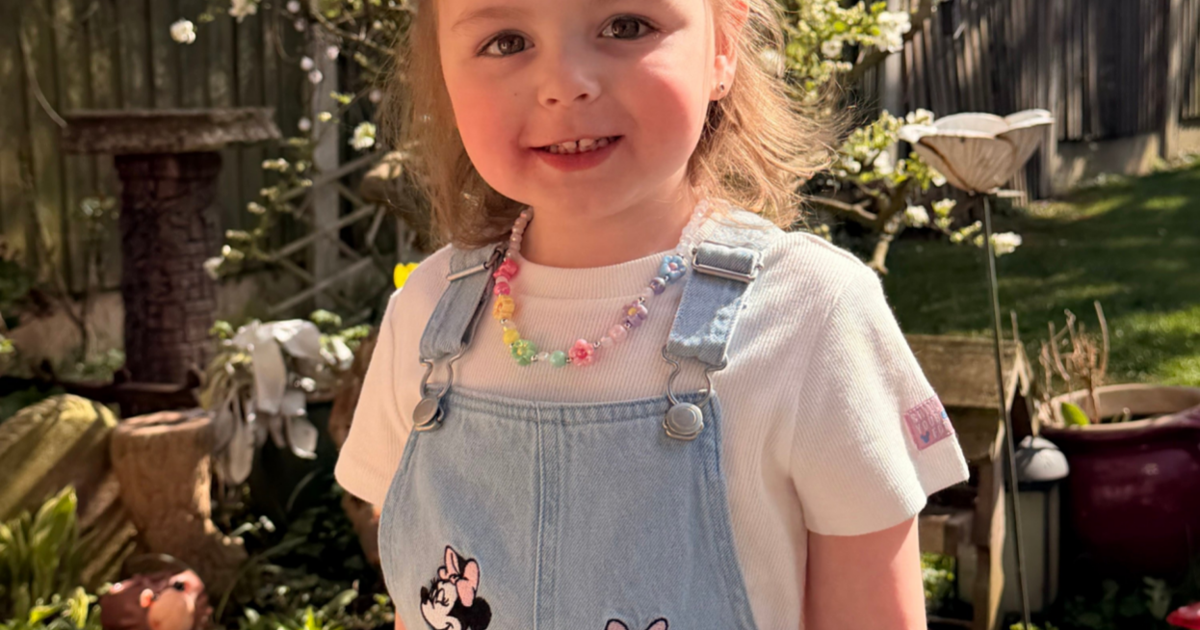

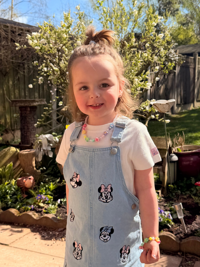
Little Nancy Dakin was diagnosed with brain cancer after experiencing various symptoms, such as constant vomiting. (Brain Tumour Research via SWNS)
By Talker
By Duy Luong
A baby was diagnosed with aggressive brain cancer after doctors mistakenly identified her persistent vomiting as tonsillitis.
Nancy Dakin, 3, experienced persistent vomiting and tremors when she was just 12 months old in September 2023.
Her parents, Gemma and Sam Dakin, took the toddler to doctors, who initially believed Nancy was suffering from tonsillitis.
But antibiotics failed to work, and her condition deteriorated significantly over the following weeks, with Nancy regressing completely and becoming pale, gray and lifeless.
She lost the ability to sit up, crawl, walk and talk properly; Gemma knew something was seriously wrong.
A week after being given medications for suspected tonsillitis, Nancy was referred to the Royal Derby Hospital.
She was neurologically assessed and a doctor identified a large tumor in her left frontal lobe.
The tumor was found to be a grade 3 ependymoma — a rare type of brain cancer.
Gemma, 33, from Castle Donington, Leicestershire, said: “Nancy is our little whirlwind.
“She’s cheeky, funny, and completely full of life, and everywhere she goes, you can hear laughter.
“She loves being outside, especially with her big brother Mickey, and going to the park is her favorite thing to do.
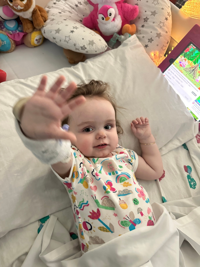
(Brain Tumour Research via SWNS)
“This all started with vomiting that just wouldn’t go away.
“We were told it was tonsillitis and given antibiotics, but nothing made a difference, and she just kept getting worse.
“She then developed tremors in her arm and became pale and lifeless. She stopped doing all the things she had just learned, like sitting, crawling and trying to walk.
“It felt like she was slipping away, and I knew something was seriously wrong.
“When we went to ER, I felt like we were being brushed off, but I refused to leave.
“I know my child, and I knew this wasn’t just a sickness bug or dehydration.
“Watching her get worse while not being listened to was both terrifying and frustrating.”
On top of hearing the shocking revelation, Nancy’s parents were devastated to find out that initially, surgery might not be possible due to the size of the tumor.
Gemma said: “When they finally did the scan and told us they had found a tumor, it was like the ground disappeared beneath us.
“We were told surgery wouldn’t be possible and that we should prepare for the worst and make her comfortable.
“In that moment, our whole world came crashing down in a way that is impossible to put into words.”
That same night, Nancy was transferred to Queen’s Medical Centre (QMC) in Nottingham.
The specialists acted quickly, getting her on fluids, IV morphine and steroids to reduce the swelling and stabilize her.
A neurosurgeon explained the tumor had, fortunately, not taken over Nancy’s brain and outlined a surgery plan.
For the first time since hearing the diagnosis, Gemma felt “a sense of hope.”
Nancy went through two procedures, with the first removing 95% of the tumor and the second, a week later, finishing the rest to ensure the operation did not pose any risk of mobility.
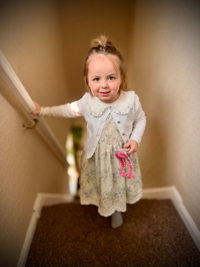
(Brain Tumour Research via SWNS)
By Talker
Shortly after, to ensure the cancer had gone completely, Nancy began high-dose chemotherapy in December 2023 when she was 15 months old.
“The treatment was extremely challenging for her, as she wasn’t able to get out of her crib and play while the chemotherapy was running. It made her very poorly, drowsy and constantly sick,” Gemma said.
“She began to associate sickness with food and eventually stopped eating altogether, which led to her having an NG tube fitted for feeding.”
During her treatment, Nancy also had one of her ovaries removed and preserved due to the potential impact chemotherapy could have on her future fertility.
Gemma said this was an “incredibly difficult decision,” but it would give her “the best chance for the future.”
After the operation, she was in severe pain and couldn’t be comforted, even with medication.
Gemma said: “As parents, all you want to do is take their pain away, but we couldn’t, and that was the hardest part.
“After hours of distress, she eventually cried herself to sleep, and although she improved slightly once we got her home and gave her medication, she remained unsettled for several days.
“It was one of the hardest parts of the entire journey.”
On Jan. 6, 2025, little Nancy completed her chemotherapy and rang the bell to celebrate being declared cancer-free.
She continues to attend regular follow-up scans to monitor her condition.
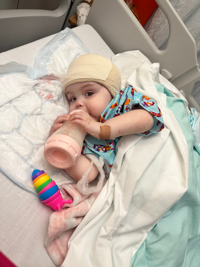
(Brain Tumour Research via SWNS)
By Talker
Now, the Dakin family is sharing Nancy’s story to raise awareness of brain tumor symptoms in children and to support Brain Tumor Research.
Gemma is also taking on the 200k in May Your Way challenge to raise vital funds for research.
Gemma said: “I’m taking on the 200k challenge to raise money because more research is desperately needed. During Nancy’s treatment, I learned that research into brain tumors receives the least funding of all cancer types, which just doesn’t make sense when it kills more children than leukemia.
“I’ll be walking, running and indoor cycling to reach the target, and Nancy and Mickey will be joining me whenever they can. It won’t be easy, especially balancing it all while caring for Nancy, but on the tough days, I’ll be thinking about how far she’s come and how research has helped save her life.
“If sharing our story and doing this challenge helps even one family or contributes in some small way to future breakthroughs, then it will all be worth it.”
Ashley McWilliams, community development manager at Brain Tumor Research, said: “Nancy’s story highlights how easily the symptoms of brain tumors in children can be mistaken for more common illnesses, leading to delays in diagnosis. The strength shown by Nancy and her family is truly inspiring, and their determination to raise awareness and funds will help drive the research needed to improve outcomes for patients.
“We would encourage anyone who has been moved by Nancy’s story to consider taking part in our 200k in May Your Way challenge. By getting involved, supporters can play a vital role in helping us fund life-saving research and bring hope to families affected by this devastating disease.”