
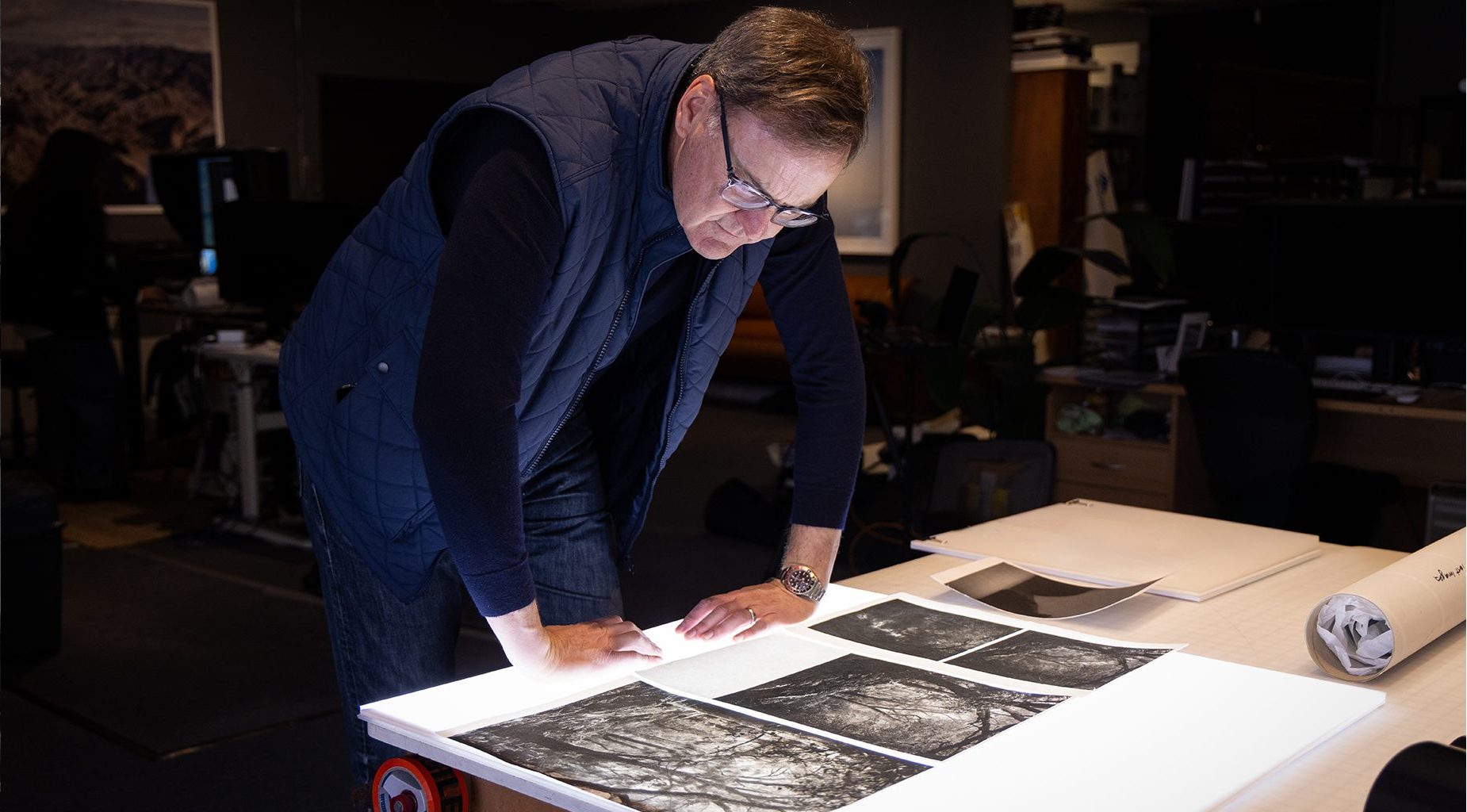
Scott Perkins chairs two of Australia’s biggest companies, Woolworths and Origin energy. Combined they have a market value on the ASX of $97 billion. Woolworths is also the largest employer in Australia with 200,000 employees. Additionally, Perkins is board chair of the Garvan Institute of Medical Research in Sydney with more than 700 scientists working on genetic treatments for diseases like cancer. Since he moved to Sydney 25 years ago, Perkins has enjoyed a stellar career. Now he is winning acclaim in a different field – art photography.
Respected art historian and critic, Mary Kisler, said in a review that one of Perkins’ photographs featuring a waterfall cascading down a mountainside into a fiord reminded her of a work by Colin McCahon, New Zealand’s most influential modern painter.
Perkins, backed by the leading Australian gallery, Michael Reid, clearly doesn’t depend on his art for an income but says he feels “thrilled and deeply anxious” about his solo show at Aotearoa Art Fair.
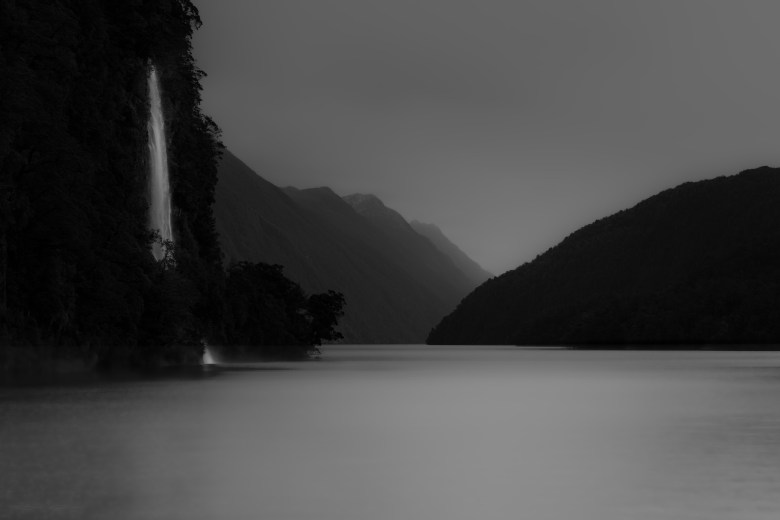 Scott Perkins, Untitled 17, 2026. Pigment print on Hahnemule metallic paper, 100 x 150 cm, edition of 8 + 2AP
“I think it’s old-fashioned performance anxiety. It doesn’t matter what else I do, when the exhibition is on, I’m purely judged against awesome competition and awesome other artists. I’m purely judged for my individual contribution to the genre and the works hanging on the wall.
“You know, people might think the business world is hyper competitive, which it is, and you rise and fall on a bunch of customer and financial metrics and what have you, but the art world is brutally competitive and direct as well. I mean, you get to the end of an exhibition and you’re either full of red dots (sold stickers) on the wall or not much is sold and you’re looking at the floor. The art world can be, you know, be quite brutal in its judgment.”
Perkins’ photographs have been described as “abstracted landscapes steeped in moody atmospheres shot in remote corners of Australia, New Zealand, Europe and beyond”. He uses timber-framed light boxes to house the dramatic images printed on metallic or handmade Japanese paper. Perkins says he tries to bring a feeling of “mystery” to the final image.
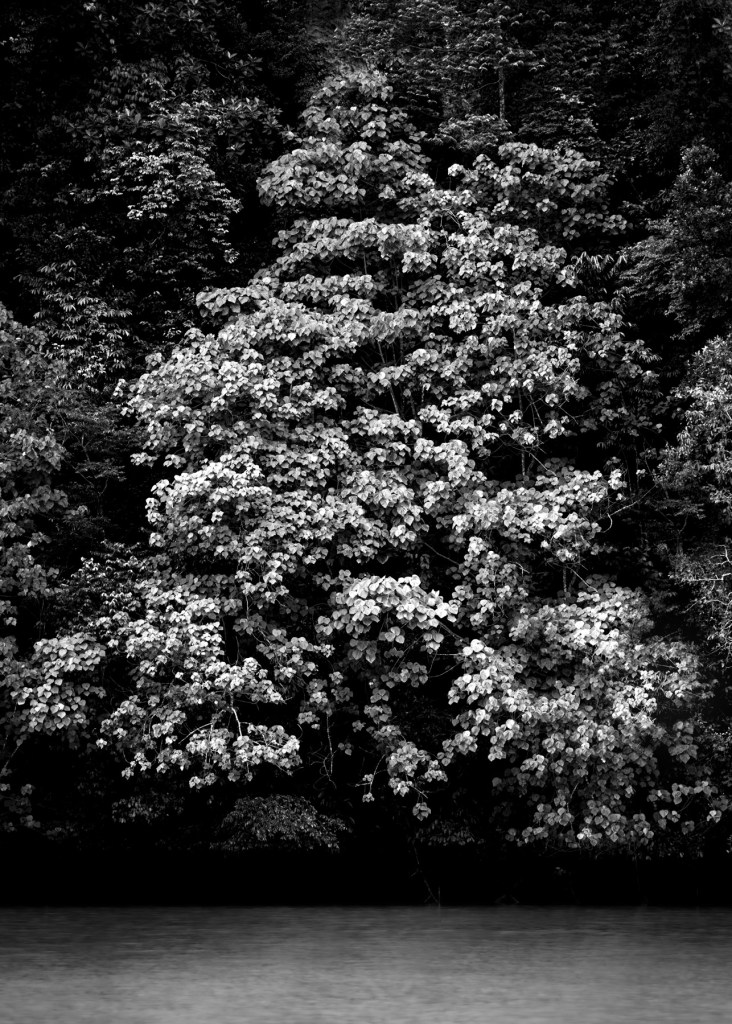 Scott Perkins, Untitled 20, 2026. Pigment print on Hahnemule metallic paper, 150 x 100 cm, edition of 8 + 2AP
“What sustains an image that takes it beyond the decorative to something that you’ll live with for a long period of time and justify spending the money on? I think it has to have something that is less obvious. Where does the less obvious come from? It might be some explicit storytelling in the work. It might be the look on somebody’s face, but there is some embedded mystery or something that’s not obvious. And so, abstraction ends up being a mechanism, I think, to release that non-obvious in the work … you almost create a new message and reveal something that’s embedded in nature that may not be so obvious.”
While it might not always stay this way Perkins says his photographs currently don’t feature people or any built structures.
“I have tried to stay well clear of hyper-realistic photography, which is so well done, and try and find my own voice, something unique and something different, an abstraction of photography, whilst it’s certainly not new there’s not too much else out there that looks like what I do.”
Most of the “raw material” Perkins looks for in his photographs is captured in remote places near, or surrounded by, water and if he needs to position himself in that lake or sea he’ll use his kayak.
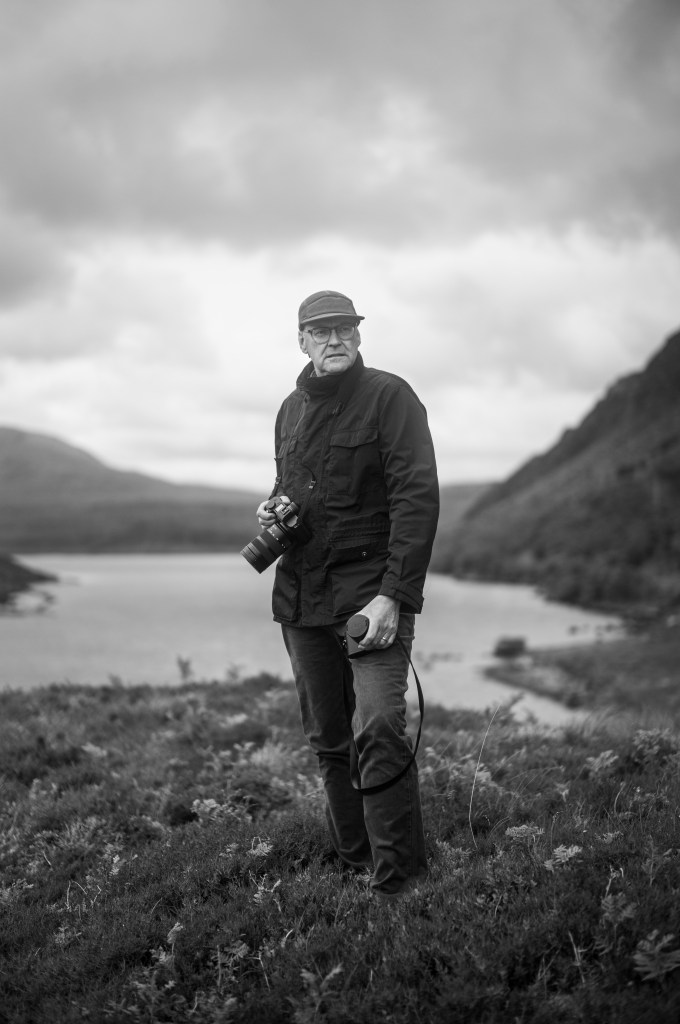 Scott Perkins. Image supplied.
“I try to go to places with inherent potential. They are all remote in most senses of the word, a bunch of images taken in Dusky Sound, I was on a kayak in Palau, on the island of Palau, and off the north coast of Sicily, among some islands there.
“I’m sort of drawn to the physical environment and the sense of adventure it can be combined with. I quite like the fact that you might have to work quite hard to get there … and it’s quite amusing but really rewarding when people come up to me and say they know exactly where I have taken a photo and they’re 10,000 kilometres away from the place, and it is nowhere near where they think it is.”
Perkins says growing up in New Zealand’s rugged landscape has strongly influenced his work.
“I draw a lot of energy by being in very remote places, and the camera just captures that. Maybe my New Zealand roots in relation to the natural environment and the fact that it’s at our back doorstep in New Zealand. And once you’ve grown up with it, you never really lose it, it is part of who you are.”
There are other personal and professional reasons Perkins remains closely tied to New Zealand.
“I sort of consider myself lucky enough to have two homes, and New Zealand remains a deep part of me. I founded, with two or three other colleagues, the New Zealand Institute that’s become the New Zealand Initiative, which, after 14 years, I just retired from, and I’m a fellow of the Auckland University, because I worked with them for 14 years to help them try and commercialise their IP.”
Perkins’ first wife Louise, an avid art collector, died in 2004 from breast cancer at the age of 39. At the time, Perkins was chief executive of Deutsche Bank New Zealand.
“After Louise passed away, I set up Sweet Louise, which is this phenomenal charity that cares for women with incurable breast cancer. So, one way or the other, all these things have kept me coming back to New Zealand. It’s a joy to do that, and I feel like I think many New Zealanders do, and this does segue into photography, I feel just such a strong connection to this overpowering landscape that is New Zealand.”
Aotearoa Art Fair 30 April – 3 May 2026, Viaduct Events Centre, Auckland