

April 27, 2026 — 3:30pm
Save
You have reached your maximum number of saved items.
Remove items from your saved list to add more.
Save this article for later
Add articles to your saved list and come back to them anytime.
Got it
AAA
House buyers are increasingly timid and sellers have unrealistic price expectations. That’s the market equation feeding into the weekend’s anaemic auction clearance rates, which are now approaching lows not seen since the pandemic.
Prices should follow clearance rates down; in a few days, when April closes out, we will see how much value has been eroded this month.
 Over the Anzac weekend in Sydney, less than half the residential properties scheduled for auction were sold.Justin McManus
Auction clearance rates are a lead indicator, and the harbinger for softer prices is already clear.
Over the Anzac weekend in Sydney, less than half the residential properties scheduled for auction were sold, while in Melbourne that figure hit a slightly less diabolical 56 per cent; but in Brisbane the auction clearance rate registered an alarming 37 per cent, according to Domain.
Related Article
Some were withdrawn before auction, while the remainder were passed in.
Over the week to April 18, the clearance rate in Sydney plunged to 37.9 per cent and Melbourne scraped in at 43.7 per cent.
In real estate sales parlance, there is a rising gap between seller price expectations and buyers’ price opportunism. We may not be at a point of calling it a buyers’ market but this group is clearly recovering some of its bargaining power.
Housing economists’ rule of thumb is that clearance rates below 60 per cent denote a market with falling property prices.
Meanwhile, years of a chronic undersupply of housing have prompted state and federal governments to introduce policies to radically increase the supply of residential stock.
After flatlining at the start of the year, house prices in Sydney dipped lower in March, following in the footsteps of its weaker southern counterpart, Melbourne. This comes despite the expansion of the Home Guarantee Scheme, which gives first-time buyers assistance in getting a foothold in the market.
The Albanese government is also putting housing affordability on the agenda, with signs the next budget may wind back some capital gains tax discounts and negative gearing perks.
Property analytics company Cotality’s Home Value Index is also moving deeper into negative territory – it’s down 0.6 per cent over the past four weeks across Sydney – taking the cumulative decline in Sydney’s home values from the market peak in November to 1.1 per cent.
Many economists are fence-sitting about how the remainder of the year will play out. ANZ is predicting residential housing prices to fall but only marginally.
 The large numbers of properties being withdrawn from auction indicates many sellers are willing to wait for a more conducive market.Justin McManus
Others have not revised earlier predictions that there will be price growth in 2026, albeit weaker than it was in 2025 when national dwelling prices rose more than 8 per cent, propelled by the smaller capital cities.
Two interest rate increases from the Reserve Bank of Australia this year have been the biggest factor dampening last year’s property market.
But more recently the war in the Middle East, which has been behind a rise in petrol prices, has spooked confidence.
Inflation was already uncomfortably above the Reserve Bank’s target range before the oil price rose and has contributed to expectations that we are looking at an inflation number this year with a five in front of it.
Related Article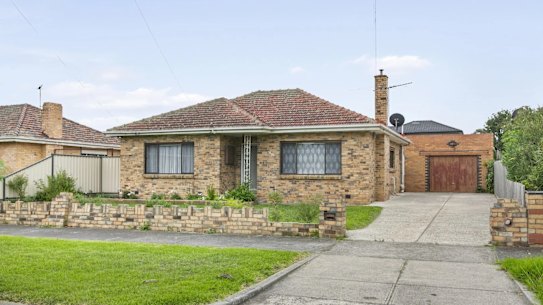
Wednesday will herald Australia’s crucial March inflation reading – one that will be closely watched by the RBA. And there are already suggestions this number will come in hot, rising to or beyond 4.5 per cent, and that will nearly guarantee another interest rate rise next month.
Westpac is expecting the consumer price index’s annual pace to peak at 5.8 per cent in May.
Higher rates feed into the affordability of housing and the confidence of home buyers.
The large numbers of properties being withdrawn from auction indicates many sellers are willing to wait for a more conducive market.
The history of Australian real estate prices supports this tactic. Over the past 25 years, prices have appreciated by 400 per cent.
There was a burst of new sellers this year trying to get properties sold before a potential avalanche of rate rises dampened demand.
That ship appears to have already sailed.
The Market Recap newsletter is a wrap of the day’s trading. Get it each weekday afternoon.
Save
You have reached your maximum number of saved items.
Remove items from your saved list to add more.
From our partners