
Lake Wānaka’s crystal clear water creates the impression of a lake in great health, but water quality is in decline and experts don’t know why.
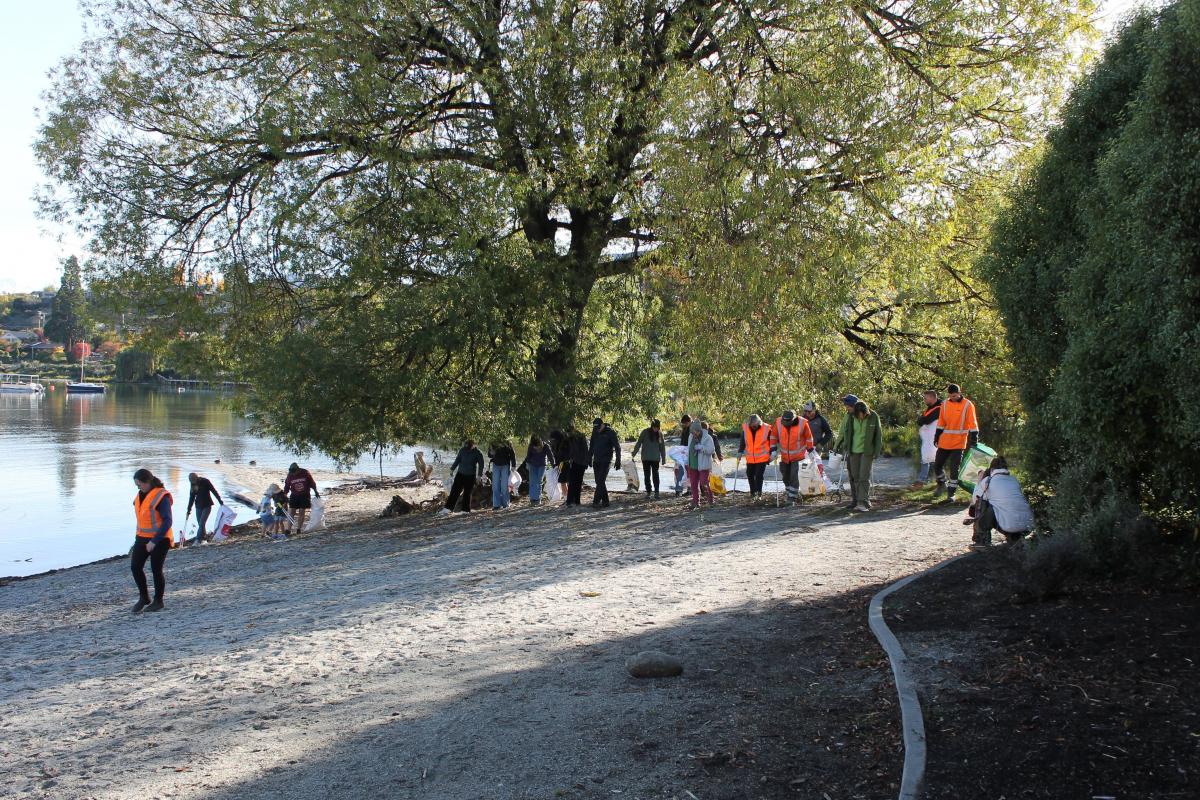
In an effort to reduce pollution and develop a greater understanding of what is harming the lake, last Wednesday community-led environmental organisation WAI Wānaka ran a beachside clean-up.
WAI Wānaka community outreach co-ordinator Lottie Oatts said the main motivation for attendees was to prevent litter from entering the lake, but there was more to the clean-up than that.
It would act as one of a series of survey areas and played a vital role in understanding the behaviours driving pollution and how people could stop them.
“We often say that the water looks crystal clear but actually, it’s in decline and we don’t know why,” Ms Oatts said.
One potential cause highlighted by Ms Oatts was litter’s tendency to break down into microplastics — pieces of microscopic plastic not visible to the naked eye.
Research undertaken by WAI Wānaka and marine scientist Veronica Rotman in 2022 took samples from across the lake, finding microplastics in every single sample.
“It was quite alarming that that much microplastic has actually made its way into the lake, and we’re not quite sure how it got there,” Ms Oatts said.
That was why at the start of the clean-up, about 30 volunteers gathered around Ms Oatts as she explained that rather than a litter-picking free-for-all, the clean-up required a systematic approach, with beach-cleaners lining up across the beach and proceeding slowly in a bid to capture as much rubbish from a specific area as possible.
“The reason we do a survey area is so that we’re able to fully cover one area of the lakefront, and it means that that area can be thoroughly searched through, because it’s so easy to miss pieces with the naked eye,” Ms Oatts said.
WAI Wānaka aimed to run two beach clean-ups a year at popular beaches in the Upper Clutha, with findings from the survey areas allowing the organisation to develop an understanding of the different types of littering that took place at different locations, she said.
At Wānaka’s lakefront, the most common types of litter were takeaway cartons, cigarette butts and hard plastics like those used in kayaks or frisbees, pointing to tourism.
At Waterfall Creek in Wānaka, wet wipes were a significant issue, while at Scott’s Beach at Lake Hāwea, the beautiful sunset appeared to have driven a spike in the littering of beer bottle caps.
Understanding the type of litter could help pinpoint a solution, whether that meant the strategic placement of a bin, or education campaigns designed to address particular causes of littering.
An example of how beach clean-ups could lead to targeted intervention was the Paws for the Lake event hosted by WAI Wānaka in partnership with the Queenstown Lakes District Council last Saturday.
“At particular beach clean-ups there is often more dog poop, but particularly at beaches like the one at the Outlet, where there’s no dog poo bin,” Ms Oatts said.
Ms Oatts, a British expatriate, said while it was typically ingrained in New Zealanders to take litter home, dog poop was often left behind, whether by accident or because people believed it was natural and would degrade.
The idea for Paws for the Lake came from council senior animal control officer Hannah Dennison, who has seen WAI Wānaka’s beach clean-ups in the past.
“I thought it would be a perfect opportunity for us to collaborate and combine their knowledge of waterways and the lake, and our knowledge of responsible dog ownership and bringing those two ideas together to engage the community,” Ms Dennison said.
At the event, dog owners could learn about the danger of toxic algae for their dog, as well as about the impacts that their dog’s waste could have on the lake.