
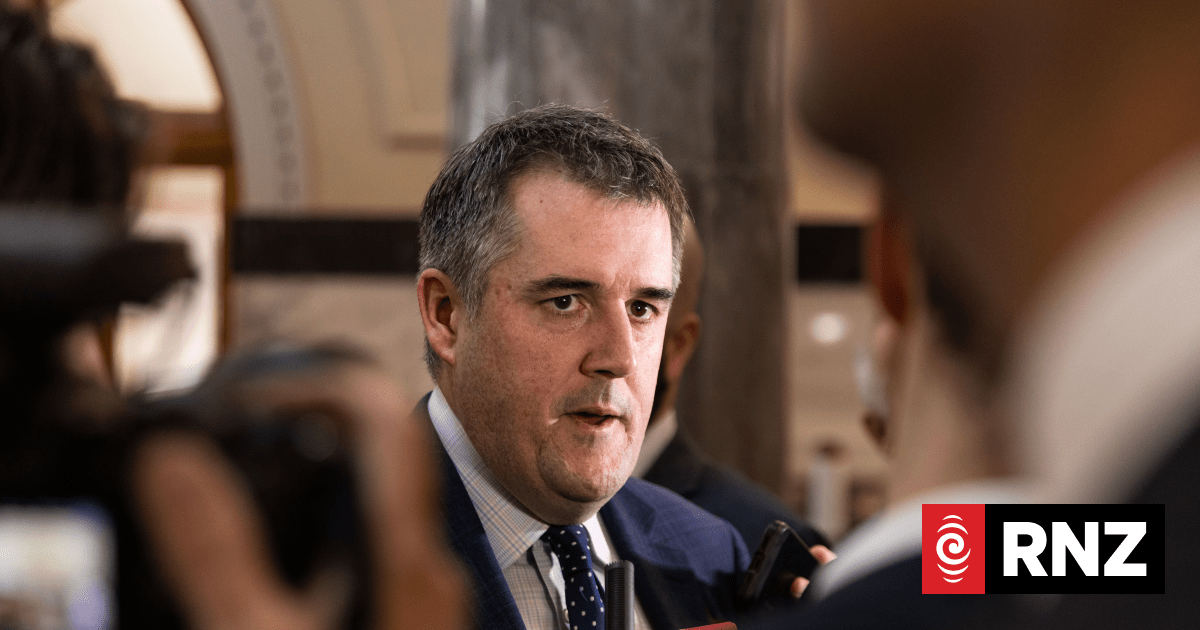

Transporting New Zealand chief executive Dom Kalasih.
Photo: RNZ / Phil Pennington
Transport Minister Chris Bishop says there’s “no doubt” roads will suffer if trucks are heavier – and officials are analysing whether it’s a worthwhile trade-off.
The government is considering easing weight restrictions for heavy vehicles in a bid to save fuel amid the global crisis.
Four changes are being worked on in case of a move up to Phase 2 of the national fuel plan.
This included allowing more weight on some trucks to facilitate fewer trips, allowing normal licences for heavy electric utes, relaxing time and access restrictions for over-dimension vehicles and removing some restrictions on the routes that over-dimension vehicles could travel.
Bishop said the freight industry had been calling for a greater weight allowance for some time, and the fuel crisis was an opportunity to expedite that work.
“There are trade offs as a result of it, impact on the roads and impact on bridges, for example, which we’re just working our way through at the moment, as a matter of priority,” he said.
“Whether or not those risks are manageable and the trade offs are worth it, are exactly what we’re looking at at the moment.”
Transporting New Zealand chief executive Dom Kalasih said loosening the weight restrictions would unlock extra productivity and save several million litres of diesel.
“You could actually avoid around 10 million kilometres of heavy travel.”
He also welcomed proposed changes to rules around over dimension vehicles but said heavy haulage was a speciality area and would affect fewer vehicles.
He urged government ministers not to wait until Phase 2 to take action.
“It can be picked up straight away. The vehicles we’re looking at, they’ve got spare capacity.
“We shouldn’t be waiting for things to get bad before we actually do things that make sense.”
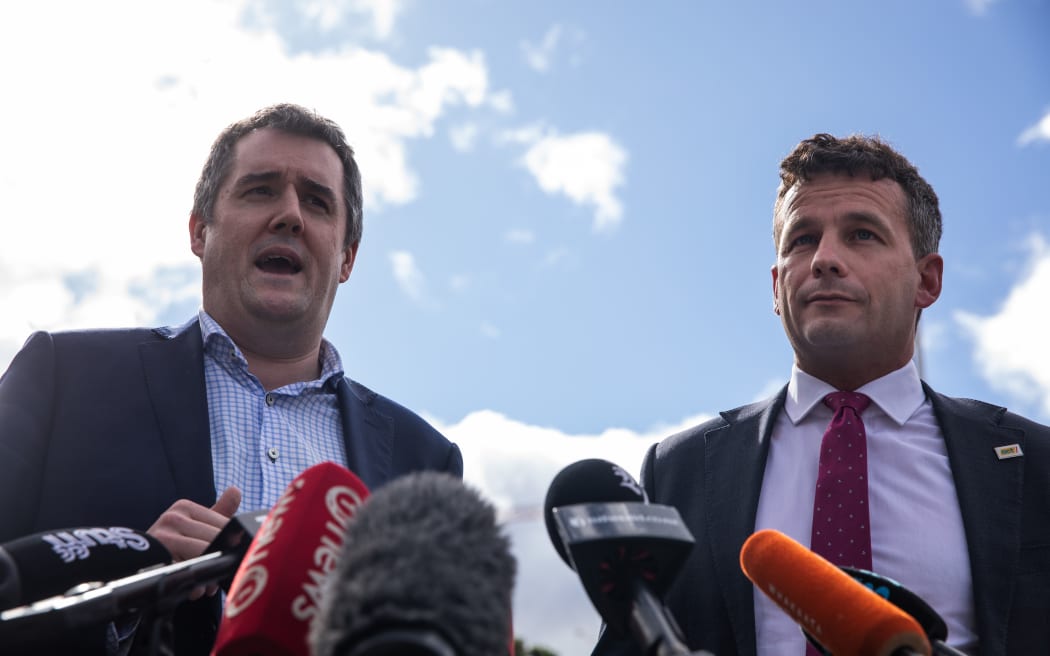
Transport Minister Chris Bishop (L) and Regulation Minister David Seymour.
Photo: RNZ / Samuel Rillstone
On Monday, Regulation Minister David Seymour and Transport Minister Chris Bishop said submissions were being developed so they could be quickly implemented if the government moved to Phase 2 of its response.
“We are still in Phase 1 of the National Fuel Response Plan, but we don’t want a repeat of the Covid-19 lockdowns. Doing the work to boost fuel efficiency now helps ensure we can stay in Phase 1 for as long as possible, causing the least disruption to Kiwis,” said Seymour.
Bishop said concerns over weight restrictions were widespread in the freight sector.
“In the short term, even small increases in permitted loads could reduce the number of trips needed, saving time, lowering costs, and reducing fuel use,” Bishop said.
“We need to balance that with safety and network impacts, but there are sensible changes we can make that will lift productivity without compromising standards.”
Fuel savings questioned
Labour leader Chris Hipkins told Morning Report on Tuesday while some it was “quite pragmatic”, it was “difficult to see how it’s going to save fuel”.
“Heavier trucks tend to use more fuel, not less fuel. And there’s still, I think there’ll be some public concern about allowing heavy trucks into urban residential areas in the middle of the night when they’re currently restricted from being there, so let’s just see how all that plays out.
“There’s questions around road maintenance. Heavier trucks means potentially more money we’ll have to spend on maintaining roads. I think these are, by and large, things that the trucking lobby have been asking for a long time, rather than things that are going to help us to save fuel.”
He said the government still needed to tell the public what would happen should supplies start to dry up.
“The government still aren’t answering those questions. Yes, we might well have enough fuel on the water and in the country at the moment, but once we get evidence that it’s stopping, you know, that there is a disruption, we’ll need to move quickly, otherwise there’ll be nothing left to ration.
“And so the government needs to have a plan so that if that happens, they can move quickly.”
Labour’s infrastructure spokesperson Kieran McAnulty said rail was an alternative but the government didn’t appear to be considering it.
“Rail … it’s a commercial proposition for these companies, they can put their freight on to the rail, [they don’t] need subsidies in order to do that.”
Sign up for Ngā Pitopito Kōrero, a daily newsletter curated by our editors and delivered straight to your inbox every weekday.