
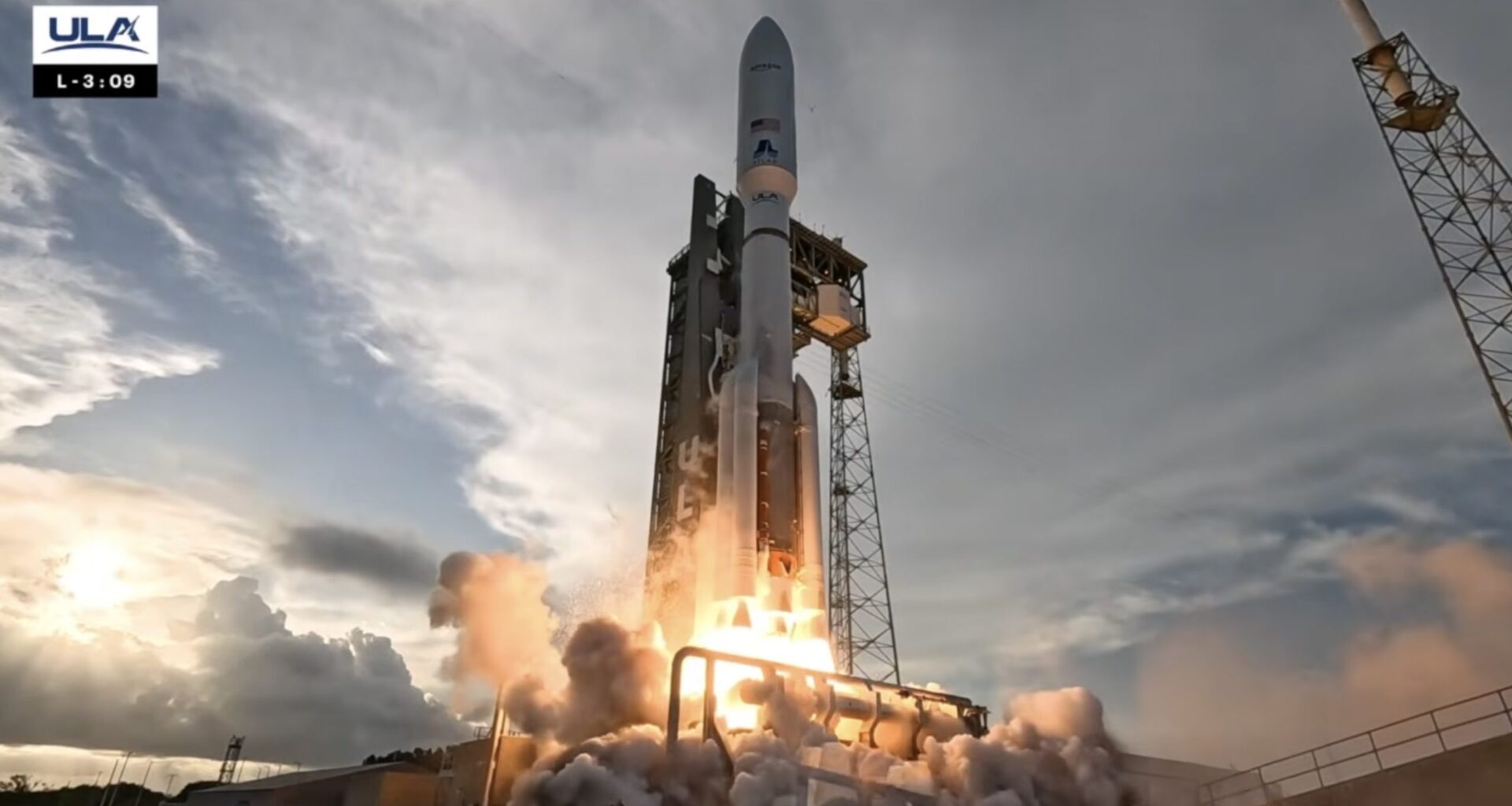
An Atlas V rocket has successfully delivered another batch of internet satellites into orbit in a significant step forward for Amazon Leo’s expanding global broadband network.
The rocket lifted off from Cape Canaveral Space Force Station on the evening of 27th April, carrying 29 satellites into low Earth orbit as part of the company’s ongoing constellation programme, now known as Amazon Leo (formerly Project Kuiper). The mission represents the sixth launch in the series and ties the record for the heaviest payload ever flown by an Atlas V at approximately 18 tons.
United Launch Alliance (ULA), the company responsible for the launch, confirmed that the satellites were released in stages beginning roughly 21 minutes after liftoff, with the final deployment completed about 16 minutes later. The operation brings the total number of Amazon Leo satellites currently in orbit to around 270, part of a long-term plan to deploy more than 3,200 spacecraft to provide global internet coverage.
Launch Turnaround Speeds Are Increasing
The mission also marked a milestone for ULA’s launch operations. By adjusting its pre-launch procedures, the company achieved its fastest turnaround time between Atlas V launches to date; just under 24 days. Traditionally, rockets would be transported to the launch pad at least a day in advance. This vehicle was rolled out on the same morning as the launch itself in an expedited process.
“The ULA team will be divided into two shifts — the Roll and Preps Crew and the Tanking and Launch Crew — to perform all the tasks that normally are spread across two days,” the company explained in its launch blog. Officials noted that while the compressed schedule helped accelerate this mission, future launches will depend on operational requirements and readiness.
The entire launch can be viewed here:
Amazon’s satellite network is designed to deliver reliable broadband connectivity to communities with limited or unreliable internet access, particularly in remote or rural regions. The constellation will operate in low Earth orbit and connect to ground-based infrastructure including fibre networks,and internet exchange points.
Competition in the satellite broadband sector continues to intensify. Multiple providers are working to expand their presence in orbit, including Starlink. Recent launches by other companies have highlighted the rapid pace of development in this field, as governments and businesses increasingly rely on space-based communications.
The steady buildup of the Kuiper network suggests many more launches are still to come. The payload capacities and speed of the process also continue to improve by degrees.