
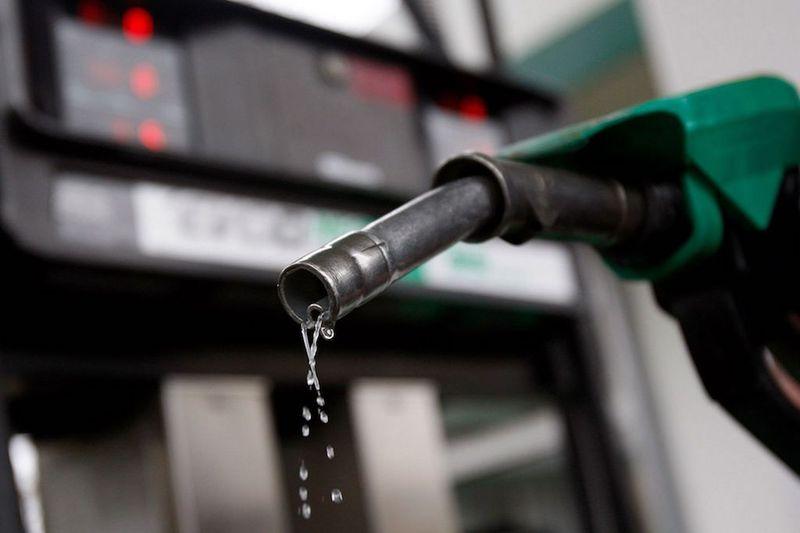
Although Nigeria has new refining capabilities, the country must liberalise fuel supply to “protect consumers,” Agusto Consulting has said.
The company, a wholly owned subsidiary of Agusto & Co Limited, gave this advice as part of its key recommendations on, “what Nigeria can do to hedge” against the impact of the Middle East crisis.
The recommendations are contained in the presentations made by Agusto Consulting, at the webinar it held last week which focused on the impact of the Middle East crisis.

According to the firm, the outbreak of the crisis on February 28, 2026, which led to the closure of the very important strait of Hormuz, has had a profound impact on diesel and fuel prices in Nigeria. It stated: “Before the closure of the strait of Hormuz, Diesel prices had settled at N970/litre.
Following the assassination of Iran’s supreme leader and the resulting escalating tensions, diesel prices surged by 65 per cent reaching N1600/litre over the course of a few weeks. “Private power generation costs for manufacturers and businesses jumped by 35% in March 2026 alone because the national grid could not offset the reliance on diesel.
“The cost of moving a container from Apapa Port to Ikeja rose from N450,000 to nearly N700,000 (a 56% spike). The cost is directly passed to consumers via the landed price of goods.” The firm further said: “Premium Motor Spirit (PMS) reached its highest point of N1,261.65/L in March 2025.
Price rises were driven by the combined impact of subsidy removal and higher costs for imports, by September, prices had settled at around N500- N 600 per liter.
As geopolitical tensions escalated, fuel prices rose by over 100 per cent to N1275/ litre in March.” “Despite high global prices, Nigeria recorded a cumulative output shortfall of 18.1 million barrels over the past year compared to its OPEC quota,” it added.
Apart from calling for a liberalization of fuel supply, the company also called for a review of the market pricing structure in the local fertiliser market and an improvement in electricity supply. “Nigeria’s electricity supply has been stubbornly stuck below 5,000 MW over the last two decades even amidst installed capacity of over 13,000 MW.
Nigeria needs to fix this! Energy alternatives especially in renewables becomes a nonnegotiable,” it stated. Agusto Consulting also recommended that Nigeria should boost its export of liquefied natural gas given that, as it put it, “With the Middle East Crisis, more countries are seeking out new supply sources for gas.”
New Telegraph reports that in its April 2026 Nigeria Development Update released on April 7, the World Bank recommended that Nigeria should allow imports of PMS to foster a competitive retail market.
Although this advice was aimed at improving supply stability, it faced significant backlash for potentially undermining local refining efforts, such as the Dangote refinery.
Critics, including energy experts and economists, argued that this contradicts the Petroleum Industry Act (PIA) of 2021, which prioritizes domestic refining, and could hurt the economy.
Following the criticism, the World Bank released a statement clarifying that its recommendation should be viewed within a broader policy context.
It emphasised that its position was not a blanket endorsement of fuel importation but part of a broader strategy tied to market reforms and consumer protection.
Please follow and like us: