
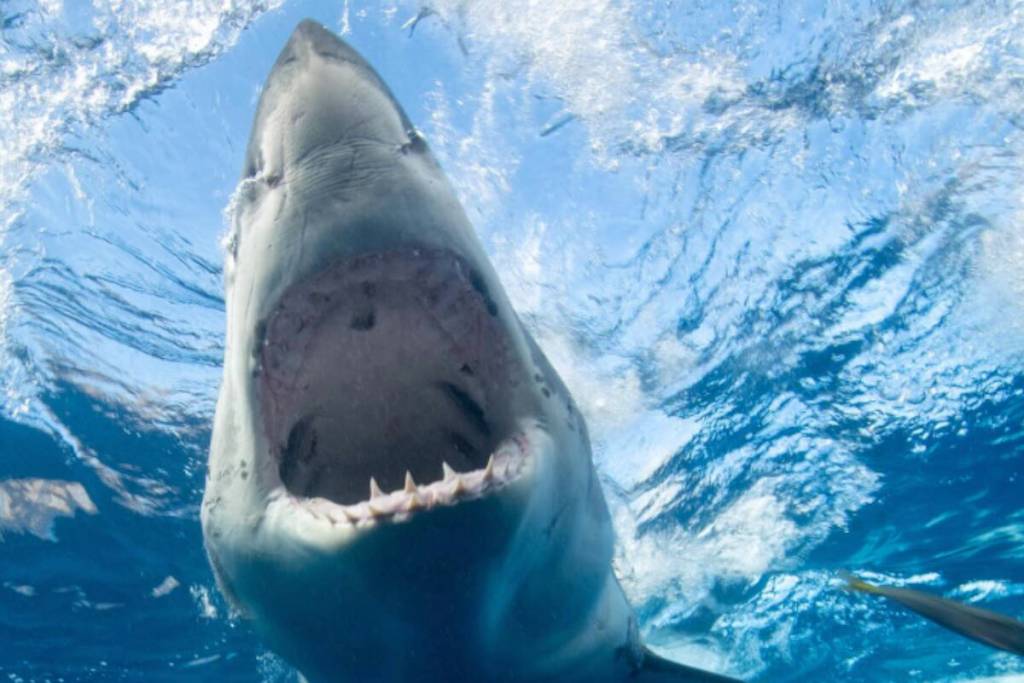
Great white shark returns to Vancouver Island waters
Published 5:30 pm Wednesday, April 29, 2026
Cruise ships filled with tourists aren’t the only visitors plying the waters off Vancouver Island.
A great white shark has been pinged off the west coast of Vancouver Island for the second time in two months.
The female shark named Kara was first spotted off the Island on March 10 and was seen off San Francisco waters by March 22.
Marine Conservation Science Institute (MCSI) in Seattle has a satellite shark tagging system that tracks white sharks and mako sharks off the coast of Southern California. Their tracks can be followed using the Expedition White Shark app, with around six sharks tagged for tracking.
The tracking system showed Kara close to Vancouver Island again on April 25.
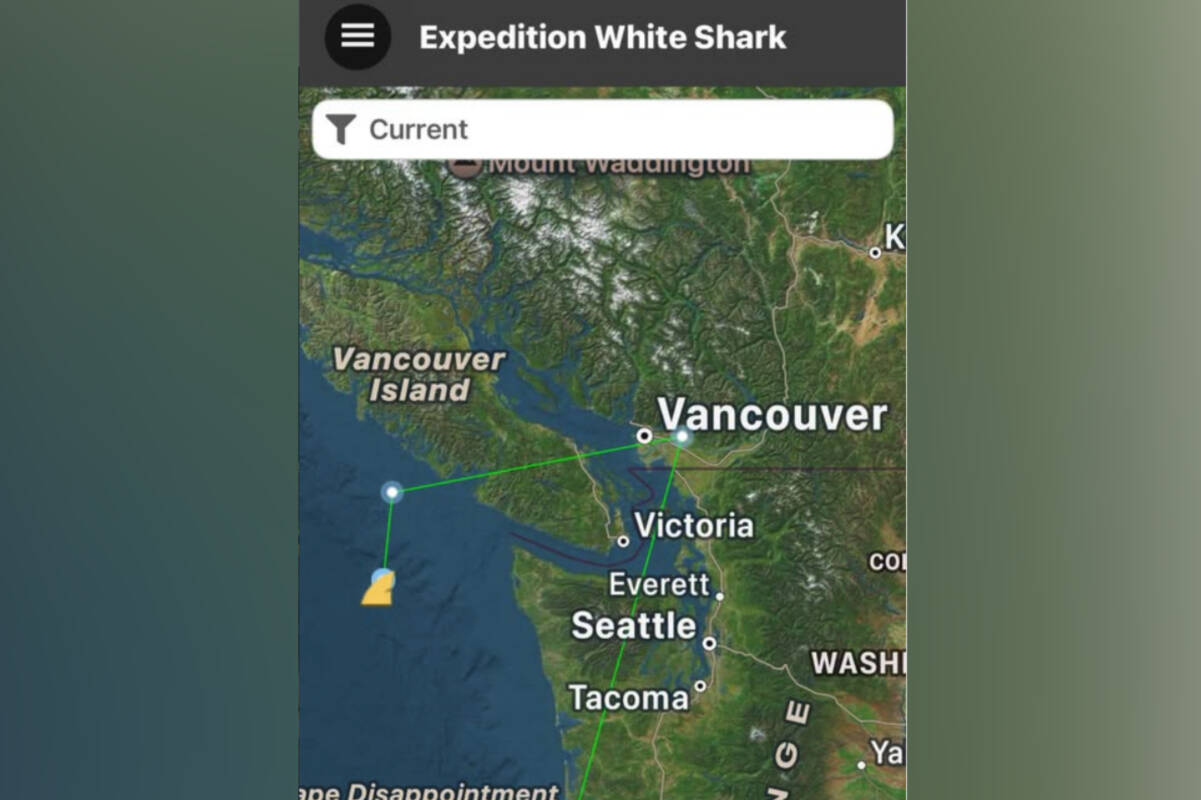
Victoria News talked to the research biologist Nicole Nasby Lucas with MCSI, about Kara’s journey to Vancouver Island waters.
“It could be that they’re following marine mammals or sea lions that might be up in the area, or maybe following a whale migration. So usually if they’re moving that far up, it’s probably based on a food strategy.” Lucas said.
She added that it’s unlikely that any other sharks will follow Kara into Canadian waters.
“This is the only one that we’ve tracked that far north, so it’s not a typical movement. But interestingly, they have repeated migration patterns. If they were successful in finding food up there, this shark will repeat this pattern. Each shark might have its own favourite place for finding food, and so if this was a successful trip for that shark on its next migration pattern, it will probably visit there again.”
Lucas also debunked the popular belief that Kara made her way north because Canadian waters are getting warmer.
“The white sharks are very tolerant of cold waters, so I don’t think they would be affected by it,” she explained.
Victoria-based naturalist Laura Briggs told Victoria News that based on previous data, Kara is expected to remain offshore and potentially move toward the Central Pacific Ocean, and may have been predicted to be as far as halfway to Hawaii by now.
“At this stage, it’s important not to speculate on the reason. There are many possible explanations, including natural variation in behaviour, the possibility that she belongs to a more northern population…It is also entirely possible that this is normal behaviour that has simply never been documented before because we haven’t had the right individual tagged,” Briggs said.
She said that it leads to a larger issue of knowing very little about great white sharks in B.C.
“We do not have reliable population estimates, and one of the most important unknowns is where they give birth. Identifying those pupping grounds could be key to protecting the species and supporting population recovery,” she added.
Meanwhile, in his first Instagram post about Kara’s sighting off Vancouver Island, posted in March, Marine Conservation Science Institute president Michael Domeier cautioned that the satellite data is not to be trusted at all times.
“The other circles connected by the green lines aren’t where the shark has been, unless Kara is capable of walking to Pitt Meadows, nowhere near any body of water other than a couple of irrigation ditches. She was never anywhere near Vancouver.”
The post further explained how the shark satellite tags usually work. While they do not use GPS, they are very simple radio transmitters. They estimate a geographic position based upon the change in frequency of the tag’s transmission as the satellite passes over the tag.
“You’ve probably heard of the Doppler effect… it takes a lot of complex math to estimate a position, and large errors can occur. That’s why you see the sharks on land at times.”
For now, Kara’s current position remains unconfirmed, but MCSI will continue tracking the shark.
“Maybe she has a Canadian passport,” Domeier wrote in his post.