
Nearly 1 in 4 American adults — roughly 61.5 million people — experienced mental illness in 2024, according to the National Alliance on Mental Illness (NAMI). Yet only about half got any treatment at all.
Why? Money. Access. Stigma. Sometimes all three.
Here’s the thing: You’ve now got more options than ever to get professional help, and the price range is staggering. You can pay nothing, or you can pay $250 per session.
So which route actually makes sense for your situation and your wallet? Let’s break down the three main ways to get mental health support right now — in-person, online and through AI — so you can figure out which one fits.
1. In-person therapy
This is the gold standard, and it comes with a gold-standard price tag. Without insurance, you’re looking at roughly $100 to $250 per session, depending on where you live and who you see.
A therapist in New York City or San Francisco might charge $300-plus. In the Midwest, you could pay closer to $120. According to the American Psychological Association, the median out-of-pocket cost sits around $150.
With insurance, the picture improves dramatically. Most copays land between $20 and $50 per visit. If your plan covers mental health — and thanks to the Mental Health Parity and Addiction Equity Act, it should — your out-of-pocket cost drops fast. If you’re confused about copays vs. coinsurance, sort that out before your first appointment so you’re not blindsided by a bill.
The big advantage here is the human connection. A skilled therapist reads your body language, picks up on things you’re not saying and adjusts in real time. That therapeutic relationship is hard to replicate through a screen.
Research backs this up, particularly for complex conditions. If you’re dealing with severe trauma, psychosis, bipolar disorder or an active crisis, in-person care is still where the evidence is strongest.
The downside? Availability. The median wait time for a first appointment in the U.S. is about 25 days. In rural areas, it can stretch to six months or more.
This is best for: Anyone dealing with serious mental health conditions, people who value face-to-face connection, those whose insurance covers in-network visits and anyone in crisis who needs immediate hands-on support.
2. Online therapy
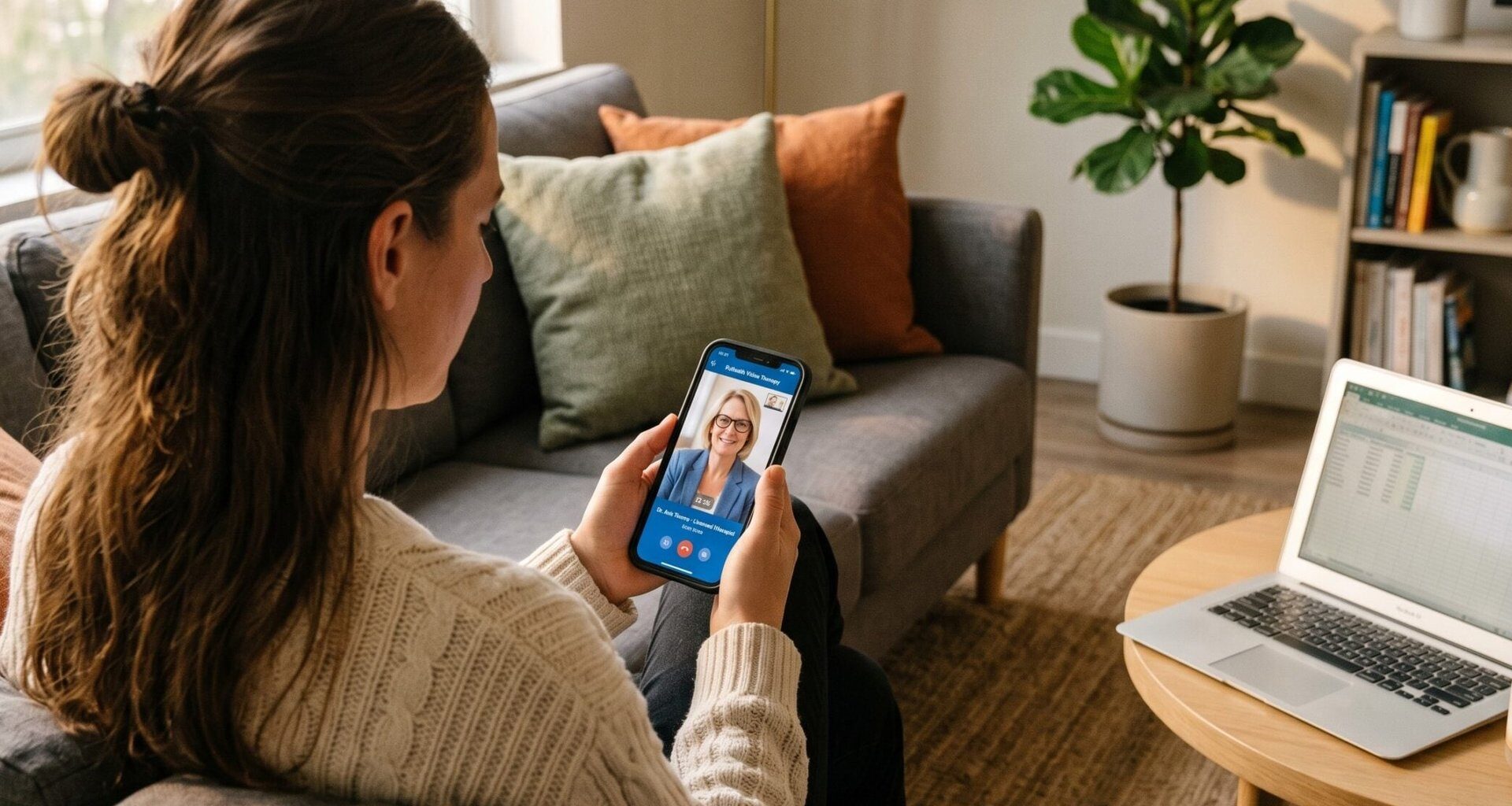
Think of this as in-person therapy’s more flexible sibling. You’re still working with a licensed therapist — just through video, phone or messaging instead of sitting in an office.
The two biggest platforms are BetterHelp and Talkspace. BetterHelp runs about $65 to $100 per week, billed monthly. Talkspace starts at $69 a week for messaging-only therapy and goes up to $109 for video sessions plus workshops.
That’s still real money — roughly $260 to $436 a month — but it’s often cheaper than paying out of pocket for weekly in-person sessions. Talkspace accepts many major insurance plans, and BetterHelp recently started accepting select insurance in 13 states.
Here’s what the science says: A 2021 meta-analysis of 57 studies, published in Clinical Psychology Review, found that video-based therapy produced outcomes equivalent to face-to-face therapy for depression, anxiety and post-traumatic stress disorder (PTSD).
A large 2025 study reinforced those findings, concluding that well-implemented remote care can match in-person treatment in effectiveness.
The convenience factor is enormous. No commute. No waiting rooms. You can do a session on your lunch break or after the kids go to bed. If you’ve been putting off therapy because you can’t fit it into your schedule, this removes that excuse.
If cost is the barrier, you may also want to explore free and low-cost mental health options before committing to a paid subscription.
This is best for: People with mild to moderate anxiety or depression, anyone with a busy schedule or limited local options, those who are comfortable communicating through screens and folks in rural areas without nearby therapists.
3. AI therapy
This is the new kid on the block, and it’s cheap — sometimes free. But it comes with big caveats.
Apps like Woebot (free), Wysa (free tier, or about $75 a year for premium) and Youper (around $70 a year) use techniques drawn from cognitive behavioral therapy to guide you through exercises, mood tracking and coping strategies.
You’re not talking to a human. You’re chatting with a bot trained on therapeutic frameworks. It’s available 24/7, it doesn’t judge and it costs less per year than a single in-person session.
Does it work? The early evidence is promising but limited. A groundbreaking 2025 trial published in NEJM AI tested a generative AI chatbot called Therabot on 210 adults with depression, anxiety or eating disorder symptoms. The result: Clinically significant symptom reductions after just four weeks.
Participants also reported trusting and communicating with Therabot at levels comparable to working with a human therapist, according to the Dartmouth researchers who built it.
But critics note the study compared Therabot to a waitlist — meaning no treatment at all — rather than to a human therapist. That’s a lower bar. And the researchers themselves caution this isn’t a replacement for professional care.
A separate meta-analysis in the Journal of Medical Internet Research found AI chatbots can help with mild to moderate mental distress, particularly among younger adults. Short-term improvements showed up in about four to eight weeks.
Here’s the risk: These apps aren’t regulated the way licensed therapists are. Some chatbots lack safety protocols for users in crisis. And the “therapeutic alliance” — that trust-based relationship between you and your therapist — simply doesn’t exist with a bot.
There’s also the privacy question. You’re sharing deeply personal thoughts with a tech company. Read the fine print before you type.
This is best for: People who want a low-cost entry point, anyone on a waitlist for a human therapist, those dealing with everyday stress or mild anxiety, and people who just aren’t ready to talk to another person yet. It’s a supplement, not a substitute.
The bottom line
There’s no single right answer here. The best therapy is the one you’ll actually use.
If money is tight, AI apps can get you started for practically nothing. If you want professional guidance without the commute, online therapy delivers results the research supports. And if you’re facing something serious, an in-person therapist is still the way to go.
You can also use your health savings account to pay for therapy — in-person or online — with pretax dollars. That’s an instant discount of whatever your tax rate is. If your employer offers a flexible spending account, that works too.
And don’t overlook what your insurance already covers. Many people don’t realize their plan includes mental health benefits at the same level as other medical care. Before you pay full freight for any option, check what you can do to cut your health care costs first.
The worst financial decision isn’t picking the wrong type of therapy. It’s not getting help at all.