
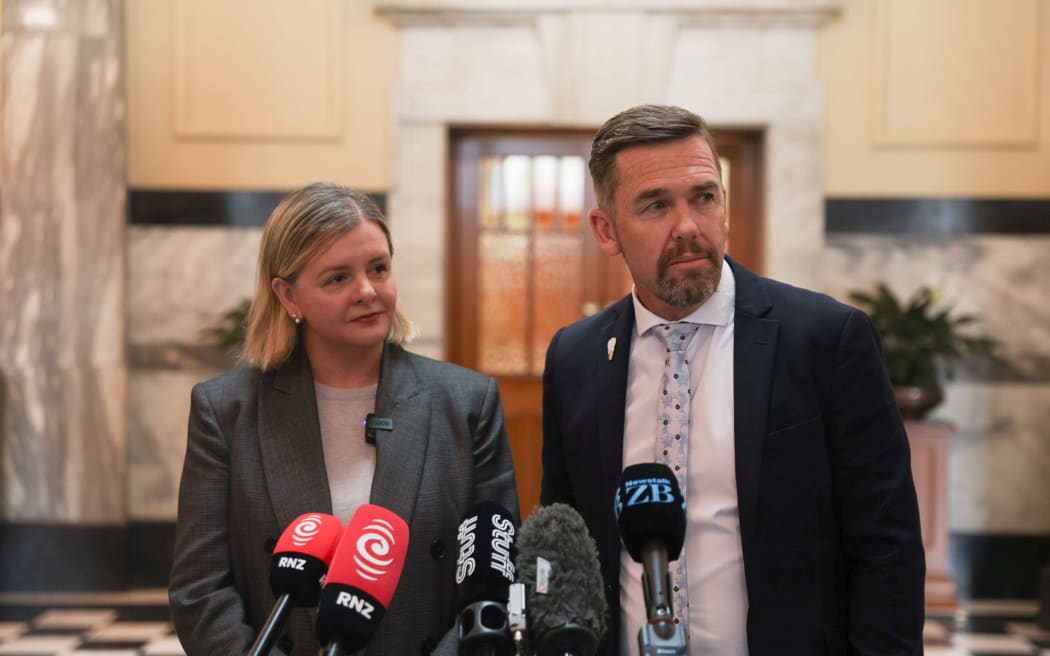
Camilla Belich (Labour) and Greg Fleming (National) used Standing Order 288 to get the Bill to Parliament.
Photo: Samuel Rillstone / RNZ
An expert in modern slavery says the bill going through Parliament now must be carefully framed to avoid becoming a box-ticking exercise
Nearly all New Zealand’s solar panels are constructed using parts built by slave labour.
This week’s Modern Slavery Bill, which has passed its first reading in Parliament, won’t change that, but it will shine some light on our supply chains, with the aim that people will be better informed, when it comes to what they buy and who they buy it from.
“The goal is that businesses will be required to have visibility in their supply chains and to be transparent about it,” says Gary Shaw, who was on the Modern Slavery Leadership Advisory Group and has worked for many years in the sector.
While describing the bill’s progression to Parliament as “fantastic”, he says the goal is not to end modern slavery – that’s a task that’s just too huge.
“For example, the energy sector, 97 percent of the polysilicone that goes into solar panels, it comes from forced labour.
“Basically, if you have a solar panel, you can pretty much guarantee that forced labour was involved in its creation. It’s not a matter of saying we’re going to get rid of that, it’s saying we are connected, we have modern slavery in our supply chain.
“Where is it, what is our influence and what can we do about it?”
This bill is not about making slavery in New Zealand illegal – it’s already illegal, but Shaw says that doesn’t mean that the issue is ring-fenced from the changes.
“It depends ultimately on how it’s framed, but I would say that it does have something to do with it… it doesn’t matter where it is, whether it’s in an orchard in Alexandra in New Zealand or in a factory in south-east Asia, that does place the same requirements and mindset for those in business, that they have the same transparency for their suppliers in New Zealand or overseas.”
Many businesses operating in the country already do this or are working towards it, and many support the legislation. Just under 1000 of them will be subject to a new reporting regime, because they have an annual consolidated revenue of more than $100 million a year.
Shaw says the mentality around it should not just be requiring them to write reports, but getting them to participate in a movement.
“It’s a modern abolition movement really. It’s about recognising that there are more people in slavery today than at any other time in human history and what are we going to do about that?
“Is it OK to continue to buy cheap stuff online and in the stores and from our favourite vendors, once we know that slavery was involved in its creation?”
World Vision has worked on getting the issue before Parliament for years, and was behind designing compromise legislation that would get the backing of both National and Labour.
National’s Greg Fleming and Labour’s Camilla Belich have made history in using Standing Order 288 to get it done, bypassing the usual ballot process by getting 61 backbench MPs to back it.
Newsroom associate editor Sam Sachdeva says they deserve an immense amount of credit, especially after ACT Workplace Relations Minister Brooke van Velden declared it was not a government priority and disbanded the leadership group that Shaw was part of.
He talks to The Detail today about the political processes used and how this move brings us in line with some of our major trading partners.
The bill will now go through a select committee process and there’s hope it can be passed before the election in November.
In the meantime, Shaw says several websites can help with ethical shopping – some are listed below.
Fair and Good – an online ethical shopping directory designed to help consumers find and choose ethical brands. It’s built around the idea that consumer purchasing power can reduce exploitation.
Tearfund New Zealand (Ethical Fashion Guide) – one of the most practical tools in NZ, ranks clothing brands A-F based on labour conditions, transparency and exploitation risk. Helps you quickly answer: “Should I buy from this brand?”
Trade Aid – focuses on artisans, fair wages and long-term relationships, and sells products with verified ethical supply chains.
Walk Free Foundation – Produces the Global Slavery Index. Not a shopping tool directly, but helps you understand which countries/products carry higher risk.
Fairtrade – Certification system you’ll see on coffee, chocolate etc. Ensures minimum standards on labour and pay.
Check out how to listen to and follow The Detail here.
You can also stay up-to-date by liking us on Facebook or following us on Twitter.