
Before he was the coolest man in Hollywood, Clint Eastwood walked onto a set and got iced out. Why did a rising studio bet suddenly become the scene nobody wanted to shoot, and who stepped in when tensions nearly boiled over?
Before the squint and the swagger, there was a nervous kid in a lab coat staring down a furious director. Clint Eastwood’s first steps onto a Universal set came with a chill, not a welcome, as Jack Arnold bristled at even shooting his small scene. A producer’s intervention kept the cameras rolling, but the encounter left Eastwood convinced a punch might land before the take did. That uneasy day would become a footnote to a career that refused to blink.
Clint Eastwood’s rocky start: The tension-filled set of his first film
Let’s rewind to a young Clint Eastwood, not yet the steely legend, just a hopeful contract player learning Hollywood’s sharp edges. In 1955, he was a newcomer at Universal, paid $75 per week, standing in the shadows of soundstages and older hands. What followed was not a grand entrance, but a test: a small role, a stubborn director, and a quiet resolve that would define him.
Clint Eastwood’s early days at Universal
Fresh to the lot in 1955, Eastwood signed a 40-week deal with Universal Studios at $75 a week. He landed tiny roles across several films and TV episodes, the kind most viewers miss on first watch. Even so, that stretch built his on-set instincts. The work was modest, the learning curve steep, and the path ahead anything but guaranteed.
Tensions rise on the set of “Revenge of the Creature”
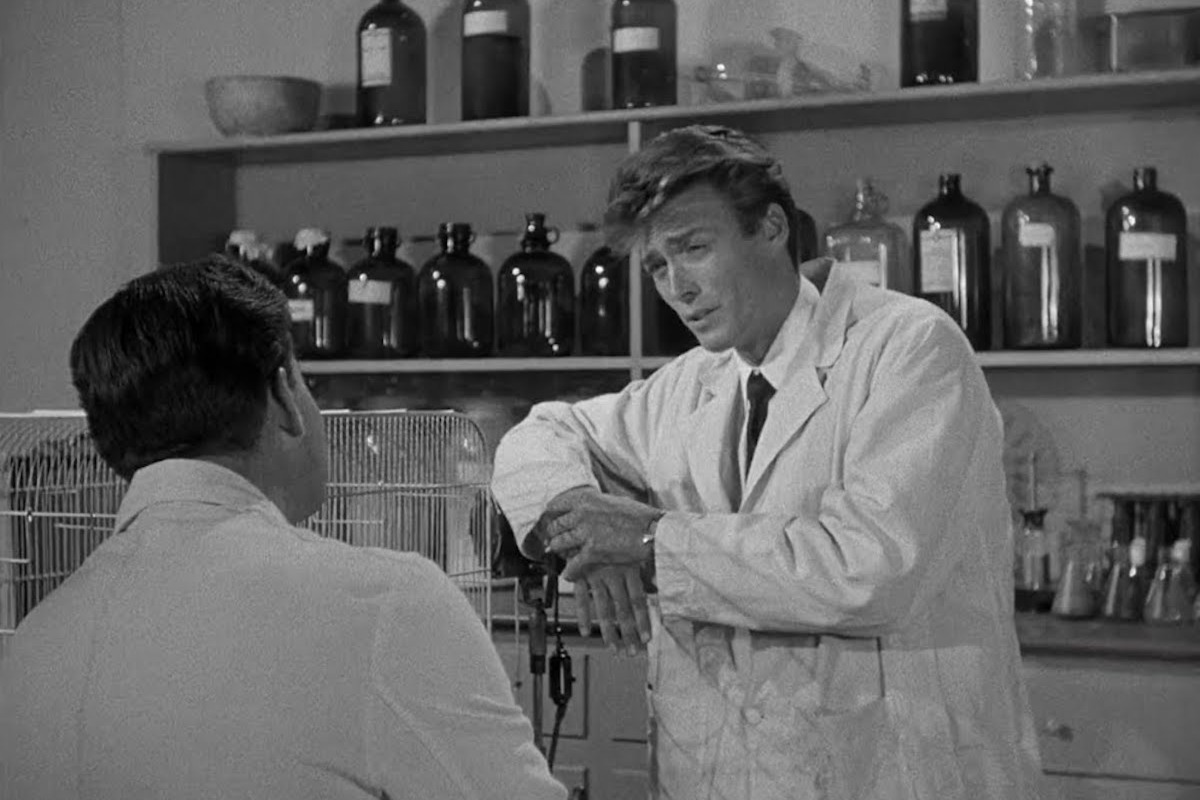
His first film appearance arrived with Revenge of the Creature, directed by Jack Arnold. Eastwood played a lab scientist, barely a sliver of screen time, yet the atmosphere felt charged. Arnold initially pushed back on shooting the scene at all, creating a chill that Eastwood later remembered in stark terms. Producer William Alland intervened, and the scene went forward as planned, a small but pivotal win.
A rough encounter with Jack Arnold
On set, the director’s resistance became personal in tone, even though Eastwood followed every instruction. The clash was less about the actor and more about the director’s dislike for the scene itself, according to Eastwood’s recollections (shared in later interviews). Alland’s backing underscored something vital: even at 25, Eastwood had quiet advocates who saw value where others did not.
The aftermath of an uneasy start
Eastwood kept moving, returning under Arnold’s credit for Tarantula in 1956. Soon after, Universal released him from his contract, the same fate that met another up-and-comer, Burt Reynolds. This is the case where early setbacks don’t dictate the ending. The two would meet again in 1984’s City Heat, proof that a rocky entrance can still lead to a lasting career, and sometimes, to long-game symmetry.