
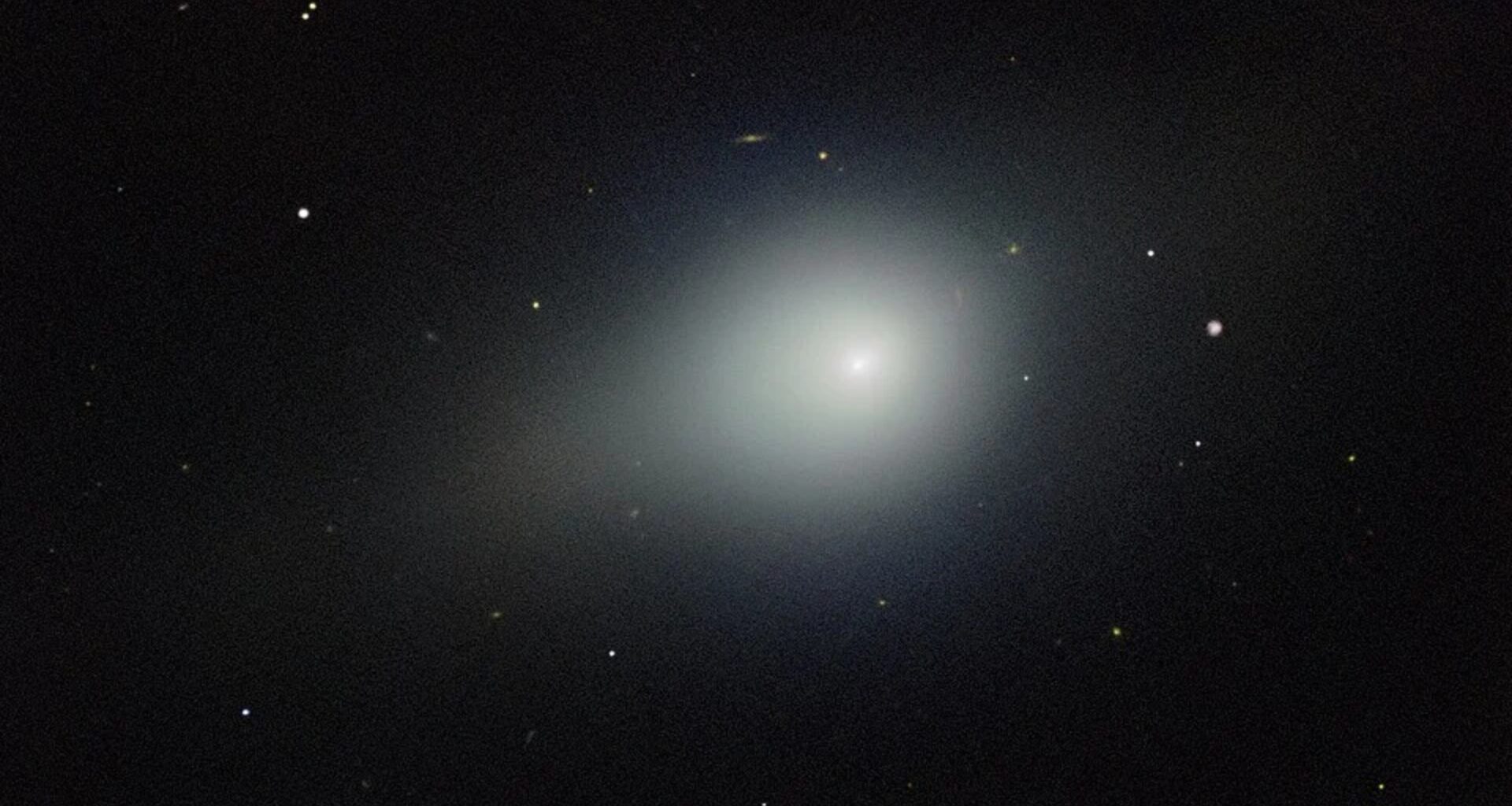
Astronomers have found that an interstellar comet carries water unlike anything measured in comets from our own solar system.
That chemical signature points to a birthplace far colder and less altered than the environment that formed the solar system.

The findings are reshaping how planetary systems across the galaxy are understood.
A colder birthplace
Near the Sun, interstellar comet 3I/ATLAS released water carrying a chemical fingerprint that stands apart.
Luis E. Salazar Manzano, a doctoral student at the University of Michigan, tied the comet’s composition directly to conditions unlike those that shaped Earth’s neighborhood.
Its water showed a level of heavy hydrogen enrichment far beyond any known comparison, preserving a record of its earliest formation environment.
Those limits indicate the comet formed under colder and less irradiated conditions, pointing toward processes that differ sharply from those in the solar system.
Water molecules that are heavier
Ordinary water contains hydrogen and oxygen, but deuterium – hydrogen with one extra neutron – makes some water molecules heavier.
Inside 3I/ATLAS, that heavier form appears in striking amounts, leaving a chemical mark that survived the comet’s long trip.
The ratio was 30 times higher than any comet measured in our solar system and 40 times higher than Earth’s oceans.
“The amount of deuterium with respect to ordinary hydrogen in water is higher than anything we’ve seen before in other planetary systems and planetary comets,” Salazar Manzano said.
Chemical traces in comet water
Comets preserve old ice because their frozen interiors can avoid much of the heat that changes planets.
When sunlight warms a comet, sublimation – ice turning directly into gas – releases molecules from beneath its dusty surface.
The escaping gas forms a cometary coma, the loose cloud around the nucleus, where telescopes can read chemical traces.
By measuring those traces, scientists compare the comet’s water with water from Earth, meteorites, and solar system comets.
A rare visitor
With so few confirmed interstellar visitors, every measurement of 3I/ATLAS carried unusual scientific weight.
Objects like this likely leave their home systems after planets or passing stars throw them onto open paths.
Because 3I/ATLAS came from elsewhere, its ice gives scientists direct material from a planetary system they cannot visit.
For a field built mostly on distant light, one passing comet offered rare material from another planetary system’s formation history.
Telescopes captured the comet early
Fast discovery made the study possible because the comet was still bright enough for follow-up observations near the Sun.
The Atacama Large Millimeter/submillimeter Array (ALMA), a network of radio telescopes in Chile, detected heavy water and methanol, a simple alcohol molecule, in the comet’s gas.
Multiple methanol lines helped scientists estimate how much ordinary water escaped, even though ordinary water stayed below direct detection.
Missing that ordinary-water signal made the result more cautious, but the heavy-water enrichment remained the central finding.
A comet with cold origins
A single extra neutron may sound minor, yet it records the temperature and radiation around forming ice.
Scientists use the ratio of deuterium to ordinary hydrogen because cold chemistry favors heavier hydrogen in water molecules.
Warmer regions can erase part of that record as molecules break apart, recombine, or mix with more processed material.
Under that chemical logic, 3I/ATLAS most likely formed in colder, less irradiated conditions than solar system comets.
A mysterious birthplace
Different parts of the galaxy contain slightly different amounts of deuterium in their gas, but not enough to explain this comet.
Galactic history destroys some deuterium inside stars, then returns processed material through winds from stars and exploding stars.
High-energy particles called cosmic rays can also change exposed ice, but they probably cannot create this much heavy water in shallow surface layers.
Those limits point back to the comet’s birth environment, not just its long time drifting between stars.
Clues about planetary systems
One possibility places the comet’s water in a prestellar cloud, a cold gas-and-dust region before a star forms.
Disk processing offers another route, because a protoplanetary disk, the young disk around a star, can mix warm and cold ice.
Early ejection from that disk could have preserved more unprocessed ice before heat and mixing lowered the heavy-water signal.
Either path leaves the same broad message: planetary systems can build their icy bodies under sharply different conditions.
Future research directions
Future interstellar comets could turn this one result into a wider survey of how water forms around other stars.
New sky-monitoring observatories should find more faint visitors, especially if they detect them early enough for chemical study.
Clear night skies remain part of that effort because light pollution makes tiny moving objects harder to catch.
Keeping those skies dark protects a basic scientific tool: the chance to notice small bodies before they pass beyond reach.
A passing comet has shown that water chemistry can vary sharply from one planetary birthplace to another, even within the same galaxy.
With more discoveries, scientists can test whether 3I/ATLAS is rare or the first clear example of a broader pattern.
The study is published in the journal Nature Astronomy.
Image Credit: International Gemini Observatory/NOIRLab/NSF/AURA/B. Bolin
—–
Like what you read? Subscribe to our newsletter for engaging articles, exclusive content, and the latest updates.
Check us out on EarthSnap, a free app brought to you by Eric Ralls and Earth.com.
—–