Get set for election year battles over asset sales as warnings grow about our high costs and rising debt.
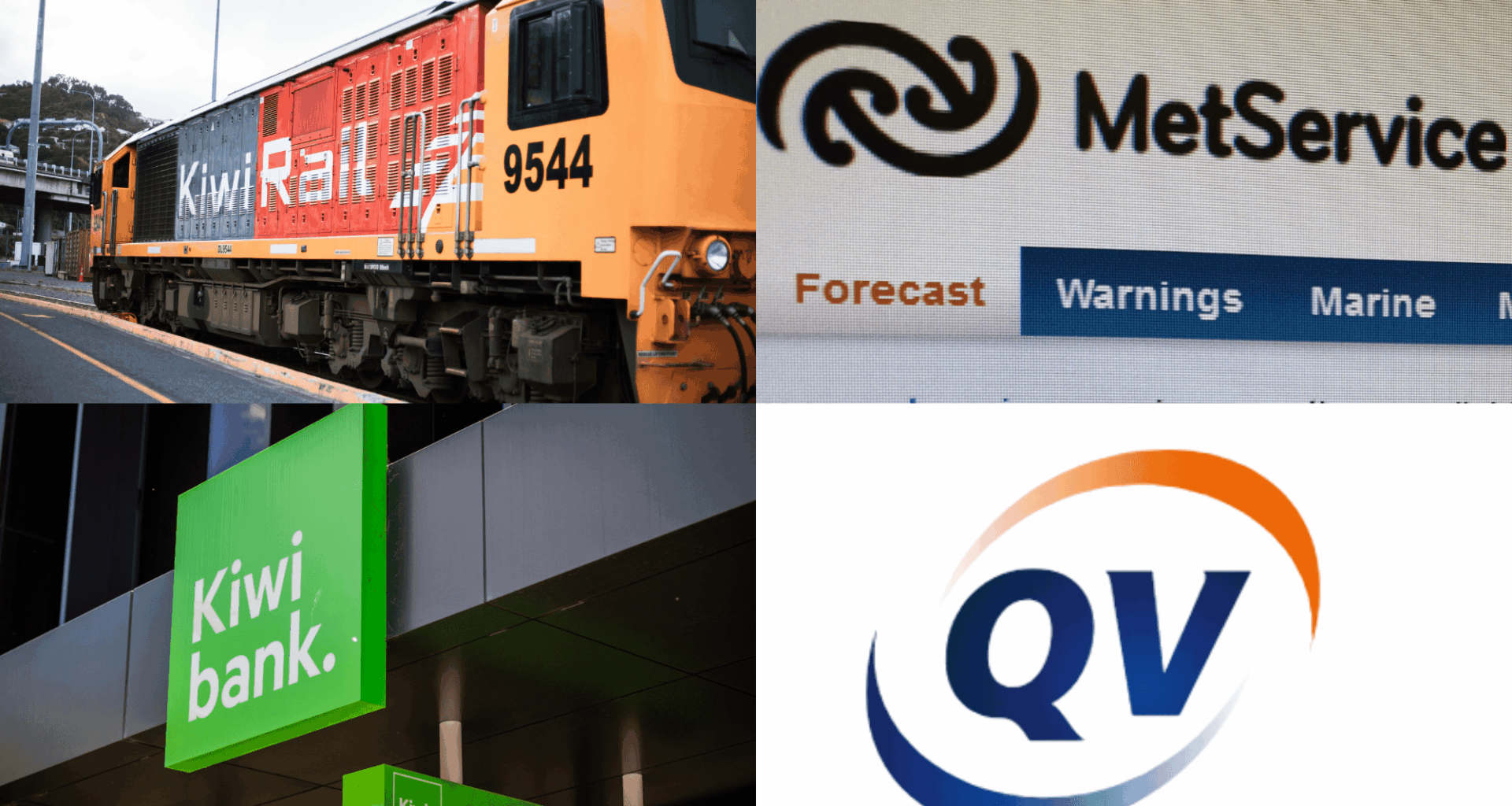
High on the list of the asset sales proponents are more than 100 farms owned by Pāmu/ Landcorp, a state-owned enterprise; parts of MetService, and Quotable Value.
More controversially, partial sales of KiwiRail and Kiwibank are also touted as solutions to our high debt and new infrastructure demands.
“Does the government put hundreds of millions of dollars into a bank or does it put that money elsewhere?” asks Jenēe Tibshraeny, Wellington business editor of the New Zealand Herald.
“And could Kiwibank still fulfil its purpose of being a disruptor bank … New Zealand-owned if the government owns, let’s say 50 percent. I think that’s a fair question.”
But the disastrous sale of KiwiRail’s predecessor, New Zealand Rail, is held up by critics as a reason not to sell the “family jewels”.
It was sold in 1993 for $328 million to a consortium led by US firm Wisconsin Central.
“They ran it down, they asset stripped it and then they abandoned it, and we had to buy it back and we’re still recovering from that experience,” says former Labour minister Phil Goff.
“I’m not for ownership for the sake of ownership but I think that you should own the things that are your strategic assets that occupy monopoly positions in the economy, like your power companies,” Goff tells the politics podcast Cross Party Lines.
Asset sales have divided voters for decades but Generate Kiwisaver investment specialist Greg Smith says it needs to be taken seriously given persistently bad news about the state of the economy.
Last week, Moody’s was the second international ratings agency to downgrade the outlook for New Zealand from stable to negative.
It pointed to the country’s debt burden, a slower return to surplus and price shocks.
Ratings downgrades mean the country risks having to pay more to borrow money at a time when our roads and water pipes are crying out to be fixed, and new schools and hospitals need to be built.
“There’s growing urgency around it and really it’s about being smarter with that $460 billion, $470 billion balance sheet,” says Smith.
“Yeah you can raise taxes, you can borrow more or you can make better use of what you already own – but we’ve got net core Crown debt that’s set to hit $230 billion by 2028. You work that out, that’s over $40,000 for every Kiwi, about 46 percent of GDP.”
We’ll get an update on the size of the government debt in the May 28 Budget announcement but at the last count our annual interest bill was $8.9b.
Money spent on paying that bill means less spent on health, education and infrastructure, Smith says.
He tells The Detail what should be top of the list, starting with the “low hanging fruit” such as surplus property, to give people a taste for it. And he doesn’t rule out the government selling more of its shares of the power companies Genesis, Meridian, and Mercury.
Tibshraeny doubts asset sales will be announced in the Budget on May 28.
“But then as we look to the election I think parties will form firmer views on this,” she says.
Treasury is asking every government department to look at its assets.
Social assets such as roads and schools make up the biggest cohort in state-owned assets, the second largest grouping is financial assets such as the bonds owned by the Reserve Bank, the shares owned by ACC, and the Super Fund.
The smallest group is called commercial assets by Treasury – the government’s stake in the energy companies, Air New Zealand, NZ Post, AssureQuality, and Kordia.
Tibshraeny uses the analogy of car ownership to explain asset sales.
“Is that car now costing me too much to run, is it breaking down all the time, is this asset now becoming a liability, I’m having to put too much into it? Is it time to sell the car and buy a different car, or buy an EV, or a bicycle? Or have my circumstances changed and I’ve moved into an apartment in the city where having a car no longer makes sense?” she says.
“That’s how we think about our own assets, and I think it makes sense for the government to think about it like that as well. I think a lot of this does already happen, it’s just that a lot of the political focus is on those commercial entities.”
She explains how asset recycling has emerged as a more popular phrase that’s touted as the fix for our infrastructure deficit.
“Those on the left or those opposed to asset sales might be concerned that the right-wing government would sell those assets and not buy anything new with that money. But what National says is ‘yes we need to look at the assets we own, we might need to sell some’.
“They haven’t committed to anything but using that money to reinvest in investments, that might make more sense for New Zealand.”
Tibshraeny says the debt cohort of assets gets the least attention but has been very costly to the country.
During the Covid crisis the Reserve Bank decided to keep interest rates low to stimulate the economy and instead printed money and bought New Zealand government bonds, valued together at $55b. The debt helped pay for things like the wage subsidy.
After the crisis, the Reserve Bank was left with bonds on its balance sheet which later fell in value.
“Due to the mechanics of that programme the taxpayer will end up footing a $10b bill for the creation of money, the buying of bonds and sale of bonds.
“That whole complicated process will come at a net cost of about $10b. That doesn’t get a whole lot of attention in the media because it’s boring and complicated,” she says.
“We focus a lot on these commercial assets like the energy companies, Kiwibank, NZ Post but the way the state, the Reserve Bank, deals with some of the programmes like the bond buying programme can have a much larger impact on the government books. And if we’re really worried about the state of the books then that’s where the focus should be.”
Check out how to listen to and follow The Detail here.
You can also stay up-to-date by liking us on Facebook or following us on Twitter.