
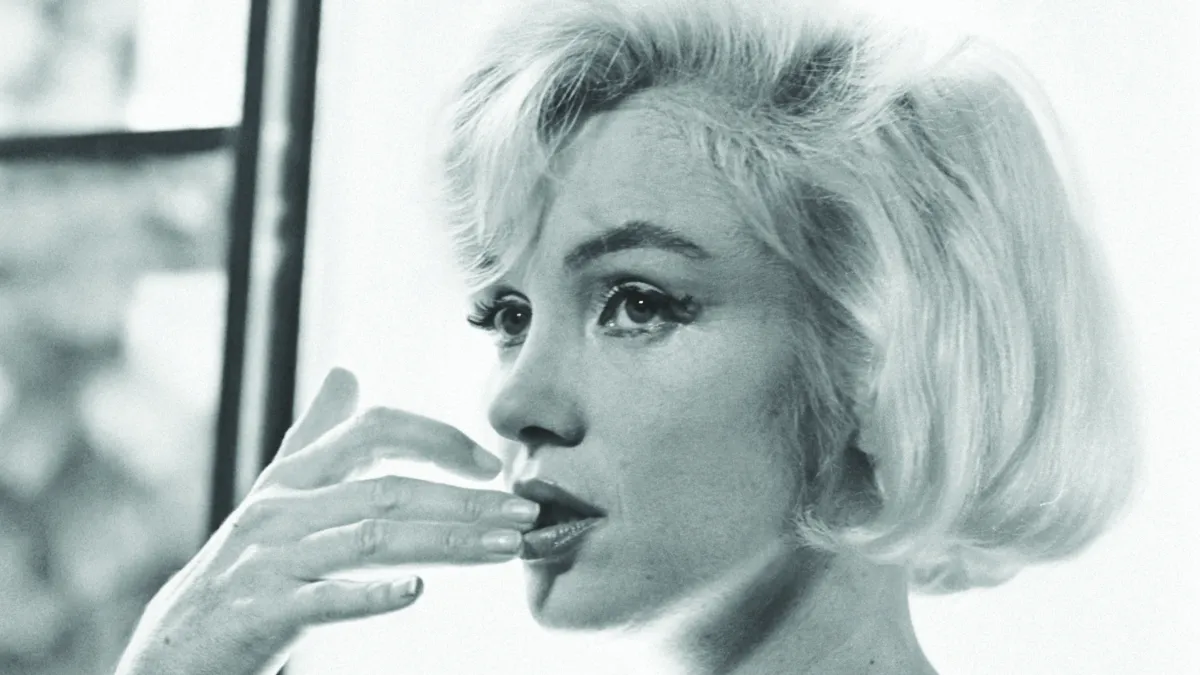
In the first home she bought for herself, aged 35, a cute, hacienda-style cottage in Brentwood, Los Angeles, Marilyn Monroe is fixing herself a drink. She’s got tequila but she doesn’t know what to put with it. She’s tried it with champagne before and that was too much. There is the clink of glasses, ice, the hoot of cars on nearby South Carmelina Avenue. She asks her publicist, Pat Newcomb, to answer the phone. “And if it’s any Italian, say I’m out, for ever!” A great gale of laughter. It’s a designer: does she want buttons on her new dress? “No buttons,” she calls out. “Tell her I’m just going to wear it clingy. But tell her thanks.”
This is Monroe as we’ve never heard her before, in a candid interview recorded over two days, June 28 and 29, 1962, for Life magazine. The article came out on August 3, the day before she died of a barbiturate overdose, and several minutes of the recording featured in a 1992 HBO documentary — but most of it has never been heard until now. Later this month it will be published in book form to mark what would have been her 100th birthday, alongside audio excerpts and hundreds of unseen images from Life photographer Allan Grant’s shoot.
 allan grant
And what a conversation it is, which I was lucky enough to hear in its entirety. Life’s associate editor, Richard Meryman, was mainly interested in fame — what it feels like, how it shapes you — but Monroe wanted to go much deeper, proving to the 20th Century Fox executives who had just fired her from Something’s Got to Give that she was still a force to be reckoned with: smart, funny, self-aware, adored by her public. She throws shade on her Some Like It Hot co-star Tony Curtis and reflects on sex scenes, her nude calendar, Hollywood “catfights”, ageing and singing for John F Kennedy. She was in negotiations with Fox lawyers (who reinstated her in July) and the interview was to be part of her comeback. “Please don’t make me look like a joke,” Monroe tells Meryman. “I don’t mind making jokes… It’s just the way it could be done.” It was the way it often had been done.
Listen to Monroe’s last interview. Click to play:
The interview took place on terms negotiated by Monroe and Newcomb: it would be published in her own words and she would see the edited transcript and be able to make changes. There were very few, Meryman wrote in Life two weeks after her death. “On the steps of the house, she showed me changes she had pencilled in, all of them small. She asked me to take out a remark about quietly giving money to needy individuals.” Monroe kept in every “Gee!” and “Well”, the kinda, sorta looseness of real speech, knowing it would sound like her. She really wanted to get somewhere with this conversation, she told Meryman — “Come on, let’s get down to it” — and so they talked about the rot in the studios, feeling betrayed and the roots of her chronic lateness.
 Allan Grant
Meryman was two months younger than Monroe, who had turned 36 on June 1, but sounds stiffer and stuffier on the recording. Monroe performs, animated and emphatic, doing other people’s voices (the rubbish collectors on 57th Street in New York, a friendly Clark Gable), laughing often, patient with Meryman’s dogged return to the same question: what’s fame really like? “It’s like caviar,” Monroe says. “It’s good to have caviar, but we have it every damn day. You know? It’s too much caviar.”
She pauses. “Speaking of caviar, how about a drink?” Meryman declines: “I’m afraid I’m going to keep my wits about me.” “Ah, well,” Monroe says, sighing, “mine are kind of dim.”
A woman at a crossroads
In June 1962, she was at a major crossroads in her life. She was no longer the Fifties ingenue of Gentlemen Prefer Blondes; nor could she command the fees or scripts of a contemporary like Elizabeth Taylor. She was three-times divorced, from Arthur Miller (in 1961), Joe DiMaggio (in 1954) and Jim Dougherty, whom she married when she was just 16 — though she remained close to DiMaggio. Her health was poor: she had been fired after six weeks of on-off sinusitis, but before that had undergone treatment for depression, endometriosis and gallstones, which had left her addicted to sleeping pills and barbiturates.
 Allan Grant
Meryman later recalled in Life that Monroe’s doctor had visited during their second interview. She had asked to postpone that afternoon, saying she was tired, but after his visit was good to go. “Marilyn bounded out to the kitchen, returned with a little ampule and, holding it up to me, said, ‘No kidding, they’re making me take liver shots. Here, I’ll prove it to you.’ By then she was willing to talk on, and it was nearly midnight when Marilyn jumped up and announced she was going to throw a steak on the grill. She came back to say there was no steak and no food at all.” According to Monroe biographer Donald Spoto, that portion of Meryman’s tape was “unusable” because “her speech was rapid and disjointed” — but his daughter Meredith Landis (Meryman died in 2015) confirms that, aside from a couple of getting-to-know-you meetings, the four-hour tape is the complete interview.
After Monroe’s death, Meryman retitled their conversation “A Last Long Talk with a Lonely Girl”, and it is true that she sometimes sounds tired and hurt. Late at night, drinking champagne, her speech becomes slower and more looping, running over past injustices. But whose doesn’t? The 64-year-old recording is imperfect, though digitally improved, with stops and starts and knocks to the machine.
‘When I’m older, I’ll play all kinds of parts’
Perhaps the loneliest parts came when the tape was off, because the stronger impression is of someone full of life and plans, besotted with her new house and buying Mexican bits for it, saving her first swim in the pool “for a friendly occasion”, liberated by being single. For the next phase of her career, she was inspired by actors like Chaplin and Garbo as examples of how to be true to yourself. “I think Sophia Loren proved that beautifully in the film she won the Academy award for [Vittorio De Sica’s Two Women],” she tells Meryman. “They tried to make her the same. And then when she went back to her own country… I don’t mean that she shouldn’t come out of her own country and make films here, but they should accept her as she is. She was marvellous.” Monroe looked forward to not being the love interest: “When I’m older, I’ll play all kinds of parts. How come they haven’t put more care into casting other parts? Not just, you know, ‘the spring lovers’.”
 allan grant
It had annoyed Fox when she flew to Madison Square Garden on May 19 to sing Happy Birthday to the president after weeks of sick leave. But she seemed to know it would be one of the performances of her life. She lights up talking about it — the fear (“I told Pat backstage, ‘I don’t know if I can do this’ ”), the way she pitched her voice at the cheap seats (Meryman: “You identify with the peanut gallery?” Monroe: “Yes, with the people”). In her memoir My Story (written in 1954 but only published 20 years later), Monroe said that as a foster child she had longed to stand up in church and take off all her clothes — to be admired rather than loved — and here was the fulfilment of that: singing in a naked dress to the nation. “A hush like that from the people warms me,” she tells Meryman.
Afterwards she introduced her date, Arthur Miller’s father, Isidore, to John F Kennedy. If there was anything between her and the president (there is no evidence of an affair, beyond gossip), there is no hint of it on the tape, where she worries about having failed to say, “How do you do?” and instead focusing on her beloved former father-in-law. Her nerves had got her through it, and she marvels to Meryman that other stars couldn’t appreciate that. “Maria Callas was in my dressing room, to have our picture taken. I said, ‘Tell her that I’d be honoured afterwards, but not before.’ She, of all people, should be aware of this.”
‘She was cheerful and utterly disorganised’
It was a running joke on the night that Monroe was never on time — she was introduced as “the late Marilyn Monroe” — and Meryman asks her why. How does it happen? “Sometimes I’m catching up with business matters, legal matters. Sometimes it’s sitting for a dress,” she says airily. “I don’t know where they get these screwy stories where I’m standing in front of a mirror, admiring myself.” Being late is “the opposite of arrogance”, she explains, because she only wants to be prepared — before contradicting herself on the mirror front. “They’ve slandered me in the press, saying that I’m depressed and in some kind of a slump and hidden away. So then I take a little extra time with my hair, with a little extra flip, a little extra eyeshadow. A little more glitter. I don’t know. It’s just my way of saying, ‘Ha!’ ”
 allan grant
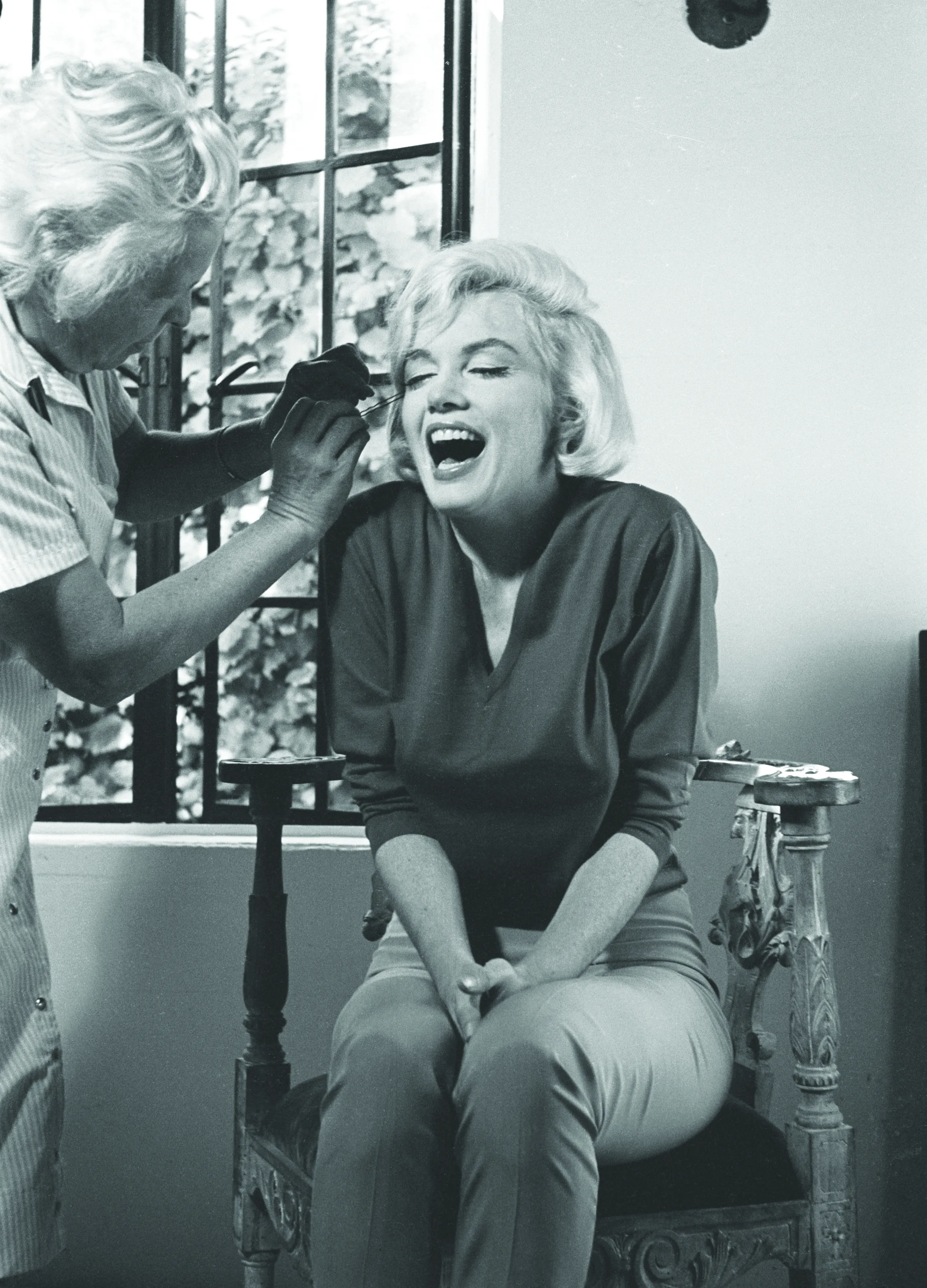
Meryman witnessed the Monroe “Ha!” himself a couple of days later, when he stopped by for a scheduled 10am breakfast and failed to catch her before she left, many hours later, for Bert Stern’s famous Vogue shoot. “While [her hairdresser] worked on her and she sat under the dryer, I could hear uproarious laughter,” he wrote in Life. “Then, in her curlers, she made little barefooted errands about the house and in and out of her room, phone calls, visits to me to ask if I was comfortable, all busy bustling, getting nothing done. There was none of the fearful moping and preening in front of mirrors I had heard so much about. She was entirely cheerful and utterly disorganised.”
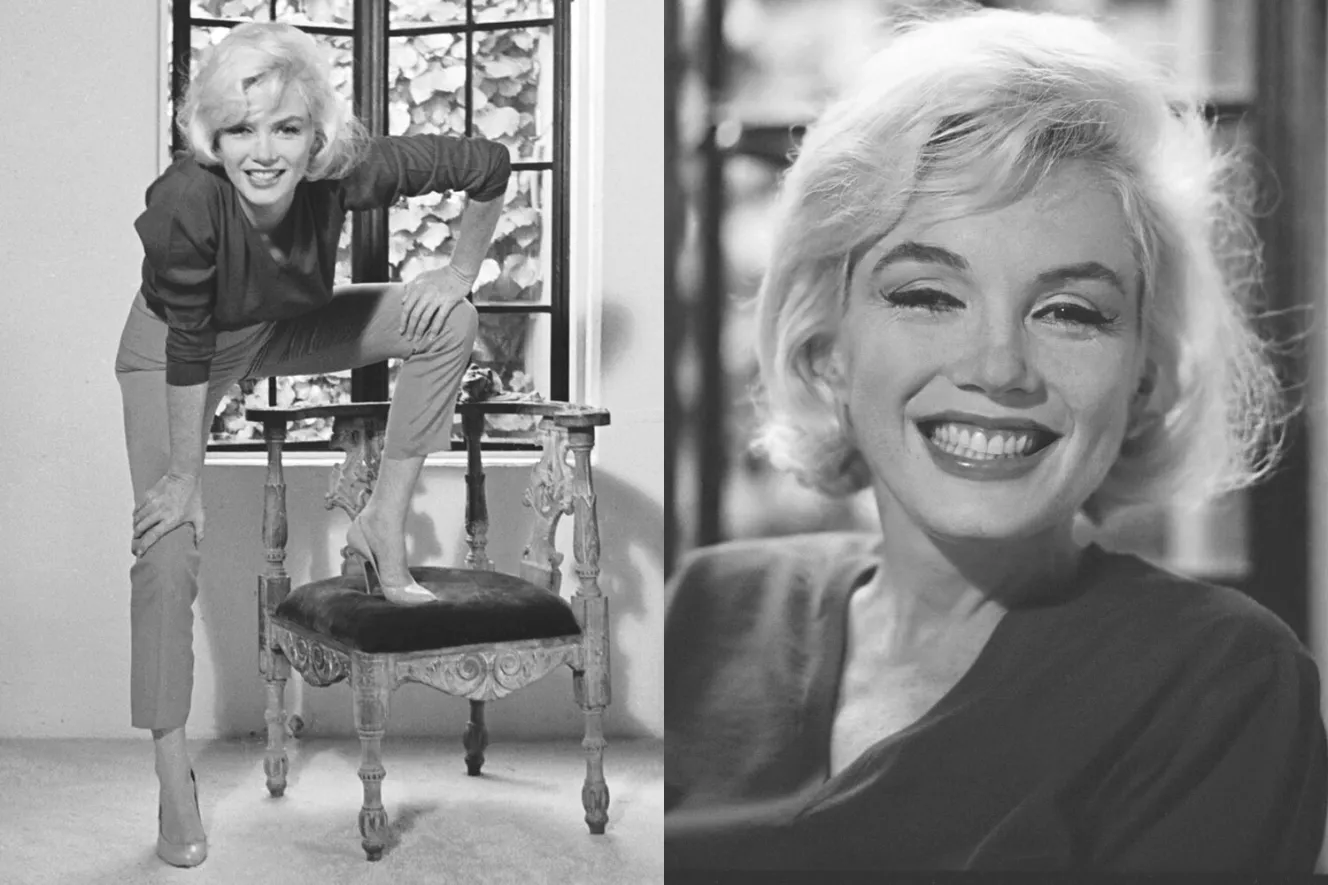
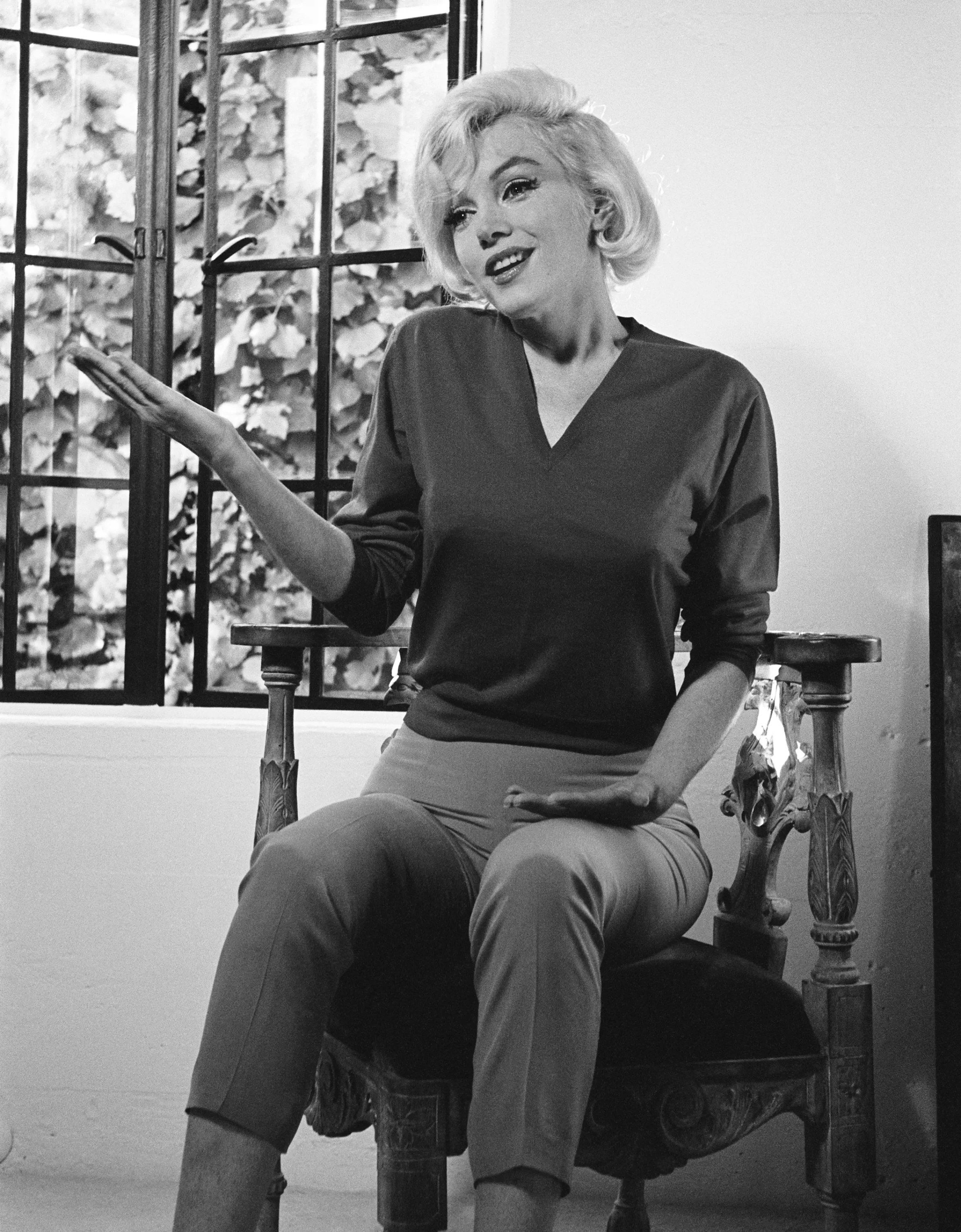
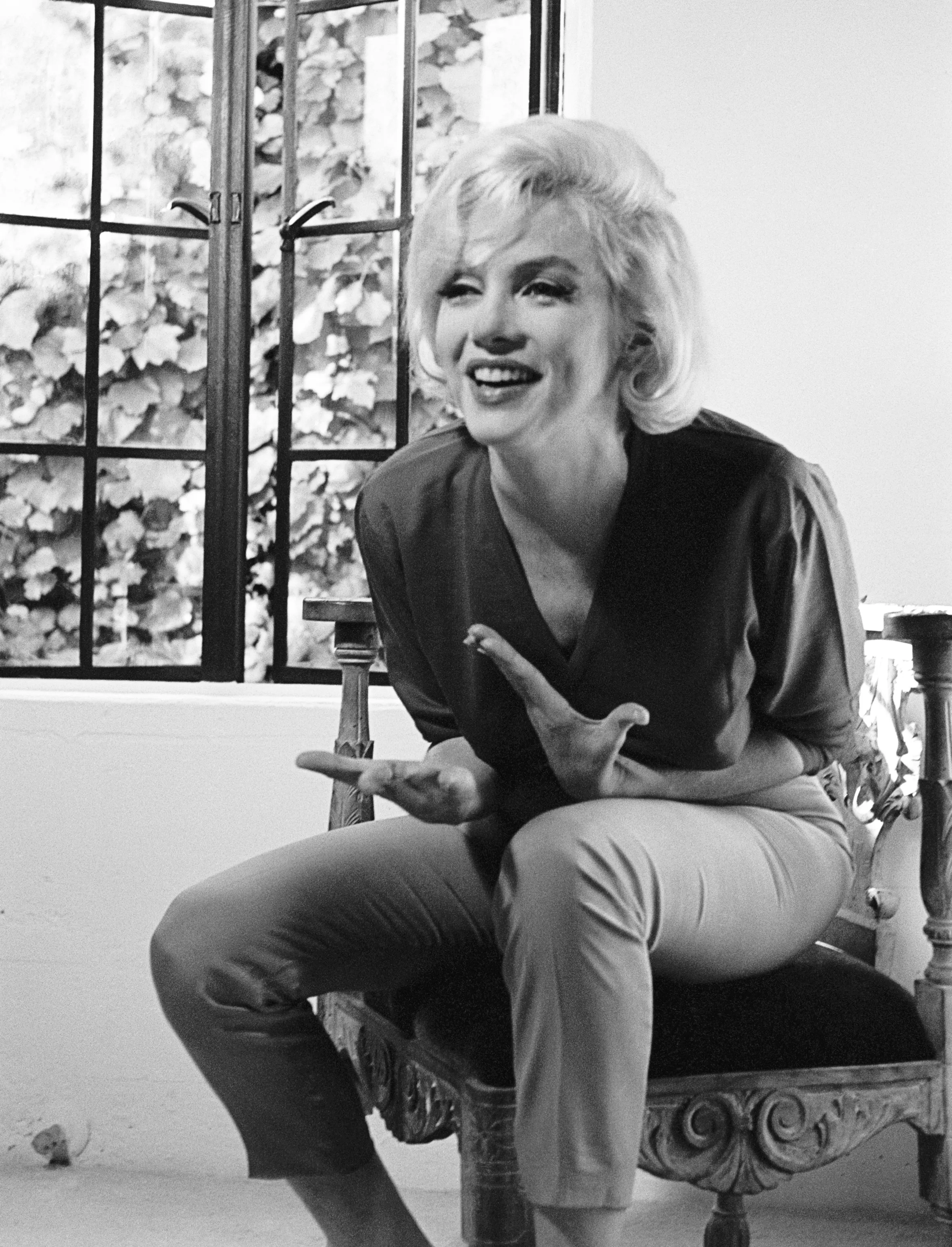
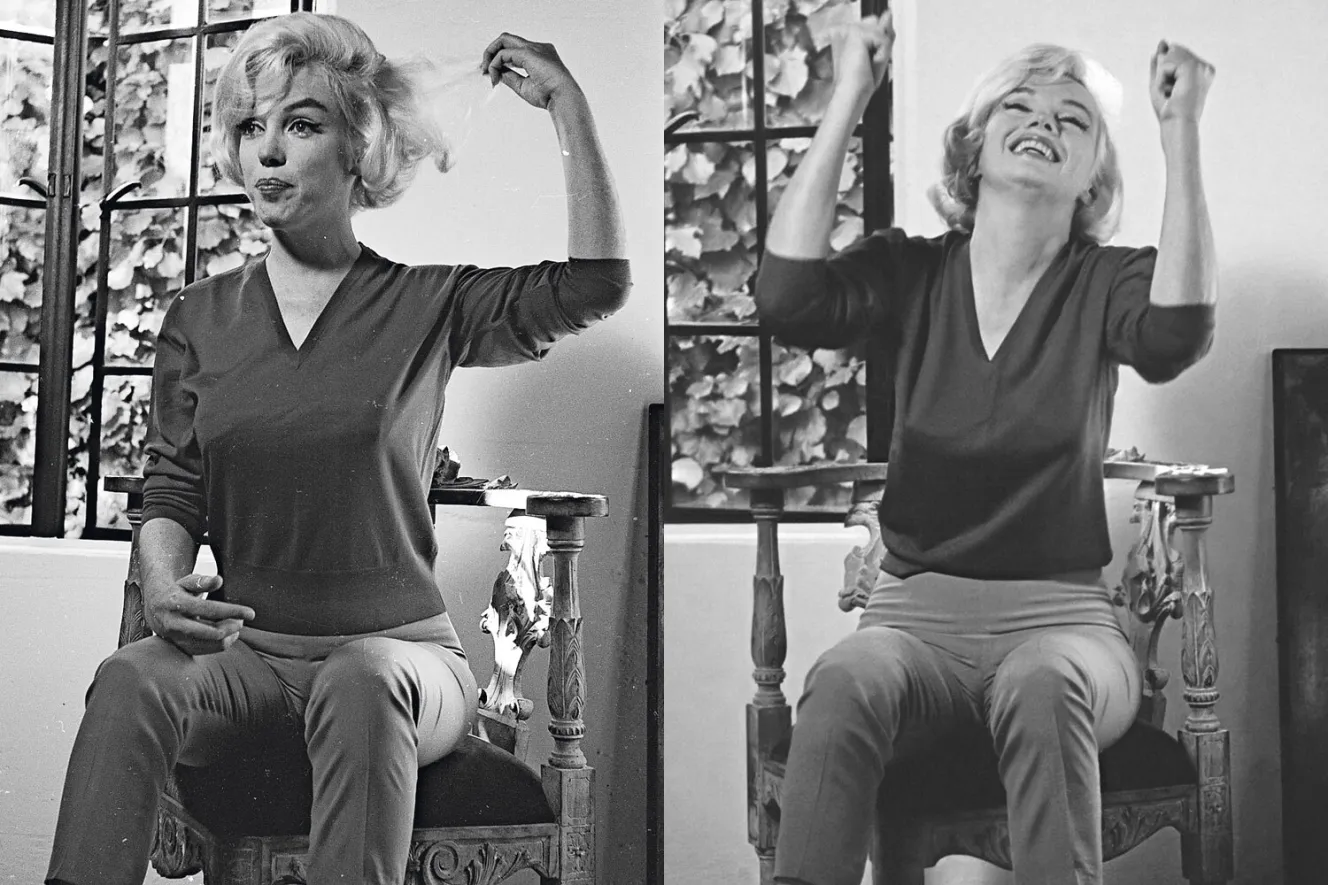
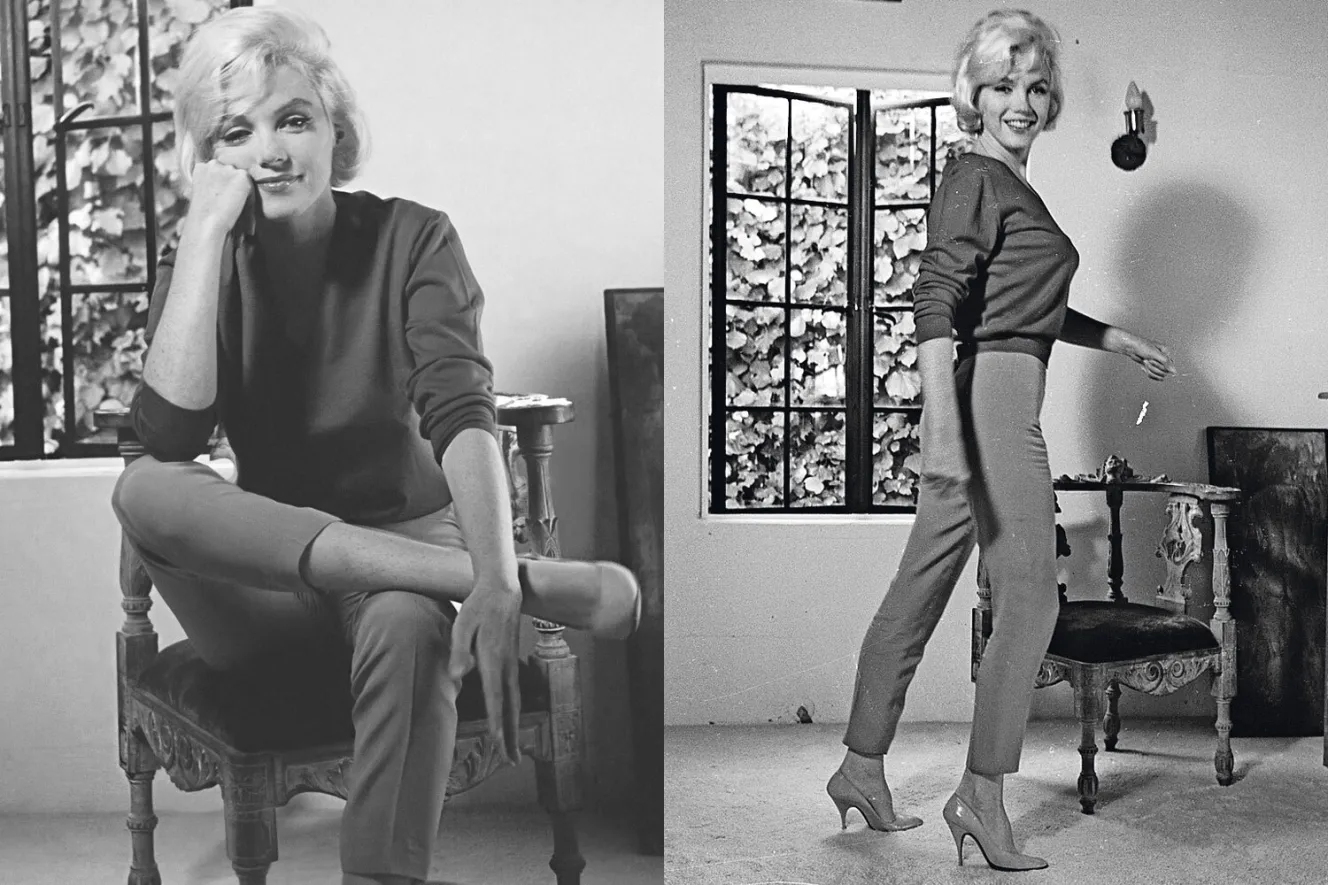
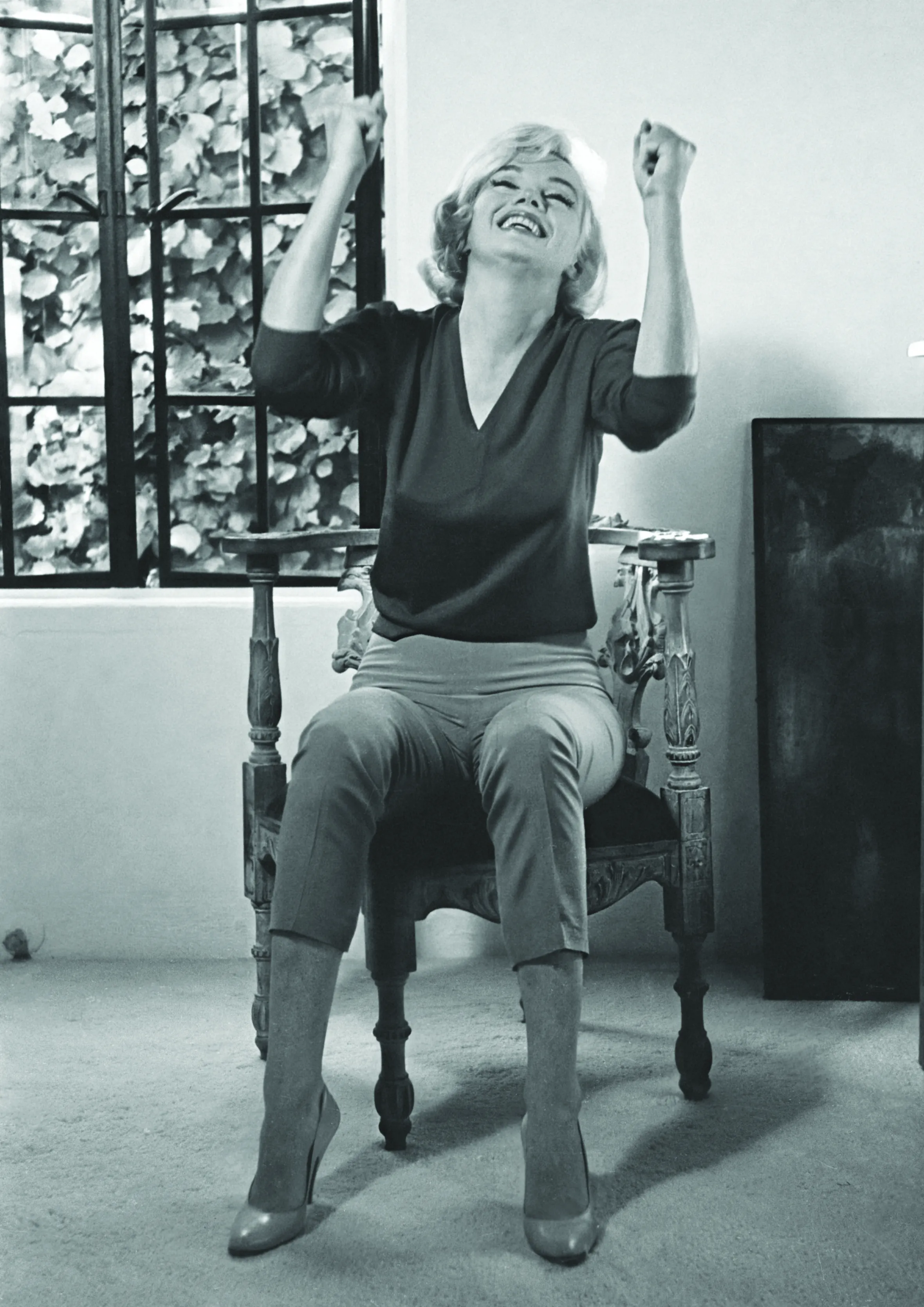
By the time Grant photographed Monroe on July 7 she had already cancelled three times and he had booked a fishing trip with friends as an insurance. But on the day she was only an hour late and in a collaborative mood, asking what she should wear. Whatever she felt comfortable in, he said, and she chose blue Capri trousers and a V-neck. He asked her to sit in a chair by the window “but instead she grabbed the arms and started sensuously moving her body, slowly gyrating around”. It wasn’t right for Life, and the intimate portraits he got an hour later were the ones they published — Monroe laughing, thinking, frowning.
Grant bought the rights from Life for $1 in 1967 and for decades the rolls of film were a well-kept secret. It was only last year that his widow, former People magazine picture editor Karin Grant, decided it was “time to let Marilyn be free”.
 Allan Grant
A reluctant sex symbol
Monroe didn’t entirely mind being a sex symbol, she tells Meryman, though she was “insulted” to be on a list of them. “It’s better than, ‘She leaves me cold.’ ” Doesn’t sexuality have something to do with your fame, he asks. She hedges: “If you check over my movies, I’ve never yet had an erotic scene. I’ve always wanted to see if I could do it.” There’s a big knowing laugh, but she’s serious. “Ask the people at Life — when, which scene, tell me how was it sexual?” In the Life interview Monroe refers to “some actor” who said kissing her was like kissing Hitler, and that she had mentally replaced him with someone else. On the tape she goes further, her anger with Tony Curtis still audible four years after shooting Some Like It Hot: “From the moment that particular actor walked onto the set he was never there, because I was so disappointed. I said ‘Oh’ to myself. But I don’t remember his name.”
In interviews and her memoir, Monroe often spoke of other women’s envy and meanness towards her. In Life she tells the story of knocking on a door while househunting and the man who opens it being “very cheerful”, followed by his wife asking her to get off the premises. (What she leaves out, but says on the tape, is that the house was probably not for sale.)
But Meryman’s questions mostly reveal a more sisterly side of Monroe, who speaks warmly of her co-star Jane Russell and refused to pose outside Bette Davis’s dressing room on the set of All About Eve in 1950. “As if they were kicking her out and I was moving in. I said, ‘I wouldn’t do this to anybody.’ ” She doesn’t get into arguments, Meryman observes. “Catfights? That’s a waste of time and energy.”
A young actress recently came to her for advice, Monroe says, after nude photographs of her started circulating. “I can’t describe the poses because it’s impossible, and I don’t want to offend your readers. I said to her, ‘You know, I don’t feel prim on this subject, but why did you do it?’ She said, ‘The same reason you did: to become famous.’ ”
That was a misunderstanding, Monroe says. She did her “red velvet” nude shoot for $50 to cover her rent, and was successful by the time the pictures resurfaced years later. Did she regret it, Meryman asks. “Well, I was a little embarrassed,” she says, not sounding embarrassed at all. “My God, there I am with my bare tuchis out!”
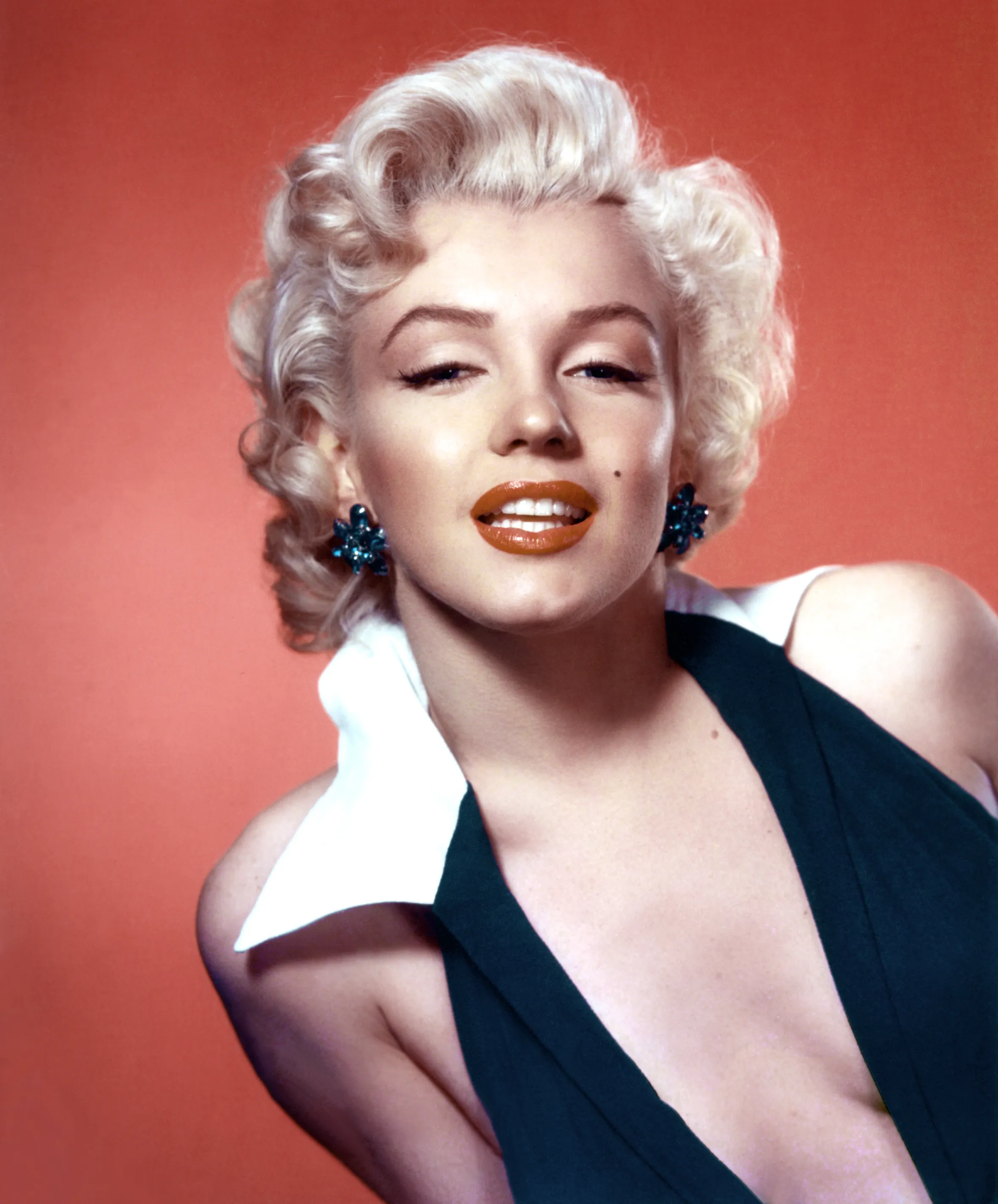 Monroe in 1953Getty Images
Awkwardly, Meryman asks how she stays in shape. “You’ve got to have a bad gall bladder and go on a low cholesterol diet,” Monroe says, laughing. “I didn’t do one exercise. I rented a bicycle and I’ve been on it once. I get it from my grandmother — I can’t take much credit.”
Monroe was fighting for her job but unafraid to give Fox a poke. “If I’m sounding picked on or something, well, I am,” she tells Meryman. Her complaints were many: that the studio planted false stories about her, that the unions protected only the bosses, that stars were blamed for everything. When she is indignant, she is funny — “I was an aspiring actress. I should say perspiring” — wondering aloud if the swimming actress Esther Williams got her fair share. “Do we know how much talent Esther Williams really had? How long could she keep swimming, really? I think they sold swimming pools, but I don’t know what she got out of it. And I was never an Esther Williams fan. You know, I dog-paddle; I don’t swim.”
‘I wouldn’t want my child to go through what I have’
There was a rumour that someone at Fox wrote her jokes for her, Monroe tells Meryman, but the tapes prove her both a natural wit and an instinctive socialist. After her marriage to Miller, she was investigated by the FBI for suspected communism and found to be “concisely leftist”. That doesn’t seem to have interested Meryman much: a statement she reads him, about the importance of kinship across race and class, and twice says should be the article’s conclusion, isn’t included.
One upside of fame was meeting Miller and DiMaggio, Monroe says, “two of the nicest men”, and one upside of divorce was worrying less about their children. She tells Meryman about Bobby Miller hiding a gossip magazine from her, and how Joe DiMaggio Jr was teased about her at school. “So I just said, ‘Bobby, anything you want to know, come and ask me. But don’t get it second-hand.’ And he always felt he could — they all did. Now I feel a little freer.” Children brought out her fierceness: “If I had had a child, I wouldn’t want a child of mine to go through what I’ve been through.”
 Allan Grant
Though it is Meryman who asks the questions, it is Monroe who is in charge — the star who could pull the plug at any moment. At one point, he asks her about “the business of cranking yourself up to appear before the camera”, and she loses her temper, her voice rising. “I don’t crank anything! You know, I’m not a Model T. I think it’s kind of disrespectful to refer to it that way.” It was slang, he says. “OK, well, don’t slang in the article.” A minute later she softens: “Say, would you like a drink?”
‘Fame is fickle. I’ll find a way to exist’
It’s one of many moments that didn’t make it into print, and raises the question of what Monroe might make of all this surfacing now. Wouldn’t she have thought it kind of disrespectful, I ask Chris Flannery and Jason Greene, the business partners who negotiated the rights to Grant’s pictures and Meryman’s text a year ago.
“I think the reverse,” Flannery says. “I think her identity got lost because of the focus on some of the negatives and her vulnerabilities. This may be the best retort, which is, here’s what she had to say, no guesswork.” After all the myths and conspiracy theories, they argue, this is her last great reveal — Monroe by Monroe — and she’s sharper, subtler and more compelling than anyone else’s version.
When Meryman heard that she had died, a “probable suicide”, he was “dumbfounded”, he said in 1992. “I never saw any sign that this was a woman giving her last interview, a woman on the verge of suicide… I’ve listened to those tapes a dozen times to see if I somehow missed some clues. I still don’t know the answer.” Which leaves the last word to Monroe. “Fame is fickle,” she tells him. “It’s nothing I’m counting on. I’ll find a way to exist; I have since I was five years old. And I would say, gee, it was a painful time, when I was famous. And I’ll remember some pleasurable times. You know?”
Marilyn: the Lost Photographs, the Last Interview by Marilyn Monroe, Allan Grant and Richard Meryman (Weldon Owen, £40) is published on May 28. Order from timesbookshop.co.uk or call 020 3176 2935. Marilyn Monroe: A Portrait, featuring Grant’s photographs and Meryman’s interview, is at the National Portrait Gallery in London from June 4 to September 6 (marilynslostphotos.com)