
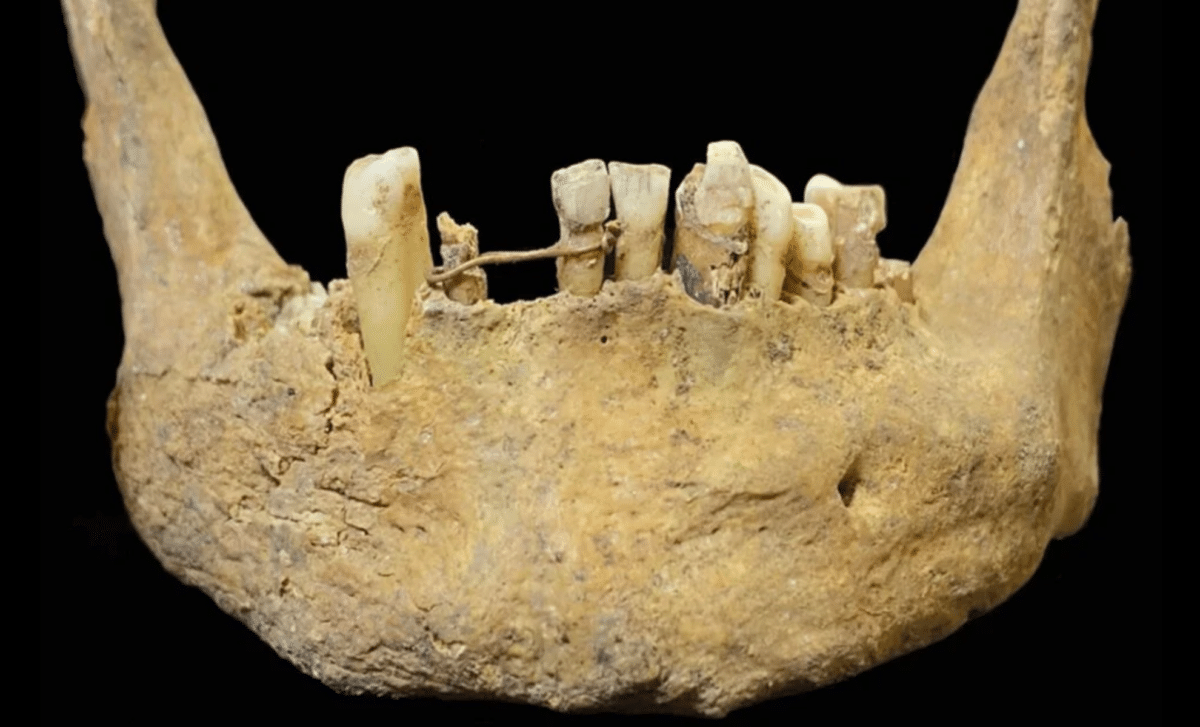
A remarkably preserved gold dental ligature uncovered in Scotland is reshaping understanding of early medical innovation, with findings published in the British Dental Journal revealing that complex dental procedures existed centuries before modern dentistry was formalized.
A Sophisticated Procedure Hidden In A Medieval Grave
The discovery emerged from excavations at the historic East Kirk Of St. Nicholas in Aberdeen, where archaeologists uncovered a human jaw containing a delicate yet highly intentional dental modification. A thin wire made of approximately 20-carat gold, composed of 82.4% gold, 9.8% silver, and 2.5% copper, had been carefully wrapped around two teeth. The structure spanned a healed gap where a tooth had once been, suggesting both precision and purpose in its placement.
Researchers determined that the individual likely lived between 1460 and 1670, based on radiocarbon dating conducted at the Scottish Universities Environmental Research Centre. Despite the fragmentary nature of the remains, the craftsmanship points to a deliberate and skilled intervention rather than a symbolic or decorative act. The ligature’s placement indicates knowledge of dental stability and possibly even aesthetics, revealing that oral care in this era could extend beyond pain relief into reconstruction. The setting of the burial, within the grounds of an affluent parish, supports the interpretation that this individual belonged to a higher social class with access to specialized care.
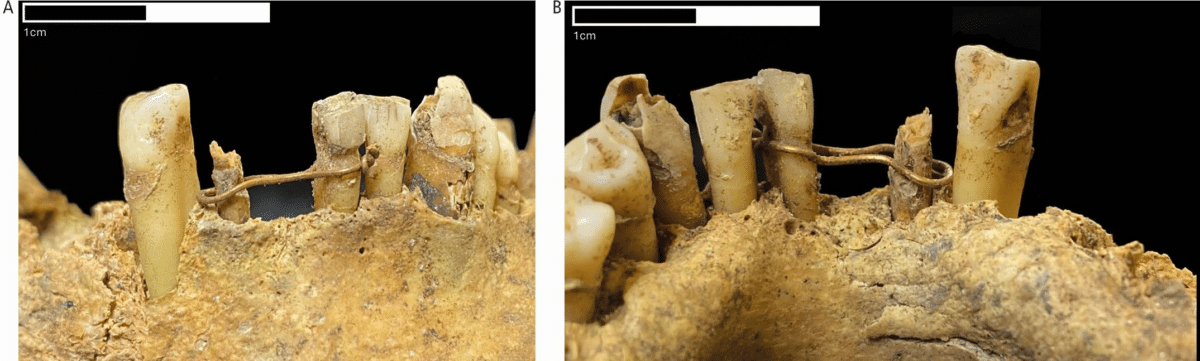 Close up of gold ligature from the (A) labial and (B) lingual aspects. Photographs by Jenna Dittmar
Insights From The Study
Detailed analysis published in the British Dental Journal sheds light on both the technical and cultural implications of the find. Researchers emphasize that this was not a crude attempt at repair but a calculated medical procedure. As the study explains,
“The most likely purpose for this ligature,” according to the team that investigated this old dental work, “was to attempt to either retain the right lateral incisor or to provide a bridging scaffold to sustain a prosthetic tooth.”
This interpretation aligns closely with modern dental concepts such as bridges and stabilization techniques, suggesting a continuity of medical thinking across centuries.
The use of gold is particularly notable, as it resists corrosion and is malleable, making it ideal for long-term placement in the human body. The researchers argue that such material choice reflects inherited medical knowledge, possibly influenced by earlier texts like those of Abul Qasim Al-Zahrawi, whose work advocated the use of durable metals in surgical procedures. The presence of this ligature indicates not just isolated ingenuity but a broader tradition of advanced practice that may have circulated among trained specialists.
Medieval Dentistry: Between Skill And Spectacle
Dental care in medieval Britain existed within a fragmented landscape of practitioners, ranging from skilled specialists to itinerant performers. While trained dentatores carried forward refined techniques, many individuals relied on less predictable sources of treatment. The study highlights this contrast, noting that “Depending on availability, one could also seek relief from a ‘tooth-drawer,’” the researchers noted, “who were often carnival performers that travelled around the country peddling proprietary methods for ‘painlessly’ extracting teeth.”
This duality underscores the significance of the gold ligature: it represents the upper tier of care in a system where most people had limited options. Folk remedies remained widespread, including treatments involving heated turf or even agricultural byproducts, reflecting a reliance on tradition rather than science. Against this backdrop, the precision and material quality of the Aberdeen find stand out sharply. It suggests that while the majority endured rudimentary or improvised care, a select few could access procedures that required both technical knowledge and costly resources.
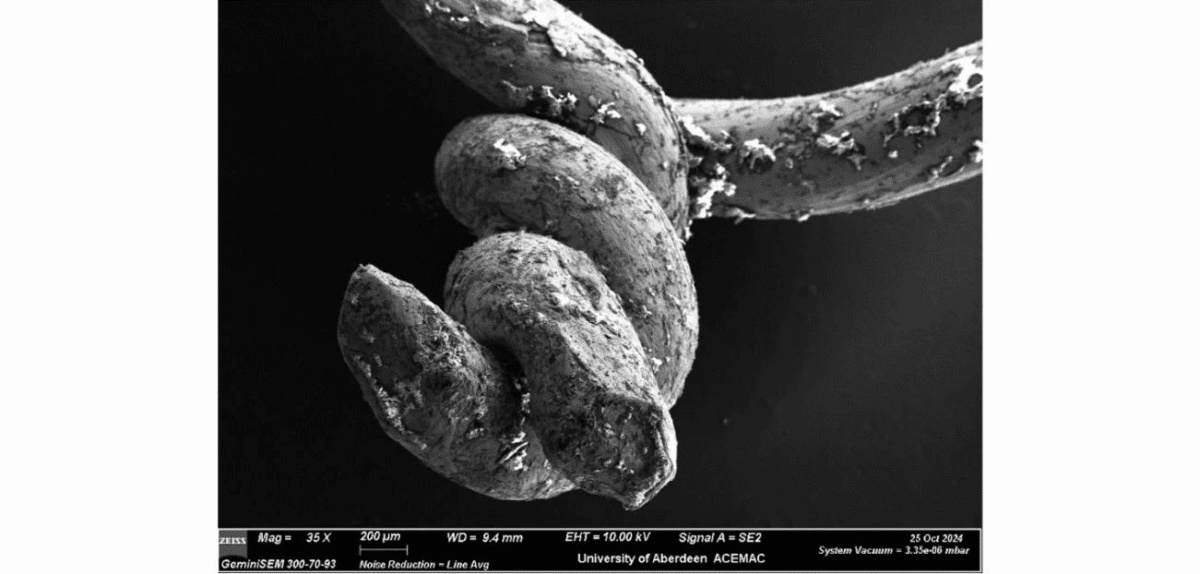 35x magnification of the knotted end of the ligature
British Dental Journal (Br Dent J)
Wealth, Health, And The Hidden Stories Of The Past
The presence of such advanced dental work reveals more than medical capability, it exposes social inequality embedded in healthcare access. The individual’s burial context within a prominent church strongly indicates elevated status, reinforcing the idea that sophisticated treatments were reserved for the wealthy. This aligns with broader patterns observed in archaeological and historical records, where health outcomes often correlate with social standing.
The excavation itself, part of a preservation effort launched in 2021, continues to yield insights into life, and death, in medieval Scotland. Researchers involved in the project, including experts from Australian National University and the University Of Aberdeen, have previously studied remains linked to outbreaks like the Black Death, situating this individual within a turbulent historical period. The gold ligature now serves as a tangible link between medical knowledge, economic power, and human resilience, offering a rare glimpse into how some individuals navigated health challenges in a world without formalized dentistry.