

Listen to this article
Estimated 4 minutes
The audio version of this article is generated by AI-based technology. Mispronunciations can occur. We are working with our partners to continually review and improve the results.
Alberta Health Services says a less invasive type of spinal surgery is dramatically reducing recovery time for patients.
Doctors at the Foothills Medical Centre started performing endoscopic spine surgery in January 2025.
According to AHS, nearly 100 patients, with conditions such as herniated discs, have received the minimally invasive procedure since the program launched.
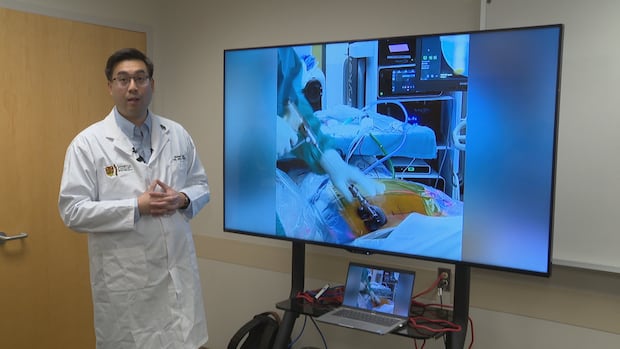
By inserting a tube through incisions roughly the diameter of a pencil, doctors can use surgical tools and a camera to decompress the spinal nerves and relieve pain, said Dr. Michael Yang, a specially trained spinal neurosurgeon who leads the program.
He said four patients have had an even more specialized endoscopic lumbar fusion, where an implant is placed between the vertebrae (stretching the space), and the spine is stabilized with screws. Bone eventually grows around the implant, fusing the spine.
“Because the surgical footprint is so small … patients typically get up and walk within two to three hours of the operation, and they are able to go home on the same day of the surgery,” said Yang.
He added it results in less blood loss and less pain as well.
“In Calgary and centres across Canada and the U.S. who are doing these surgeries, are really at the tip of the spear. We’re able to achieve the goals of surgery with much less impact on the patient, so they can go back to their daily lives.”
Easier on patients and health-care system, says doc
According to Yang, traditional lumbar fusion surgery is much more invasive because it requires larger incisions and it disrupts the muscle and bone. It also uses both screws and rods.
“[With] traditional surgery, patients often stay in the hospital between three to four days,” said Yang, “and have significant pain and go home and recover months at home.”
In addition to providing faster relief to patients, Yang believes these less invasive surgeries can also benefit the health-care system because they don’t require hospital stays.
“We free up a lot of hospital resources by not admitting them to the hospital. So we can free up that bed for the emergency room patient that needs a bed in the hospital,” he said.
“We’re really reducing pressure on the hospital system.”
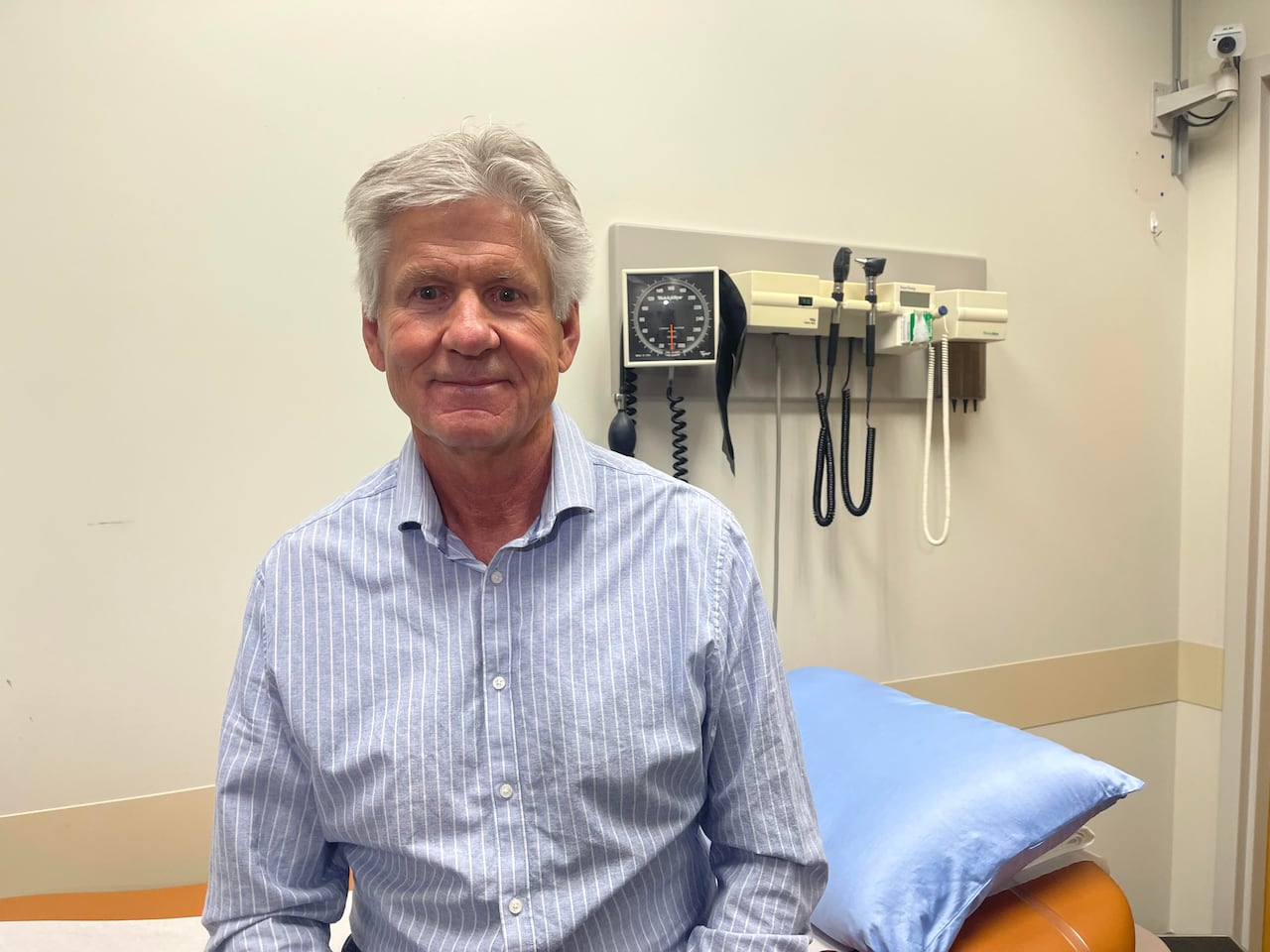 Dale Bingham said he had no pain after his endoscopic lumbar fusion and was back home the same night. (Jennifer Lee/CBC)‘Changed my life’
Dale Bingham struggled for years with back problems that led to severe back and leg pain.
“At one point I wasn’t able to do much,” said the 72-year-old from Red Deer, Alta., noting he ended up on medication to control the pain.
When he heard that endoscopic lumbar fusion surgery could fix the misaligned vertebrae that were compressing a nerve in his lower back, he was all in.
“Let’s do it,” he said. “I had no qualms at all. I wasn’t nervous.”
He recalled the morning he went in for surgery, he struggled to move due to the pain.
After he had the minimally invasive lumbar surgery, he was out of the hospital in a few hours — pain free — and took a long walk the next day.
“It was absolutely amazing. I just felt so good and was so happy,” said Bingham, who was back at the gym within six weeks and is enjoying golf again.
“This has changed my life so good, for the better.”
Yang noted the implant used in the specialized lumbar fusion surgeries has yet to be approved by Health Canada, so he has to apply for special approval for each patient.