
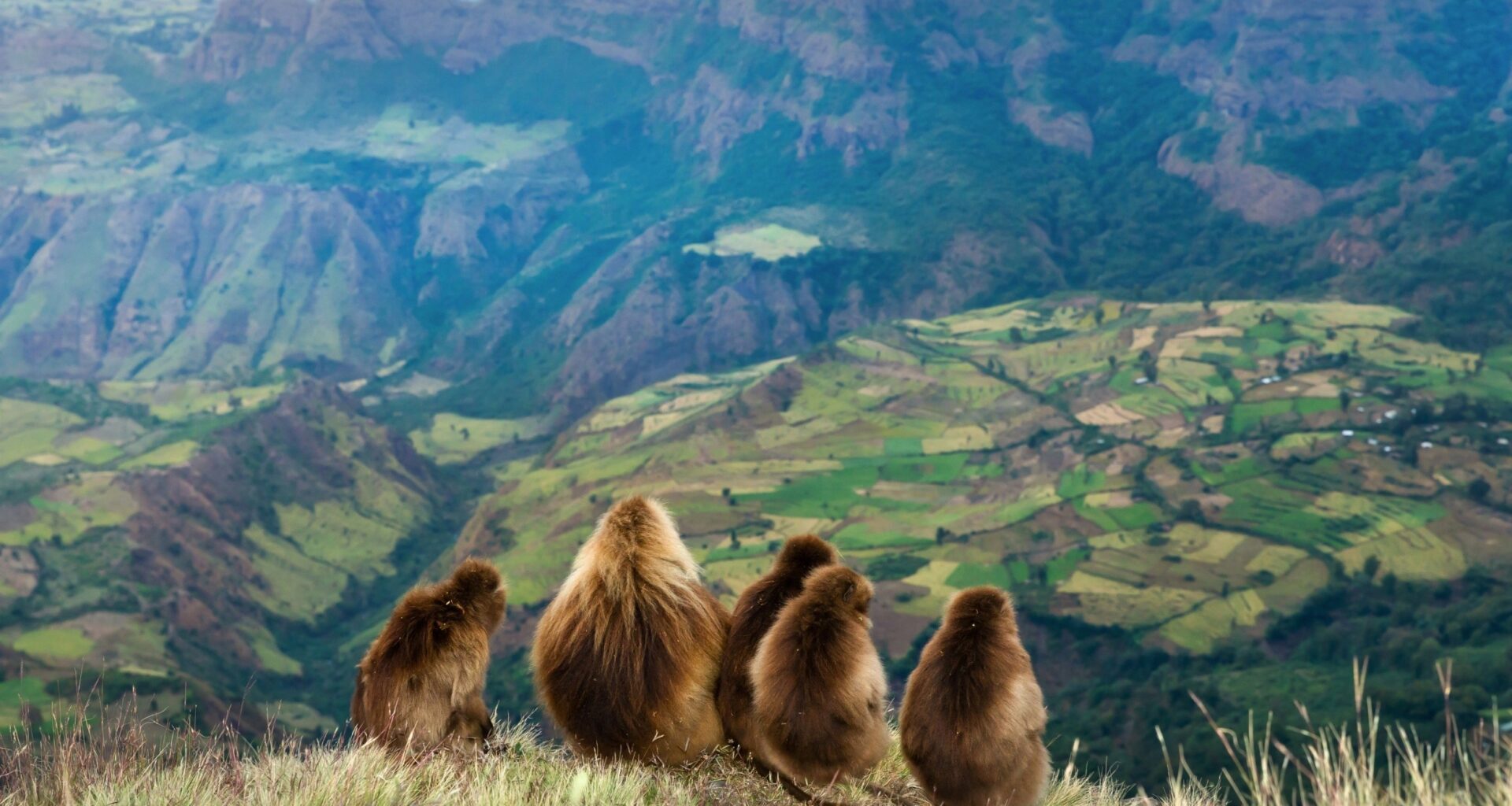
A troop of baboons often looks calm after a long morning of foraging. But with closer observation, a different story unfolds.
Hands move through fur as individuals settle into place. Some pairs linger in close contact for long stretches, while others separate after only brief exchanges.

A few draw steady attention from many, becoming the center of repeated interactions. Others remain on the edges, waiting for their turn to connect.
These moments may appear small at first glance, yet they carry real weight, shaping the structure and function of the entire society over time.
Grooming builds social bonds
Grooming is not just about cleaning. It helps animals relax, builds trust, and creates lasting connections. Each interaction adds to a web of relationships that holds the group together.
Over time, these repeated actions form a social structure. No single moment stands out. But together, they define who belongs where.
For years, scientists grouped baboons and their relatives into two types of societies. One type had a single, tight group. The other had layers, with smaller groups inside a larger one.
This idea helped researchers compare species. But it also simplified a complex reality.
A new study shows that these categories do not capture the full picture.
A closer look at baboon societies
Researchers from Arizona State University led a major project called the Comparative Analysis of Papionin Societies.
The team gathered data from 13 field sites across Africa. The dataset spans 135 years and includes 11 species.
Jacob Feder, who led the study, wanted to revisit a basic question. What do we really mean when we describe a society as single-level or multi-level?
Feder used familiar examples to explain the traditional view. “Single-level societies are kind of like soccer leagues,” Feder said.
“Everyone is an exclusive member of their unambiguous team, competing against other teams to ‘win’ (access to good food, defend their territory).
“In general, people have positive feelings and relationships with those who are a part of their team, and are averse to those who aren’t.”
Multi-level social systems and networks
Feder compared multi-level systems to everyday school life.
“Everyone’s divided up into their respective classrooms, but they regularly pass by each other in the hallways, cross paths during lunch breaks and mingle during recess,” Feder said.
“While relationships within classes are generally stronger, there’s no ill will (and sometimes even friendships) between classes and plenty of social glue keeping everyone together.”
These examples help, but real data tells a more complex story.
A model for human evolution
It may seem natural to study chimpanzees to understand human evolution. They are our closest relatives.
But baboons offer something different. They lived during the same period as early humans.
“This dataset focused on baboons and papionins because this group of primates has long been used as a sort of model for human evolution,” Feder said.
“Baboons, geladas and mangabeys were evolving around the same time as our early human ancestors during the Plio-Pleistocene (roughly 5.3 million to 11,700 years ago).”
This shared timeline means they faced similar challenges. Studying them gives insight into how social systems may have formed under similar conditions.
Mapping entire social networks
To study relationships, researchers used social network analysis. Grooming made this possible.
Study co-author Joan Silk explained why grooming works so well. It is easy to observe and looks the same across locations.
Grooming also carries meaning beyond hygiene. It reduces stress and strengthens bonds.
Researchers tracked who groomed whom, how often, and for how long. These details helped map entire social networks.
Hidden variation appears
When scientists compared these networks, they found something surprising.
“One thing that we discovered in the data, which we had not previously suspected, it turns out that not all of these single-level societies are actually the same,” Silk said.
“In some ways, they are very similar, strong kin biases, etc. However, some are more cliquish and some are more cohesive.”
Two groups may share the same label but function very differently. Some spread social attention widely. Others form tight clusters with clear boundaries.
This shows that simple labels miss important differences.
Female baboons create social structures
The study also highlights who builds these networks.
Females play a central role in shaping the group, forming strong bonds with relatives while also building connections with high-ranking males.
Female baboons also show a clear preference for individuals who share a similar social status.
These choices may seem routine. But over time, they define the structure of the group.
“Females don’t necessarily have more coercive power, but they are creating social structures,” Silk said.
This view shifts how we think about influence. It is not only about dominance. It is also about relationships.
Questions still remain
Mapping social systems is only the first step. Scientists still want to know why these systems form.
“The ecological reasons of how and why you have these multi-level societies are still a big question,” Silk said. “And now that we’ve done this work we can go after that.”
Many factors may play a role. Food availability, predators, habitat, and group size all matter. Researchers can now test these ideas using richer data.
Social choices build human networks
This research offers a broader lesson. Social systems are not fixed categories. They are built through daily interactions.
Each small choice carries weight, from who sits together and who offers help to whom, to who builds connections that last over time.
Over time, these choices create complex societies. This is true for baboons and for humans.
If you look closely, the structure of any society begins with simple acts of connection.
The study is published in the journal Proceedings of the National Academy of Sciences.
—–
Like what you read? Subscribe to our newsletter for engaging articles, exclusive content, and the latest updates.
Check us out on EarthSnap, a free app brought to you by Eric Ralls and Earth.com.
—–