
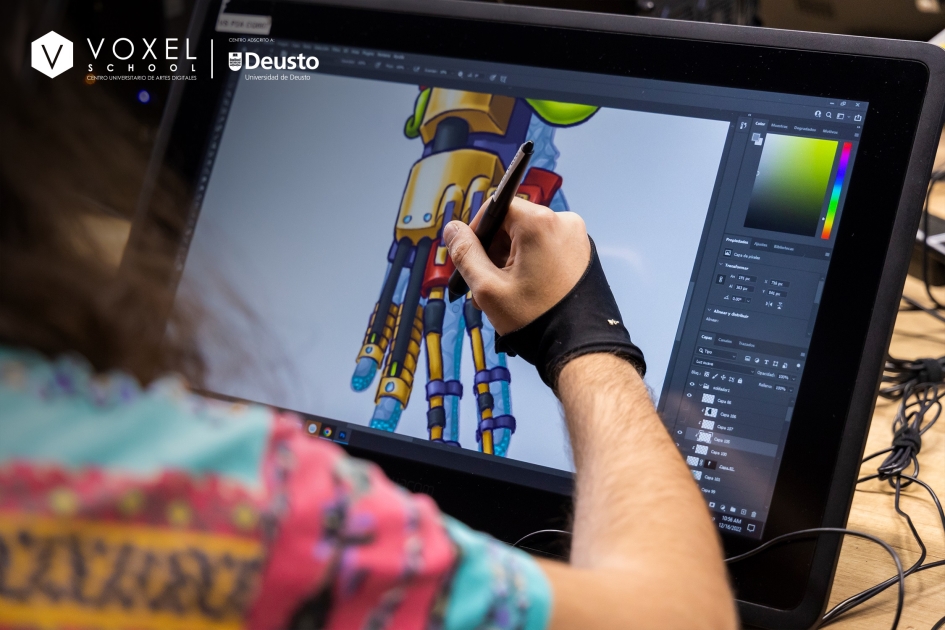
What sorts of upcoming initiatives for the next academic cycle are in the works? What new areas or disciplines are you focusing on as the industry continues to evolve?
Jose Cuesta: We are working on several lines that respond directly to the evolution of the industry. One of them is the reinforcement of areas linked to real-time production, virtual production, Unreal Engine workflows, technical art, and new creation methodologies for video games, animation, and interactive experiences.
We are also promoting initiatives connected to concept art, art direction, and international production, especially through collaborations with leading studios and professionals. We want students to have contact with a global vision of the industry and with ways of working that go beyond the local market.
In addition, we continue to develop projects related to our Industry Lab, which aims to bring education even closer to real production environments. The idea is for the school to be not only an academic space, but also a place where projects, collaborations, applied research, and direct contact with the industry actually happen.
Voxel School has been expanding its international collaborations. How do these partnerships influence both your curriculum and your students’ opportunities?
Jose Cuesta: International collaborations are essential because they allow students to be exposed to different standards, production cultures, and professional expectations. In a global industry, it makes no sense to train talent with only a local market in mind.
A good example is our agreement with Wachajack, the prestigious Japanese concept art studio. This collaboration allows us to bring our students closer to one of the most influential visual and creative cultures in the world, especially in areas such as concept art, character design, worldbuilding, and art direction. It also helps us incorporate methodologies, references, and ways of working from an international professional environment.
These partnerships influence the curriculum because they help us update content, introduce new approaches, and connect students with professionals who are working on international projects. They also create opportunities for mentorship, masterclasses, portfolio reviews, project participation, and access to broader professional networks.
For us, an international collaboration should not be just a branding action. It must have a real impact on student learning. When we work with partners such as Wachajack and other international studios, artists, or institutions, we want that relationship to translate into applied knowledge, inspiration, and concrete opportunities.