
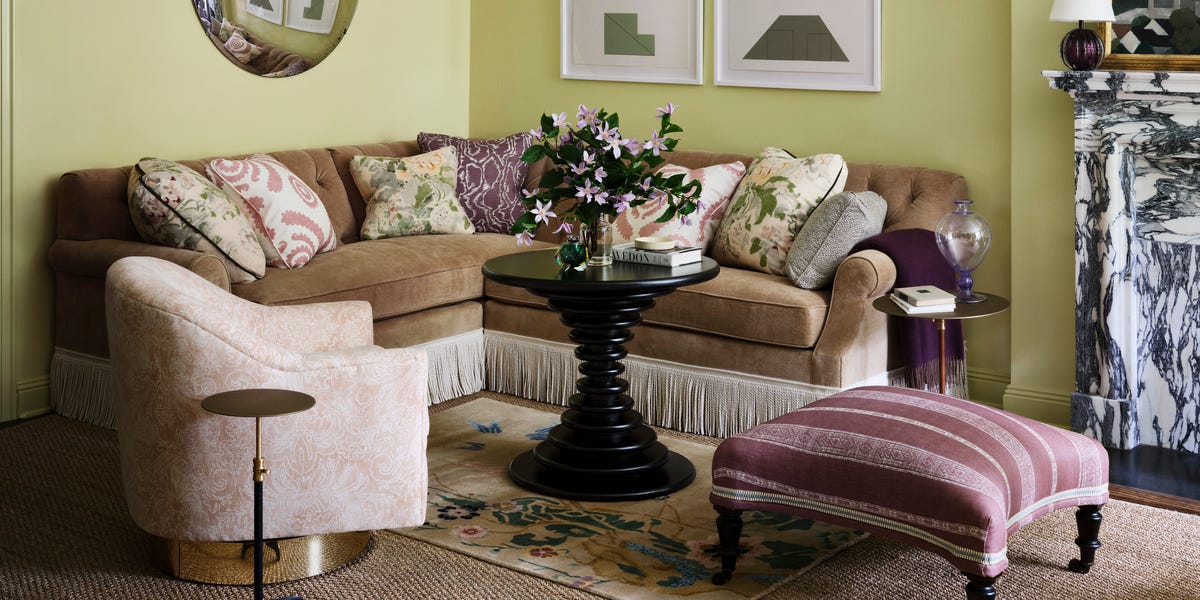
Fashion, beauty, wellness, travel, tech, and interior design—trends exist in every sphere. While many trends are packaged in a way to make them feel fresh and innovative, oftentimes, what’s en vogue has simply cycled through and reappeared with slight variations. With this in mind, we set out to uncover the biggest design trends from the decade you were born, and to highlight those still popular today.
“The trends that still translate best are those that incorporate warmth and function—that includes the organic textures of the 1970s, the confidence of the 1980s, the comfort of the 1990s, the livability of the 2000s, and the cleaner approach to space planning that became so prominent in the 2010s,” says Hawaii-based interior designer Melissa Dyckman, founder of Melissa Dyckman Interiors.
Knowing that VERANDA readers exist across the age spectrum, we chatted with Dyckman and a handful of other interior experts to define the key design elements from the 1920s and 1930s all the way up to the 2010s and 2020s.
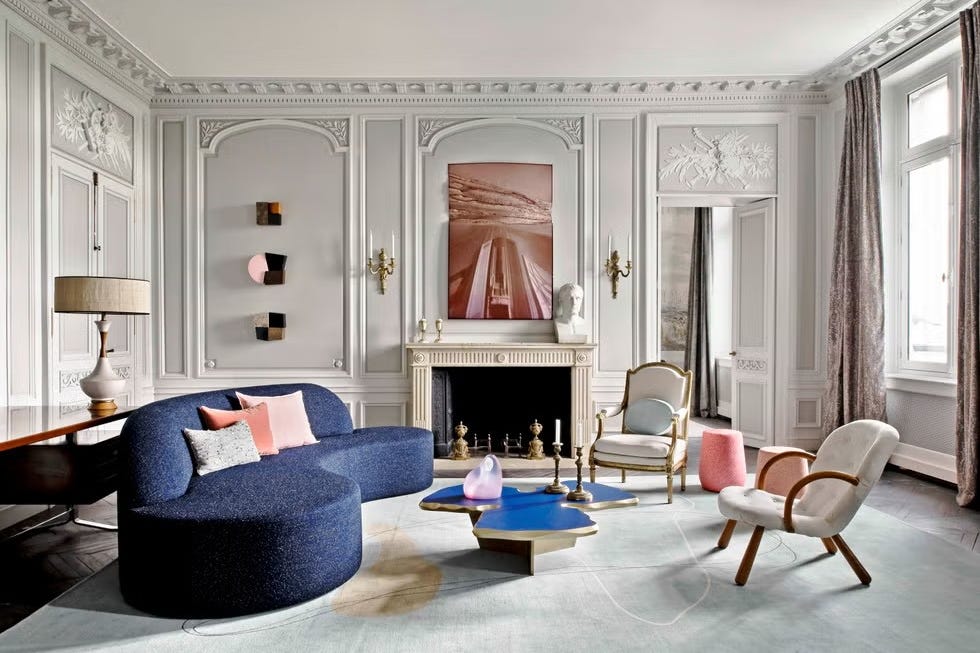
Christoph Theurer
“The best way to incorporate any of these influences is to pull from subtle details of the decade rather than trying to recreate it,” Dyckman says. “That might mean richer wood tones and woven texture from the ’70s, one bold sculptural moment inspired by the ’80s, or the comfort of the ’90s expressed through inviting upholstery. The goal is always to create a home that feels personal and lasting.”
Whether you’re dreaming up your perfect bedroom, living room, kitchen, or nursery—or simply looking to brush up on the history of interior design—ahead, read through the most prominent interior elements from the 1920s to 2020s.
Just remember: “In the end, trends come and go—timeless design, grounded in storytelling, is what endures,” says The Residences at Blue Sky, Auberge Collection interior designer Liubasha Rose.
1920s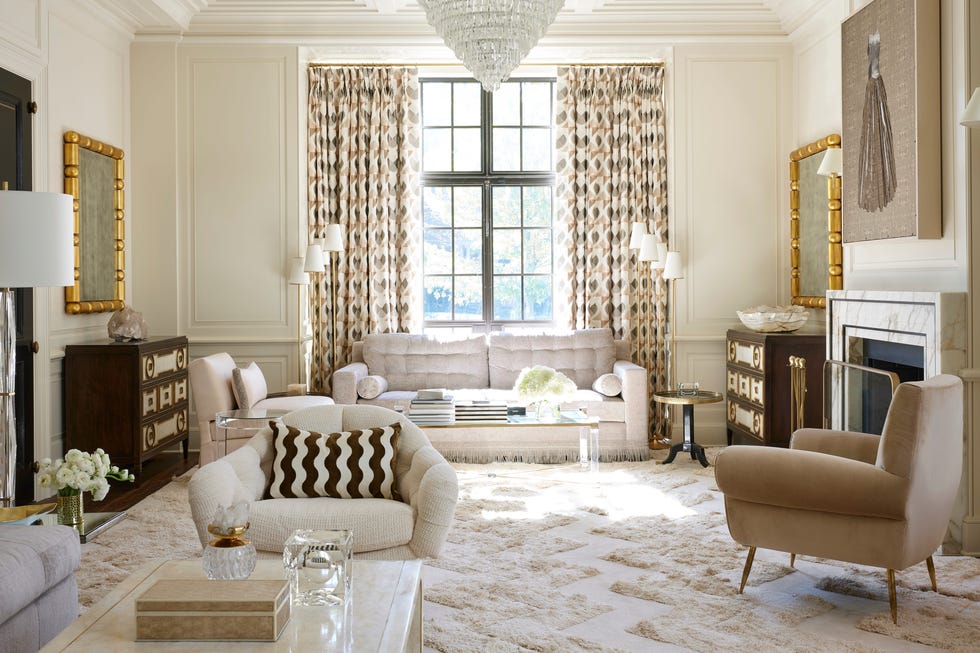
Mali Azima
When it comes to the 1920s, picture Great Gatsby, Roaring Twenties, and Art Deco vibes. “The 1920s, to me, always read as very glamorous—lots of Art Deco influence, with bold geometry, contrast, and rich materials like brass and velvet,” says DuVäl Reynolds, owner and principal designer of DuVäl Design. “It’s an era of design I really love.”
Rose concurs with Reynolds, noting that lacquered finishes, high-gloss surfaces, marble, and rich, layered materials bring the 1920s Art Deco vibe to life. “[It’s] geometry and ornamentation—Jean-Michel Frank’s restraint paired with Deco richness,” she explains.
As for how to incorporate the decade into modern spaces, Rose says to opt for an Art Deco craftsmanship approach. “Lay a geometric two-tone wood parquet as a quiet foundation; introduce custom brass hardware with a sculptural hand; add a contrasting marble between a double bullnose on a rounded kitchen island,” she suggests. The result will be subtle yet statement-making.
1930s
While Art Deco continued to thrive into the 1930s, Reynolds reveals that interior design also began to soften during this time. “There’s still elegance there, but it feels more streamlined and practical, with curves and built-ins becoming more common but not as much of a defined style,” he explains.
Today, one might nod to the ’30s by skipping an entertainment unit in favor of a streamlined media built-in. It’s practical, organized, and instantly draws the eye. Who knew the trend dated all the way back to the ’30s?
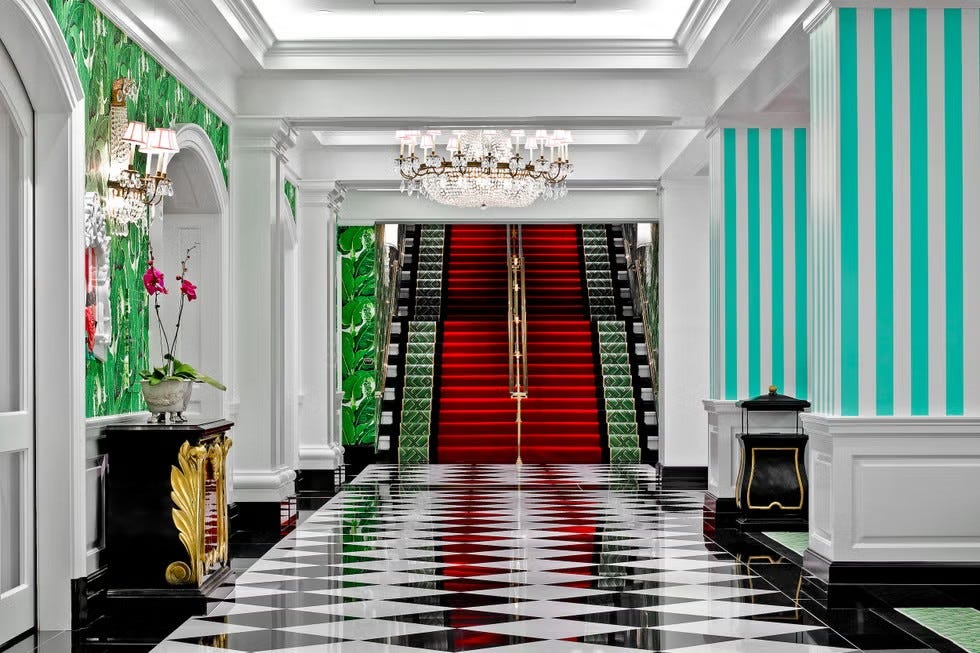
The Greenbrier
1940s
Design from the 1940s was a bit more polarizing. On one end of the spectrum, many interiors embodied the somberness of the decade, while others aimed to buck against it.
“By the 1940s, I tend to think of interiors as more modest and comfort-driven, likely influenced by wartime—warmer woods, simpler furnishings, and softer, more traditional details,” Reynolds shares. “Life was no longer about being glamorous but was probably more about survival and family values.”
Meanwhile, Rose reveals that the ’40s were also defined by a sense of theatrical optimism. “Dorothy Draper’s bold, confident interiors [were] an antidote to wartime austerity,” she points out. “High-contrast palettes, oversized patterns, and classical motifs reimagined at scale—[there was] a glamorous blending of traditional forms with a more modern, spirited sensibility.”
1950s
The 1950s are famous for the birth of mid-century modern design—an aesthetic that continues to dominate today. “The 1950s are where mid-century modern really started to stand out,” Reynolds reflects. “I always associate that era with clean lines, functional pieces, and a sense of openness, especially with the indoor-outdoor connection.”
Rose agrees, calling out an obsession with Vladimir Kagan’s lines, sculptural, optimistic furniture forms, and indoor-outdoor living with Richard Neutra’s architecture as a backdrop.
The beauty of the 1950s MCM movement is that it has stood the test of time. “It’s still everywhere in homes today,” Reynolds says. “It works so well because it’s clean, functional, and easy to mix with other styles. You don’t have to go full retro for it to feel right in a modern space. We usually suggest incorporating it in small ways—like a piece of furniture with tapered legs, warm wood tones (walnut or teak), or something with a simple, sculptural shape. Keeping the palette neutral and layering in texture (like wool or linen) helps it feel current rather than too ‘theme-y.’”
Meanwhile, if your favorite aspect of the design aesthetic is the fluidity between inside and out, Rose has just the idea. “Open the room fully to the landscape with large sliding or pivot doors; allow the flooring—stone or terrazzo—to move seamlessly beyond the threshold; anchor the space with a built-in banquette oriented toward light, garden, and view,” she instructs.
Douglas Friedman for VERANDA
1960s
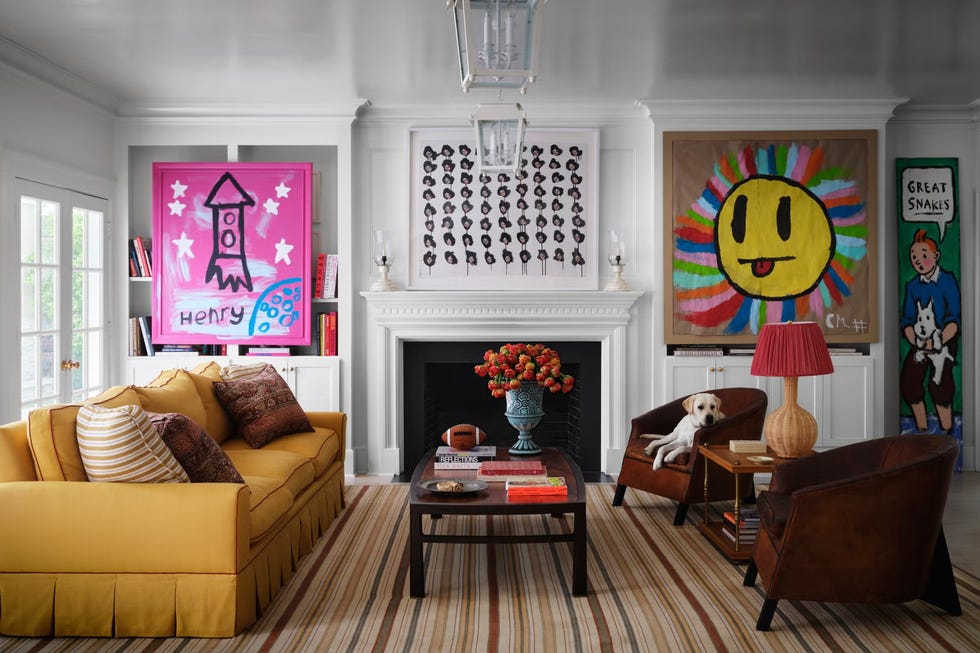
The MCM movement of the ’50s expanded in the ’60s, diversifying in both palette and pattern. “In the 1960s, things seemed to loosen up creatively—more color, more experimentation, and a willingness to play with new materials and bold patterns,” Reynolds explains.
Reflecting on the decade, Rose calls out the “bold color and graphic pattern seen in David Hicks’s confident use of geometrics and saturated palettes.” It was also during this time that pop influence and playful materials came to the forefront, she points out. “Experimentation with lacquer, acrylic, and high-contrast finishes; futuristic, forward-looking design grounded by a sense of discipline and refinement,” she explains.
To add a little ’60s flair to your space today, Rose suggests leaning into the pop influence of the era. “Place a single sculptural sofa with a Kagan-like curve in a saturated tone; pair it with a lacquered or acrylic table and whimsical overscale Murano butterfly sconces; soften the composition with a light pastel hand-painted James Turell-inspired mural on the wall,” she recommends.
1970s
From the ’40s to the ’70s, there was an undercurrent of political unrest that, while not everyone partook in protesting or wartime efforts, influenced a shift in interior design. As everyday life became more stress-inducing, the collective desire was to feel more grounded at home.
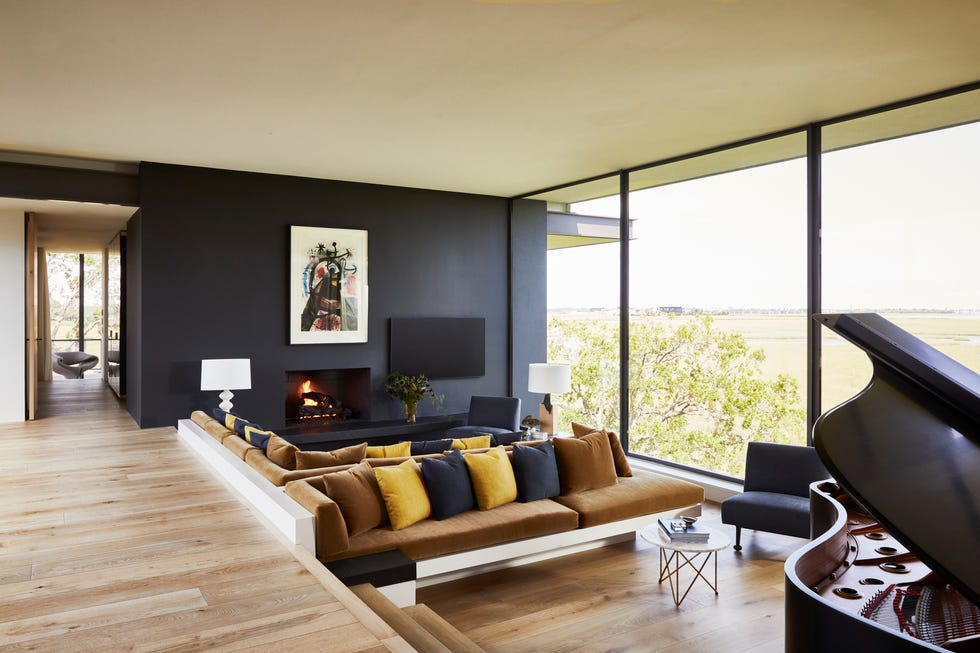
“In the ’70s, you saw earth tones, natural woods, woven textures, low seating, and a more relaxed approach to living,” Dyckman says. “There was a strong connection to organic materials and spaces that felt less formal.”
Reynolds reflects on the era with the same train of thought. “The 1970s, in contrast to the ’50s and ’60s, feel a lot more grounded and earthy to me, with warmer tones, natural textures, and a more layered, relaxed approach, while still feeling playful and artistic—the ’70s always remind me of a desaturated version of the ’60s,” he shares.
Today, the earth tones and organic elements of the ’70s remain a mainstay in many modern homes. “People still respond to rooms with texture, wood tones, and a palette pulled from nature,” Dyckman says. “The key is to keep it edited so it feels intentional rather than nostalgic.”
To refresh the ’70s aesthetic in your space, Rose says to opt for earth tones and natural materials, echoing Ward Bennett’s grounded minimalism. “[Pair] layered, textural interiors—shag, rattan, stone—[with] informal, lounge-like living spaces,” she suggests. “Center the room with a monolithic travertine or limestone table; layer in deep, comfortable armchairs in a graphic fabric on top of an alpaca shag rug with a brutalist metal chandelier.”
Brie Williams for VERANDA
1980s
After the minimalism and muted nature of the 1970s, society craved color and bold design. “In the 80s, everything was in excess,” Dyckman says. “Think: glossy finishes, bold color, dramatic silhouettes, and a more expressive use of scale. In some homes, it was glamorous, while in others it leaned heavily traditional.”
It was in the ’80s when tinted mood lighting came to the forefront of design, as well. “The 1980s seemed to swing back toward drama and excess—glossy finishes, bold shapes, and a bit of a ‘more is more’ mindset; it’s this era that I think of the glossy black finishes and colorful lighting,” Reynolds says.
While ’80s interior elements are largely considered to be outdated today, Dyckman says that what still translates now is the willingness to make a statement. “That can show up through a sculptural light fixture, a larger piece of art, or a stronger contrast in materials,” she adds. “The lesson from the 1980s is to not be afraid of going big but to use it with more restraint.”
1990s
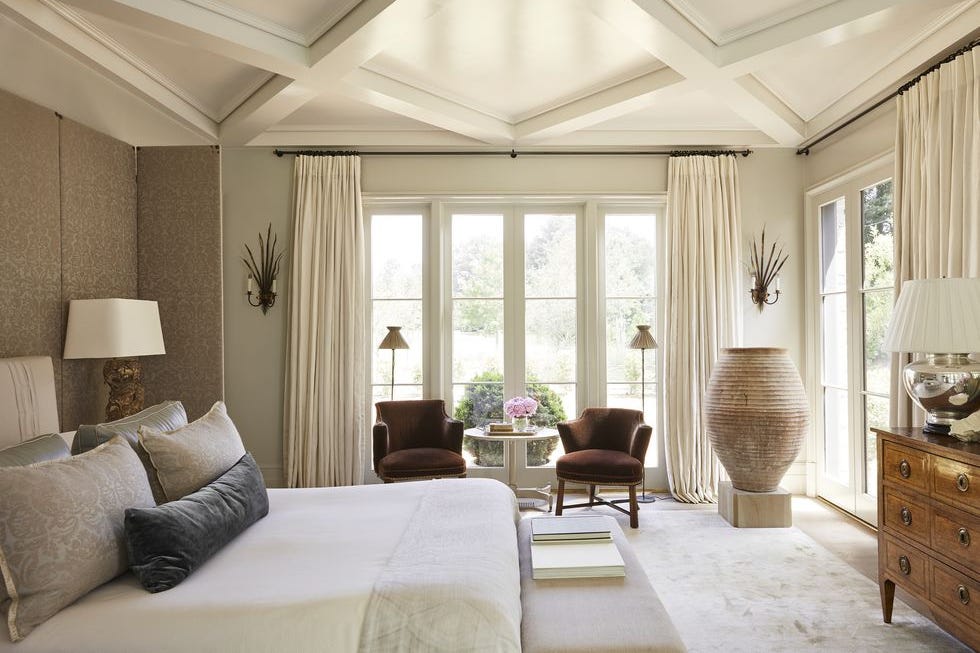
In the ’90s, we saw another shift from bold design statements to more comfortable living. “The 1990s felt like a reset, leaning into minimalism, neutral palettes, and spaces that were a bit more casual and livable,” Reynolds says, and Dyckman agrees. “The ’90s shifted toward comfort and simplicity,” she explains. “There was a lot of beige, softer palettes, overstuffed upholstery, and lighter woods. It was a decade that placed a lot of emphasis on making home feel comfortable and functional.”
It’s a design notion that still rings true today. “Comfort matters, but today it works best when paired with more depth and contrast,” Dyckman says. “A comfortable room should still have shape, texture, and some personality.”
Brian Woodcock
2000s
Y2K is an era beloved in fashion and beauty for its playful use of color, shimmer, and shine. In interiors, however, the 2000s were a time when minimalism returned to the forefront, albeit in a refined manner. “[It] echoed Christian Liaigre’s quiet restraint and disciplined palettes,” Rose says. “Open kitchens as understated social hubs, seamlessly integrated into the architecture; comfort expressed through generous, low-slung proportions—oversized, but tailored and intentional,” she notes.
In that way, Dyckman thinks of the 2000s as a design era when things became more polished without making a bold statement. “Dark woods, heavier furniture, open concept living, granite surfaces, and more decorative detailing all became common,” she says. “There was a desire to make interiors feel substantial and finished.”
This concept of a well-rounded, completed construction and design continues to shape homes today. “Open concept living still works for a vast majority,” Dyckman says. “The best version of that era today is less heavy and more refined.”
2010s
Before the 2010s, interior design trends were spread via magazines and TV. As such, they took a bit more time to unfold. When the 2010s came rolling through, however, the Internet and social media were abuzz with the latest design trends, causing them to spread like wildfire.
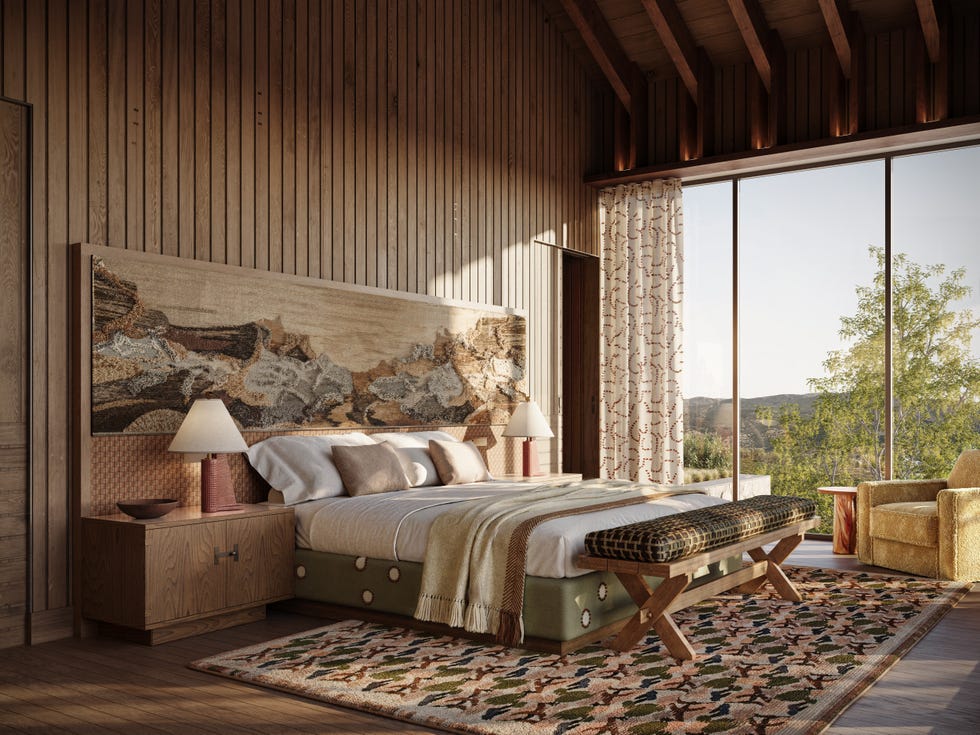
“You saw all white kitchens, gray floors, fast furniture, modern farmhouse details, open shelving, and rooms styled to photograph well,” Dyckman says of the decade. “There was a strong pull toward clean, highly curated spaces.”
While picture-perfect, Instagram-ready homes remain popular today. Here in 2026, we’re seeing a shift toward more collected homes and spaces with character. “What still feels relevant is the desire for simplicity, but I think people are moving away from homes that feel overly trend-driven,” Dyckman says. “The takeaway from the 2010s is to keep what is functional and clear, while bringing back warmth and a stronger sense of personality.”
The Residences at Blue Sky, Auberge Collection
2020s
Now, here we are, just over halfway into the 2020s, and it’s more evident than ever that, while social media continues to inundate society with endless design inspiration, what feels most widely embraced is a need for authenticity and personality in the home.
“It feels like interiors are becoming more personal and layered,” Reynolds says. “There’s a stronger focus on sustainability, mixing old with new, and bringing in natural elements—it’s less about following a specific trend and more about creating something that feels collected and individual.”
To really lean into today’s less-styled, more-collected mentality, Rose says to embrace nature, warmth, and storytelling in your space. “Compose the space as a layered mix—a vintage credenza, custom upholstery, and contemporary lighting; weave in art, objects, and biophilic elements so the room feels personal, evolved, and quietly assembled over time,” she says.

Rebecca Norris is a full-time freelance writer living in the Washington, D.C. metro area. Over the past 10+ years, she’s heavily covered a range of lifestyle topics, including travel, home, beauty, style, wellness, and celebrity news. She is a graduate of George Mason University, where she earned a B.A. in Media: Production, Consumption, and Critique, along with a minor in Electronic Journalism. When she’s not writing, she can be found strolling with her Jack-Chi, Cash, sipping iced matcha lattes, indulging in delicious cuisine, perusing farmer’s markets and antique sales, collecting colored glass, getting lost within the pages of a book, and exploring new bucket-list cities.