

Listen to this article
Estimated 4 minutes
The audio version of this article is generated by AI-based technology. Mispronunciations can occur. We are working with our partners to continually review and improve the results.
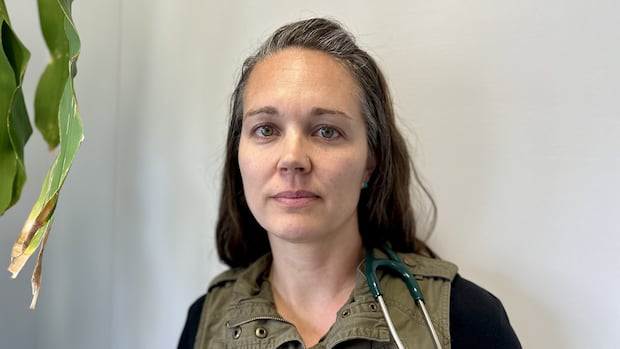
Many clients Dr. Allison Henderson treats at the London, Ont., Refugee Health Clinic have just fled war zones, persecution and violence, and they arrive in the city without money or a place to call home.
Nearly 100 new refugees come through the clinic’s doors every month seeking treatment for a variety of complex health issues, says Henderson, the clinic’s medical lead.
Now, the federal government is requiring refugee claimants to pay out of pocket for some medical services that were previously fully covered by the Interim Federal Health Program (IFHP).
Henderson says the decision will force them into precarious health situations and will further strain an already overwhelmed emergency system in the city.
“I think what worries me about the rhetoric I’m hearing from the government is sort of, ‘Well, we need to equalize things,’ like, ‘Everyone should have to pay a bit.’ And it feels like it’s a race to the bottom,” said Henderson.
The IFHP provides health care to refugees before they are eligible to receive provincial health insurance. London’s refugee clinic, part of London InterCommunity Health Care, provides patients with primary care during their first year in Canada, after which they try to find a primary care provider in the city.
What is the new co-pay model?
Starting May 1, Ottawa introduced a co-pay model under the IFHP. This means refugee claimants now have to pay $4 for every prescription and 30 per cent for “supplemental” health services such as mental health counseling, emergency dental, or basic vision care, as well as medical devices such as hearing aids, wheelchairs or prosthetic legs.
Basic essential and emergency services are still fully covered under the program, which includes vaccinations, lab tests and ambulance services.
Although the change is being referred to by the federal government as “co-payments,” Henderson said many refugees do not have any money to pay for their health care.
For instance, she has a patient with cerebral palsy who has difficulties swallowing and cannot afford outpatient therapy, having only just arrived in Canada.
“This will mean that we are at a higher risk of choking, of having an aspiration, of having pneumonia, of ending up in hospital,” said Henderson.
Program cuts won’t save money, doctor says
There is a growing backlog of people trying to seek asylum in Canada. The government says the IHFP provided coverage to more than 623,000 people in 2024-25, costing about $896 million.
In a statement to CBC News, Immigration, Refugees and Citizenship Canada said introducing these changes is expected to generate around $127 million in savings in 2026-27 and $232 million onwards.
Though, when Henderson has been involved in conversations with the federal government, she says “they haven’t provided us any data to back up what their analysis is as to why they think this will save costs.”
“They did tell us there wasn’t any expert consultation in this decision,” she said.
She says the decision will cost the health care system more money, because refugees will be forced to wait until their health concerns become emergencies.
Henderson hopes the government reverses its decision, and there’s already a precedent for this.
In 2012, Stephen Harper’s Conservative government also reduced coverage provided by the IFHP. A legal challenge was filed against the cuts, and a federal court justice ruled in 2014 that the changes violated Section 12 of the Charter.
That ruling was appealed by the Harper government, but the appeal was abandoned when Justin Trudeau entered office.
When Henderson began working at the refugee clinic 10 years ago, she saw about 30 to 40 new arrivals to the clinic per month, about half the number of people she sees now. Henderson is working with her patients and other organizations to try to mitigate harm, but the patients she has spoken with feel abandoned and neglected by the new cuts, she said.
“It feels like one more place where we are pulling back as a society and we’re all starting to look inward and only think about ourselves and only care about ourselves,” said Henderson.
“There’s a quote about how, you know, you can judge a society by how they take care of the least of those. And I would say when we move in this direction, it gives me a sick feeling in my stomach.”