
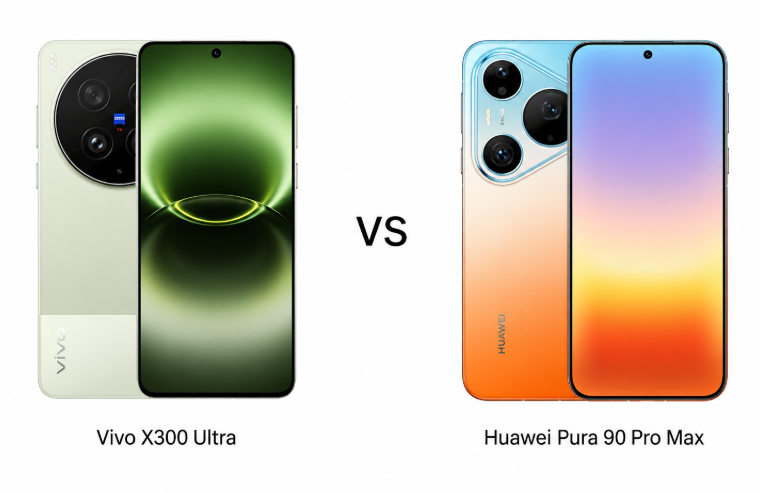
Vivo X300 Ultra and Huawei Pura 90 Pro Max represent two very different approaches to the ultra-flagship smartphone experience. Vivo focuses on maximum hardware power with a cutting-edge Snapdragon chipset, massive battery, and an ambitious Zeiss-backed camera setup, while Huawei leans toward refined design, polished software, and balanced flagship usability. Both promise premium experiences, but the real difference comes down to performance, cameras, and overall value.
FeatureVivo X300 UltraHuawei Pura 90 Pro MaxWinner Operating SystemAndroid 16, OriginOS 6HarmonyOS 6.1Vivo – Newer Android platform with flagship Qualcomm ecosystemChipsetSnapdragon 8 Elite Gen 5 (3nm)Kirin 9030SVivo – More powerful flagship chipsetDisplay TypeLTPO AMOLED, 144Hz, Dolby Vision, HDR10+LTPO OLED, 120Hz, HDR VividVivo – Higher refresh rate and broader HDR supportDisplay Size6.82-inch6.9-inchHuawei – Slightly larger displayResolution1440 × 31681308 × 2880Vivo – Sharper resolution and higher pixel densityProtectionArmor GlassKunlun Glass + anti-reflective coatingHuawei – Added anti-reflective coating advantageMain Camera200MP wide50MP variable aperture wideVivo – Larger megapixel sensor setupTelephoto Camera200MP periscope, 3.7x optical200MP telephoto, 4x opticalHuawei – Slightly higher optical zoomUltrawide Camera50MP40MPVivo – Higher resolution ultrawide sensorExtra Camera FeaturesOptional Zeiss zoom lenses, gimbal OISVariable apertureVivo – More advanced camera hardware flexibilityRear Video Recording8K@30fps, 4K@120fps4K videoVivo – Supports higher video resolution and frame ratesSelfie Camera50MP AF13MP ultrawide AFVivo – Higher resolution front cameraSelfie Video4K@60fps4KVivo – More advanced selfie video supportStorage OptionsUp to 1TB / 16GB RAMUp to 1TB / 16GB RAMTie – Similar memory configurationsBattery Capacity6600mAh / 6400mAh6000mAhVivo – Larger batteryWired Charging100W100WTie – Same wired charging speedWireless Charging40W80WHuawei – Much faster wireless chargingReverse ChargingReverse wired & wireless18W reverse wired & wirelessHuawei – Reverse wired speed specifiedBluetoothBluetooth 5.4Bluetooth 6.0Huawei – Newer Bluetooth standardUSBUSB Type-C 3.2, DisplayPortUSB Type-CVivo – Faster USB standard with DisplayPort supportFingerprint ScannerUnder-display ultrasonicSide-mountedVivo – More premium biometric implementationSatellite FeaturesEmergency SOS via satelliteBDS satellite calling & messagingHuawei – More advanced satellite communicationPrice~$1500 / ₹1,25,000~$950 / ₹89,000Huawei – Significantly more affordableDisclaimer: Specs are based on available data. Actual performance may vary. Verify details from official sources before buying.
1. Design and Display
Build and Feel
The Vivo X300 Ultra and Huawei Pura 90 Pro Max both target the premium flagship segment, but they approach design differently. Vivo leans toward a camera-centric identity with Zeiss branding and a slightly more aggressive flagship aesthetic, while Huawei focuses on refinement and elegance with its polished HarmonyOS ecosystem. Both devices feature glass backs, aluminum frames, and IP68/IP69 protection, giving them a premium feel in daily use.
Huawei’s anti-reflective Kunlun Glass gives the display a cleaner outdoor viewing experience, especially under sunlight. Meanwhile, Vivo counters with Armor Glass protection and a more advanced display package. The X300 Ultra also feels more tailored for media enthusiasts thanks to Dolby Vision support and its higher refresh rate implementation.
Display Quality
The Vivo X300 Ultra features a 6.82-inch LTPO AMOLED panel with a 144Hz refresh rate, HDR10+, Dolby Vision, and sharper 1440p resolution. Huawei offers a slightly larger 6.9-inch LTPO OLED display with HDR Vivid and excellent color tuning, but its 120Hz refresh rate and lower pixel density feel slightly behind for a flagship in this category.
Verdict
The Huawei Pura 90 Pro Max delivers a more elegant and balanced flagship experience, but the Vivo X300 Ultra clearly offers the superior display package. Its higher refresh rate, sharper panel, and Dolby Vision support make it more appealing for gaming, streaming, and long-term flagship value.
2. Specifications Including Battery
Performance
The Vivo X300 Ultra is powered by the Snapdragon 8 Elite Gen 5 chipset paired with UFS 4.1 storage, placing it among the fastest Android phones currently available. Heavy gaming, AI processing, and multitasking feel effortless, and the combination of OriginOS 6 with the flagship Qualcomm chip gives the device a very polished, high-performance character.
Huawei’s Kirin 9030S chipset performs well for daily flagship use, and HarmonyOS 6.1 feels highly optimized, but it is unlikely to match Vivo’s raw GPU power and sustained gaming capability. Huawei still delivers excellent fluidity for normal workloads, especially within its own ecosystem.
Battery and Charging
Vivo packs a massive 6600mAh battery with 100W wired and 40W wireless charging, making endurance one of its biggest strengths. Huawei counters with a smaller 6000mAh battery but pushes wireless charging further with 80W support. Vivo feels more practical for heavy users, while Huawei’s wireless charging convenience stands out for premium buyers.
Verdict
The Vivo X300 Ultra takes a comfortable lead in overall hardware performance and battery endurance. Huawei remains efficient and polished, but Vivo simply feels more future-proof for demanding users and power-focused flagship buyers.
3. Camera
Main and Secondary Lenses
Camera hardware is where both phones become extremely competitive. The Vivo X300 Ultra uses a massive 200MP primary sensor with gimbal stabilization, paired with another 200MP periscope telephoto lens and a 50MP ultrawide sensor. The optional Zeiss zoom lenses further push its photography ambitions into professional territory. Low-light capture and zoom flexibility are expected to be among the best in the industry.
Huawei counters with a versatile triple-camera setup featuring a variable aperture 50MP main sensor, 200MP telephoto lens, and a 40MP ultrawide camera. Huawei’s image processing has historically been among the strongest in mobile photography, especially for dynamic range and natural tones. The variable aperture system also adds more flexibility in different lighting situations.
Selfie Camera
Vivo includes a 50MP autofocus selfie camera capable of 4K recording, while Huawei offers a 13MP ultrawide front camera with autofocus. Vivo clearly delivers more detail and stronger front-camera versatility for creators and video users.
Verdict
The Huawei Pura 90 Pro Max may produce more natural flagship photography in some situations, but the Vivo X300 Ultra offers a more ambitious and technically advanced camera system overall. Its sensor hardware, Zeiss tuning, and extreme zoom flexibility give it the edge for photography enthusiasts.
4. Pricing
The Vivo X300 Ultra is priced at around $1500 (approximately ₹1,25,000), while the Huawei Pura 90 Pro Max comes in significantly lower at roughly $950 (around ₹89,000). That creates a major gap between the two devices despite both targeting the ultra-premium flagship category.
Vivo justifies its higher price with a stronger chipset, sharper display, larger battery, advanced Zeiss camera system, and higher-end multimedia capabilities. It clearly positions itself as a no-compromise flagship for users who prioritize performance and camera hardware above everything else.
Huawei, however, offers impressive value considering its premium build quality, flagship cameras, advanced wireless charging, and polished software experience. For many buyers, the lower price makes the Pura 90 Pro Max feel like the more balanced purchase. The savings are substantial without sacrificing too much of the flagship experience.
Verdict
The Vivo X300 Ultra is the better ultra-premium flagship, but Huawei delivers stronger value for money. Buyers focused on top-tier hardware may prefer Vivo, while Huawei feels like the smarter purchase for most premium users.
Disclaimer:
Prices are approximate and may vary based on country, region, launch timing, and applicable taxes. Always check whether the listed price is for a China unit or a global/international variant when purchasing.
5. Conclusion
The Vivo X300 Ultra stands out with its Snapdragon 8 Elite Gen 5 processor, dual 200MP camera system, optional Zeiss external zoom lenses, 144Hz LTPO AMOLED display, and huge battery capacity. It is clearly designed for enthusiasts who want maximum hardware performance with very few compromises.
The Huawei Pura 90 Pro Max focuses more on balance and ecosystem refinement. Features like the variable aperture camera, 80W wireless charging, anti-reflective display coating, and HarmonyOS optimization give it a more polished day-to-day personality. Huawei also feels less aggressively focused on specs and more centered around overall flagship usability.
Verdict
The Vivo X300 Ultra is the stronger flagship overall thanks to its superior performance, display technology, battery capacity, and more advanced camera hardware. However, the Huawei Pura 90 Pro Max remains highly competitive because of its lower pricing and refined premium experience. Users wanting the absolute best hardware will likely lean toward Vivo, while Huawei makes more sense for buyers seeking flagship quality without crossing into extreme flagship pricing territory.
Disclaimer: This comparison is based on the specifications provided and is intended for general informational purposes. Actual performance, camera results, battery life, and overall experience may vary depending on real-world usage, software updates, and individual preferences.
Read More: