
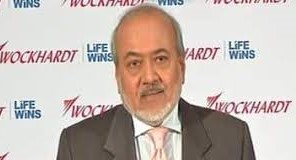
Dr. Habil Khorakiwala, an alumnus of Purdue University and Harvard Business School, founded Wockhardt in 1967. In his entrepreneurial journey, he has seen rise, decline, and turnaround of Wockhardt. He chronicled his entrepreneurial journey in a book titled, ‘Odyssey of Courage’ in 2017. Based on tenets, principles, and insights drawn from his book, a mentorship programme for young and budding entrepreneurs is offered by the Wockhardt School of Courage which was established by Dr. Khorakiwala in 2018. The journey of Wockhardt’s transformation, especially turnaround, offers interesting insights.
Wockhardt was among the first to sense opportunities for generic pharmaceuticals in Europe. Wockhardt made its first overseas acquisition – Wallis Laboratory – in 1998 in the UK. In 2003, Wockhardt acquired CP Pharmaceuticals in Wales. In 2004, Wockhardt acquired the pharma business and marketing infrastructure of Esparma GmbH for entering Germany which was Europe’s largest generics market at that time. In June 2006, Wockhardt acquired Dumex India from Royal Numico NV of The Netherlands thereby bringing on board – Protinex and Farex. Wockhardt also acquired Negma Laboratories (France), Morton Grove Pharmaceuticals (USA) in November 2007 and Pinewood Labs (Ireland) during this period. Acquisition of Negma Labs in France catapulted Wockhardt to become the Largest Indian Pharma company in Europe.
Wockhardt had many firsts to its credit, e.g., Wockhardt as the first company to introduce the concept of product detailing to doctors with ‘Visual Aid’ in India, first pharma company to commission dedicated manufacturing plant for milk-based nutraceuticals, first pharma company to go for Initial Public Offer (IPO) after Indian economic reforms, first pharmaceutical company in India to get US FDA approval for its manufacturing plant, first major acquisition in India by a pharma company with acquisition of Merind Limited, first Indian pharma company to raise funds through Global Depository Receipts (GDRs), first Asian pharma company to launch recombinant insulin from concept to market stage, first major pharma acquisition in UK by a India-based company, to name a few.
In 2005-06, Wockhardt launched WEVA – Wockhardt Economic Value Added – programme to reward and incentivize middle and senior management. Wockhardt acknowledged the advice and guidance of famous management guru – Prof. C. K. Prahalad (AR 2006-07, p.5) in identification of growth drivers, strategic plans to optimise value, and rationalise resources for potential markets and businesses, in addition to creation of ‘next practices’ to fulfil the Vision 2012. Prof. Prahalad who died on April 16, 2010, was remembered by the company when it cited him in Annual Report of 2010-11 – “Learning to do more with less for more people, should be the innovator’s dream.” Wockhardt’s distribution reach by the end of 2008 comprised 100,000 retailers, 4,000 distributors, 26 stock-points, and 1,900 field personnel in India.
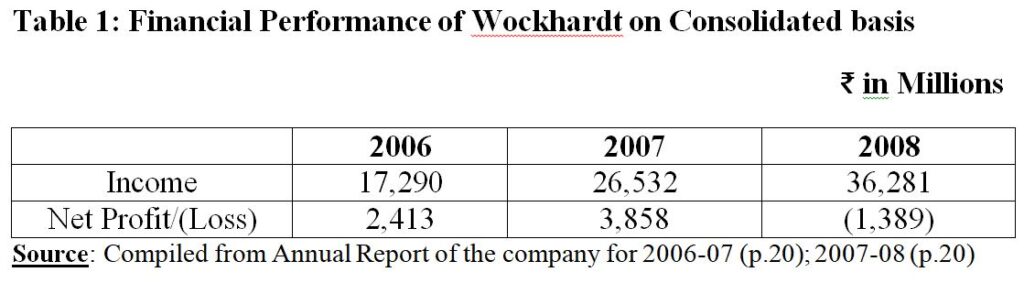
On a consolidated basis, the sales of the company for the year 2008 grew by 44% to ₹35,926 million, and Profit before depreciation, interest and tax had recorded a growth of 23% to ₹8,438 million. It was due to Mark to Market and derivative losses of ₹5,810 million, and a provision of ₹1,295 million towards premium on Foreign Currency Convertible Bonds (FCCBs) for the period from October 2004 to December 2008 that the Company incurred a loss of ₹1,389 million. In October 2004, Wockhardt had issued 110,000 Zero-coupon FCCBs of USD 1,000 each. These Bonds were redeemable on maturity date at 129.578 per cent of its principal amount, only if there was no conversion of bonds on or before September 25, 2009. Therefore, in 2009, the FCCB to the tune of US$ 108.50 million and term loans became due. The company could not meet these obligations, and sought restructuring through CDR mechanism.
From Net Loss of ₹1,389 million for 12 months ended Dec. 31, 2008, Net Loss reached ₹10,007 million on the Total Income of ₹45,309 million for 15 months ended March 31, 2010. In April 2009, the company approached the Corporate Debt Restructuring (CDR) Cell of ICICI Bank Limited for restructuring the debts of the company. During this period, the Company divested Animal Health Care Division to Vetoquinol, France. The business of Esparma GmbH was also divested to Mova GmbH.
During 2009-10, Wockhardt won Government of India Patent Award as the ‘Pharmaceutical Company with the maximum number of Patent filings and grants from India’, with 74 patents granted. From January 2009 to March 2010, the consolidated revenue touched ₹45 billion (US $1 billion). Wockhardt was among the top five companies globally to have received 23 ANDA approvals from the US FDA in a single calendar year (Annual Report 2009-10, p.9). During this period, Europe constituted 48% of the company’s consolidated revenues. Wockhardt was ranked among the top 10 Indian companies in the generic field in the UK pharma market, and was the 2nd largest generics supplier to UK hospitals. The company operated 14 manufacturing facilities in India, the US and Europe.
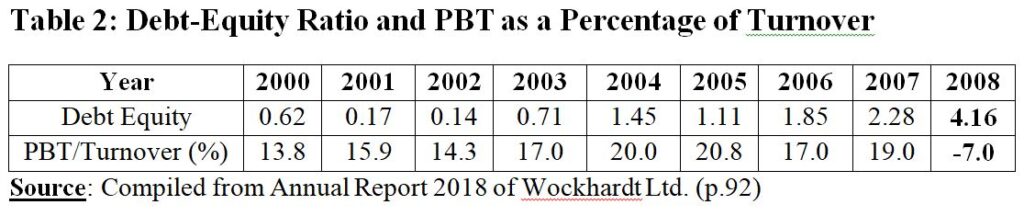
By 2010-11, consolidated revenue declined to ₹37,671 million (or ₹3,767 Cr.) with a Net Profit of ₹905 million from a loss of ₹10,007 million (based on 15 months’ figures) a year ago. However, consolidated revenue had registered a growth of 3% on YoY basis. The CDR was implemented and became effective from April 15, 2009 which was extended till 2018. By 2011-12, the company had 12 manufacturing plants world-over comprising 9 plants in India, and one each in the USA, UK and Ireland. Net Debt/Equity declined from 5.5x in FY10, 3.6x in FY11, 1.9x in FY12, 0.4x in FY13, and 0.1x in FY14.
Other important developments during this period included the divestment of Nutrition business on a slump sale basis to Danone that was completed on July 26, 2012 for a consideration of ₹1,288.31 Crore, and Davinder Singh Brar joining as a Director on the Board of Wockhardt in April 2012. D.S. Brar had served in erstwhile Ranbaxy Labs where he became CEO & MD in 1999. By 2012-13, 83% revenue of the company came from global business, and joined the Billion Dollar club by scaling $1 Bn in Sales. During 2013-14, the company faced a challenge in managing the compliance requirements from the US FDA and UK MHRA. To deal with this, the company increased quality team by almost 40%, devoted over 82,000 hours of training, and achieved a high degree of automation.
By 2015-16, Wockhardt had 7 brands which figured amongst top 300 brands in Indian Pharmaceutical Market, and had 5th position in vaccines, in addition to 4th position in Pain Management. In 2016-17, the company completed 50 years of its existence.
Wockhardt Hospitals has undergone significant shift over a period. In 2009-10, the company had seven super-speciality hospitals, and the company was front-runner in exploring potential of medical tourism. By 2014-15, the no. of super-speciality hospitals came down to 9. By the end of FY25, Wockhardt Hospitals had just five super-speciality hospitals, two each in Nagpur and Mumbai, and one in Rajkot.
In Q4 of 2019-20, Wockhardt divested a part of domestic branded business to Dr. Reddy’s Laboratories that comprised 62 products and related business, assets, and liabilities including manufacturing facility at Baddi (Himachal Pradesh) for a consideration of ₹1,850 Crore. Underlying rationale given by the company was to shift from acute therapeutic areas to more chronic segments as well as to focus on niche antibiotic portfolio of NCEs.
In recent years, visible improvement has been observed for Wockhardt as in Domestic market, Wockhardt was the fastest growing company amongst the Top 5 insulin companies in India during 2024-25. In Europe, UK and Ireland gave edge to Wockhardt as it remained amongst Top 3 Indian Generic companies in the UK, besides being 6th largest generic supplier in Retail and in Hospital channel respectively, in Ireland during 2024-25.
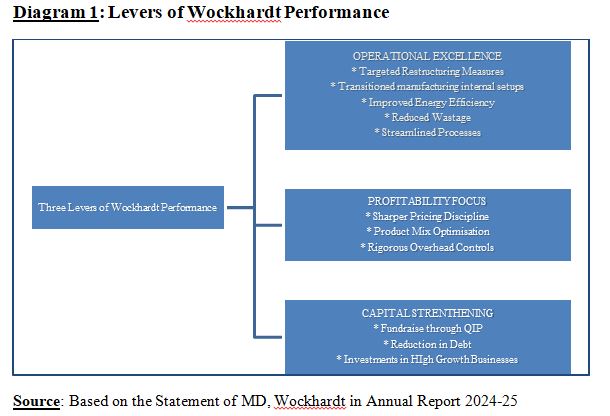
For FY26, UK business contributed ₹1,318 Crore with a growth of 13% as compared to FY25. In Q4FY26, the UK region contributed ₹349 Crore in revenue with a growth of 20% as compared to Q4FY25. From Irish region, the revenue contribution stood at ₹209 Crore in FY26 with a growth of 16% as compared to FY25. Q4FY26 revenue from Irish region stood at ₹52 Crore which was 12% higher than corresponding quarter of FY25.
Wockhardt’s strategy emphasized on Innovation in ‘biotechnology’, and ‘novel antibiotics’ programme. Pioneering biotechnology research of the company can be judged from the fact that Wockhardt was the first Indian company, and fourth in the world, to have developed from ‘concept to market’ stage its own version of recombinant human insulin – Wosulin. In 2009, Wockhardt launched a biotechnology driven long-acting insulin analogue glargine, under the brand name Glaritus. Rather, Wockhardt was only the 2nd company in the world, after the originator, to have developed this product.
To conclude, it can be said that journey of Wockhardt truly chronicles a performance characterized by a never-say-die spirit that soars in prosperity and endures in adversity.
Dr. Anil Kumar Angrish, Associate Professor (Finance and Accounting), Department of Pharmaceutical Management, NIPER S.A.S. Nagar (Mohali), Punjab
Disclaimer: Views are personal and do not represent the views of the Institute.