
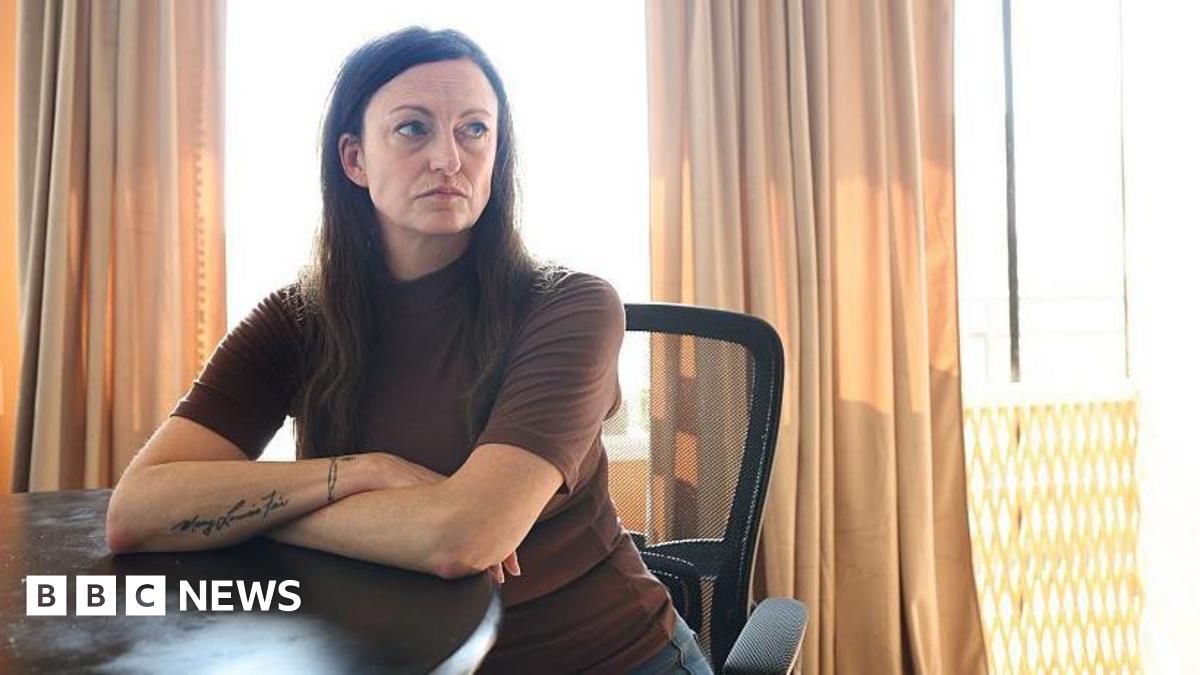
Claire Brosseau has travelled the world doing stand-up comedy and acting in television shows, films and plays. She has also been struggling with diabilitating mental illness from a young age, and has been treated by psychiatrists in four major North American cities over three decades.
Brosseau has tried nearly every treatment available to people like herself with bipolar disorder and PTSD, she said, from behavioural therapy and medication to electric shocks to the brain.
Nothing has worked for the 49-year-old Toronto woman, who described herself as “functionally terminal”, no longer able to work, leave the house or speak with her loved ones. She is now enrolled in a psychiatric care programme at a local hospital that, she said, is designed to support people with severe and persistent mental illness who have exhausted all treatment options.
“There’s nothing left to try, and I’m at the end of my life,” she told the BBC.
Brosseau wants to die by medically assisted dying, also known as euthanasia and in Canada, under the acronym MAID. While it is legal in Canada, it is not currently available to those whose sole condition is mental illness.
“I open my eyes every morning and I feel immediate dread and anxiety,” Brosseau said, adding: “I want a safe death. I don’t want to have to do something horrific.”
Canada has been planning to expand the law to people with severe, treatment-resistant mental illness, but has delayed doing so twice – most recently to next year – over concerns the healthcare system is not prepared. Now, Ottawa is weighing whether to move forward at all.
In the meantime, Brosseau said her illness is worsening and she cannot afford to wait any longer. She has asked an Ontario court to exempt her from the current law and grant her access to medically assisted dying.
Polls suggest the majority of Canadians, external support access to medically assisted death. But the issue has been more fraught when discussing patients with mental illness.
Over the past two months, a parliamentary committee tasked with reviewing whether Canada should expand the programme heard from advocates and medical experts who warned against doing so.
Some argue that assisted dying has, in some cases, become a tool to alleviate suffering of disabled Canadians who would be better served by improved access to affordable housing, healthcare and disability supports.
Others argued that mental illnesses are not yet well understood by medicine, making it difficult to determine if a patient is expressing suicidal ideation or is indeed incurable.
Dr Sonu Gaind, a former chief of psychiatry at a major Toronto hospital, told the committee that “none of those issues have been resolved” since Canada decided to pause its expansion to assisted dying.
“Instead, we have even more evidence showing we are not ready to provide MAID for mental illness,” he said.
What the committee recommends could ultimately shape the programme’s future. Prime Minister Mark Carney told reporters last week that he is waiting for their report before deciding on next steps. “I like to take informed positions,” he said.