
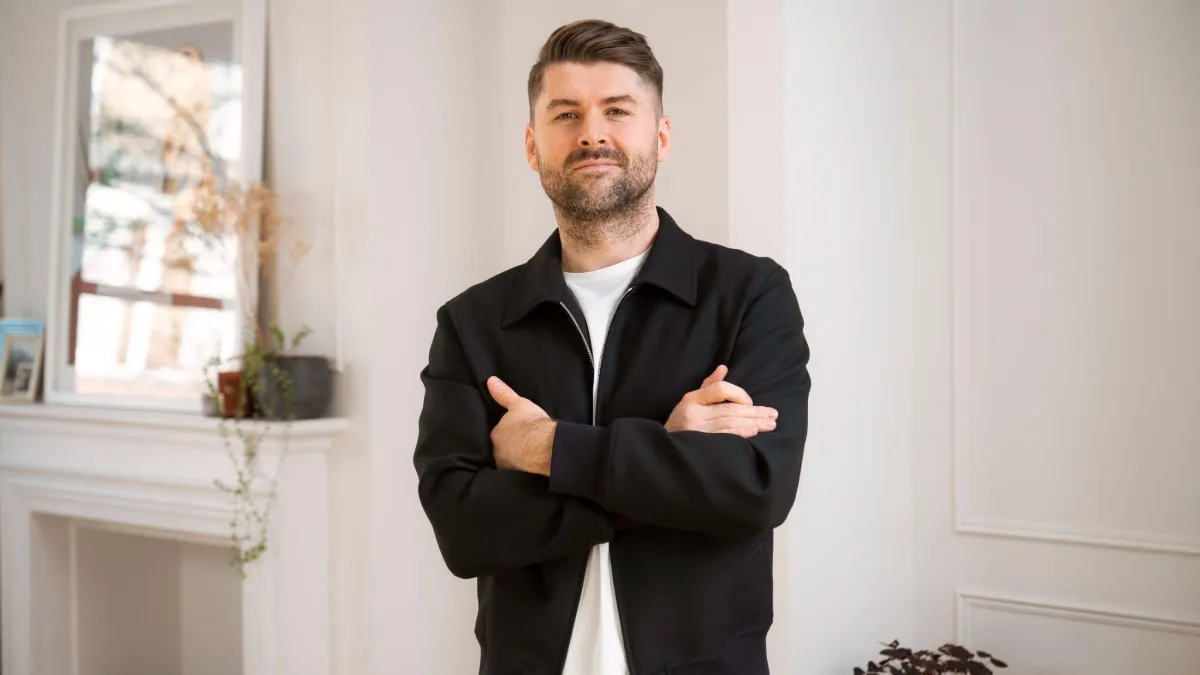
As a teenager, Chris Donnelly was more interested in his blossoming rugby career than grades. He was so unconcerned with the impression he made on his teachers that he started selling cheap toys from China to his school friends to play pranks during class.
His rugby aspirations ended with a series of operations when he was 17. But in spite of a realisation that he now needed to “do the academic thing”, selling laser pointers in class laid the foundation for him to become a founder many times over.
“I wouldn’t have described myself as [a serial entrepreneur] until recently; maybe other people would. But now I would say there is no way back — I could never get a job now,” he said.
Enterprise newsletter
Advice and inspiration for entrepreneurs in The Times Enterprise Network’s briefing.
Sign up with one click
Donnelly sold his first business, a marketing firm called Verb Brands, in 2021 to the New York media agency Croud for $25 million. He made nearly $14 million from the deal and has gone on to found three more businesses in the past five years, including Lottie, a comparison site for care homes.
He and his two brothers drew inspiration from their father’s entrepreneurial lifestyle; he ran a firm that advised retail brands about the best locations to set up shop. Boarding at Wellington College in Berkshire, in part because of its rugby reputation, Donnelly was never academically inclined due to being “severely dyslexic”, but in his spare time he taught himself to build websites.
He went on to Warwick University to study politics and economics, but soon his business aspirations took over when he launched The Real University Guide, a university comparison site, with his older brother, Nick.
Despite reaching significant traffic, the venture failed. “We probably were just quite inexperienced,” admitted Donnelly, now 35. The failure, though, was the catalyst for his next move: the very next day, he began building websites for local businesses.
Towards the end of his time at university, he stopped attending lectures, preferring to spend his time on website development, which earned him between £20,000 and £30,000 a month.
After graduating in 2013, Donnelly rented a small office on Brick Lane, in east London, for £400 a month to start work on the creation of Verb Brands. Ben Askins joined him as co-founder in 2014.
Verb Brands originally focused on building websites and then social media profiles for companies. The cast of Made in Chelsea asked Donnelly to build them a website in exchange for some exposure.
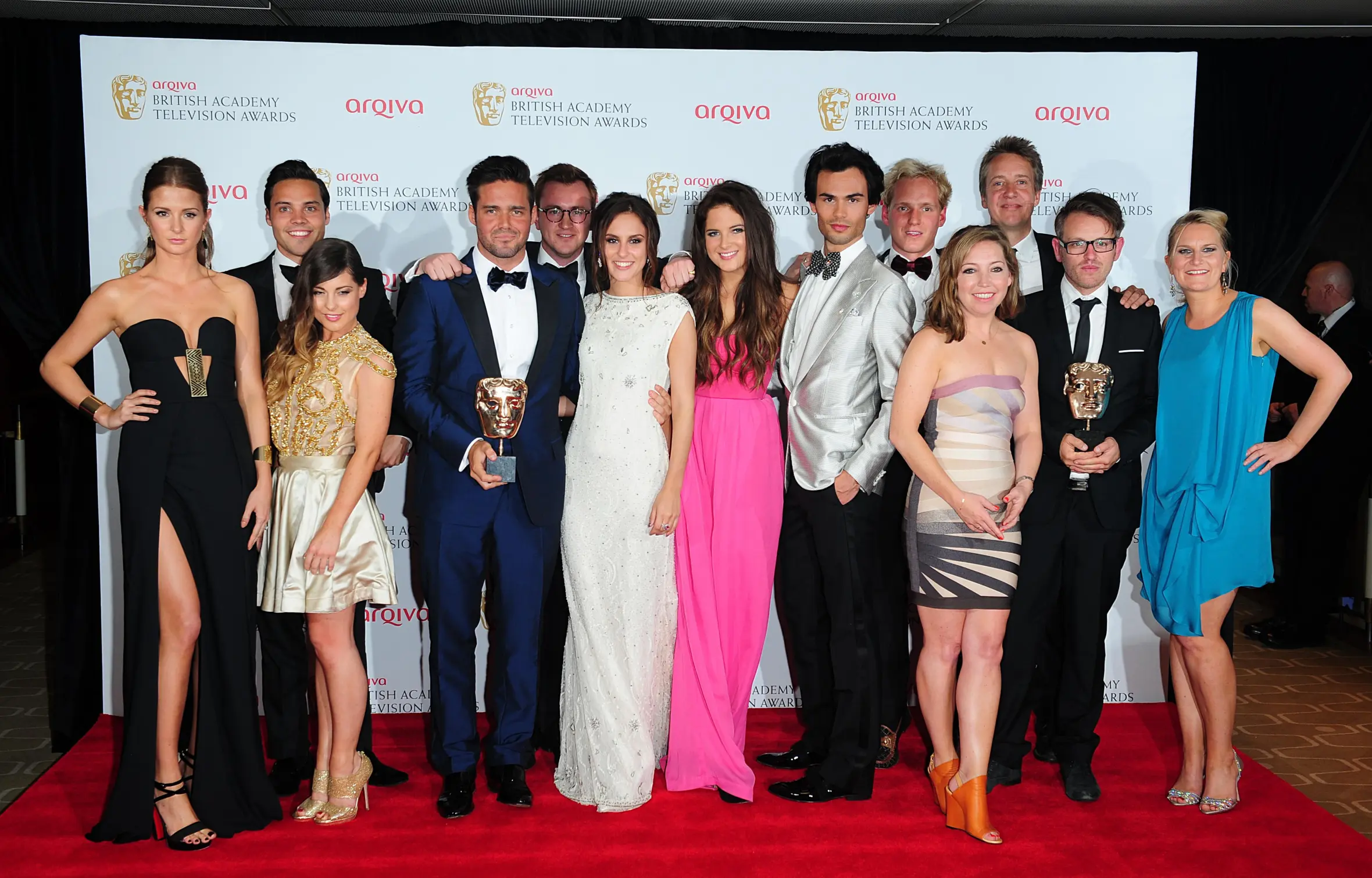 Made in Chelsea stars at the Baftas Alamy
“We did a free website for them, which was pretty painful at the time, and they started tweeting about us on their massive Twitter accounts,” he said. “Loads of brands saw us, which led to lots more opportunities.”
The company landed a contract with Sunseeker Brokerage, a yacht dealership. Verb Brands then focused on becoming a luxury marketing agency, using Sunseeker as a case study to get more work.
“One of the best choices we made was to focus on luxury, because they move slower than mass-market brands,” said Donnelly. “We moved quite fast on things like running social media, SEO and pay-per-click — [faster] than most other agencies at the time.”
Verb Brands expanded in 2017 by acquiring another firm and winning clients such as Bugatti, Aston Martin, LVMH and Harrods.
 Aston Martin was among the big client wins for Donnelly’s marketing firmMARTYN LUCY/GETTY IMAGES
The company started targeting businesses in the US and Donnelly spent half his year in New York. By 2020, Verb Brands’ revenue had reached £5 million, but the pandemic stalled growth. Marketing teams began pulling their budgets and, to save the company, 80 per cent of its staff were placed on furlough. Donnelly and Askins started posting on LinkedIn daily about luxury to build their personal profiles.
Towards the end of 2020, Donnelly said many luxury brands realised they needed to start selling online instead of relying on boutiques. Because Verb Brands had positioned itself as a go-to brand for luxury companies, the phone started “ringing all day”.
However, the financial strain faced by Donnelly during the pandemic prompted him to sell the company. He had “under-indexed” on paying himself, and after seven years of work, he felt he had “nothing to show for it”.
While he was making for the exit at Verb, his younger brother, Will, approached him with a new idea born out of their family’s frustrating search for elderly care. “Across all four grandparents, we had very specific challenges — from poor home care to bad home choices, to a grandpa who was basically in bed at home for ten years.”
Together, they launched Lottie, a comparison marketplace for care homes. The business took off, aided by high-profile investors such as Tom Blomfield, the co-founder of Monzo. Donnelly attributes some of the company’s success to “feelgood” marketing — pink branding and recreating Taylor Swift album covers featuring care home residents.
 Lottie Organisation
In the early years of Lottie, Donnelly built up his social media presence and his followers grew to more than one million.
Meanwhile, Lottie continued to grow. When sales reached £5 million in 2025, Donnelly stepped back from the company to let his brother take the reins. “At the beginning, I was the entrepreneur and he was the subject matter expert. But five years in, he was the chief executive,” he said.
Donnelly took a three-month break, going on a delayed honeymoon after getting married in 2022.
He returned to find demand for his social media expertise and went on to launch The Creator Accelerator, a training programme for other entrepreneurs to build their brands. The company had a £5 million turnover in 2025. Donnelly trusts his team to run the company on his behalf and gets involved only when he is “invited to teach a cohort”.
After his three-month holiday, Donnelly also briefly took a position at Lovable, the Swedish AI software development firm. The experience at the fast-growing start-up inspired him to found his latest company, Searchable, an AI-driven platform that helps companies optimise their marketing to rank higher on AI search engines.
Ask me anything
Best advice received … Spend most of your time on recruitment.
Best business tip … Don’t fight a rising tide.
Someone I admire … Tom Blomfield. He built GoCardless, then he built Monzo and now he teaches at [the start-up accelerator] Y Combinator in San Francisco. As a UK-based entrepreneur, that’s an unbelievable story.
Best decision … Having technical co-founders for Searchable.
Worst decision … Trying to run Lottie and Verb Brands at the same time.
A motto to live by … Why not us?
Best way to start the day … A cup of coffee.
He co-founded the company with Sam Hogan and Arya Nagabhyru, two engineers he met through Y Combinator in San Francisco.
The company launched last November and shortly after raised £3 million from Freestyle, an early-stage venture capital firm. In April this year, Searchable raised a further £10 million in an investment round led by Headline, another VC firm, giving it a valuation of more than £60 million. Donnelly said Searchable had reached revenues of $4.5 million (£3.4 million) since launch and that customers included American Express, KPMG, Pfizer and Boston Consulting Group.
“I’ve always thought that I’m not really an ideas person; I’m more like an executor. Searchable was probably my first good idea,” Donnelly said. “The agency was a consultancy business at which I was a good executor, Lottie was my brother’s idea, [and a] teaching and coaching business is not a new idea. I feel more passionate about this idea than I have of anything previously.”
While he has promised his wife not to create a new firm for a while, he said he still has an “internal push” to “build a big business”.
“I want to build a big, lasting, generational type of business, and I feel like I have never had the skills or the aptitude until now.”