
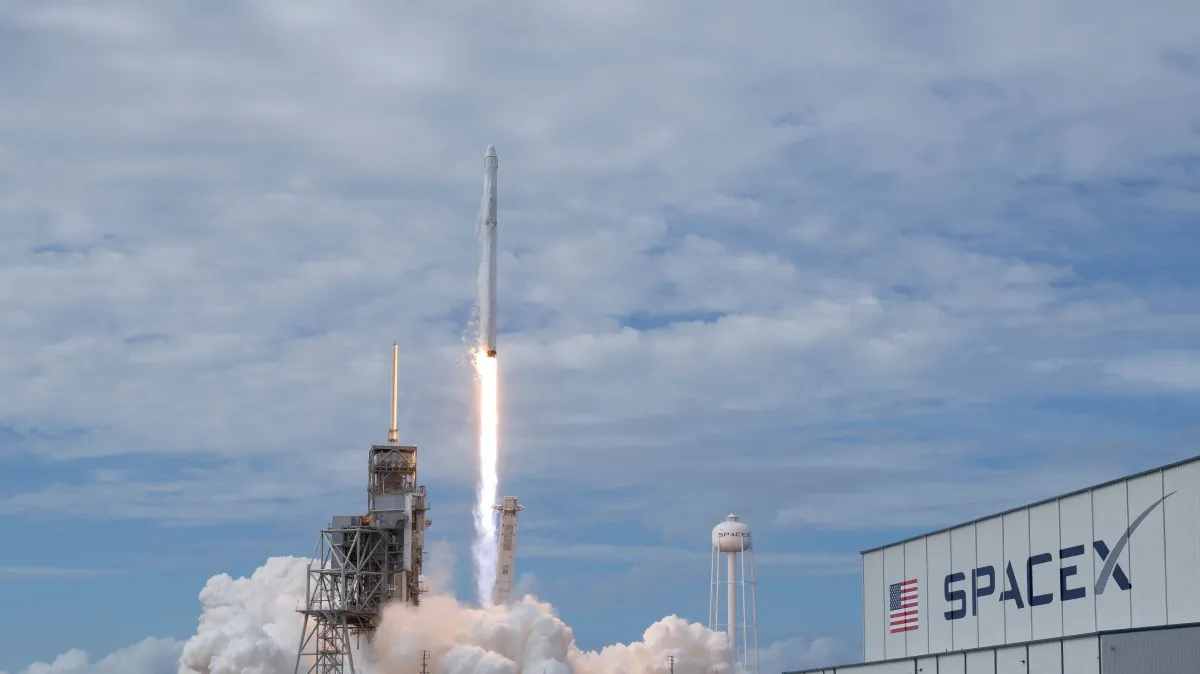
Elon Musk, dressed in a black suit and black tie, shifted in his seat, staring into the middle distance of a courtroom in Oakland, California, last month as he pondered the future of the human race — and the role that one of his companies, SpaceX, has in securing it.
“It’s life insurance for life as we know it,” he explained flatly. “The goal of SpaceX is to make life inter-planetary, to extend life beyond Earth and ensure the long-term survival of life and consciousness as we know it.”
It was the beginning of Musk’s testimony last month in his blockbuster case against Sam Altman, whom he has accused of “stealing” OpenAI, the creator of ChatGPT. (Musk was a co-founder and early funder.)
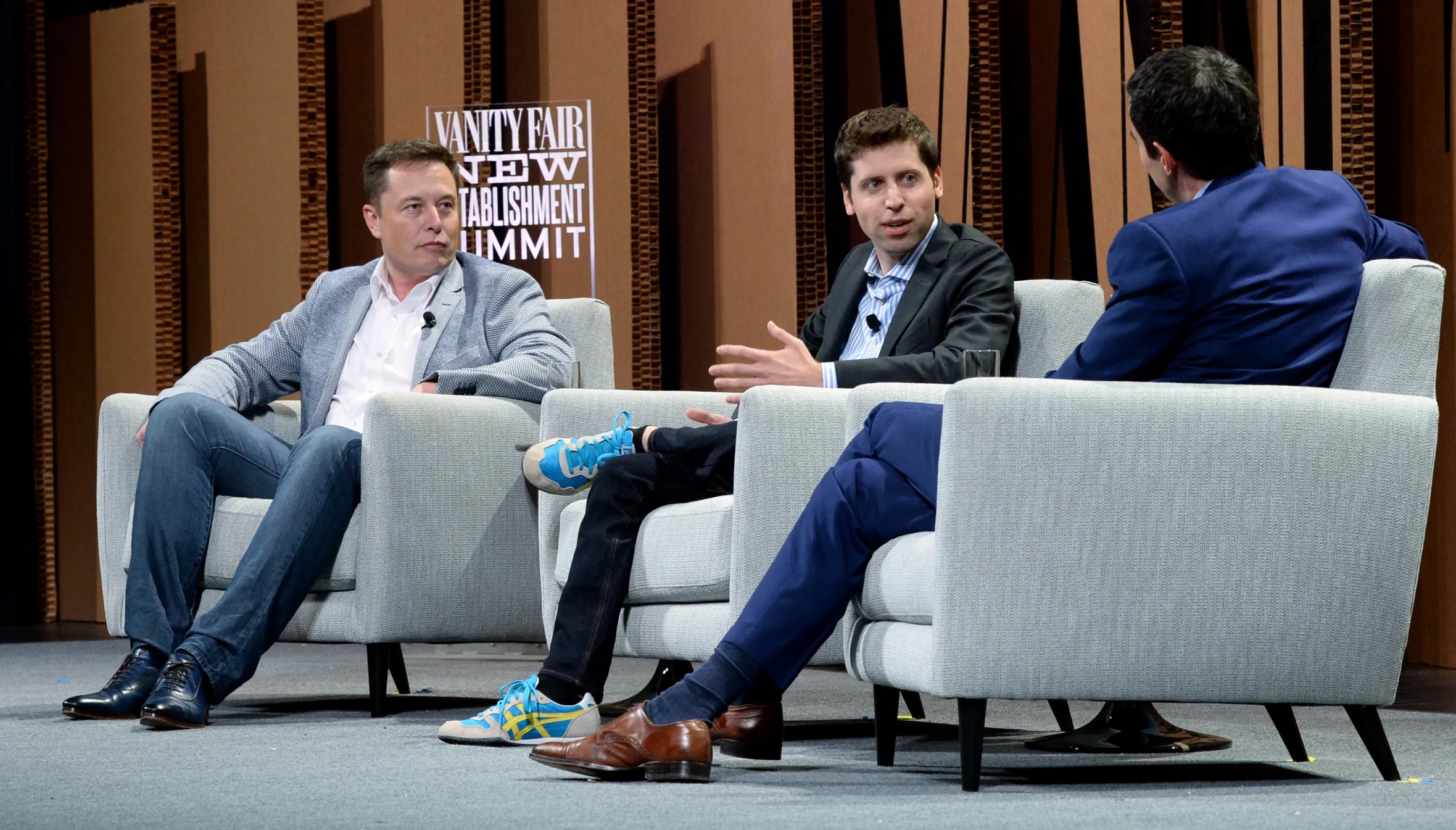 Elon Musk and Sam Altman at a discussion in 2015, in San Francisco, on the next frontiers of technologyMICHAEL KOVAC/GETTY IMAGES
As the trial opened, the 54-year-old South African’s lawyers aimed to impress upon the jury the extraordinary nature of their client, framing him as an unrivalled titan of industry.
And what better way to do so than let him rhapsodise about the company that makes spaceships, which he started 24 years ago with the cash from his previous business, PayPal. No one, Musk included, thought it would succeed. “I generally think my companies are going to fail until proven otherwise,” he explained. “Anyone who was good wouldn’t join us, because I was just an internet guy. It did seem improbable, frankly.”
Of course, SpaceX did succeed. And now Musk is pushing ahead with a gigantic stock market float next month in New York that will, very likely, be the largest in history, valuing SpaceX at up to $2 trillion (£1.5 trillion). The company is expected to file paperwork for its initial public offering (IPO) next week, with the float due on June 12, under the ticker “SPCX”.
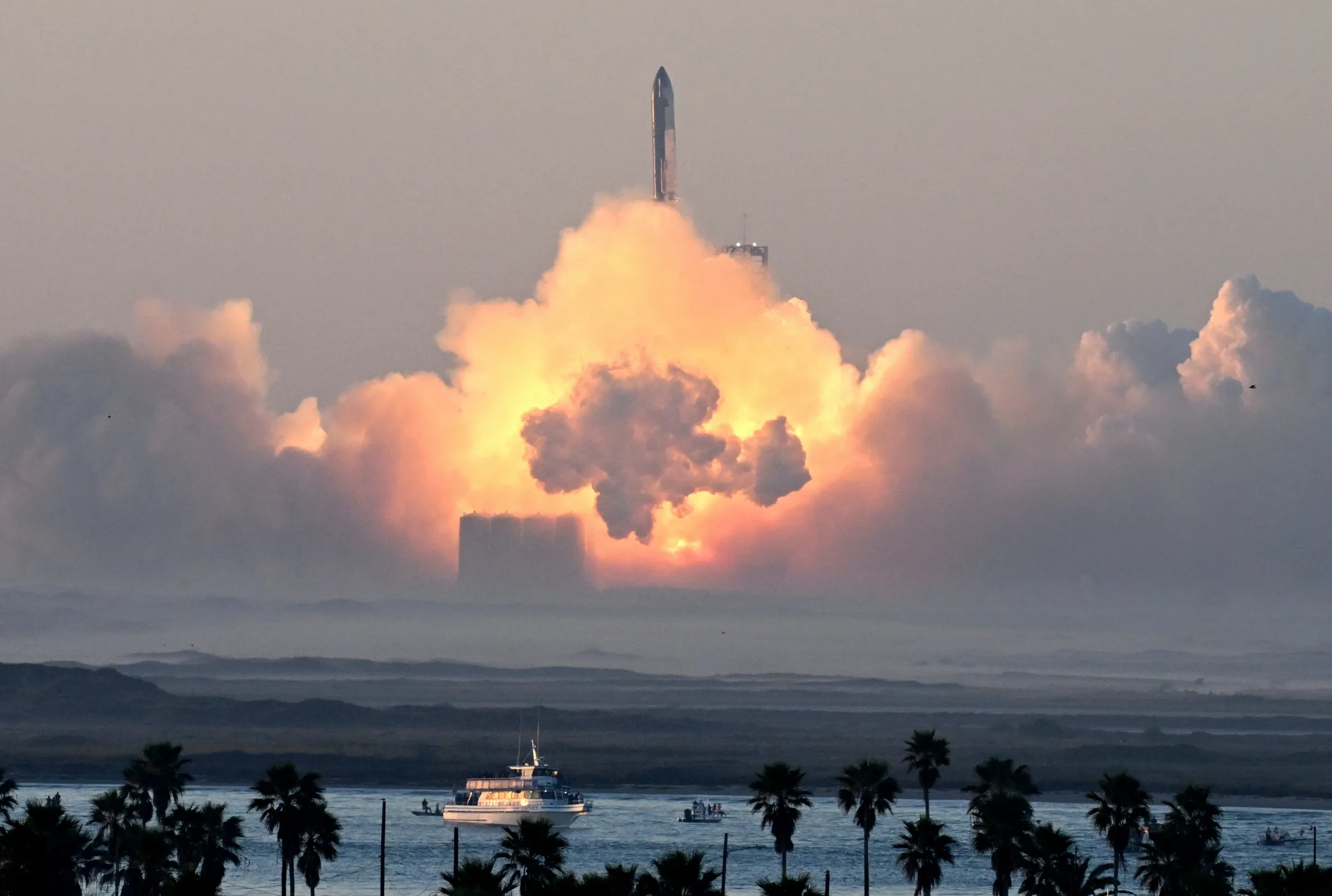 A SpaceX Starship rocket blasts off from Starbase in Texas in 2023 TIMOTHY A CLARY/AFP
The mega deal will mark the culmination of the science-fiction childhood dreams of its founder. SpaceX is perhaps the most unusual collection of assets ever assembled under one roof and offered up to the public. It is, in effect, Elon Musk Inc.
SpaceX, based at Starbase, on the Gulf coast in Texas, employs more than 17,000 people and is the primary transport service taking astronauts to and from the International Space Station. It controls 80 per cent of the launch market and fires a rocket into the heavens every other day.
The company also operates Starlink, the fast-growing provider of high-speed internet beaming down to Earth from the largest collection of satellites in history. And because Musk never appears content to adhere to convention, in February he merged SpaceX with xAI, which includes the social media platform X and the xAI artificial intelligence lab, and is also an operator of vast data centres with names such as Colossus.
Last month, Musk added one more piece to this strange jigsaw: he struck a deal with the AI coding start-up Cursor that gives SpaceX the option to acquire the San Francisco company for $60 billion later this year.
The investor roadshow for the company’s listing — the series of pitches designed to convince money managers to buy up to $75 billion worth of the new SpaceX stock — is set to kick off June 8. What will they be buying? SpaceX has not filed papers publicly yet, but leaked numbers have revealed a deeply lossmaking jumble of what appear, for now, to be tangentially related businesses.
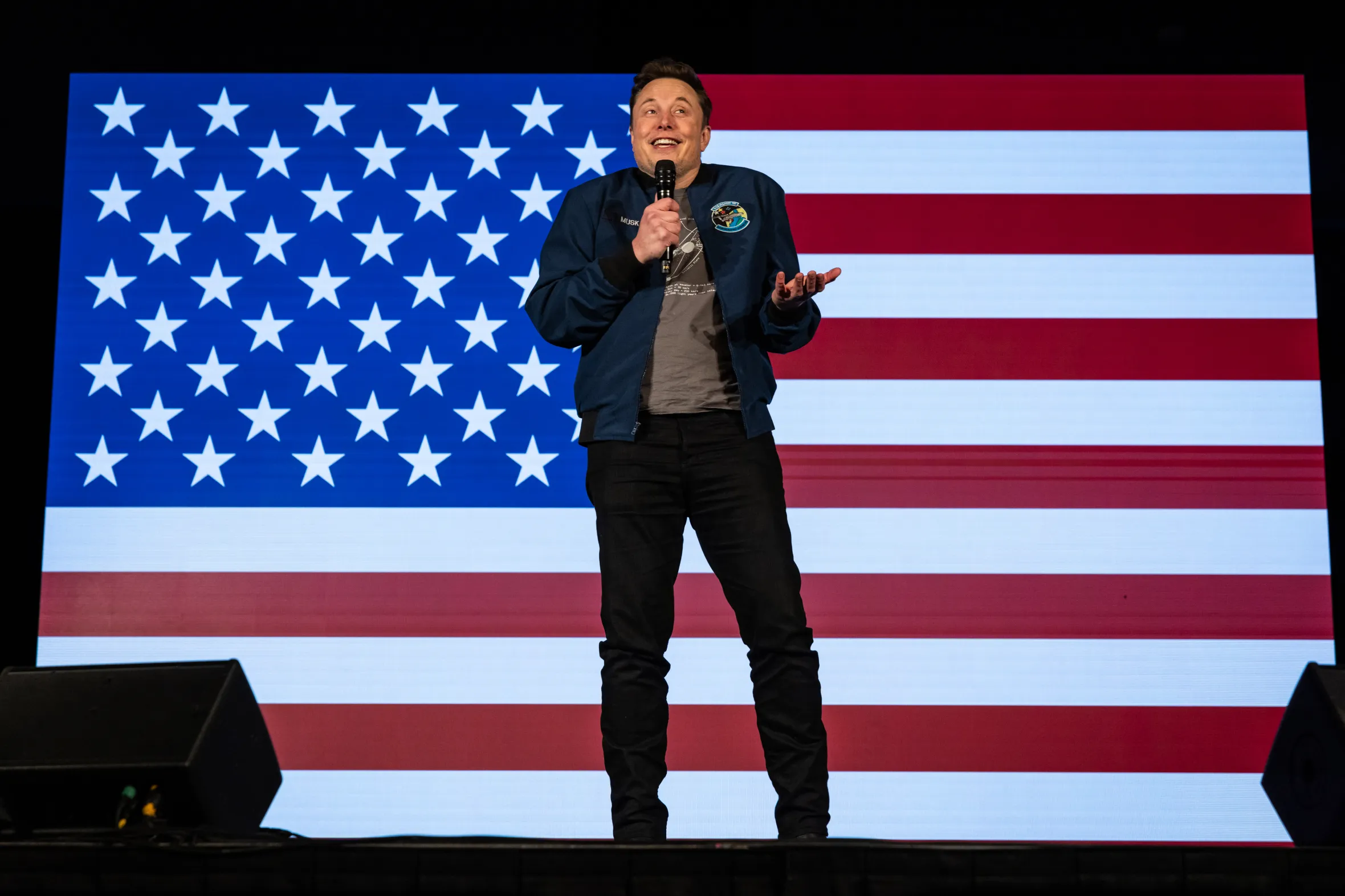 Elon Musk is hoping for lift-off on the stock marketSAMUEL CORUM/GETTY IMAGES
The company last year lost $5 billion on $18.5 billion in sales. This was mostly due to Musk’s vast spending on new data centres to power xAI. Starlink is the cash cow — accounting for roughly two thirds of the group’s sales — and it is growing fast; customers have tripled to more than ten million people over the past two years as SpaceX, by the week, lofts more satellites into orbit to increase coverage areas and speeds.
Yet Musk has tied the financial equivalent of an anvil to his high-flying space venture by appending his terrestrial businesses; the social media and AI operations are losing billions. Which makes the purported $2 trillion valuation a head scratcher. Investors will be asked, in effect, to discard any meaningful financial metric. Instead, Musk will try to entrance them, as is his wont, with his uniquely fantastical vision of the future.
AI, he has predicted, will make work “optional, like growing your own vegetables instead of buying them from the store”. To power this future, he will construct vast, solar-power data centres in space that will orbit the globe at 22,000 miles an hour. And he will, of course, colonise Mars as a “back-up plan” in case everything goes terribly wrong on Earth due to, say, climate change or rogue AI.
If he does all of that, Musk will become an even richer man. Leaked documents earlier this year indicated that he would be awarded millions of super-voting restricted shares if the company hits a market value of $7.5 trillion and establishes a permanent human colony on Mars with at least one million people.
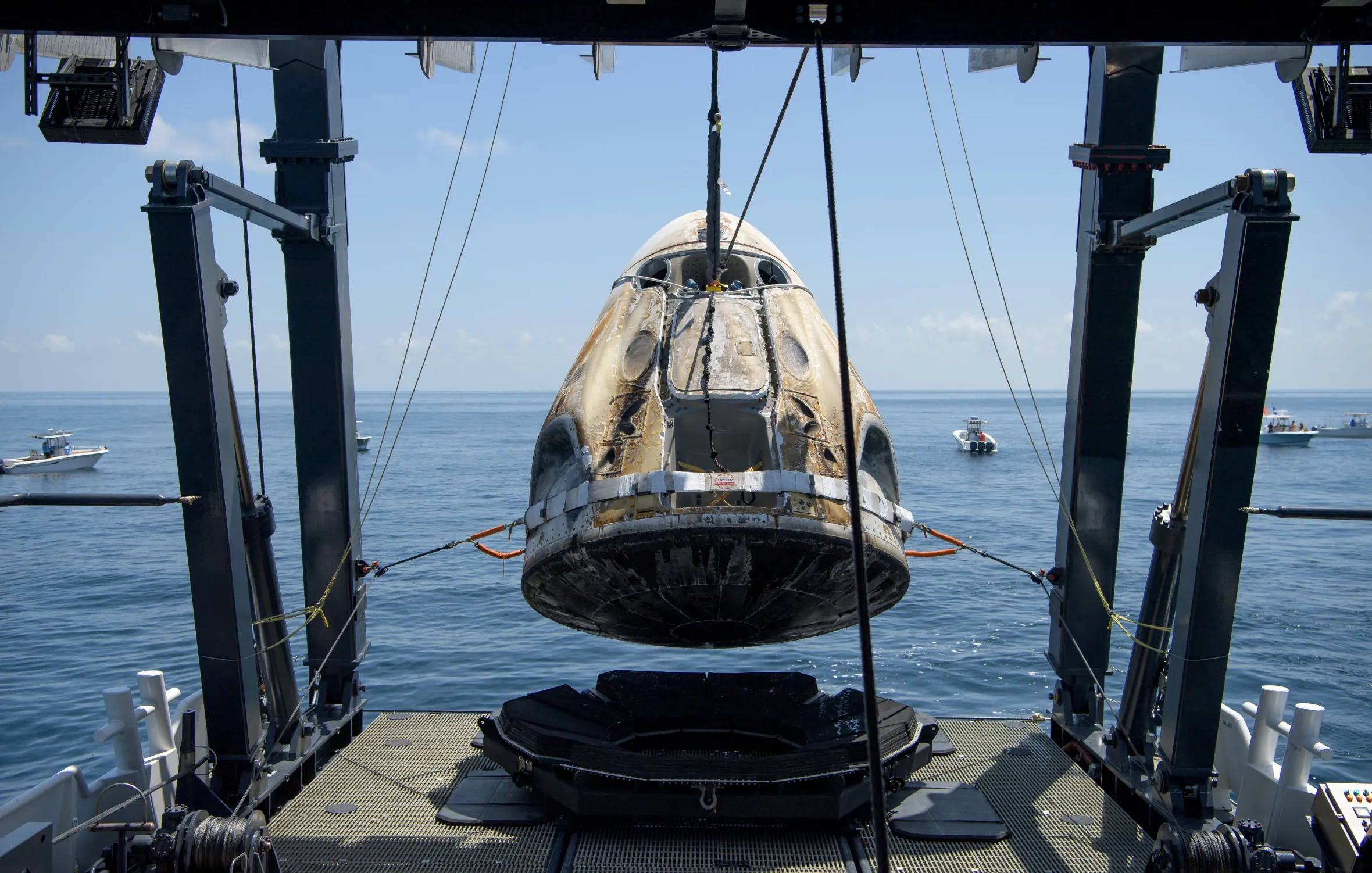 The SpaceX Crew Dragon craft being recovered after it splashed down in the Gulf of Mexico in 2020REUTERS
Of course, investors could get very, very rich, too — if the float goes to plan. Aswath Damodaran, an expert in company valuation at New York University’s Stern School of Business, recently estimated SpaceX’s value — based on the limited public information — at $1.2 trillion. But he predicted that Wall Street analysts would employ “pricing gymnastics with forward multiples, hand-picked peer groups and fairy tales to justify their [bullish] positions”.
He added: “Love him or hate him, Musk is definitely not boring, and his capacity to spin business narratives that seem outlandish at first hearing but become conventional wisdom later clearly adds to the allure of SpaceX.”
Investors in London-listed companies will also share in the spoils. Investment trusts Scottish Mortgage, the Schiehallion Fund, Baillie Gifford US Growth and Edinburgh Worldwide have holdings in SpaceX.
Most extraordinary of all is how close the company came to, quite literally, going up in smoke.
It was 2008 and SpaceX was about to run out of money. Musk had made a boatload of cash six years before from the sale of PayPal to eBay, and he put most of it, $100 million, into an insane idea: a start-up rocket company. Governments built rockets, private firms did not — and certainly not companies run by someone with zero experience in space flight. But Musk had long been obsessed with colonising Mars.
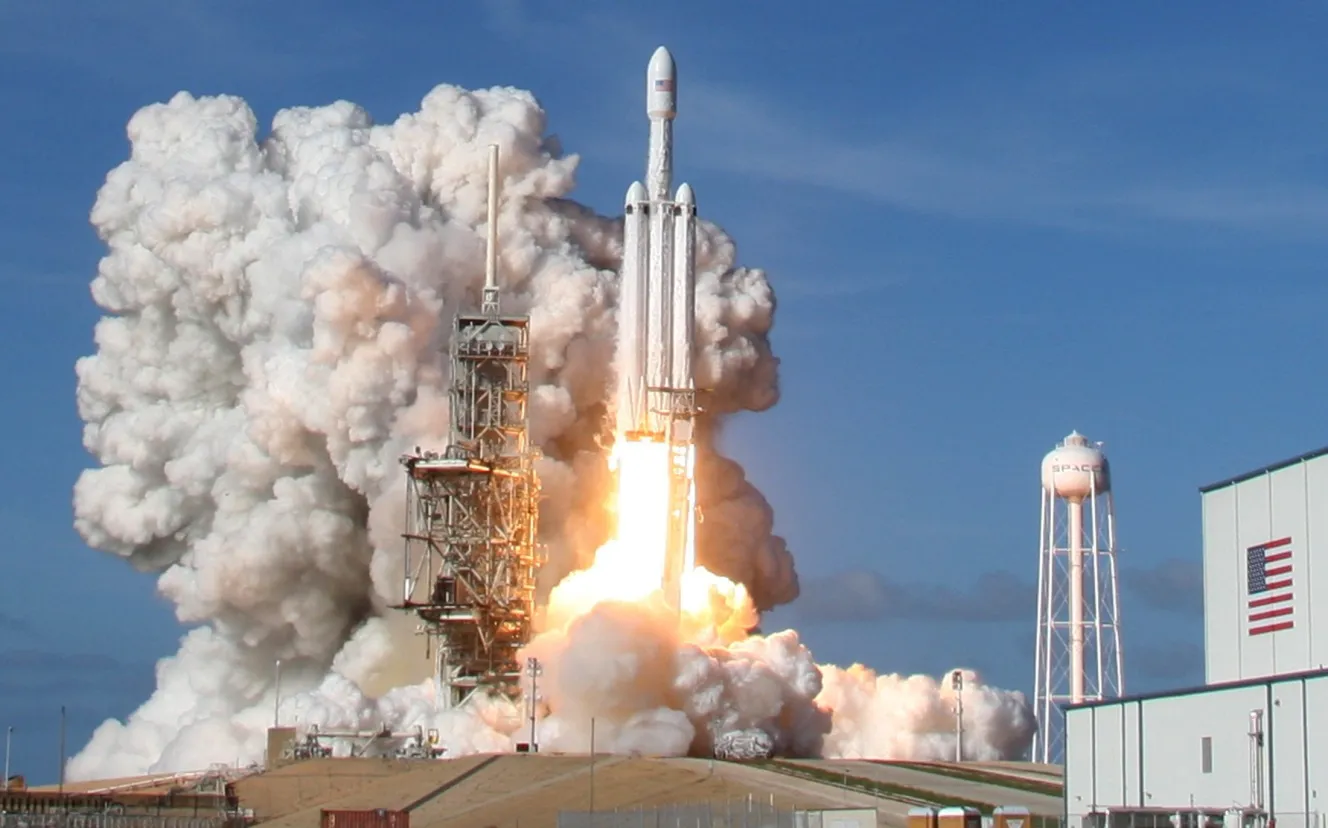 A Falcon rocket lifts off from Cape Canaveral in Florida in 2018. The craft was Musk’s saviourTHON BAUR/REUTERS
So, in 2002 he founded SpaceX to design, from scratch, a reusable rocket that could theoretically be orders of magnitude cheaper than other rocket systems in use at the time. It did not go well: SpaceX’s first three rockets blew up. By 2008, it was a small company with nothing but very public, spectacular failures and a rapidly dwindling bank account.
But Musk had one final throw of the dice: a fourth launch. On September 28, 2008, his Falcon 1 rocket successfully reached orbit from Omelek Island in the Pacific. Three months later, the Nasa space agency awarded SpaceX a $1.6 billion contract to fly cargo to the International Space Station. SpaceX was saved. And just as Tesla kick-started the electric vehicle industry, SpaceX has done the same for the space industry.
 SpaceX technology has advanced to perform the most complex manoeuvres
In the old days, if you wanted to get kit into orbit, you had to book space on the Space Shuttle or a Russian state rocket. SpaceX has collapsed launch costs 20-fold, allowing an array of start-ups to gain a toehold in space — from firms developing zero-gravity manufacturing equipment to asteroid miners and imaging satellites.
Adam Jonas of Morgan Stanley bank recently published a list of 60 companies set to benefit from the space boom. “A combination of scientific advancements, geopolitics and economics has rekindled investor attention on the space theme to the highest levels we have seen since launching the Morgan Stanley space team nearly a decade ago,” he said.
Before the lawsuit, Sam Altman spoke to Walter Isaacson for a 2023 biography of Musk. He told the author: “Elon desperately wants the world to be saved — but only if he can be the one to save it.” SpaceX is the manifestation of that saviour complex. And as of next month, anyone can have a piece.
It might be a steal. Or perhaps a disaster. But as Damodaran at the Stern School of Business said, it certainly won’t be boring.