
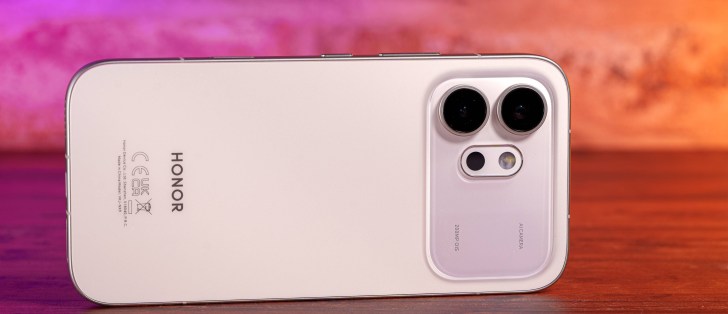
Non-Pro is just like the Pro, minus the telephoto
Just like the Honor 600 Pro, the vanilla Honor 600 doesn’t change much in the camera hardware compared to the previous model, and the differentiator between Pro and non-Pro remains the higher-tier model’s telephoto camera – the Honor 600 doesn’t have one.
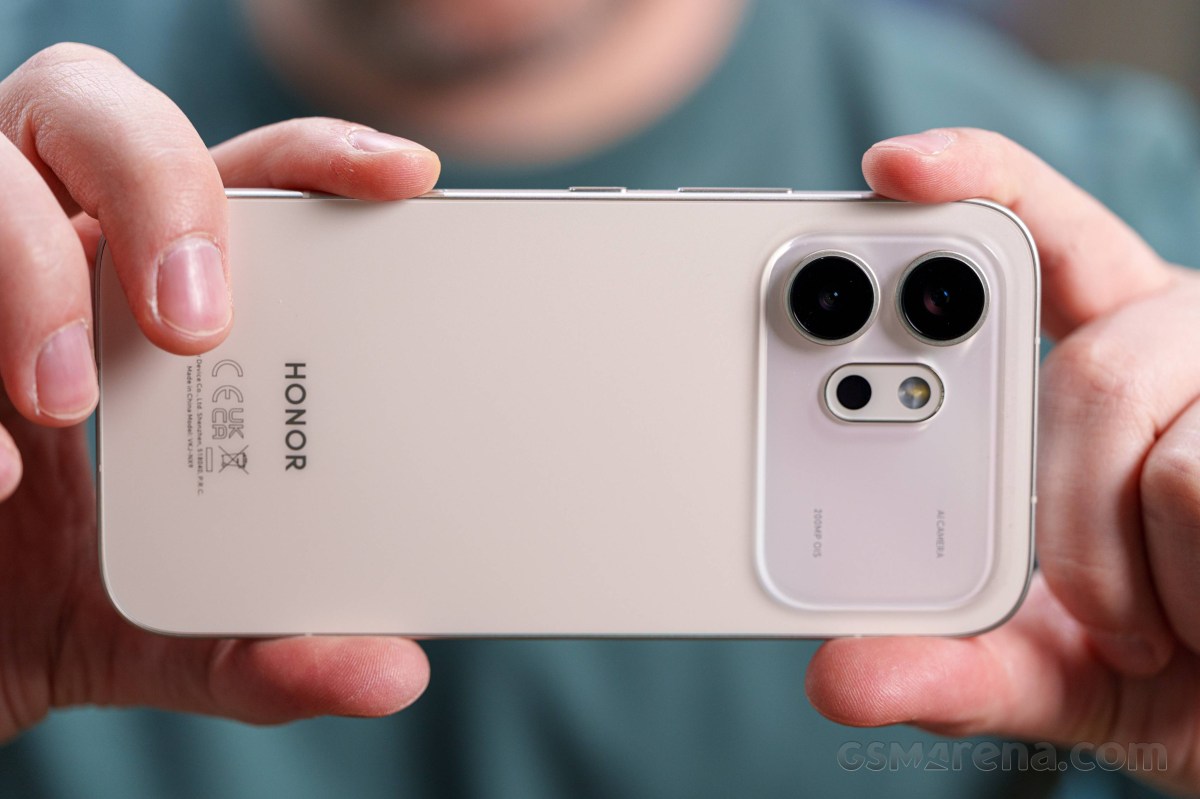
The other cameras appear to be shared between the two models, and by all accounts, they’re the same cameras as last year, though with Honor’s reluctance to disclose the sensors in hardware apps or their specs pages, there’s always a chance that something’s been changed.
The main camera on the back is a 200MP main unit with a 24mm equivalent stabilized lens. It may very well be the Samsung HP3 sensor – the numbers check out – but we can’t be sure. We know from the 600 Pro that 2x zoom is pretty great from that camera, and it’s only past that zoom level that the lack of a telephoto camera will start to show – more on that later.
The ultrawide camera is based on a conventional RGB sensor (as opposed to a Quad Bayer type one) with a 12MP resolution, paired with a 16mm lens that features autofocus.
A bit of a missed opportunity is the lack of AF on the selfie camera, which is an enduring injustice in the lineup. Still, as AF-less selfie cameras go, we know this one to be a top performer – a 50MP sensor with a 21mm equivalent lens – what’s not to like?
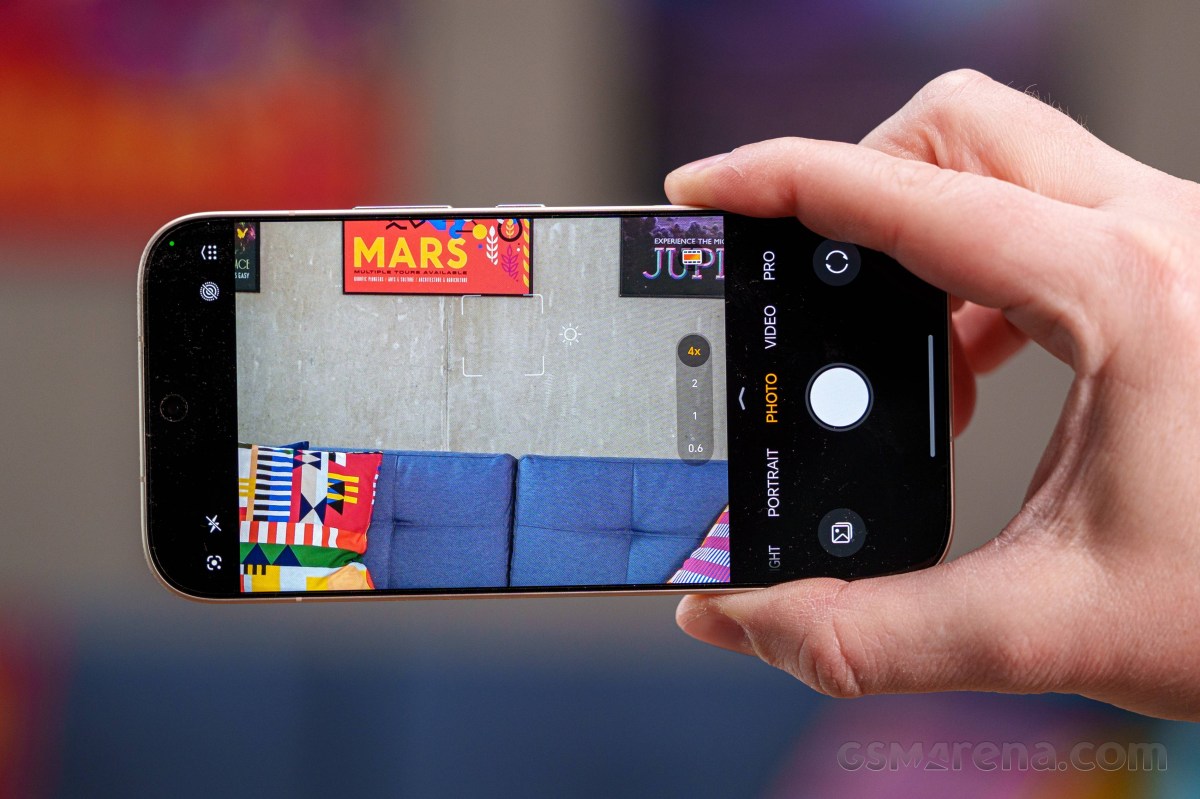
Wide (main): 200MP (1/1.4″, 0.56µm-2.24µm); 24mm, f/1.9, OIS, PDAF (9cm – ∞); 4K30/1080p60 video recording.
Ultrawide: 12MP; 16mm, f/2.2, PDAF; 4K30.
Front camera: 50MP (1/2.88″, 0.61µm-1.22µm); 21mm, f/2.0, fixed focus; 4K30/1080p60.
The Honor 600, like the 600 Pro, has an extra Honor AI button that can be assigned to launch the camera app and act as a shutter release button (no two-stage action or capacitive swipe functionality – it just clicks). There’s not a whole lot of customization – within the camera app, other than the single click to shoot, you get long press for either burst shooting or video recording.
Daylight photo quality
Main camera
The camera hardware might be identical to that of the Honor 600 Pro, but the vanilla 600 takes slightly different pictures with its main camera – still properly great, just a little different. For one, the 600 applies a small crop to the image when shooting in the default 12.5MP resolution, and shots come out at 27mm equivalent (as opposed to the native 24mm, which the 600 Pro uses). The other difference is a bit of an uptick in saturation, most visible in greenery, though it’s not too dramatic. Overall, we’re looking at pleasing colors and a wide dynamic range with still great contrast. Detail is excellent too, particularly in bright outdoor conditions, but also in dimmer indoor setting, though the Pro does have a bit of an advantage in those latter cases.








Daylight samples, main camera (1x)
Why you’d want to shoot in 200MP is beyond us, but here’s a handful of samples shot at the nominal resolution – there are no inbetween settings like 25MP or 50MP. Come to think of it, maybe might want to get that 24mm native field of view – the 200MP mode will get you that, and you can then proceed to downscale the shots to more manageable dimensions.




Daylight samples, main camera (1x), 200MP
Portraits are great too, with lively skin tones and well-rendered facial detail. Portrait mode might just be a little prone to missteps with subject detection, but we saw no actual blunders.






Human subjects, main camera (1x): Photo mode • Portrait mode
2x zoom photos are easy to praise too. While they may be just a smidge less sharp than the Pro’s 2x results, the ones we’re getting here are still quite excellent. Dimmer indoor scenes are slightly more noticeably behind the Pro’s but still easily good enough and perhaps hard to rival in the class.








Daylight samples, main camera (2x)
Another manifestation of the phone’s 2x greatness is close-ups, where at the minimum 9cm focusing distance you’d be getting a pretty large reproduction ratio and excellent detail.




Close-up samples, main camera (2x)
2x portraits are also top-class, though you’d need to be sticking to Photo mode to get the excellent detail – Portrait mode introduces a notable drop in quality. The camera has a decent level of optical separation between subject and background though, so the computational bokeh may not be entirely needed.






Human subjects, main camera (2x): Photo mode • Portrait mode
Where the Honor 600 trails its more esteemed Pro stablemate to a significant degree is zoom in power beyond 2x. The Honor 600’s main camera does manage to put out good results at 4x in outdoor scenes – not pin-sharp, but still quite good – but sharpness does drop indoors. The Pro’s dedicated 3.5x zoom camera is obviously a major advantage when it comes to reach.








Daylight samples, main camera (4x)
Ultrawide camera
The Honor 600’s ultrawide camera doesn’t spoil the good impression and delivers solid outdoor shots and a slightly less detailed but still not half bad indoor results. Weirdly enough, the Pro has a miniscule advantage in sharpness outdoors, but that fades indoors where the shadow softening is about the same on both. The vanilla model still has a bit more punch in its colors, but hues are looking great overall. Just like on the Pro, contrast can be a touch higher than we’d like.







Daylight samples, ultrawide camera (0.6x)
Low-light photo quality
Main camera
The Honor 600 takes its main camera excellence into the night as well. You’d be getting detailed low-light shots, with accurate white balance and great color saturation. Exposures do tend to be a little dimmer than we’d like, same as on the Pro, but there’s still good shadow detail and highlights are kept in check. The 600 Pro has a minor advantage in the darkest of scenes, we’ll give it that.








Low-light samples, main camera (1x)
Quality does drop at 2x, but we’d still consider the Honor 600’s results good – in absolute terms, but even more so for the class. If you want slightly better shots at 50-ish millimeter focal length, the Pro will give you those, but it wouldn’t be a massive difference.








Low-light samples, main camera (2x)
Zooming in to 4x isn’t really advisable on the Honor 600 in the dark, unless you’ll only be viewing the shots on the phone itself, or you’ll be sharing them heavily compressed anyway. That said, even at fit-to-screen magnification on a computer, you’ll probably be able to spot the blotchiness. It does pay to… pay more for the 600 Pro if you plan to be shooting beyond 2x, particularly in low-light settings.






Low-light samples, main camera (4x)
Ultrawide camera
The ultrawide camera isn’t really impressive at night, but doesn’t outright disappoint either. Its shots can be soft and noisy – more so the darker the scene, of course. But we’re still looking at great dynamic range and good color rendition, so with the right expectations you’ll probably be fine. The Pro tends to be a little cleaner, while the vanilla phone leans towards less noise reduction, though it could be down to the lesser chipset on the plain 600 not being as good at noise reduction.








Low-light samples, ultrawide camera (0.6x)
Selfies
You can count on properly excellent selfies from the Honor 600 in board daylight, with nicely fine detail and pleasing skin tones. There will be a drop in quality indoors as it dials up the sensitivity, and at night photos will be softer still – the Pro is better at handling less than ideal light. Selfie close-ups won’t be sharp though – there’s no escaping the fixed focus’ sweet spot, which may be relatively large but it doesn’t cover phone-up-your-nose scenarios.








Selfie samples
Photo quality verdict
The Honor 600 is a capable stills camera that will keep you quite happy as long as you’re aware of its limitations. It’s got a superb main camera on the back that delivers top-class results at 1x and 2x in good light, maintains excellence at 1x at night and is quite good at 2x in the dark as well, within its class’ context. If you’re into zooming in beyond 2x, however, you’d best look at a more premium model with a dedicated telephoto camera, though the 600 might just be decent enough at 4x in broad daylight. People shots are excellent at 1x and 2x (with Portrait mode quality being a little iffier), close-ups are superb at 2x, selfies are wonderful in good light (and decent in the dark).
Video quality
The Honor 600 can record video at up to 4K30 with its main camera and you have to switch to 1080p if you’d like 60fps capture – the 600 Pro would happily do 4K60 as well. The ultrawide maxes out at 4K30, with no 60fps mode even at a lower resolution and the selfie camera can do 4K30 or 1080p60.
The h.265 (HEVC) codec is the default setting, but you can toggle it off and use the older h.264. The vanilla 600 doesn’t support HDR video recording – the Pro offers HDR Vivid for all quality modes.
Stabilization is always on, and there are no specific modes or extra settings.
The Pro video mode adds exposure, white balance, and focusing options, and has a simple live histogram (not a waveform). However, it won’t allow for 24fps recording.
You can hit ‘> play’ below and use the ‘>| next’ button to advance through the playlist of all video samples, or you can watch the full playlist on YouTube.
Daylight videos from the main camera are very good, possibly excellent for the class. Exposure is on point, dynamic range is very good, though contrast just might be a touch too high, colors are looking great. Sharpness is quite excellent too – maybe there’s a minor edge over the Pro here, actually. Even the 2x zoom level is producing good quality, all things considered.
The ultrawide camera is contrastier still – we saw a similar pattern on the Pro, only here it’s taken a notch up. Sharpness is very good for an ultrawide in the class.



Video screengrabs, daylight: 0.7x • 1x • 2x
At night, the main camera’s video quality is quite good for the glass – admittedly, there’s a fair bit of noise, but there’s also plenty of detail baked in there as well. You just might be able to get away with 2x zoom as well, though you shouldn’t expect miracles.
In comparison, the Pro does manage to extract a bit more from the shadows at 1x and it’s cleaner too, but given the price difference everything is where it should be. Once again, though, the ultrawide camera’s low-light videos aren’t really unusable.



Video screengrabs, low light: 0.7x • 1x • 2x
Stabilization is excellent on the Honor 600. We found its main camera to be excellently stable when you’re shooting from a stationary position – better than the 600 Pro’s, actually. The ultrawide is also nicely stable. Walking shake is ironed out proficiently on the main camera. There’s a slight jumpiness at the end of a pan, which isn’t an issue as is, but can potentially be avoided altogether with better technique.
Video quality verdict
The Honor 600’s video recording capabilities are fairly basic, with no 4K60 and no HDR support of any sort. The phone’s daytime 1x footage is great though and the low-light results at that level are quite good too, and even 2x is usable with the right mindset. The ultrawide is decent during the day, but not much use at night. Stabilization is nearly flawless.