
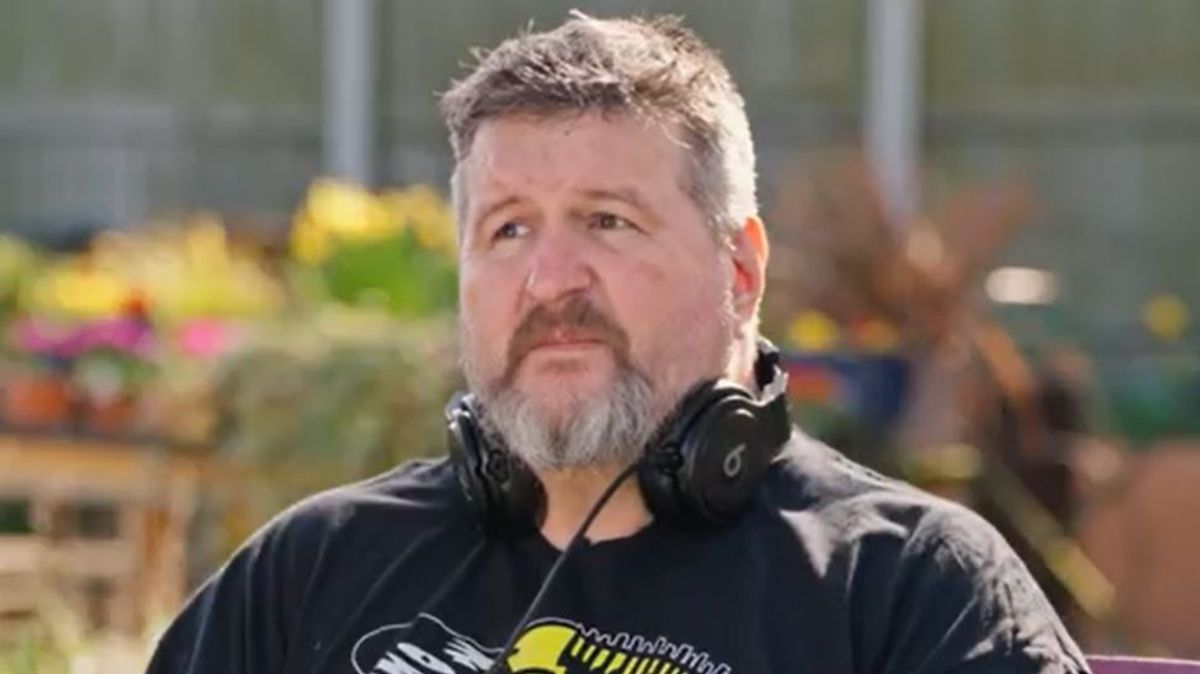
Mark sought help from mental health services after believing his TV was mocking himBenfleet mental health patient Mark tells his story
When Mark started believing that the TV was talking to him, he realised that “enough was enough” – he needed help. Mark was extremely unwell, and experiencing intense periods of paranoia, bipolar, and schizoaffective disorder.
Eight years into treatment at St Andrew’s Healthcare in Benfleet, Mark points to music and therapy as bringing him hope for the future. Now, he couldn’t be without music, which he says helps him with everyday tasks.
The 50‑year‑old said: “I’ve come a long way since I’ve been [at St Andrew’s]. I’ve done a lot of work on myself. The main thing in my life is still music. I get through my days better with music. When I first arrived at St Andrew’s and found out there was a music room, I was over the moon.”
Mark was first admitted to hospital, experiencing complex mental health conditions. He said: “I was talking to the TV and I thought it was talking back. I thought people were mocking me and laughing at me. I’ve been to hell and back with drugs too, but I reached a point where I realised enough was enough.”
He added: “Because of all the music sessions, the therapy, and the staff here saying they believe in me more than I believe in myself, I’m starting to acknowledge that I can do things if I put my mind to it. I’ve got so much hope now.”
His mental health has improved thanks to his headphones, which help him to do everyday tasks. “I don’t like getting on buses without music. I suffer with paranoia bad, and when people start chatting and laughing, I [think] straightaway ‘oh they’re laughing about you, Mark, and talking about you,’ which they’re probably not. When I’ve got my headphones on, I blank everyone out. I’m all right, I’m on my own there.”
Alongside music therapy, Mark has also started attending gym sessions with St Andrew’s Healthcare’s onsite sports therapist. Mark said: “I’ve started weight‑lifting, which has really helped because exercise gets your endorphins working. When I look back at who I was before I came here, I don’t recognise myself.
“Before, all I had was darkness. Gradually, little by little, light started to appear. And now, I don’t just see a light – I see a floodlight. I have nothing but hope for my future.”
Dr Samantha Dove, Clinical Director for Essex, who has overseen Mark’s care, said: “Mark’s story highlights why it’s so important to offer a range of therapeutic approaches. Here at St Andrew’s we recognise that bespoke treatment is vital to ensure people receive care that reflects their individual needs, interests and strengths, alongside clinical support.
“People respond in different ways, and for Mark, music and physical activity became a vital part of his recovery alongside clinical care. Mental Health Awareness Week is a reminder that when we listen to what matters to individuals and support them in different ways, recovery becomes possible.”