
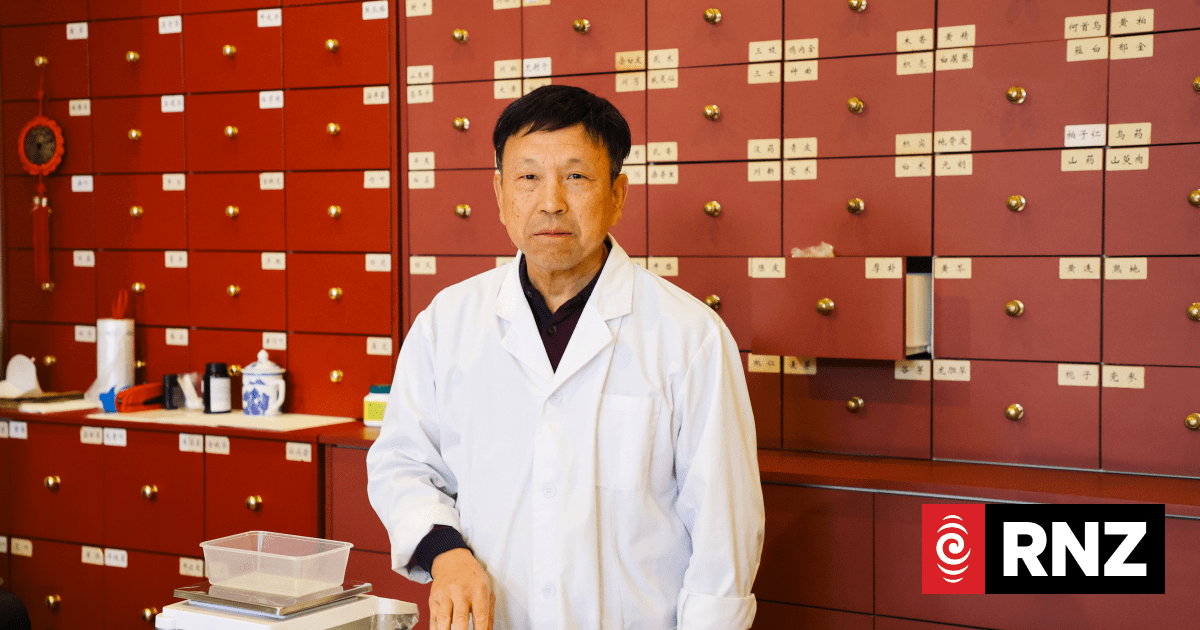
Auckland acupuncturist Selwyn Wong Doo still remembers a time when he was helping at his father’s clinic wearing a school uniform.
His father, William, opened the first Chinese medicine clinic in Auckland in 1939, eventually serving as the founding president of Acupuncture New Zealand.
Wong Doo, 71, said his father was blindfolded and led to a monastery in China to learn his skills before practising in New Zealand.
“I remember him saying that he got scared once and gave up acupuncture because one of his clients said he was doing witchcraft and had the police come and knock on his door,” he said.
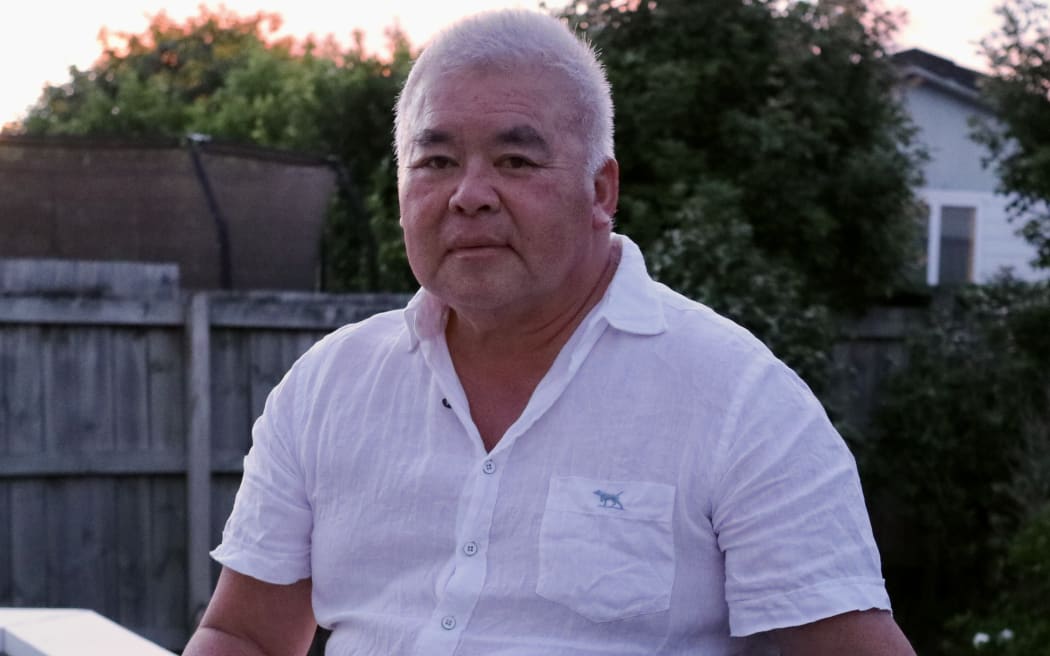
Selwyn Wong Doo, 71, is a traditional Chinese medicine practitioner.
Photo: Supplied
His father stopped offering acupuncture treatment for a while, carrying on with Chinese herbs, massages and diet, before picking it up again in the 1960s.
Acupuncture gained some prominence in North America in the early 1970s after The New York Times published a first-hand experience of acupuncture and moxibustion in China in July 1971.
That was just before US President Richard Nixon visited China in February 1972.
“My Dad in those days had about a six months’ waiting list of people wanting to come and see him because he would have been one of the very few around at that time,” Wong Doo said.
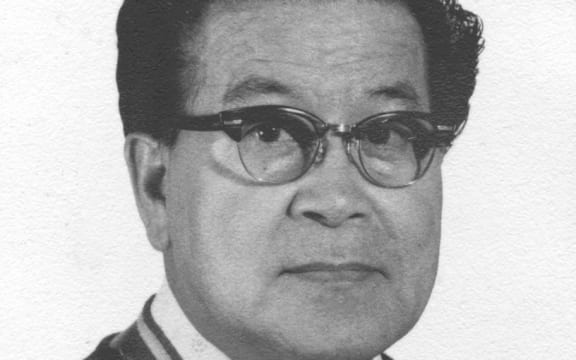
Selwyn Wong Doo’s late father, William
Photo: Supplied
Naturally, Wong Doo picked up the skills and carried on the family practice.
In 1977, a bill was introduced to Parliament to restrict the practice of acupuncture to registered medical doctors, physiotherapists or dentists, he said.
While such professions typically didn’t know about acupuncture, professional practitioners would not be able to continue to offer such services if the bill went through.
In a bid to retain their roles, a small group of acupuncturists gathered in Auckland and started the New Zealand Register of Acupuncturists that same year.
The organisation is now known as Acupuncture New Zealand.
“I think a lot of people understand acupuncture now,” Wong Doo said.
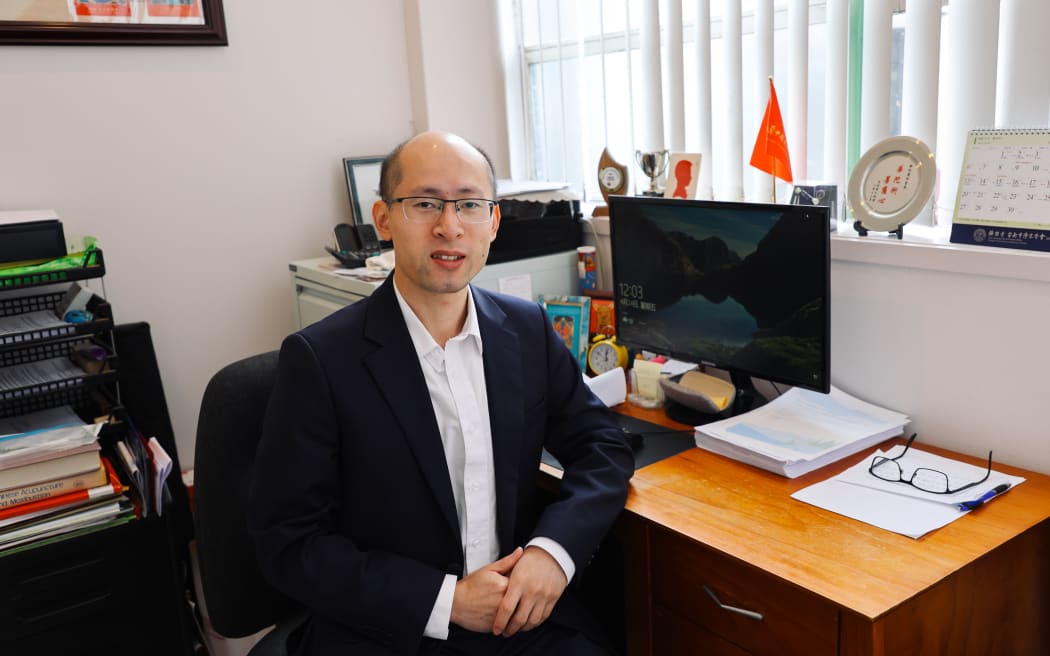
Renjie Xi, vice president of Acupuncture New Zealand
Photo: RNZ / Yiting Lin
Traditional Chinese medicine has deep roots in New Zealand, with evidence of the practice dating back to gold fields in the 19th century, said Renjie Xi, vice president of Acupuncture New Zealand.
Much of its modern history had been associated with Acupuncture New Zealand, he said, adding that the establishment of regulatory body Chinese Medicine Council in 2021 was something of a landmark for the profession.
“Today, Chinese medicine is a fully regulated health profession under the Health Practitioners Competence Assurance Act, with more than 1300 registered practitioners nationwide,” Xi said.
All practitioners must be registered with the council, hold an annual practicing certificate and demonstrate ongoing competence, he said.
Acupuncture, herbal medicine and tuina (Chinese massage) were the most representative therapeutic techniques, which were also the most widely practised services in New Zealand, Xi said.
Cupping, moxibustion, gua sha (scraping therapy) were common complimentary treatments, he said.
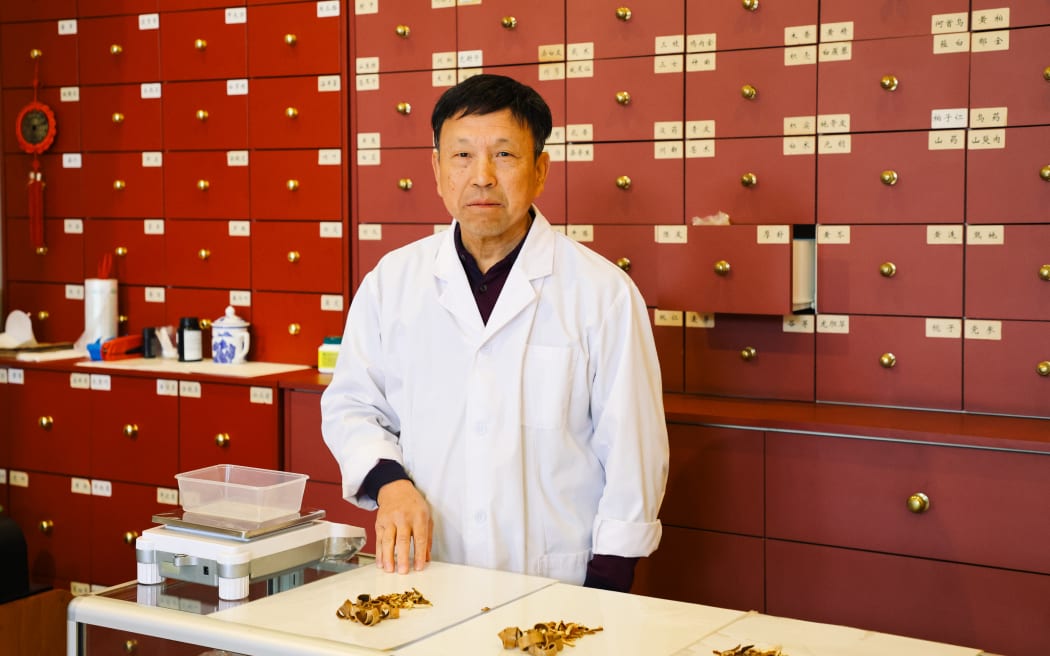
Gordon Zheng with some traditional Chinese herbs
Photo: RNZ / Yiting Lin
Gordon Zheng’s Beijing Chinese Medicine Clinic on Dominion Road in Auckland is a practice that offers a bit of everything.
Having studied at an institute now known as the Beijing University of Chinese Medicine, he started one of the first few Chinese medicine clinics in Auckland in 1992.
“We were the third in Auckland, I think,” Zheng said. “I’d estimate that there are probably more than 200 clinics in Auckland now.”
Although his patients were predominantly Chinese at the beginning, these days Zheng has a mixture of patients from all ethnic backgrounds, with some using his services for more than 20 years.
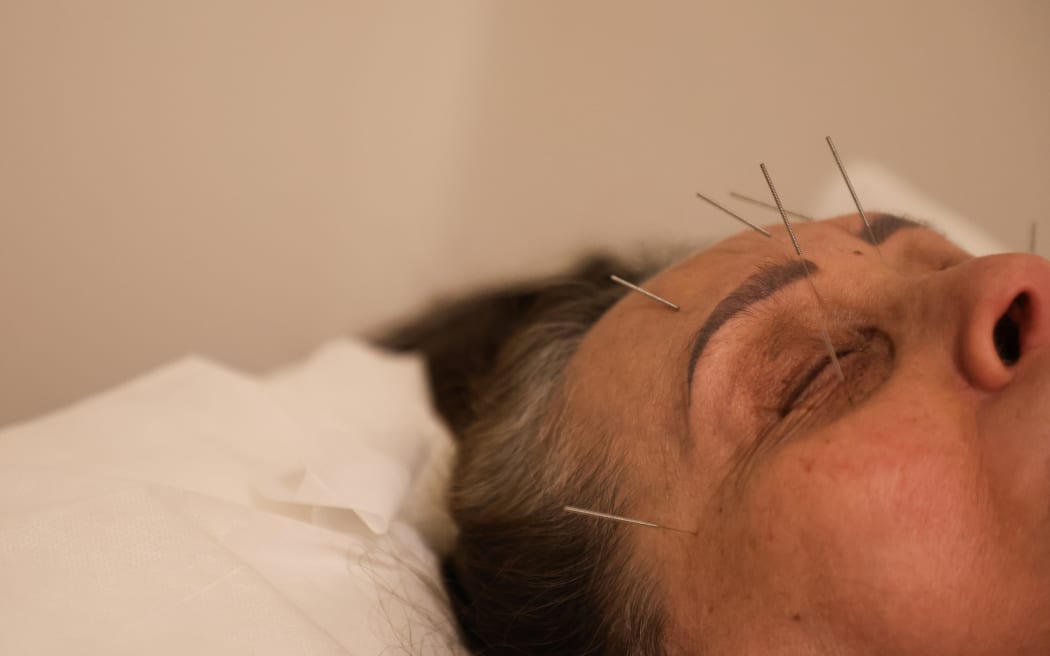
A patient being treated with acupuncture at Gordon Zheng’s clinic.
Photo: RNZ / Yiting Lin
“Many conditions can be regulated with acupuncture,” Zheng said.
“For example, facial paralysis and strokes can both be treated with acupuncture, and even conditions such as hypertension and diabetes can be managed with it.
Traditional Chinese medicine was an empirical science, he said.
“It relies on doctors accumulating experience through long-term clinical practice over many years,” he said.
Traditional Chinese medicine carried an element of risk if not handled well, he said.
For example, he said, needles could be inserted too deep, or the toxicity of certain herbs unconsidered.
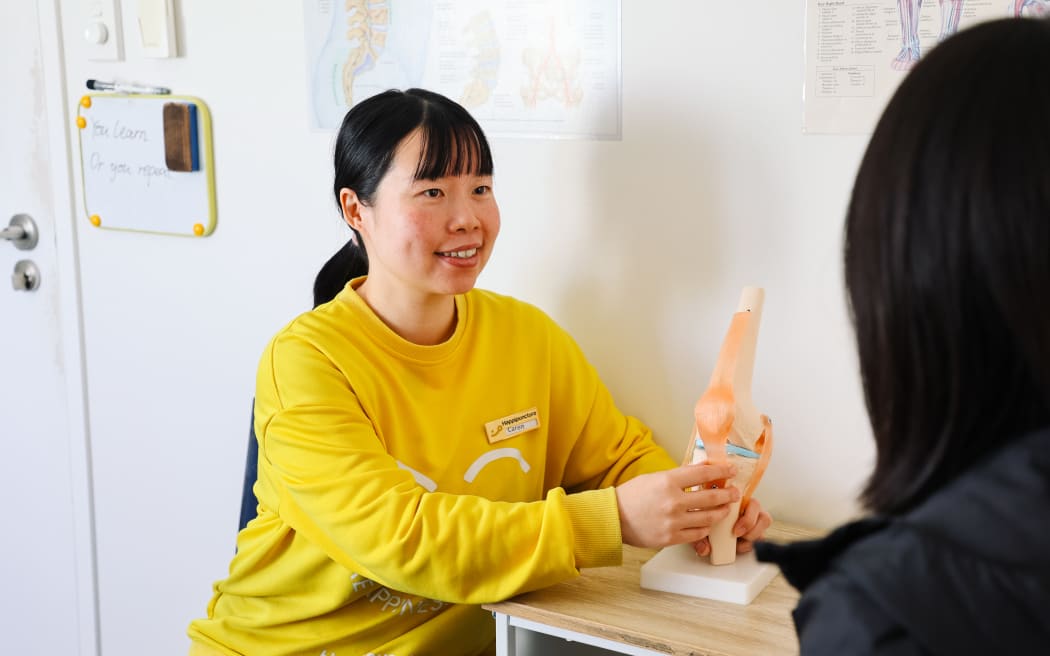
Caren Chen explains the structure of a human knee joint.
Photo: RNZ / Yiting Lin
Operating on Auckland’s North Shore for five years, Caren Chen’s Happipuncture Clinic has gradually built a loyal client base.
Chen trained for seven years at the Guangzhou University of Chinese Medicine, working at a hospital before coming to New Zealand.
Traditional Chinese medicine was specifically tailored to an individual, and two people experiencing a headache could be given different herbs and acupuncture treatment, Chen said.
“I think traditional Chinese medicine is more of a holistic view that combines heaven, Earth and humanity,” she said.
Chen believed the best care could be provided to patients when combining traditional Chinese medicine with Western medicine.
As such, her clinic offers physiotherapy and massage services.
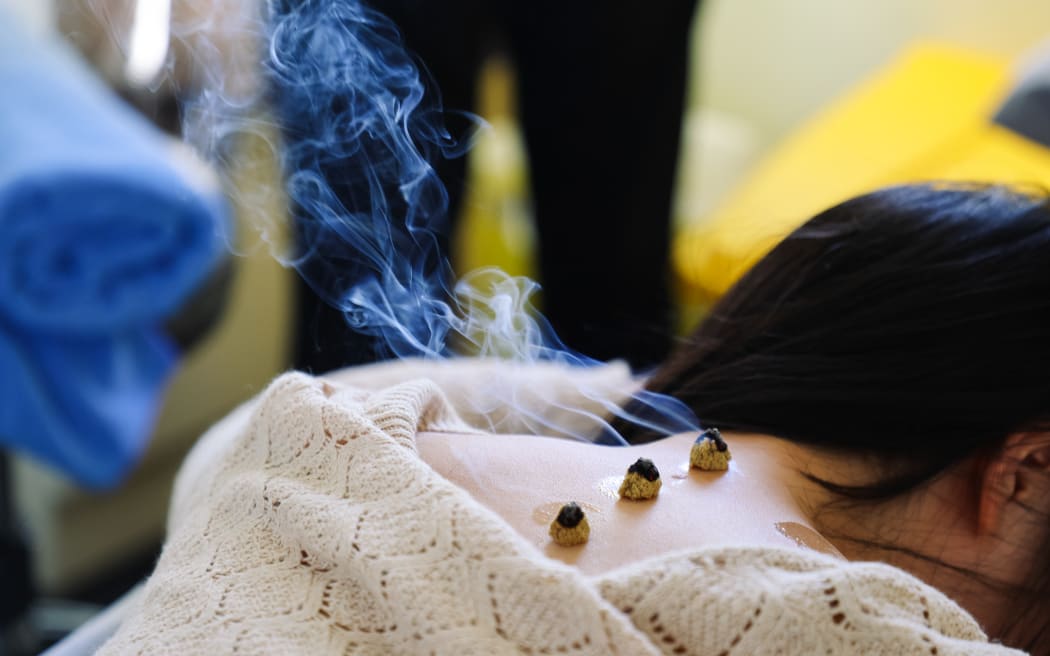
Moxibustion at Caren Chen’s clinic
Photo: RNZ / Yiting Lin
“For example, when treating patients with pain or neuromuscular issues, in addition to considering meridians and acupuncture points from a traditional Chinese medicine perspective, we also think about muscle anatomy and exercise science from a Western medical perspective,” Chen said.
“We can keep preserve the good parts of [Chinese medicine] traditions – the essence of them – while also continuing to learn from Western culture.”
Recognition of Chinese medicine appeared to have grown in New Zealand over the past decade, but there was a long way to go, Chen said.
“I think more people in New Zealand are gradually becoming exposed to and accepting traditional Chinese medicine and acupuncture, and many are increasingly placing their trust in these treatments, I believe that is a positive thing,” she said.
“From the perspective of practitioners, we also hope to continue improving ourselves overall – whether that’s our professional skills, cultural understanding or English proficiency.
“I think that is the only way traditional Chinese medicine can develop more successfully in Western countries.”
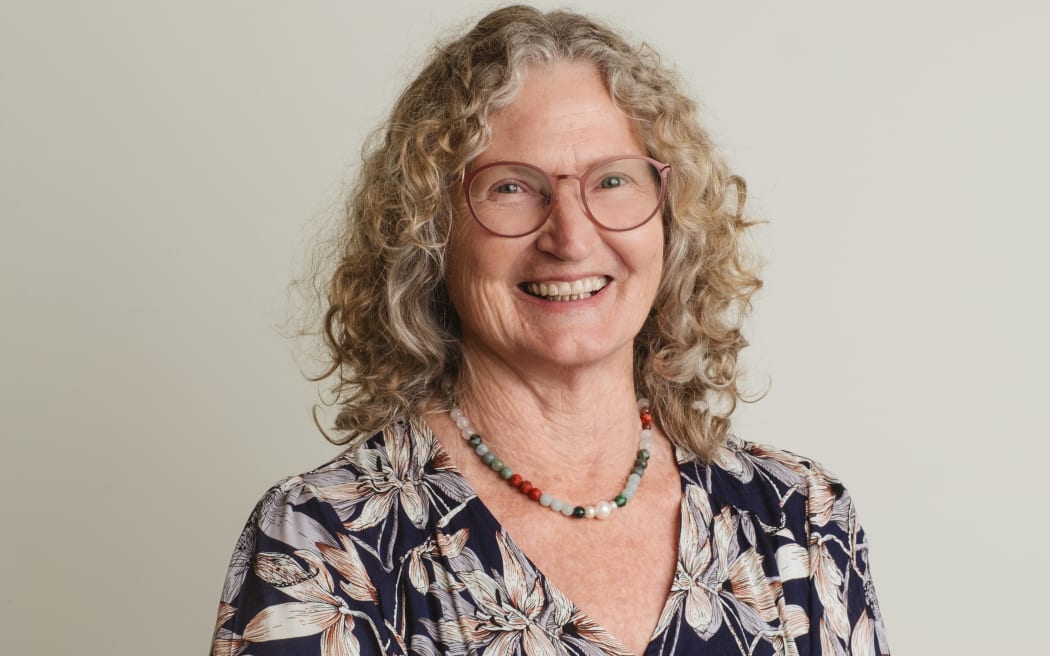
Chinese Medicine Council chair Paddy McBride
Photo: Supplied
Chinese Medicine Council chair Paddy McBride said awareness of the benefits of Chinese medicine was growing – not only in New Zealand but globally.
“Chinese medicine has a history of many thousands of years and has strong emphasis on staying well rather than waiting to seek treatment only when something has gone wrong,” she said.
“The Chinese Medicine Council of New Zealand would like all New Zealanders to know that the profession is regulated and that Chinese medicine is a safe, valid choice to meet their health care needs.”
McBride would like to see traditional Chinese medicine incorporated into and offered within the public health system, as it is in countries such as China, South Korea and Japan.
“Currently practitioners are working in private practice, and the cost of treatment is beyond many who would greatly benefit from the different aspects of Chinese medicine.”
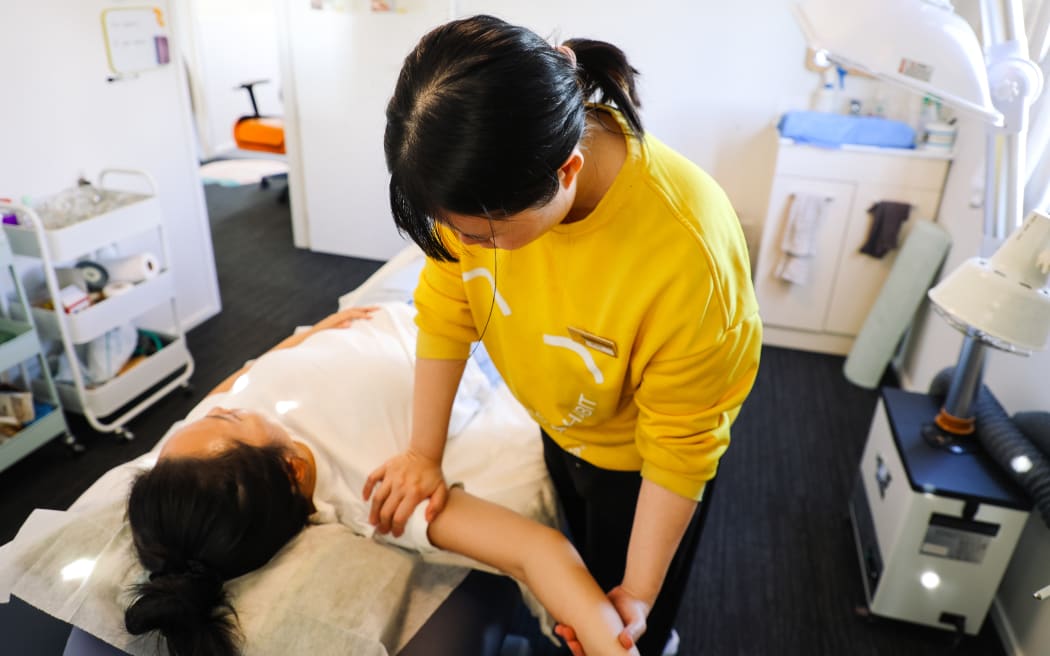
Caren Chen treats a patient with a massage.
Photo: RNZ / Yiting Lin
Jacqui Lunday, Health New Zealand’s national chief for allied health, said the organisation recognised that cultural beliefs, traditions and practices could influence an individual’s health experience and treatment preferences.
“Practitioners are expected to demonstrate cultural competence as part of their core professional practice, which includes acknowledging and respecting culturally specific approaches, while ensuring care is delivered safely and aligns with recognised standards and best practice,” Lunday said.
A Ministry of Health spokesperson said traditional Chinese medicine was regulated similarly to other allied health professions such as physiotherapists, podiatrists and chiropractors.
“While some allied health professional services are offered in the public health system (such as occupational therapy and speech language therapy), this does not routinely include traditional Chinese medicine,” the spokesperson said.
“Some traditional Chinese treatments, like acupuncture, can be funded by ACC.”