
 minji
minji
My new school sat four miles from LA’s Koreatown and was predominantly Korean—a stark contrast from the majority White neighborhood I was coming from. I struggled at first to adjust to the new cultural expectations and norms, to catch jokes and conversations that flew over my head before I could make sense of them.
At recess, my classmates would talk about a K-pop group called Super Junior. At first, I only pretended I knew and liked “SuJu” to fit in. But one day after school, a friend pulled up a music video on her computer: Super Junior’s newest title track, “U.”
minji
I still remember how my ears perked up at the strum of the guitar intro, how my head bopped involuntarily as the 11 members popped and locked perfectly to the beat. I ran home that day and immediately googled how to download music so that I could add it to my mp3 player, giddy at the thought of playing it at lunch the next day. I was officially a fan.
 eunice
Around that time, I also discovered Super Junior and felt, for the first time, the peculiar intensity of a boy band obsession. I bought their album Twins and found inside the CD a booklet with each member’s face staring back at me, names printed underneath like a roster you were supposed to memorize. We didn’t call it “bias” back then—that language hadn’t reached us. But we understood, somehow, that you were meant to choose (ours was Kibum).
By then, Minji and I were staying in touch over e-mail. One day she wrote that she was an ELF (“Everlasting Friends”, the official Super Junior fandom), and I couldn’t believe it! It was thrilling to realize that we were both caught up in the same thing, in completely different places, and it became another thread holding our friendship together.
minji
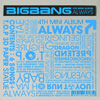
As the years went by, our tastes started to change. By middle school, we were fangirling over hot new groups like Girls’ Generation, Wonder Girls, and BIGBANG.
minji
These legendary acts were not only capturing the hearts of the Korean general public, but taking the Hallyu Wave (Korea’s global pop culture boom) across Asia and into immigrant communities around the world. After my family moved back to Michigan, my high school’s Asian Pacific American Club incorporated K-pop into our yearly cultural show performance. I couldn’t believe that I was learning the choreography for SHINee’s “Replay” with my non-Korean friends, performing in front of an auditorium full of non-Korean classmates. While most of my classmates couldn’t point to Korea on a map, my small but tight-knit community of Asian immigrant kids were watching K-pop videos on YouTube together after school.
eunice
In 2012, Psy’s “Gangnam Style” became the first YouTube video to hit one billion views. At its peak, “Gangnam Style” was generating over 11 million views per day, prompting YouTube to upgrade its view counter system, which had maxed out at 2,147,483,647 views—a limit based on 32-bit integer coding. Suddenly, Psy was everywhere; for many people around the world, it was their first exposure to K-pop.
I remember watching Psy teach the “Gangnam Style” dance to Britney Spears on Ellen and getting chills. There was something thrilling about watching the world finally catch up to what we already knew. Korean music wasn’t just “foreign.” It was fun, silly, catchy, and unmissable.
Psy’s “Gangnam Style” was the first music video to hit 1 billion views Every music video on YouTube that hit 1 billion views by 2016
YouTube Views Data, 2010–2016
Line chart of YouTube music video views over time, showing how “Gangnam Style” reached 1 billion views in 158 days
minji
We were living through the “Golden Age of K-Pop” from opposite sides of the world—one in the homeland, the other in the diaspora. Though we were too young to understand the forces driving this wave, the soft power that South Korea was amassing via these cultural exports, we were authentic participants of the buzz and excitement.