
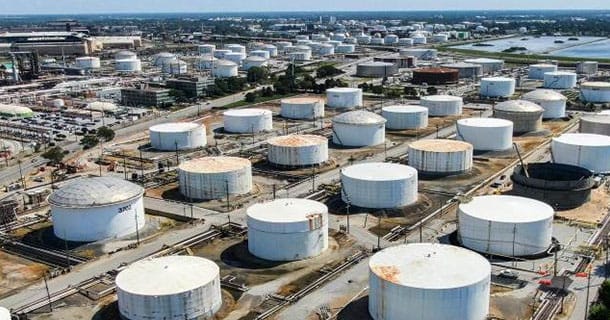
US ramps up refinery activity
The US has responded partly by maintaining elevated refinery activity. EIA data showed refinery utilisation climbed to 91.6% of capacity last week as operators attempted to maximize fuel production amid rising demand and tightening global supply conditions.
Gasoline prices have surged alongside the supply crunch.
Strategic Petroleum Reserve (SPR)
The Strategic Petroleum Reserve (SPR) was created in the 1970s after the Arab oil embargo to provide emergency crude supplies during severe disruptions.
Stored in underground salt caverns along the Gulf Coast, the reserve historically has served as a key buffer against geopolitical shocks and natural disasters.
Since the Iran war began, the SPR has shed roughly 10% of its holdings.
Industry publication Oilprice.com reported that US commercial crude inventories have effectively erased all stockpile gains accumulated earlier in 2026 within just five weeks.
The publication said “massive SPR releases” were masking what otherwise would appear as a much steeper domestic supply drawdown.
What inventory decline shows
Energy market observers say the inventory decline highlights the increasingly global nature of the crisis.
The US remains one of the world’s largest oil producers, crude prices and fuel markets remain deeply tied to global shipping routes and Middle East supply stability.
Roughly one-fifth of the world’s oil consumption typically passes through the Strait of Hormuz.
The conflict has also renewed debate in Washington over long-term energy security and how aggressively the government should continue drawing down emergency reserves.