
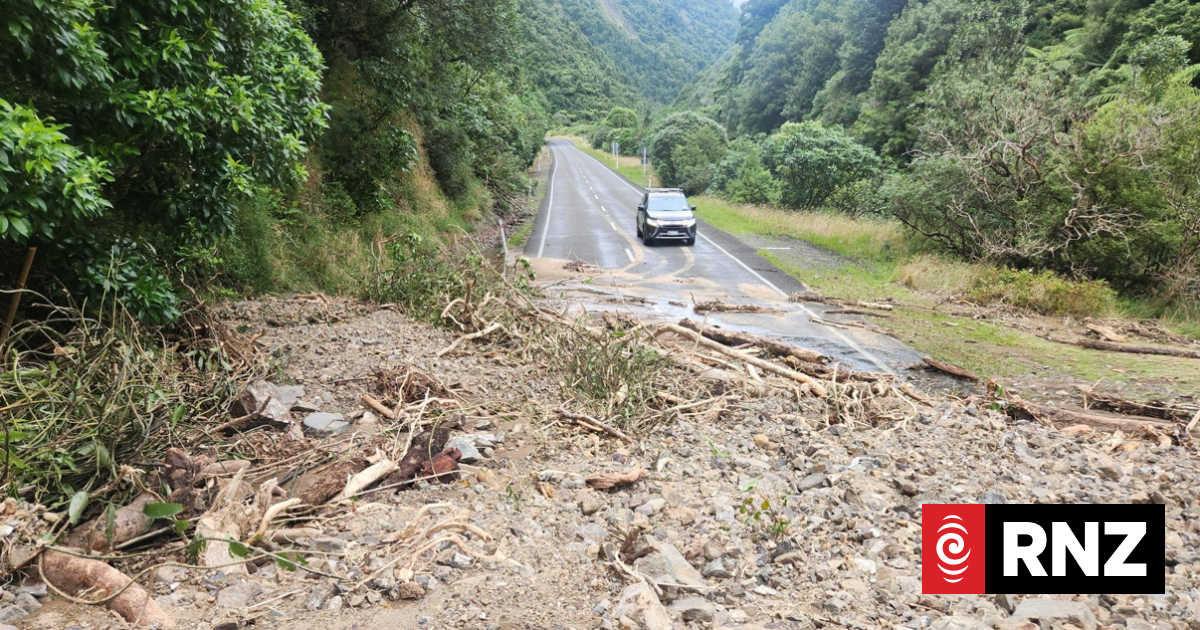
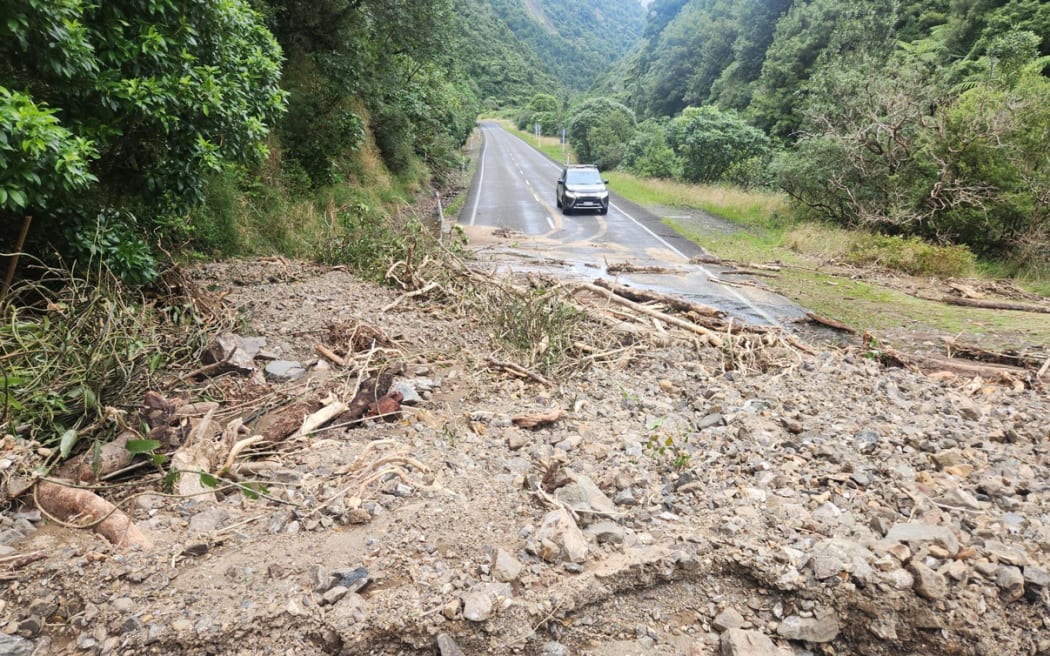
A slip on State Highway 2 through the Waioweka Gorge.
Photo: Supplied/NZTA
The focus on State Highway Two East Coast needs to shift from repairs to resilience, the Mayor of Gisborne says.
East Coast leaders have asked the government to formally recognise the highway, which connects Gisborne with Ōpōtiki, as a nationally significant economic and lifeline infrastructure asset to open it up for national transport funding, Rehette Stoltz said.
A group of East Coast district and regional councillors wrote to Minister of Transport Chris Bishop in April about prioritising resilience works for the route, and followed up with a meeting with the minister last Wednesday.
Stoltz said the highway is a lifeline for the community, health, tourism and food producers but it was closed for weeks following extreme weather in January.
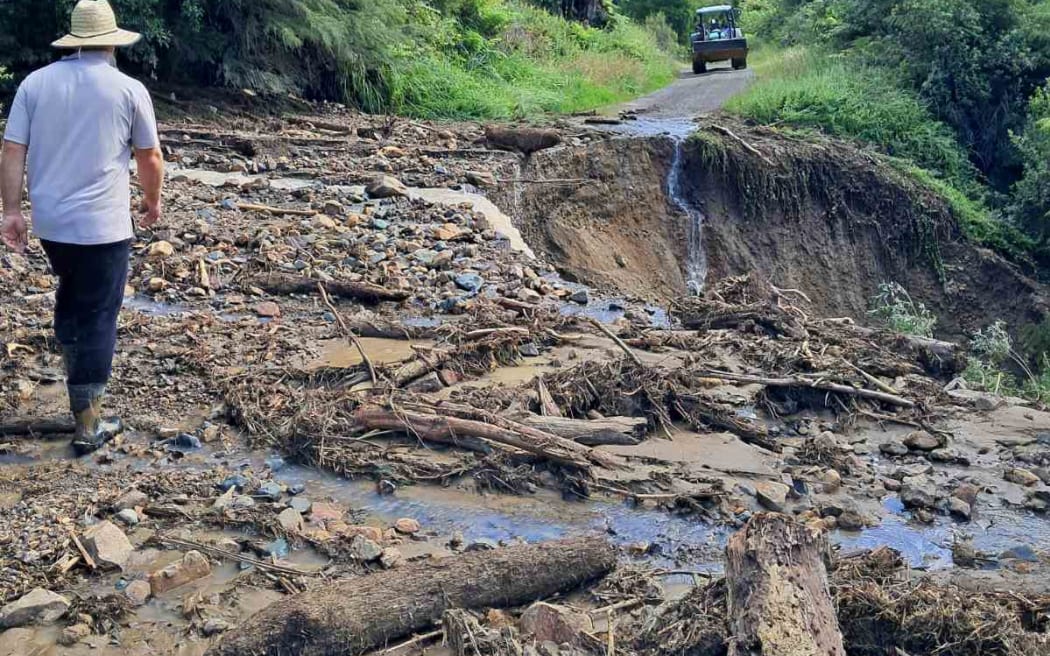
Damage in the Wairata Valley following torrential rain on 16 January that brought down slips on SH2, closing the Waioweka Gorge.
Photo: Supplied / Rebecca Redpath
The closure cost the region $8million dollars a day, and the weeks of closures had harmed business confidence in the region, she said.
“We are grateful for the work that they have done there in the last few months, but what we need to start talking about for SH2 East Coast is resilience. We cannot just keep patching it up.
Stoltz said that getting the road recognised for its lifeline and economic role will mean they can get funding for further resilience works.
Plans are in place to repair the road to its standard prior to January,
“What we need to look at is resilience, that we are not cut off every time there is an extreme weather event.
“We need to make sure our community is connected, not only for people that live here, connecting them with the rest of New Zealand, but also, it’s a health route, it’s an essential economic route for food producers.
“We might not be the economic hothouse of New Zealand, but we grow the food to feed the economic hothouse of New Zealand, and we need to get it to them.”
Sign up for Ngā Pitopito Kōrero, a daily newsletter curated by our editors and delivered straight to your inbox every weekday.