
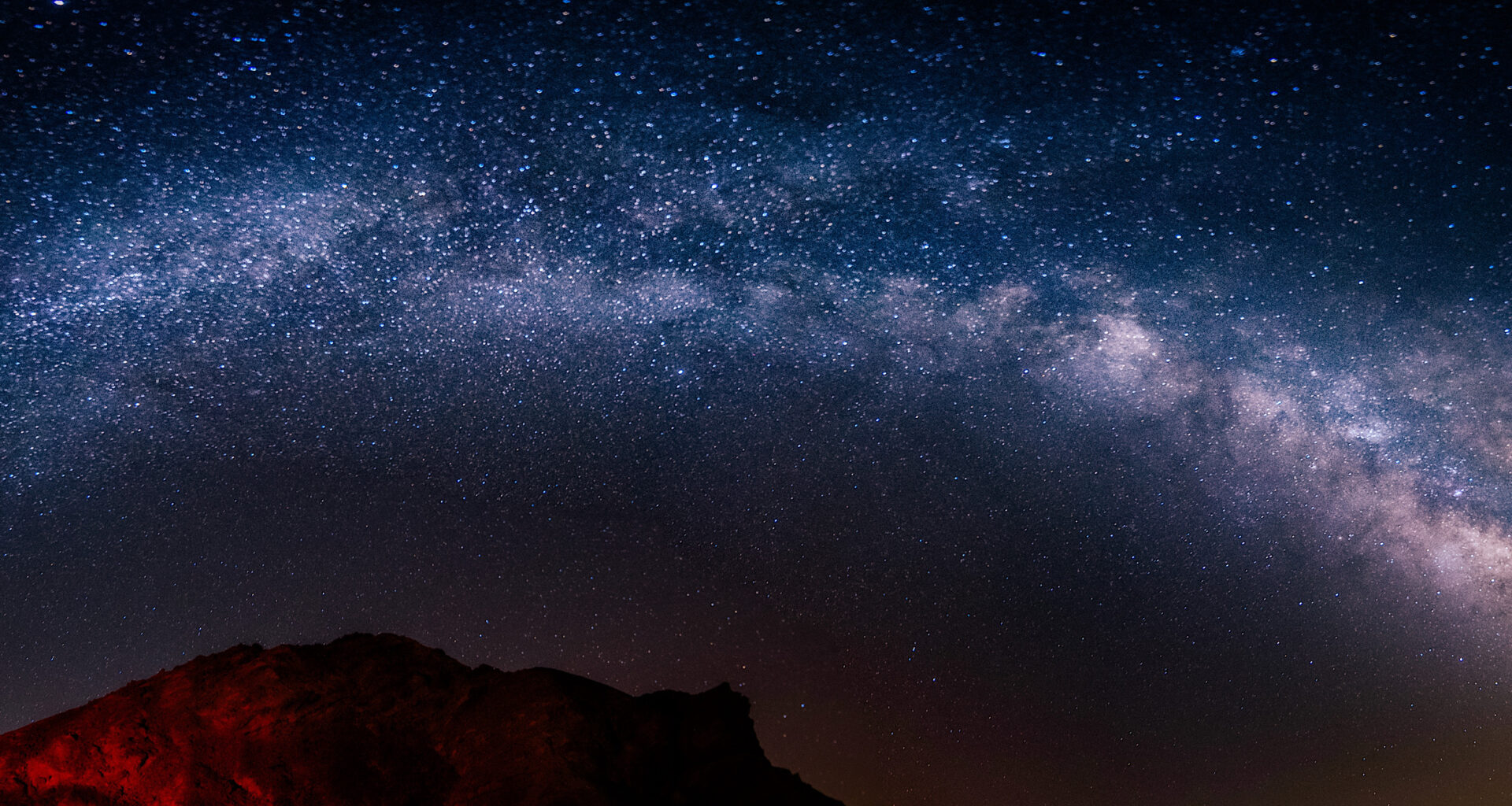
The Milky Way is thought to contain tens of millions of dead stellar remnants, perhaps hundreds of millions.
Yet, fewer than 4,000 have ever been confirmed. The majority of them are the spinning kind, whose radio beams sweep past Earth. The rest remain dark.

A new study suggests a way to find them using gravity as a detection tool and a telescope originally designed for other purposes.
Hidden stellar corpses
The research was led by Zofia Kaczmarek at Heidelberg University in Germany. The study predicts this missing population could finally come into view.
The forecast hinges on an upcoming NASA observatory that has not yet launched.
Neutron stars are the crushed cores that are left behind when massive stars collapse.
Each one packs more mass than the Sun into a sphere the size of a city, putting them among the densest objects in nature.
Most of the unconfirmed objects give off no radio pulses, no X-ray glow, and no signal easily picked up by a telescope. They drift through the galaxy entirely unannounced.
“Most neutron stars are relatively dim and on their own. They are incredibly hard to spot without some sort of help,” Kaczmarek said.
Starlight that bends
The trick depends on microlensing, a small gravitational effect first predicted by Einstein.
When a massive object drifts in front of a distant star, its gravity warps spacetime and bends the background star’s light around it.
From a telescope’s view, the distant star briefly appears brighter and slightly displaced.
Many can pick up the brightening, but far fewer can detect the tiny positional wobble that comes with it.
The same approach revealed the first confirmed isolated black hole in 2022, in a paper that weighed an otherwise invisible compact object.
Until then, there was no method to confirm what these dark lenses really were.
Weighing dark objects
Because neutron stars are heavy, they bend light more than lighter objects. The size of the positional wobble scales with mass.
Greater mass produces a larger wobble. When the wobble is measured, the unseen object can be weighed. That detail is unusually powerful.
So far, astronomers have only weighed neutron stars in binary pairs, where an orbiting partner gives them a reference point. Single, drifting neutron stars have never had their masses measured.
“What’s really cool about using microlensing is that you can get direct mass measurements,” said Peter McGill of Lawrence Livermore National Laboratory (LLNL).
The technique opens a window onto isolated neutron stars that no other method can reach.
Roman’s hidden talent
That’s where the Roman Space Telescope enters the picture. The flagship NASA observatory was built primarily to hunt for exoplanets and chart dark energy.
Its precision makes it unusually good at detecting the tiny positional wobbles that betray a passing dark mass.
Roman can measure both the brightening and the wobble of a lensed star with rare accuracy.
The mission’s main microlensing campaign, the Galactic Bulge Time Domain Survey, will monitor millions of stars near the galaxy’s center at 12-minute intervals.
The cadence was designed for finding planets, but it works equally well for catching drifting neutron stars.
Isolating neutron star candidates
The novel piece of the analysis came from what the simulations revealed. Until this study, no one had a clean way to separate isolated neutron stars from the broader microlensing crowd.
When the team mapped simulated events by duration and wobble size, neutron stars clustered in a distinctive spur, clearly separate from the rest.
The feature only appears when both signals are measured together. A signature in plain view.
Within the spur sit fast-moving neutron stars that are unusually likely to produce a clean lensing signal.
Selecting the spur should yield a high-purity sample of isolated neutron star candidates.
Kicks from supernovas
Neutron stars don’t form gently. The supernova explosion that creates one is never perfectly symmetric. The imbalance shoves the new neutron star sideways, hard and fast.
These natal kicks can send a star hurtling at hundreds of miles per second. Astronomers have long suspected average kicks fall between 60 and 300 miles per second.
Roman’s catalog could prove that. The team’s simulations show the spur looks different depending on how strong the kicks are.
Measuring the spread of detected neutron stars would let researchers test competing supernova models against data.
What Roman may reveal
The forecast offers a concrete prediction. Once Roman starts surveying, the team expects to spot roughly 100 isolated neutron stars.
Their brightness changes and positional wobble are both measurable, allowing researchers to calculate their masses from the lensing data.
That would be a first. No isolated neutron star has had its mass measured before, and even one example would let astronomers test where the boundary between neutron stars and black holes really lies.
The simulations also show the survey’s lower-cadence “gap-filling” observations are critical.
Skipping them would drop the detectable event yield by about 38 percent. Roman is set to launch in late 2026.
The study is published in the journal Astronomy & Astrophysics.
—–
Like what you read? Subscribe to our newsletter for engaging articles, exclusive content, and the latest updates.
Check us out on EarthSnap, a free app brought to you by Eric Ralls and Earth.com.
—–