
The government is extending the minimum English language requirements under the Accredited Employer Work Visa.
From the beginning of next month, the language requirement will apply to ANZSCO and National Occupation List (NOL) skill level 3 roles.
The NOL groups jobs together into occupations with skill level ranges from 1-5.
Examples of level 1 are a chief sustainability officer or head chef/executive chef, while level 3 occupations include peer support worker or ski Patroller.
Applying the requirement to level 3 roles will align them with the existing English language requirements for skill levels 4 and 5.
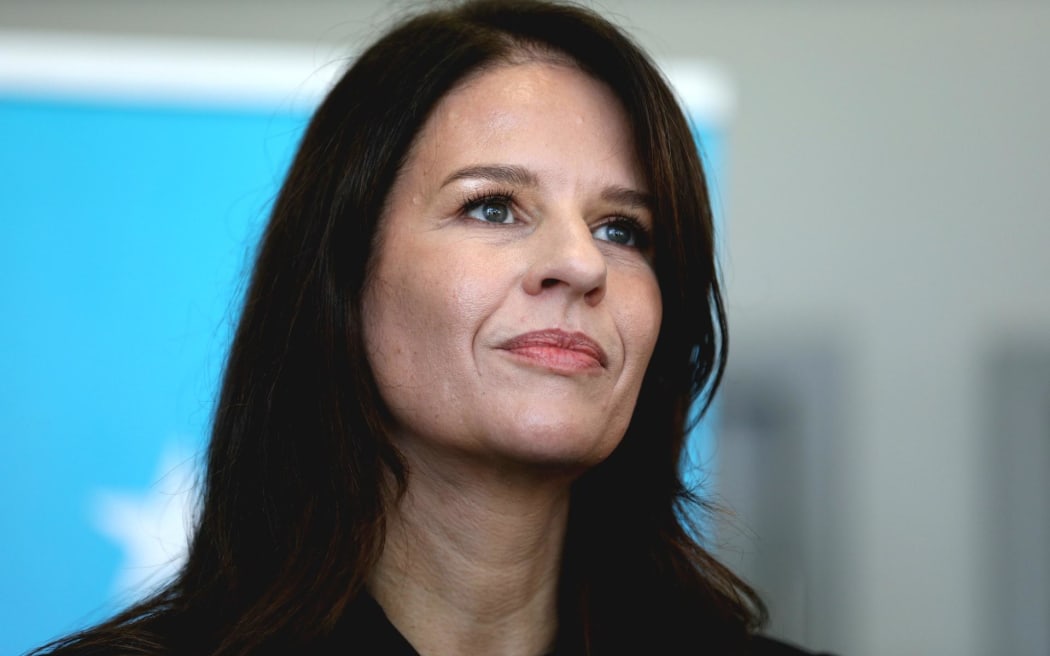
Immigration Minister Erica Stanford says it is important that people coming to NZ for “mid-skilled roles with aspirations for residence” arrive with a “minimum of basic, everyday English”.
Photo: RNZ/Nick Monro
Immigration Minister Erica Stanford said skill level 3 was now the largest part of the AEWV cohort.
“Being able to communicate in basic, everyday English ensures that workers understand their rights and engage effectively at work and in the community while they are here,” said Stanford.
“The required standard is the current baseline (IELTS 4.0 or equivalent), which demonstrates basic, everyday English for common situations, not a high or advanced level of English.”
She said with the introduction of two new skilled residence pathways in August it was important that people coming to New Zealand for “mid-skilled roles with aspirations for residence” arrive with a “minimum of basic, everyday English”.
“They will then have up to five years to meet the higher level of English required for residence.”
Global Workforce Seasonal Visa and Peak Seasonal Visa AEWV applications were not required to meet the minimum standard of English.
The government was also expanding the Active Investor Growth category to include a philanthropic component.
From 1 June this year, applicants in the Growth category would be able to include philanthropic gifts of up to 20 percent of their total investment.
This option is currently available in the Balanced category, but not in Growth, which attracts the most applications.
“This expansion retains the Grown category’s focus on active investment, while recognising that philanthropy also supports positive outcomes for communities alongside strong economic investment,” Stanford said.
Sign up for Money with Susan Edmunds, a weekly newsletter covering all the things that affect how we make and spend money