
It’s Budget Day on Thursday – what happens and what can we expect?
Photo: RNZ/Liam K. Swiggs
Explainer: It’s the most wonderful time of year… if you’re a Budget nerd, that is.
Thursday is Budget Day, the biggest day of the year for politicians, other than Election Day.
It’s when Finance Minister Nicola Willis will lay out how money will be spent – and what it won’t be spent on – for the next fiscal year.
It’s a huge event for all the pundits and politicians, but what does it actually all mean?
Here’s your primer on what to expect:
What is the Budget?
It’s how the government tells us where it’s going to spend money and where that money comes from.
Every May, traditionally on a Thursday, the finance minister delivers the Budget in a speech to Parliament. This speech makes a case for how the government plans to spend money and manage the economy.
Read more about this year’s Budget:
The primary Budget bill is the Appropriation Bill, which seeks parliamentary authorisation for specific amounts of money for the government in the coming year.
The government must present its Budget to Parliament by 31 July every year.
While everyone talks about Budget ‘Day’, the process actually carries on all year, cycling perpetually from one Budget to the next.
Select committees go on to scrutinise the spending plans and pass the Budget that was presented on Budget Day.
For example, the 2025/26 Appropriation Bill passed its third reading on 11 September last year, after being introduced in May.
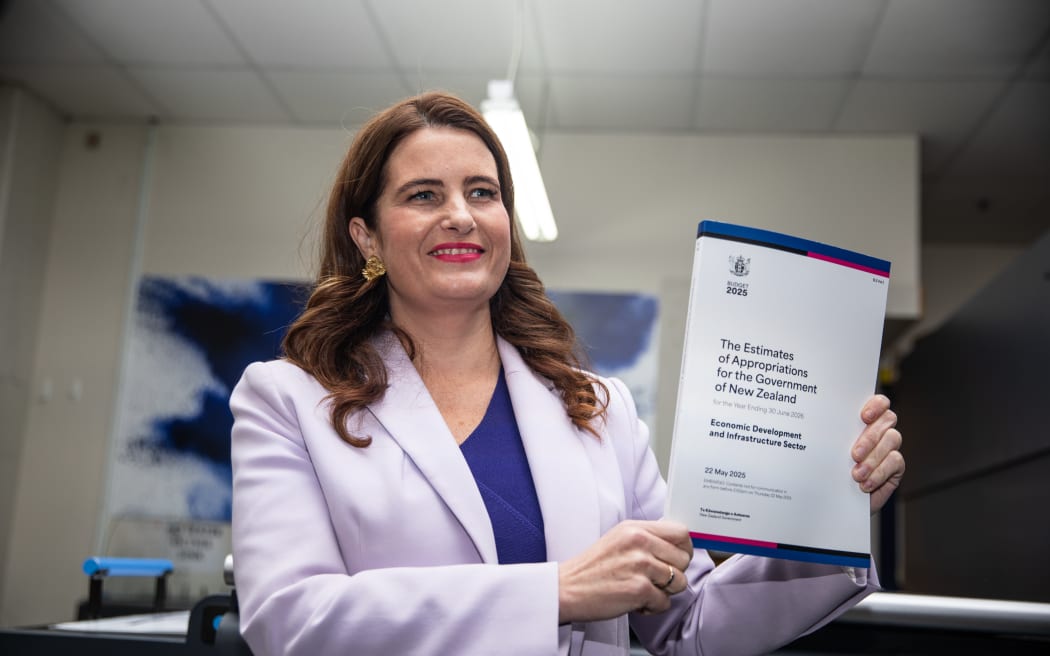
Nicola Willis with the 2025 Budget.
Photo: RNZ / Samuel Rillstone
What happens on Budget Day itself?
Budget Day is equal part numbers-crunching, and political pomp and pageantry.
Everything from how the Budget documents are printed to what kind of snacks politicians might eat beforehand – pies for Sir John Key, cheese scrolls for Dame Jacinda Ardern’s government and, last year, Willis presented cookies baked by her daughter – is carefully planned out.
“All Budget statements are a sales pitch, rather than a fair summary,” RNZ’s The House noted last year.
Here’s what happens on the day:
10.30am – Media and other interested parties go into lock-up at the Beehive – no phones, no internet – and get a first look at the Budget. Documents will be released under a strict embargo.
The finance minister will also present to journalists during lock-up and journalists will dash to complete first takes on the highlights. If you break that embargo, you can get in big trouble.
2pm – The Budget embargo lifts and, here at RNZ and everywhere else, you’ll suddenly see a flood of Budget information.
Willis will give her Budget Statement to Parliament, laying out the government’s plans, kicking off a day of speeches and debate.
“The minister of finance speaks first to make the Budget speech,” said a spokesperson for the Clerk of the House of Representatives.
“The minister’s speech is then normally followed by the leader of the opposition and then the PM. That isn’t cast in stone, but it is what traditionally occurs.
“Once the PM has spoken, it’s usual for the leaders of the other political parties to speak in the debate. That is usually in the order of the size of the party in the House.”
Parliament will go on to debate the Budget details, which can last up to eight hours.
Of course, RNZ will be there to live-blog coverage throughout the day, and we will have heaps of articles, commentary and reaction to follow up the release.
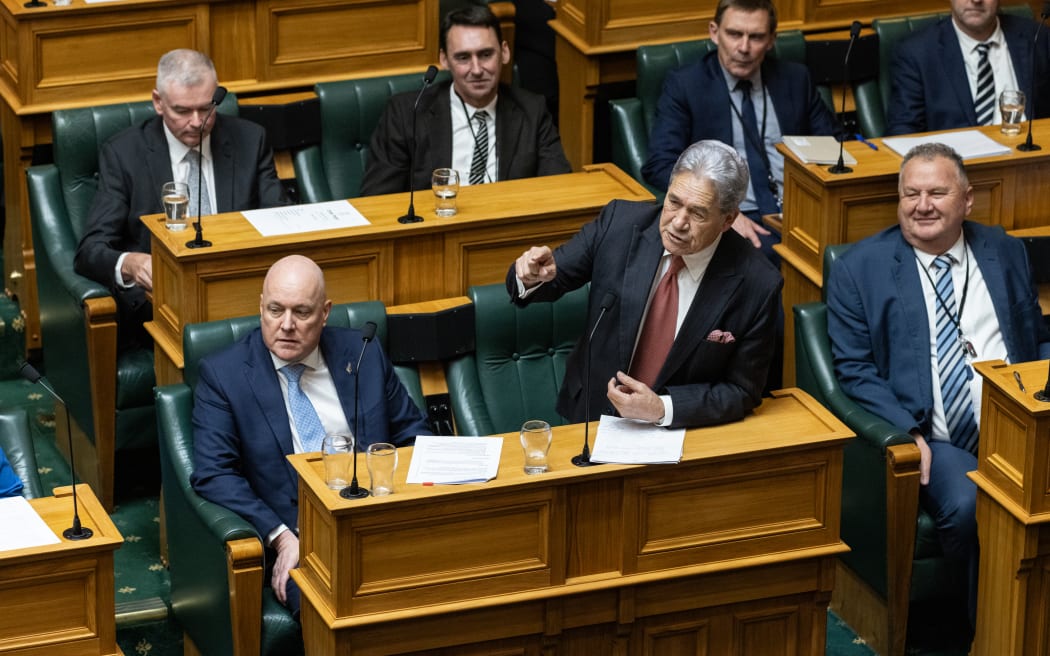
Politicians will debate the Budget after its release.
Photo: VNP / Phil Smith
Why should we care about Budget Day anyway?
Well, it’s your money and how it’s being spent.
“Because it’s the one set-piece that shows us what public services the current government is spending and investing in, and how they will pay for it,” Simplicity chief economist and media commentator Shamubeel Eaqub said.
“We have relatively transparent fiscal reporting in New Zealand, meaning we have good insight on what the government is spending on, what it is cutting, and whether it will be paid for by taxes or debt.”
Michael Swanson is a research fellow in the University of Otago politics programme.
He said people should care about the Budget, as it shows what the government thinks is important – but it also should show its future plans for the country.
“It gives a snapshot of what the government places value on and allows everyday Kiwis to decide if that aligns with their view on where New Zealand is heading.
“Most of all, Kiwis should ask, ‘Does this Budget make my life, and the life of my family and community, better than it was yesterday?'”
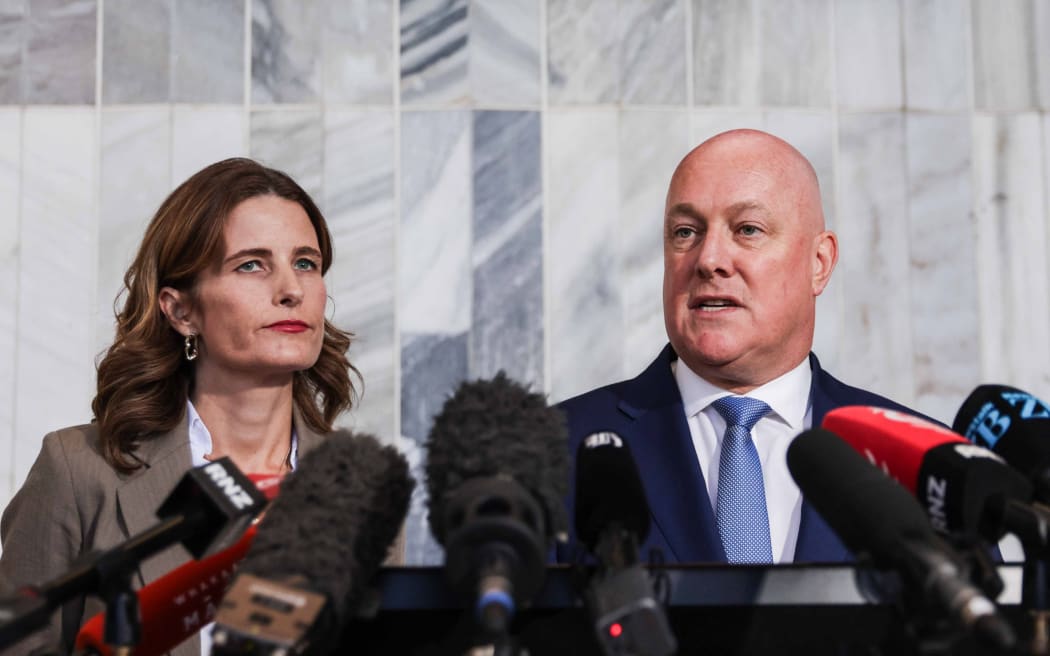
Prime Minister Christopher Luxon and Finance Minister Nicola Willis have signalled a tight budget.
Photo: RNZ / Samuel Rillstone
What’s this year’s message look like?
“There will be no splashing the cash,” Willis said, while making the date announcement.
This year’s Budget Policy Statement came out in December. Since then, let’s just say the world hasn’t exactly remained static, as the US/Israel war against Iran has upended the global economy.
Even in December, the message was “New Zealand is in a challenging fiscal position”.
“In a more volatile world, we must focus on controlling what we can control and that starts at home,” Prime Minister Christopher Luxon told Business NZ recently.
Of course, it’s an election year, so the government will try to make the case for another term in November.
“They will do their best to signal their suitability to govern again, while at the same time, leave as little money in future budgets as possible, so the opposition cannot make big promises, without unwinding what is already announced,” Eaqub said.
So far, we know that less spending on new programmes will be announced, but spending on capital projects will rise.
The budget operating allowance – the amount of recurring annual funding for new programmes – has been dropped to $2.1 billion. By comparison, in 2022,. then-Finance Minister Grant Robertson set an operating allowance of $5.9b.
However, Willis has proposed an increase in capital expenditure – one-off spending on projects like roads, schools and hospitals – up from $3.5 to $5.7b.
Willis has said the capital spending increase was a result of making investments towards growth.
“We have capital-intensive plans for the future – that includes re-equipping our defence force, it includes ensuring our transport networks are fit for future growth, that we have the hospitals and the schools that we need.”
“Budget 2026 is about securing New Zealand’s future,” Luxon said in pre-Budget remarks. “Fiscal repair, balanced with careful capital investment features heavily in that story.
“The government remains committed to putting debt on a downward path towards 40 percent of GDP and to returning the books to surplus by 2028/29.
“Achieving that will be a tall order and will require careful choices in the years to come.”
Swanson said past Budgets had often failed to articulate long-term goals.
“We have a real problem with being future focused and this is something that has hampered consecutive governments.
“What does the country look like in 2030, 2036 or 2040? Rather than just saying, ‘We’re being fiscally responsible’, they need to explain why and what the end goal is.”
Eaqub said every Budget had to include difficult choices.
“A surplus is easy to deliver – raise taxes or cut spending – but neither is popular, because each come with winners and losers.”
Last time the government was in surplus was in 2019, just before the Covid-19 pandemic.
“We will not balance the books, if we aren’t willing to have a proper conversation about what public services we want, of what quality and who pays for it,” Eaqub said. “There are no free lunches.”
When it comes down to it, with all the speeches on Thursday, the Budget needs to speak clearly to the concerns of ordinary New Zealanders, Swanson said.
“I’d also say that the missing piece is the human element,” he said. “The current government have an issue with managing the human impacts of choices made and speak instead in fiscal terms.
“As a result, communication about these decisions comes across as quite defensive, arguing that stability is key to getting through tough times, rather than how this truly makes New Zealand a better place to live.
“What they need to do is show they understand the human impacts of the decisions being made.”
Sign up for Ngā Pitopito Kōrero, a daily newsletter curated by our editors and delivered straight to your inbox every weekday.