
Limited ink colors, machinery and social acceptance made tattoos simpler in style and creativity in the past. However, today, so much has evolved in the world of tattoos. (Designed by Stripes Staff)
Tattooing has come a long way since the days of sharpened bamboo sticks, bones, stones and shells being the only way to get the ink into the skin. Limited ink colors, machinery and social acceptance made tattoos simpler in style and creativity in the past. However, today, so much has evolved in the world of tattoos.
Evolution of Machines
In 1891, Samuel O’Reilly patented the first electronic tattoo machine in New York. This allowed for increased consistency and speed in tattooing. Then came coil machines, rotary machines, pen machines and pneumatic machines. Coil machines, first appearing in the late 1800s, allow for the bold lines that make up the American Traditional (aka “Old School”) style. Rotary and pen machines help create fine line detailing and realism styles.
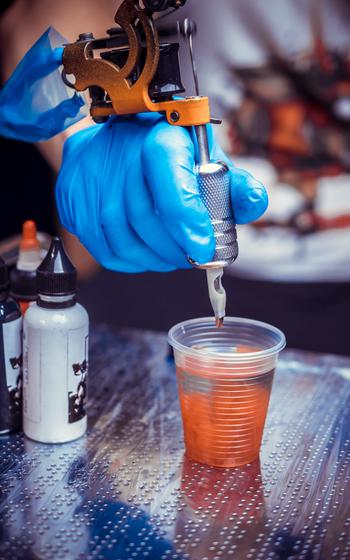
Today’s tattoo machines have morphed from O’Reilly’s original patent to not only increase speed and consistency, but also precision and flexibility. (misterforeman (123RF))
Today’s tattoo machines have morphed from O’Reilly’s original patent to not only increase speed and consistency, but also precision and flexibility. Modern machines are made from material that allows for safer and more sanitized tattoo application. Now, machines can be cordless for better movement of the artists and tattoo recipient as well as more precise application of the tattoo itself.
Machines have even evolved to be completely self-running. That’s right. No artist sitting next to you. It’s just a robot arm manipulated by an artist in a different location. The “world’s first” tattoo completed by an industrial robot was done in 2016 and the world’s first “remote” tattoo (where the artist was in a different location) was done in 2021. Would you get a tattoo from a robot?
Evolution of Ink
Machines are not the only thing that have changed in the world of tattooing. Tattoo inks come from humble beginnings made from charcoal, plants, fruits and minerals. This meant that color choice and pigmentation was limited; however, these ingredients also had much more local cultural ties than modern inks.
Today, the color choices for inks are seemingly limitless. These choices let artists create seamless shading in the tattoo to give not only a brighter look, but also a more realistic and/or stylization to the tattoo. These modern, bold colorful inks also hold their vibrancy longer, creating less of a need for touch-ups later in life. It’s not just the color choice that has changed over the years with inks.
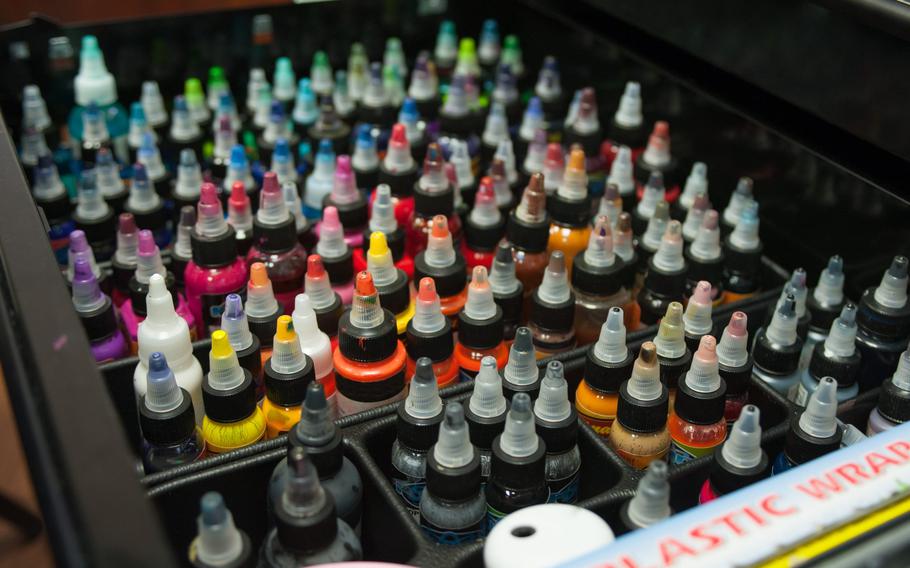
Today, the color choices for inks are seemingly limitless. (motionshooter (123RF))
Early 20th century inks could contain heavy metals and chemicals that are no longer present in modern ink. For the eco-conscious, there are vegan tattoo inks. For those who are not 100 percent committed to an idea, there is disappearing ink which contains bio-absorbable ingredients that shrink and fade over time. There are also black-light inks that only appear under an ultraviolet light.
Evolution of Safety
Getting a tattoo begins from the moment you enter the studio and does not end until the tattoo is completely healed. It is not just the hours you sit in the chair.
As more tattoo shops popped up all over the world, the more the industry became regulated. It is now common practice for artists and shops to be subject to licensing, certification, documentation and inspections. This creates a more comfortable and safer environment for both artists and customers.
The use of single-use needles, tubes and ink containers as the standard means that there is much less risk of infection and cross-contamination. Sterilization techniques have also advanced for equipment and work surfaces. Getting a tattoo in the modern era is surprisingly similar to getting a medical procedure done in terms of prep, cleaning and sanitation.
There has also been significant progress in terms of after-care. Many of today’s artists recommend using derm bandages to help with the healing of tattoos. These breathable, medical-grade barriers allow for the tattoo to heal for 3-5 days without interference from the outside world (dirt, dust, pet hair and people touching it).
As tattoos and the industry continue to gain momentum and popularity, more and more ideas for innovative styles, methods and technologies emerge. With robot tattoo machines, disappearing ink and new styles constantly appearing, there is no telling where tattoo culture will go next.