
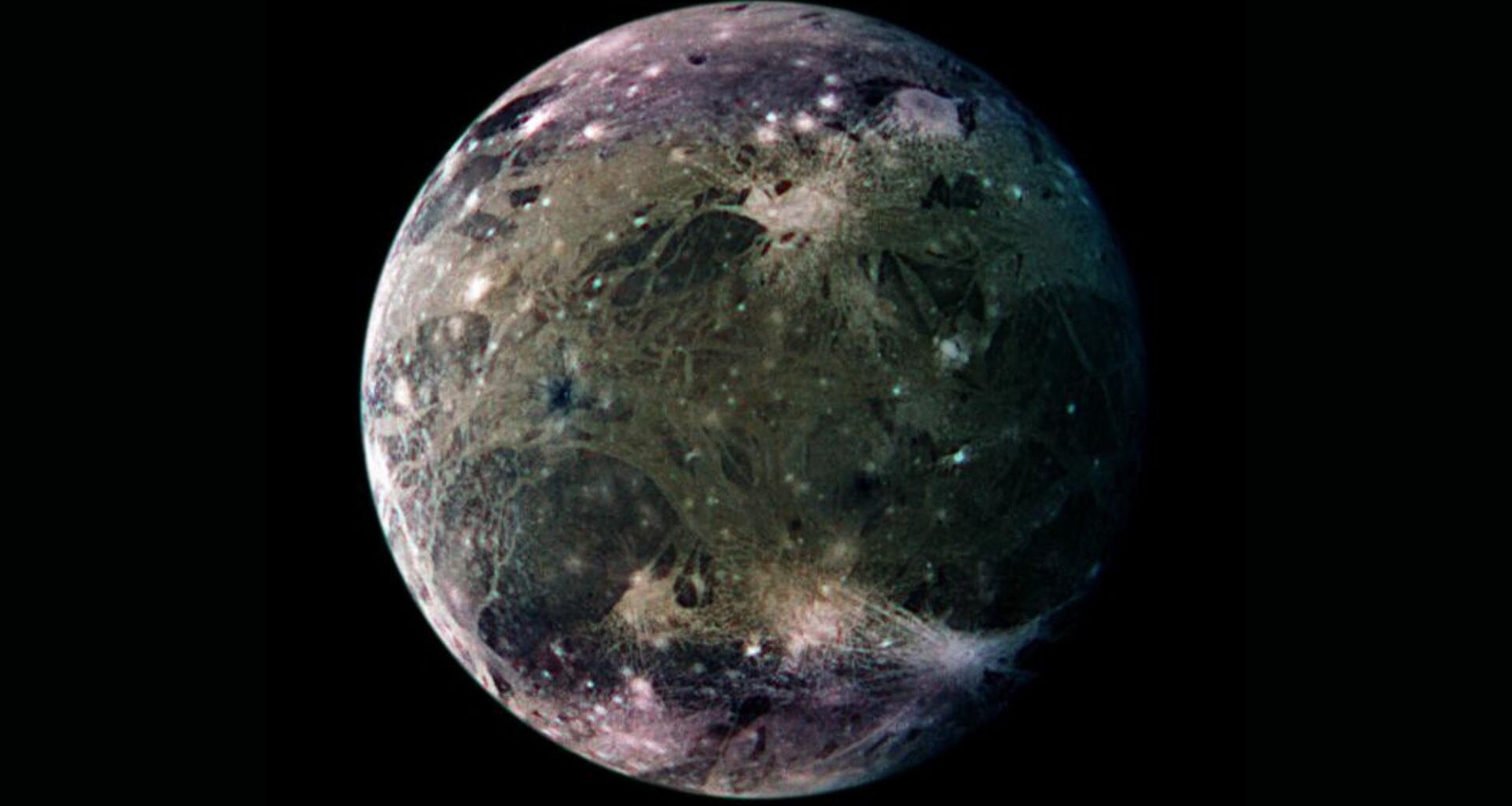
Jupiter’s giant moon Ganymede is the only known moon to have its own magnetic field — and it may be heating up in a process “not yet observed anywhere else,” new research suggests.
One of the four Galilean satellites swirling around Jupiter, Ganymede is the largest moon in the solar system. At nearly 3,300 miles (5,300 kilometers) in diameter, it’s more than 1,000 miles (1,600 km) wider than Earth’s moon and slightly bigger than Mercury, our tiniest planetary tot. (Jupiter has more than 100 confirmed moons, with the largest four known as the Galilean moons.)
You may like
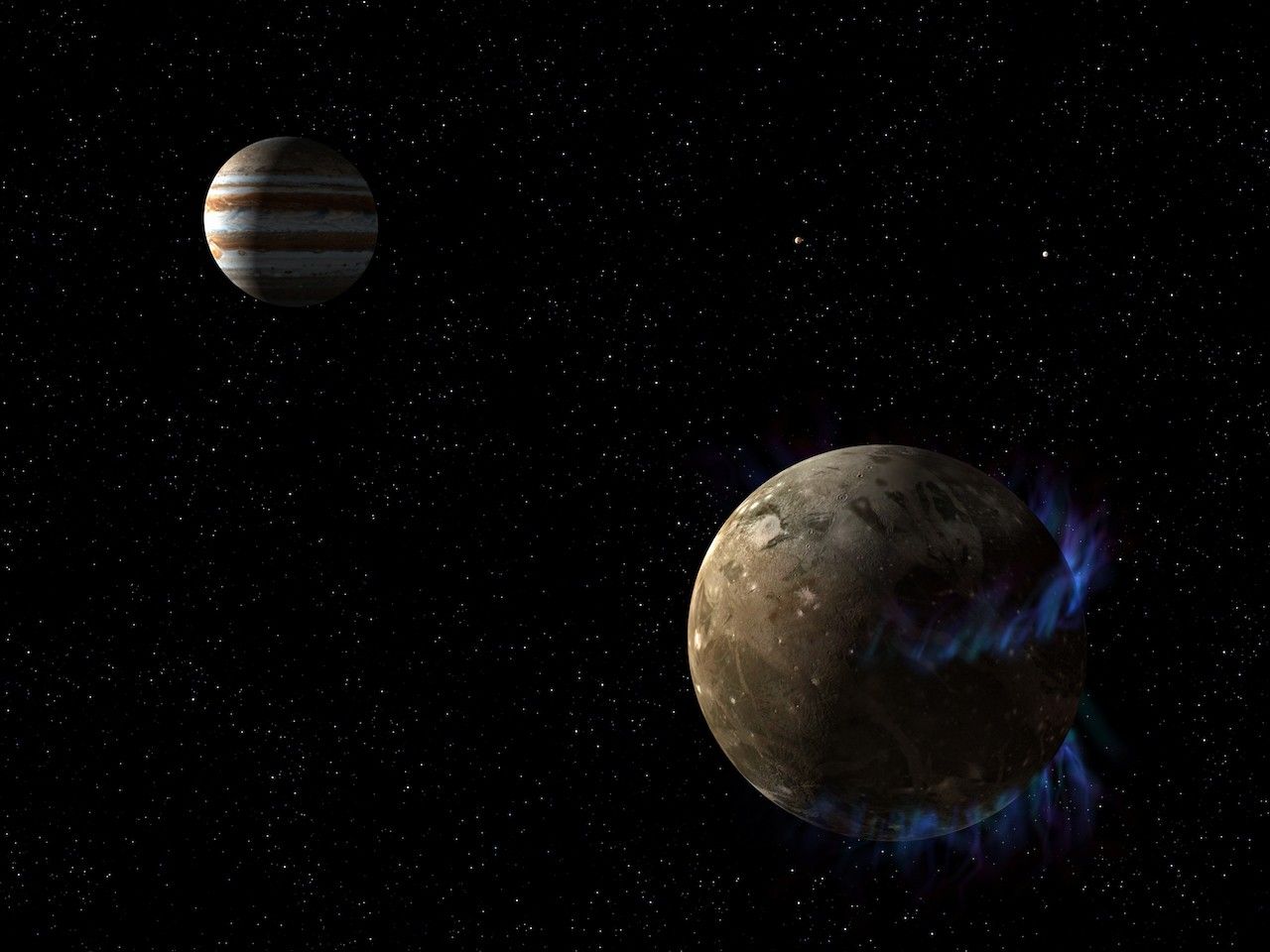
An illustration depicting Jupiter and its largest moon, Ganymede, exhibiting auroras discovered by the Hubble Space Telescope.
(Image credit: NASA/ESA)
Hot or cold start?
What to read next
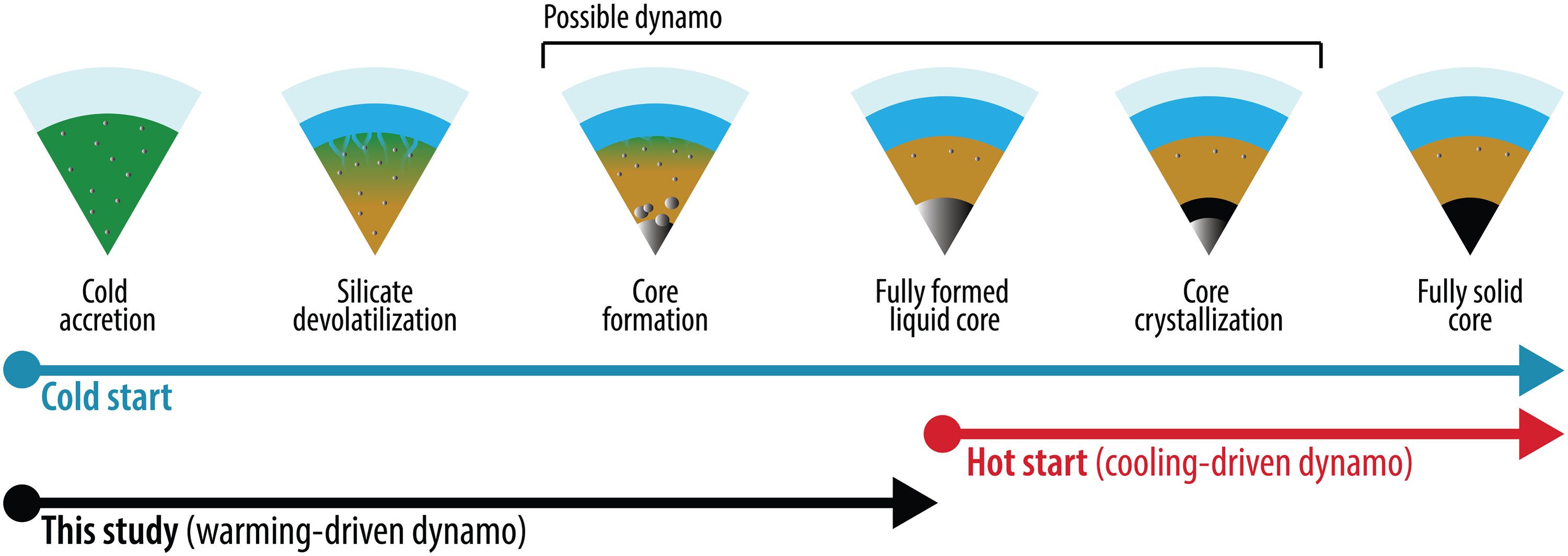
“Cold” and “hot” scenarios for the formation of a dynamo, such as within Ganymede, as modeled in this study.
(Image credit: (Trinh et al., Science Advances, 2026))
Alien implications?
Trinh, K. T., Petricca, F., Hemingway, D. J., & Vance, S. D. (2026). Powering Ganymede’s dynamo with protracted core formation. Science Advances, 12(19), eaed8021. https://doi.org/10.1126/sciadv.aed8021