
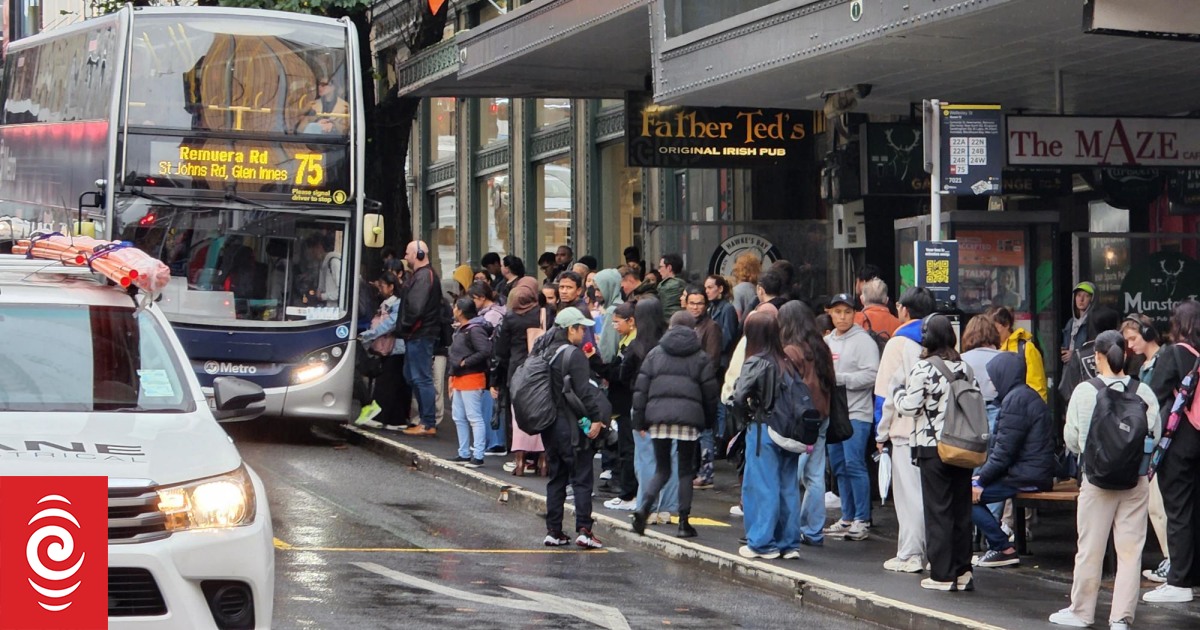
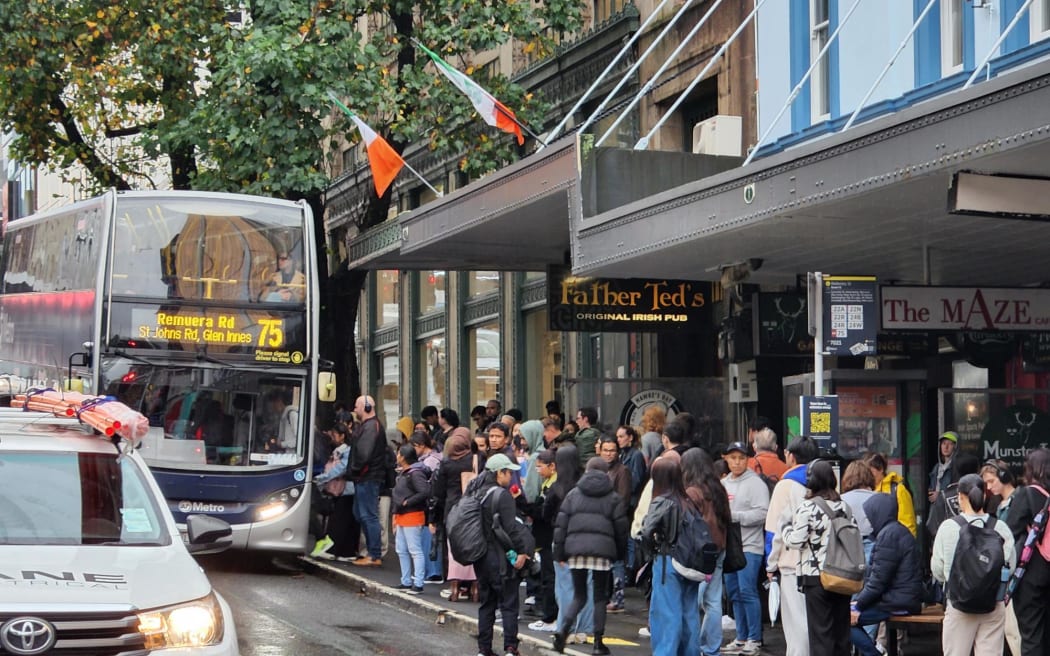
People queue for buses in central Auckland (file photo)
Photo: RNZ / Lucy Xia
Bus passenger numbers in Auckland are back to levels not seen in the city since before the Covid epidemic, due in part to the ongoing fuel crisis.
Data from Auckland Transport showed a record number of bus trips in March, with high numbers persisting into April too.
Public transport advocates said the city and the government should be capitalising on the chance to make the change permanent.
March is traditionally Auckland’s biggest month for public transport patronage, with ‘March madness‘ setting in as work, school and university all get into full swing.
The all-time record across all forms of public transport was March 2019, when more than 10 million trips were taken on the city’s buses, trains and ferries.
However, this year a new March record was set for bus passengers, with 7.5 million trips taken on the network criss-crossing Auckland.
Auckland Transport public transport and active modes director Richard Harrison said the buses remained busy last month – six percent up on the same month last year and only just below
“We hit mid-March, we had a very busy period as we expected, [it] started to get quieter, and then just after the fuel prices started rising sharply, it jumped back up again,” he said.
“And patronage has stayed at a high level where we would have expected it to drop.”
Weekend passenger numbers were especially high.
“[That] suggests to me that some people are starting to take those discretionary trips at the weekend by public transport as well,” Harrison said.
“Maybe they’re driving during the week and then at the weekend they’re going, ‘Hey, let’s use the bus instead and save a bit on our fuel costs.'”
Bus passenger numbers were so strong that they had finally back to pre-Covid levels, despite changes in working and commuting habits.
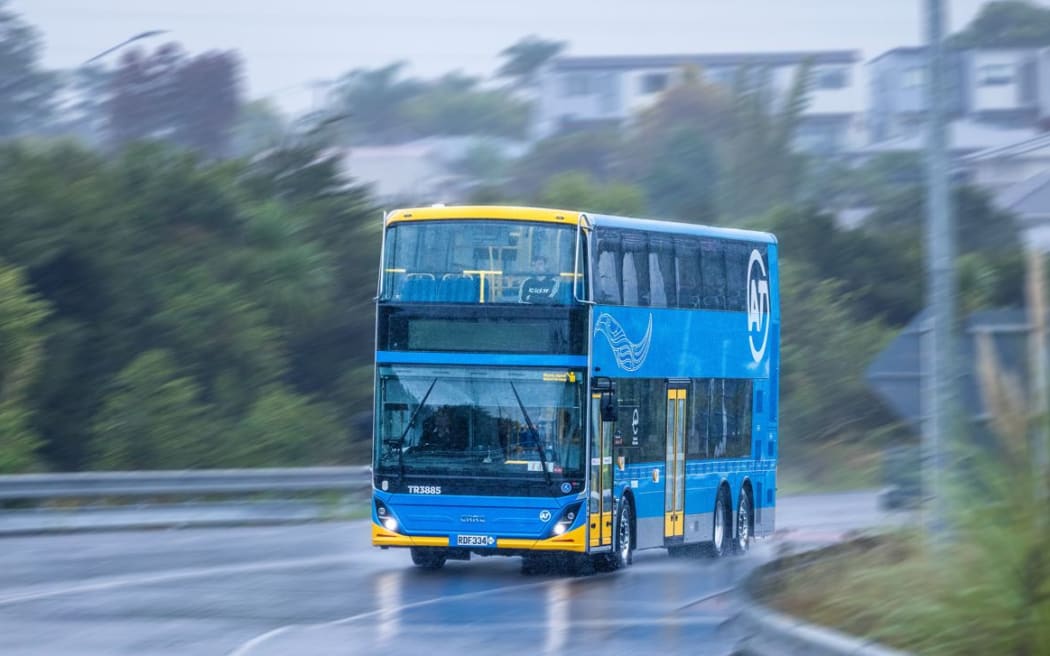
There are nearly 400 electric buses in Auckland Transport’s fleet now.
Photo: Auckland Transport / supplied
Auckland University urban planning programme director Tim Welch said it was clear from other data that some of the bounce was coming from people getting out of their cars.
“We know that traffic is likely down about 2.5 percent, so three million fewer trips [by car] this April compared to last April, across a sample of sites with traffic monitoring.”
Along with more bus passengers, cycling trips at a set of monitored sites had jumped by about 20 percent last month, too, Welch said.
“These numbers have kind of been trending in their respective directions for a while, but the fuel price stuff has definitely likely contributed to that continuing trend.”
He expected that to continue.
“We know that we likely haven’t seen the worst in terms of fuel supply and price shocks, so it’s likely that we’ll continue to see more and more people piling onto public transport.”
Greater Auckland transport blogger and advocate Matt Lowrie said Auckland Transport had done a lot of work to improve off-peak frequency over the last decade, with many services running every 15 minutes during evenings and weekends.
“Auckland actually has probably the best bus network in Australasia,” he said.
The weekend numbers had been increasing for a while, “and they’re getting stronger as a result of the fuel crisis as well”.
Auckland Transport should be doing more to capitalise on that.
“People just assume it’s going to be slower, and so there’s probably more that can be done around encouraging off-peak use,” he said.
“That’s really where our public transport system needs to be, where it’s used well all day for a whole range of trips, not just your commuting from, commuting to the city.”
Tim Welch said the government had chosen the wrong focus for its fuel conservation campaign, which urged motorists to ‘stretch every tank’.
“When the main messaging is check your car boot to make sure it’s not full and pump up your tyres, that’s really the government just assuming and messaging that cars are your number one choice,” he said.
“We do have this very reliable and, luckily, heavily electric public transport system that’s running in the background that could be used a lot more as well.”
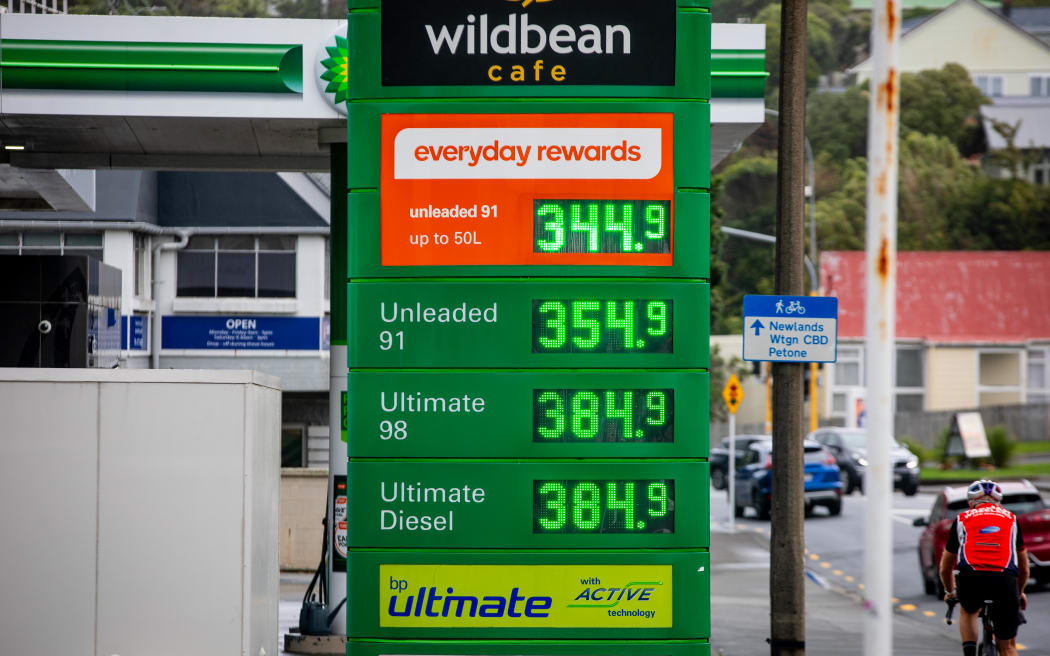
Petrol prices have been above $3 a litre since late March.
Photo: RNZ / Mark Papalii
Lowrie was also perplexed by the focus on fuel saving.
“[They’ve] very much shied away from encouraging people or saying that people should try and use public transport more,” he said.
“No one says it’s going to be the solution for everyone, but in our biggest cities … if we can encourage people to use public transport more, that will reduce pressure on fuel demand that can be used for people who don’t have public transport options available.”
Carbon dioxide from transport accounts for 18 percent of New Zealand’s total greenhouse gas emissions.
With the right investment and effort, the fuel crisis was a chance to help to drive a wholesale transport mode shift, Welch said.
“[There’s] the old saying that [you should] never let a good crisis go to waste – if we don’t use this time of heightened awareness of the cost of driving to enhance public transportation and cycling and walking options, then it’s just naturally going to go back, because people don’t have that alternative.”
As well as better awareness, frequency and speed were two of the most important factors that would encourage more people onto buses, he said.
“Ideally what we would do is increase the number of buses to the point that you don’t even have to think about when your bus is going to come – you just go to the stop and it’ll be there within five or six or seven minutes.”
Routes that already had that level of frequency, or dedicated busways or bus lanes, had proved hugely popular, he said.
“Every time we have dedicated bus infrastructure, the numbers just far exceed any expectations.”
He pointed to the Northern Busway, which now conveys half of all people crossing the Harbour Bridge at peak times, and the priority bus lane on the Northwestern Motorway, which has seen passenger numbers on services using it more than double in just two years.
More of that was needed on urban roads, too, he said.
“If we want more people on the buses and a more efficient public transport system, we’ve got to find a way to, at least on the busiest routes, get those buses out of traffic and moving along quicker.”
More bus lanes, with longer operating hours and better enforcement, would be “a key win”, he said.
“I’d take with a grain of salt any argument that we just don’t have the space for a dedicated bus lane. We have cars parked on both sides of the streets on nearly every road we have, so there’s tons of space to do it.”
Richard Harrison said Auckland Transport was considering where it might be able to quickly introduce some temporary bus lanes, if the fuel crisis deepened.
“Right now, private vehicle traffic is slightly down where we would expect it to be, but not massively down that we’d say it’s right to take a lane for the buses,” he said.
“But it’s certainly something we have got in mind if the situation escalates.”
Auckland Transport had doubled its tertiary student discount form 20 to 40 percent earlier this year, and had been operating a $50-a-week fare cap since 2024, but was otherwise limited in what it could do to lower fares with an increase in funding, he said.
It had brought forward the introduction of about 40 more electric buses, with the total number of EVs in the fleet now approaching 400,
The organisation was also keeping an eye on all its routes to see where passenger numbers were especially high, he said.
“We’re monitoring utilisation every day to see if there are any hotspots where we might need to put in extra buses.”
Sign up for Ngā Pitopito Kōrero, a daily newsletter curated by our editors and delivered straight to your inbox every weekday.