
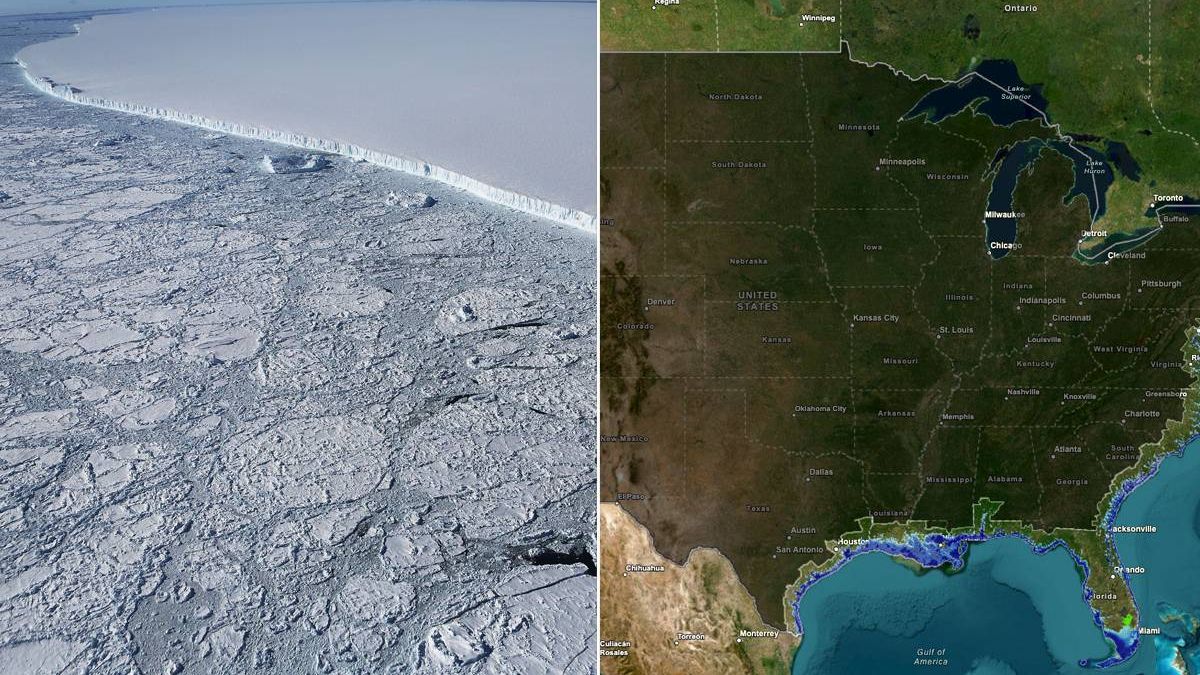
Coastal cities across the U.S. could be at risk of going underwater due to the melting of the Thwaites Glacier in Antarctica, known as the “Doomsday Glacier”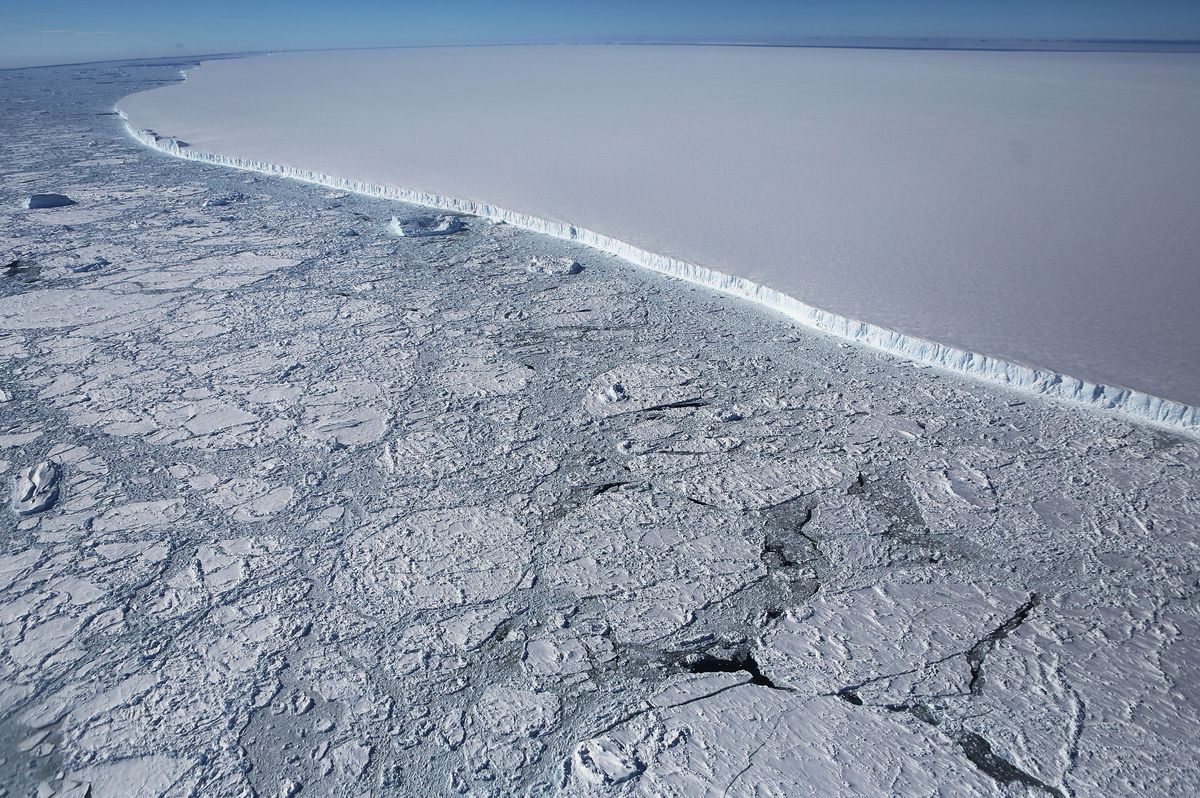
A melting glacier in Antarctica could cause sea levels to rise across the world(Image: Getty Images)
Scientists are sounding the alarm over the melting “Doomsday Glacier,” warning of potentially catastrophic consequences for global sea levels.
The Thwaites Glacier, situated on the West Antarctic Ice Sheet, spans an area larger than Florida and ranks among Antarctica’s most rapidly retreating glaciers. Stretching roughly 80 miles across, the Thwaites Glacier holds the distinction of being the world’s widest glacier.
Dubbed the “Doomsday Glacier” by researchers, the massive ice formation is deteriorating at a concerning pace due to warming ocean waters driven by climate change. Should it collapse entirely, experts warn it could trigger a sea-level rise of nearly 11 feet, placing major coastal cities in grave danger.
READ MORE: Map reveals blast zone as chemical tank at risk of explodingREAD MORE: Inside the major airports that could see flights cut under DHS bill
Currently, ice loss from the Thwaites Glacier contributes approximately 4% to global sea-level rise, according to the International Thwaites Glacier Collaboration. Annually, it sheds 50 billion tons more ice than it gains through snowfall, reports the Express US.
The collapse of the Thwaites Glacier would spell disaster
A 2024 study conducted by researchers from UC Irvine and the University of Waterloo utilized high-resolution satellite radar data to pinpoint locations where warm, high-pressure seawater was penetrating beneath the glacier’s grounded ice, intensifying the melting process and accelerating sea-level rise.
“Thwaites is the most unstable place in the Antarctic and contains the equivalent of 60 centimeters of sea level rise,” Christine Dow, an associate professor of glaciology at the University of Waterloo and a co-author of the study, told UC Irvine News. “The worry is that we are underestimating the speed that the glacier is changing, which would be devastating for coastal communities around the world.”
Dow went on to explain: “At the moment we don’t have enough information to say one way or the other how much time there is before the oceanwater intrusion is irreversible.”
“By improving the models and focusing our research on these critical glaciers, we will try to get these numbers at least pinned down for decades versus centuries,” she continued. “This work will help people adapt to changing ocean levels, along with focusing on reducing carbon emissions to prevent the worst-case scenario.”
However, a separate 2024 study published in Science Advances by researchers from Dartmouth College and the University of Edinburgh suggested through simulations that the Thwaites Glacier might not be as susceptible to marine ice cliff instability (MICI) as earlier believed.
The research team discovered: “All models show that Thwaites Glacier would not retreat further in the 21st century.” Their simulations indicated that the glacier’s “thinning” could actually “reduce the calving rate” and help stabilize the cliff. The scientists emphasize that existing model projections should be re-evaluated.
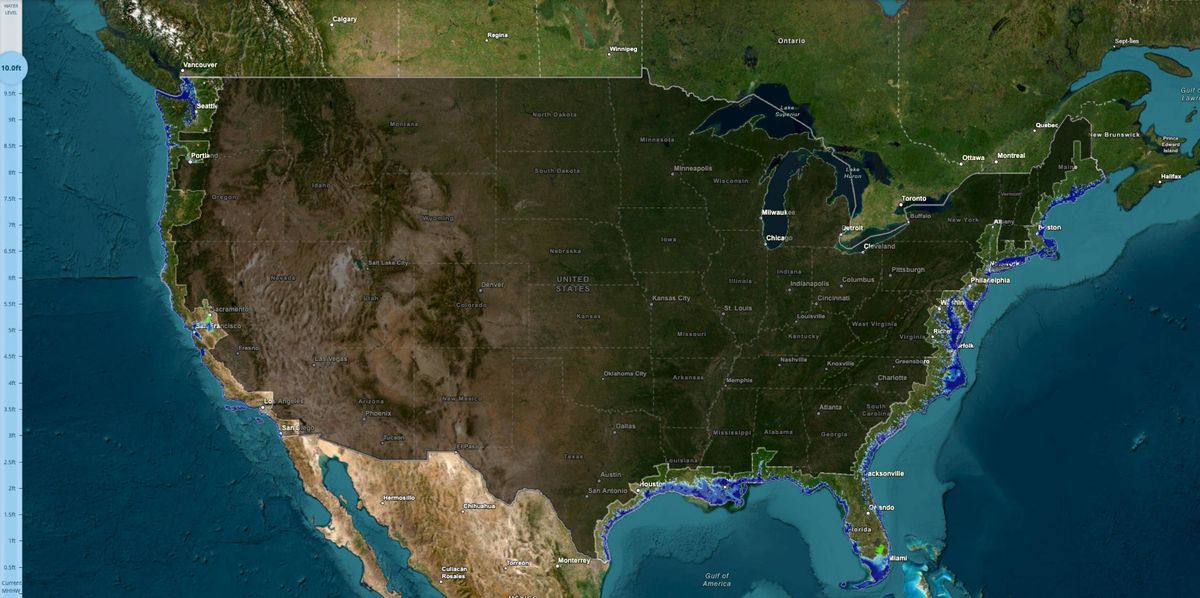
The NOAA map shows which U.S. cities could be underwater if sea levels rise 10 feet(Image: NOAA)
Which U.S. cities would be threatened if sea levels rise 10 feet?
A projection map from the National Oceanic and Atmospheric Administration (NOAA) illustrates which regions of the U.S. would be impacted should sea levels surge by 10 feet. Vast stretches of America’s coastline would face catastrophic consequences, with certain areas experiencing extreme flooding while others would be entirely submerged.
Florida ranks among the states that would be hardest hit by a 10-foot sea level surge, with significant portions of its coastline going underwater, while cities including Jacksonville, Fort Lauderdale, Tampa, St. Petersburg, and Panama City would face the threat of severe flooding.
Coastal Texas cities, among them Galveston Bay, Freeport, Surfside Beach, and communities near New Orleans, Louisiana, would also find themselves vulnerable to encroaching waters.
Additional cities facing serious risk include Charleston, South Carolina; Savannah, Georgia; Norfolk and Virginia Beach, Virginia; Wilmington, North Carolina; Baltimore, Maryland; New York City, New York, along with parts of New Jersey, Delaware, and Mississippi, according to Newsweek.
California would not be spared either, with locations such as San Francisco Bay, Oakland, San Mateo, San Diego, and Santa Barbara identified as particularly susceptible to rising waters.