


Lake Pupuke, in Takapuna, Auckland.
Photo: 123RF
Follow Our Changing World on Apple, Spotify, iHeartRadio or wherever you listen to your podcasts
Ancient Lake Pupuke is a popular suburban playground on Auckland’s North Shore, but for a few specialist scientists it is like a crime scene and they are the detectives, trying to find a fingerprint from the remarkable rocks deep below the surface.
The site is one of many scientists are focussed on in their search for natural hydrogen that could one day help power the local neighbourhoods and provide a home-grown solution to our dependence on imported energy.
With the fuel crisis, soaring electricity prices and critical shortages of natural gas cutting deeper by the day, exploration and testing of the gas have stepped up.
Last month, the energy minister Shane Jones called a meeting of investors, academics and energy users about the future of hydrogen as a fuel option at a time when he says, “geopolitics is really afflicting our sense of resilience here in New Zealand”.

Energy Minister Shane Jones
Photo: RNZ / Mark Papalii
Our Changing World’s Sharon Brettkelly spoke to one of the scientists who attended that meeting, along with the “detectives” working on the hydrogen “crime scenes”.
“We’ve known for a long time that hydrogen comes out of the ground and naturally bubbles out of some place,” says geomodeller Paul Viskovic, who is leading the hydrogen work at Earth Sciences New Zealand.
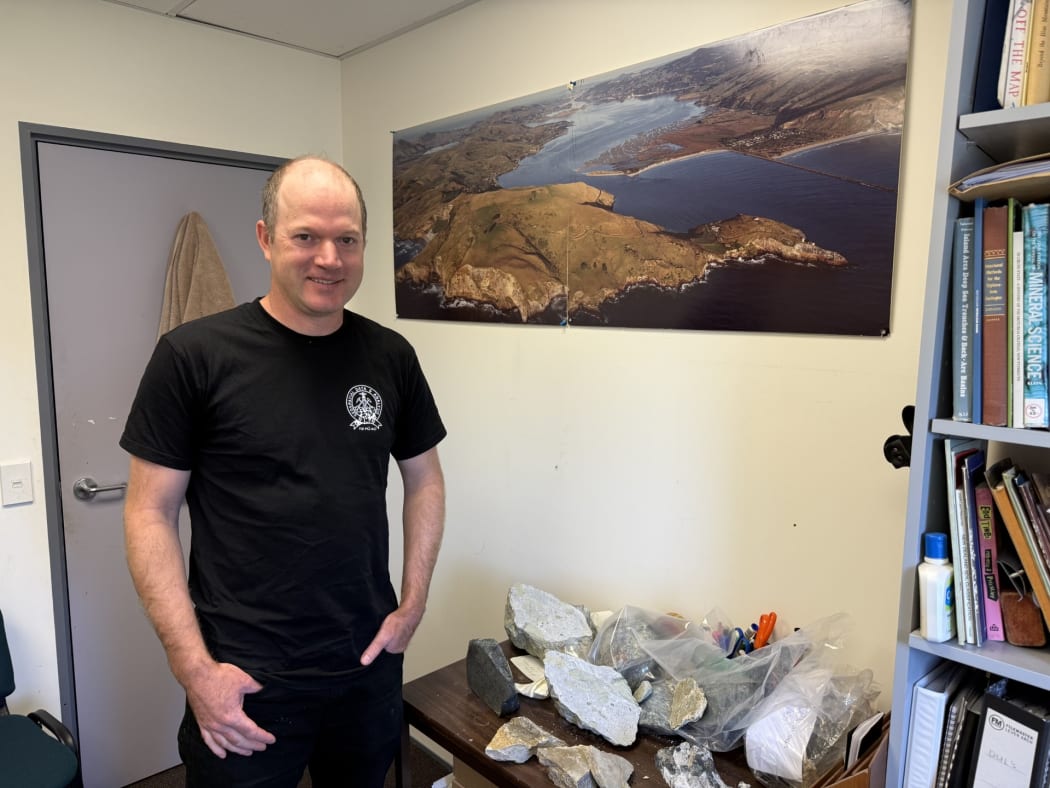
Paul Viskovic
Photo: RNZ / Sharon Brettkelly
Finding Hydrogen
For many years it was a scientific curiosity, and people would find it bubbling up in a steam or in mud volcanoes, he says.
Now it is seen as a potential resource with collaborations already underway between Earth Sciences and private companies.
“Companies are asking us questions like, ‘where should we look for natural hydrogen?’, and the government’s asking us questions like, ‘where is it going to be available for industry?’,” he says. “We’re trying to answer those questions from the ground up.”
The last time a government science organisation seriously researched hydrogen was in the late 1980s at a hydrogen seep in Fiordland, says Viskovic.
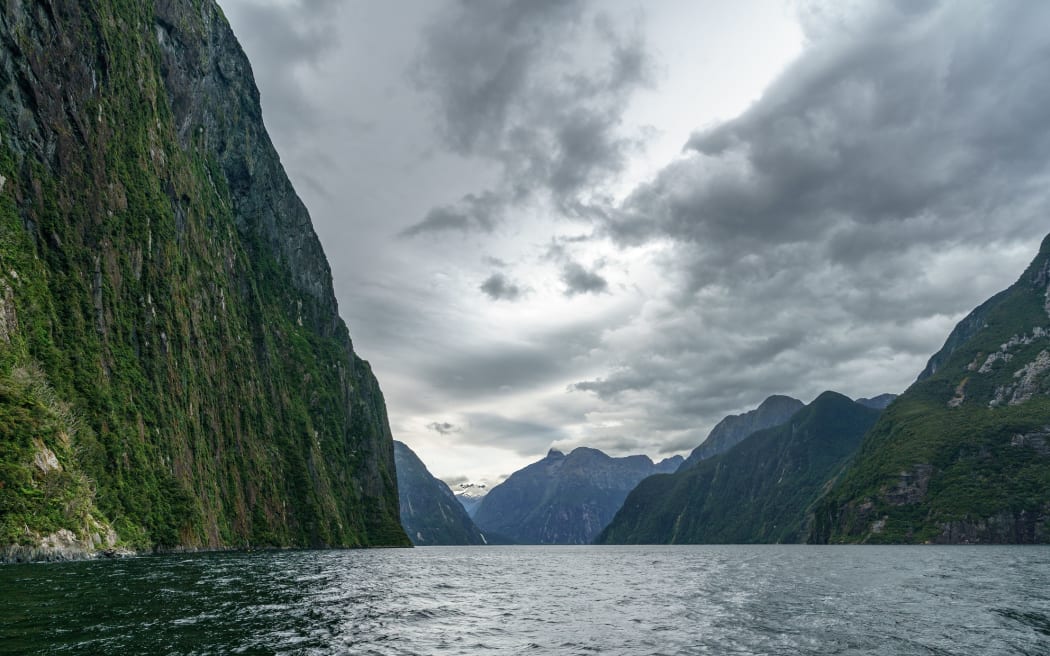
Fiordland has been known to have a hydrogen seep since the late 1980s.
Photo: 123rf.com
“It’s been known about since the 1950s at Poison Bay and it is 75 percent hydrogen, which is really high compared to most of the other places we look.”
Viskovic says the Fiordland site will never be developed as an energy source but the research there is helping scientists understand “where the fingerprint is, what it looks like and can we find other places that are not as unique as that but where it would be available”.
Unlocking the secrets of hydrogen
There’s still a lot to learn about hydrogen, he says, but researchers already know that it exists in sites like Lake Pupuke, a freshwater maar lake formed about 200,000 years ago during a violent volcanic explosion.
That eruption didn’t just shape the landscape, it also brought up chunks of rocks from great depth.
Locked inside the volcanic rocks around the lake are ultramafic xenoliths, dense fragments of mantle‑derived rock that were ripped from far below the surface and carried upward by rising magma during Auckland’s volcanic eruptions.
The natural hydrogen-producing process is subtle and often hidden but it is turning up in other parts of Auckland in places like wells that have been drilled for other purposes, and throughout the country.
Viskovic says hydrogen is made by a handful of processes in Aotearoa but the best known to companies is serpentinisation, a kind of rusting reaction of iron and magnesium which happens in specific rocks.
“Luckily those rocks are near the Alpine fault, in Southland at Bluff, further north at Nelson, and go in a big strip underneath one side of Taranaki and then under Auckland,” he says.
Hence the research at sites like Lake Pupuke where it is known the iron-rich rocks exist.
The hydrogen discoveries at urban sites mean the energy potential isn’t hypothetical or far‑off, says Viskovic, it will be easier to capture, manage, and eventually convert into clean energy.
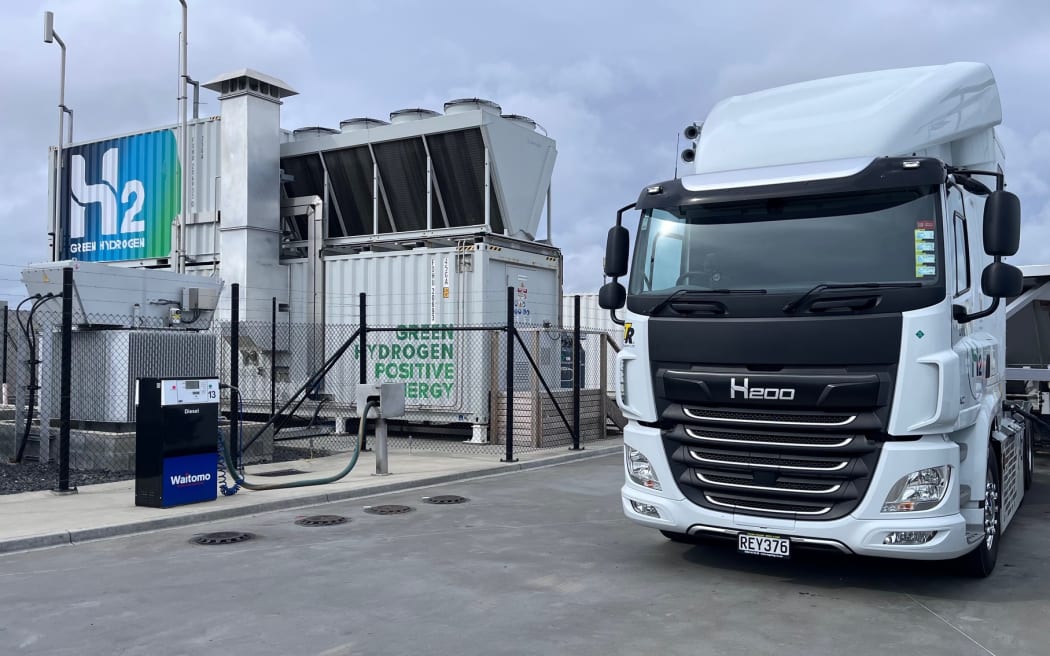
While it might not be able to fuel the whole country, some industries could benefit from a localised hydrogen fuel source.
Photo: RNZ / Kate Newton
Hydrogen detectives
The scientists are looking at the “exhaust pipe of a biological system” and developments in science mean they can better understand now how and where hydrogen is made.
“We’ve had great gas scientists over many, many years but its only in the last 10 or 20 years that you can genome sequence the bacteria.”
Viskovic says hydrogen is difficult to clean and use, but if you get it clean enough it’s got more energy per kilogram than other gases, like methane.
Industries that can’t use electricity need a fuel that can burn but not produce CO2 and might be readily available here in Aotearoa. But there are difficulties in using it, he says.
“Hydrogen can make steel go brittle, it can escape really easily, so if you don’t have a really tight seal on the pipe, it seeps out.
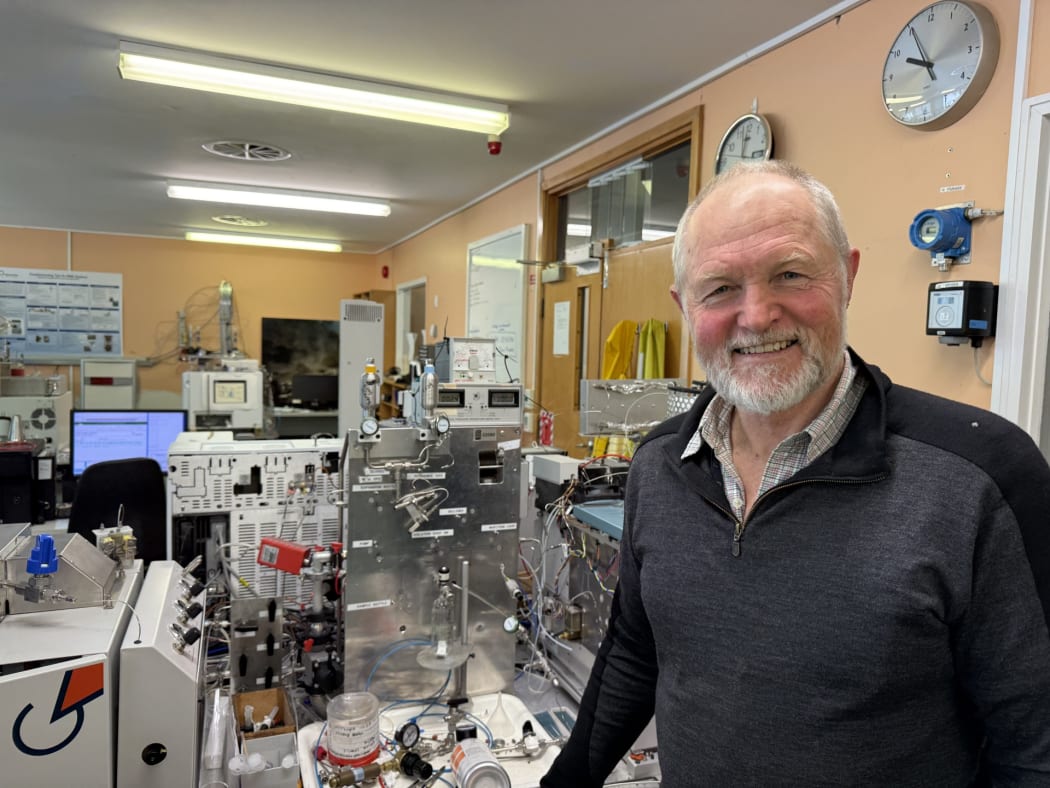
Senior minerals geologist Kevin Faure at the National Isotope Centre
Photo: RNZ / Sharon Brettkelly
The detective work takes place in the laboratories at the National Isotope Centre at Gracefield, Lower Hutt, where senior minerals geologist Kevin Faure leads a team analysing the chemical fingerprint of the gas samples sent from around the country.
“We’re interested in looking at the isotopes of gas. That tells us about the source of this gas, what was its journey.”
Faure says the tests help them understand how the gas behaves in different ways in nature.
“Hydrogen could come from organic matter, it could come down from microbes, or it could come from deep down in the crust or mantle of the earth. But those all have different signatures so we can use our isotopes to identify where did this come from.”
Hydrogen doesn’t come by itself, but with many other gases like carbon dioxide, methane and helium. And that makes the seep like a crime scene, says Faure.
“If you’ve got one witness, hydrogen, that’s great. But if you’ve got four witnesses – methane, CO2, nitrogen and hydrogen – then you can use the isotopes to try and understand where does hydrogen come from.”
Before it gets to the stable isotope laboratory the gas sample is put through an initial test in the neighbouring lab, run by isotope hydrogeologist Thijs van Soest.
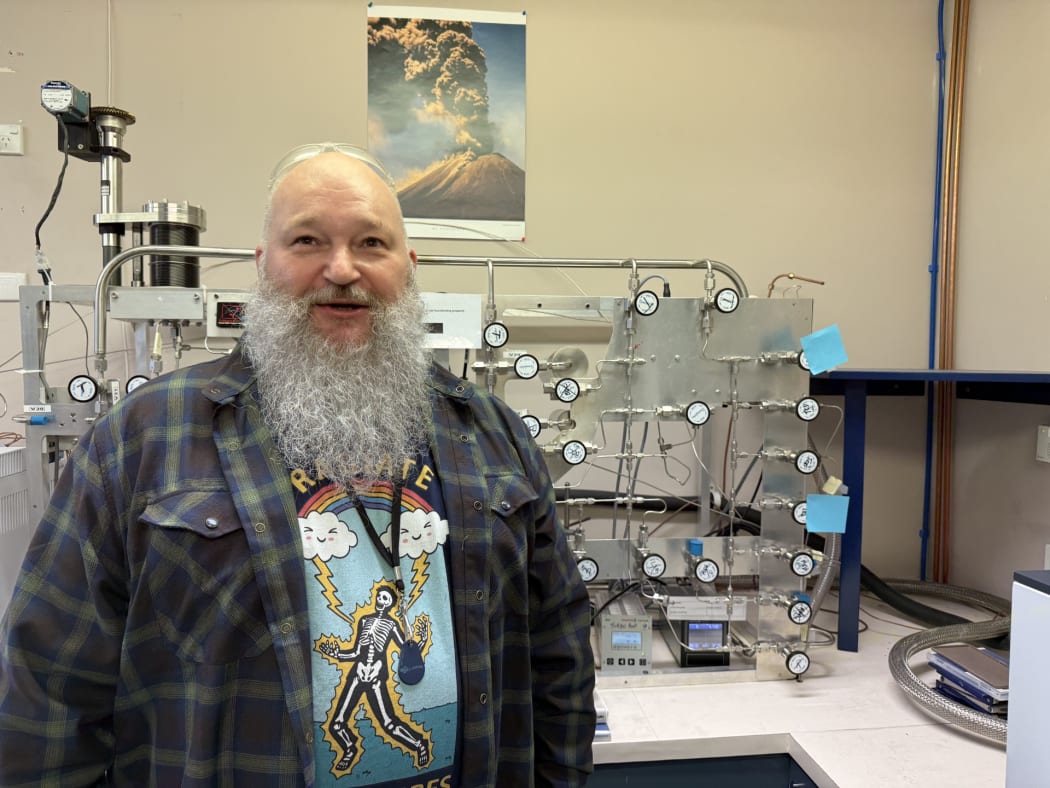
Isotope hydrogeologist Thijs van Soest
Photo: RNZ / Sharon Brettkelly
“It is important that we determine the actual general chemistry, the composition of the gas. A, is there actually hydrogen in the sample, is there going to be enough gas to get the result they’re looking for.”
He explains how the vacuum manifold siphons off different gases to help scientists work out their composition.
The gas sample they’ve just tested from Fiordland for the hydrogen project shows high levels of helium, he says.
“For the hydrogen (project) it may be of less direct use but helium of itself could be a resource. A lot of medical equipment uses helium.”
The work might be painstaking, but Faure says it can be a thrill to see the result.
“The excitement of seeing that number come off your chart when you know you’ve measured this gas that two minutes beforehand you had no idea where this gas came from,” he says.
Paul Viskovic says the role of the scientists is crucial to the development of natural hydrogen.
“New Zealand is fortunate that we’ve got such variable geology. It means it’s hard to know where to look and these guys know when we find something what it is, where it came from.
“Is this just a random swamp gas that’s just coming from a shallow peat layer or is this actually something substantial that you might not know from just taking a handheld sensor at the surface.”
New Zealand is behind other countries in developing hydrogen as an energy source, he says.
After attending the meeting called by Shane Jones at Parliament, he says legislation is the main issue holding back developments in New Zealand
“Hydrogen is not in the Crown Minerals Act and it’s not really a mineral because it’s a gas. So, there’s a real need for legislation and clarity on the legislation to encourage companies.
“At the moment they’re applying for mineral permits and expecting to be grandfathered in, but what would really unlock it is the government moving forward with the legislation.
“Earth Sciences can help by understanding the science questions that help them develop the legislation.”
Sign up to the Our Changing World monthly newsletter for episode backstories, science analysis and more.