
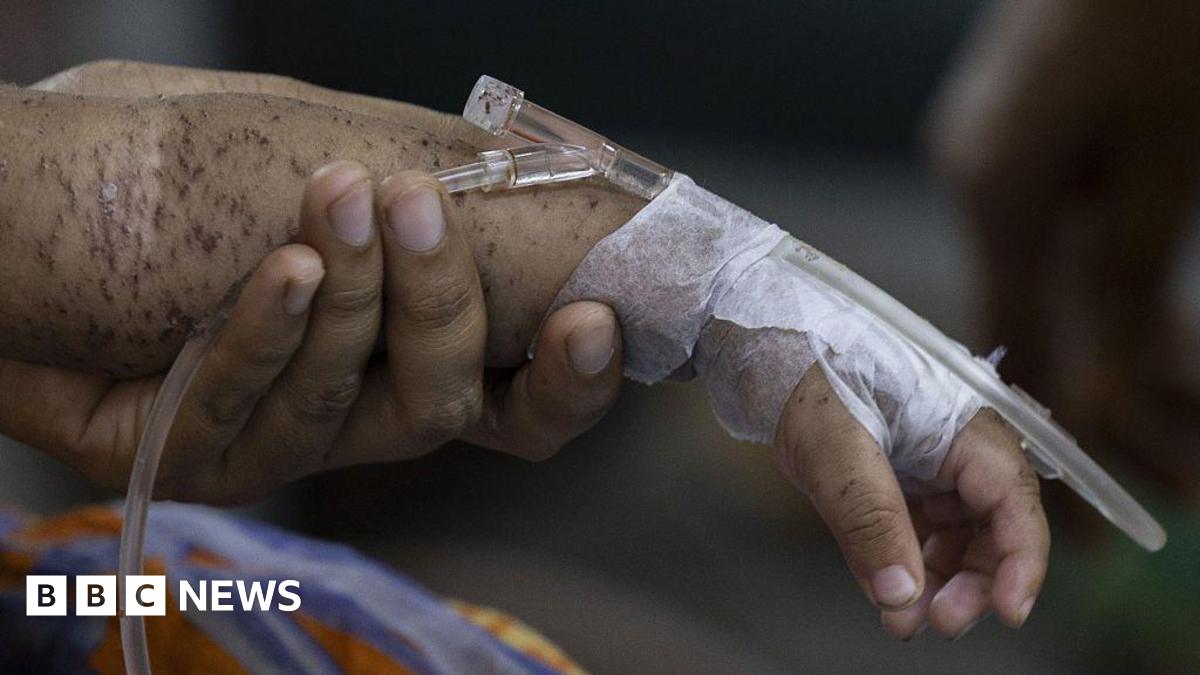
“It feels like a bit of a perfect storm,” Rana Flowers, Bangladesh country head for UNICEF said during a press conference.
Flowers explained that the agency had identified several factors which increased the risk of infection, including pockets of cases since 2023 where children were missing out on routine vaccination, high population density in certain areas – especially Dhaka or Cox’s Bazar – and big population movements for holidays.
But one element in particular has stood out: delays ordering vaccines.
In 2024 Bangladesh’s long-term ruler, Sheikh Hassina, fled from the country after mass protests against her rule. An interim government was appointed, and elections were held in February 2026.
UNICEF says that the interim government decided to change the way Bangladesh bought vaccines, which led to delays in placing orders. Flowers said they had 10 separate meetings with the interim government where UNICEF flagged risks associated with delays to vaccine procurement.
“I can tell you I sat with the interim advisor and staff on at least ten occasions,” she said. “Saying we are worried, look at my face, I am worried you are going to face an outage.”
In a post on social media, Md Sayedur Rahman, former Special Assistant to interim chief advisor for the health ministry, said that “no change was implemented in the vaccine procurement process during the tenure of the interim government”.
“A regular and consistent collaborative relationship regarding vaccine matters was maintained with UNICEF,” he added.
Others also say that gaps in vaccination which opened during the Covid pandemic were never closed.
“Previously health workers went from door to door to convince parents to get their children vaccinated,” Husain says. “But during Covid they were discouraged from doing that to avoid transmission. Some parents were afraid that they could contract Covid if they took their child to hospital to receive the vaccine too.”