
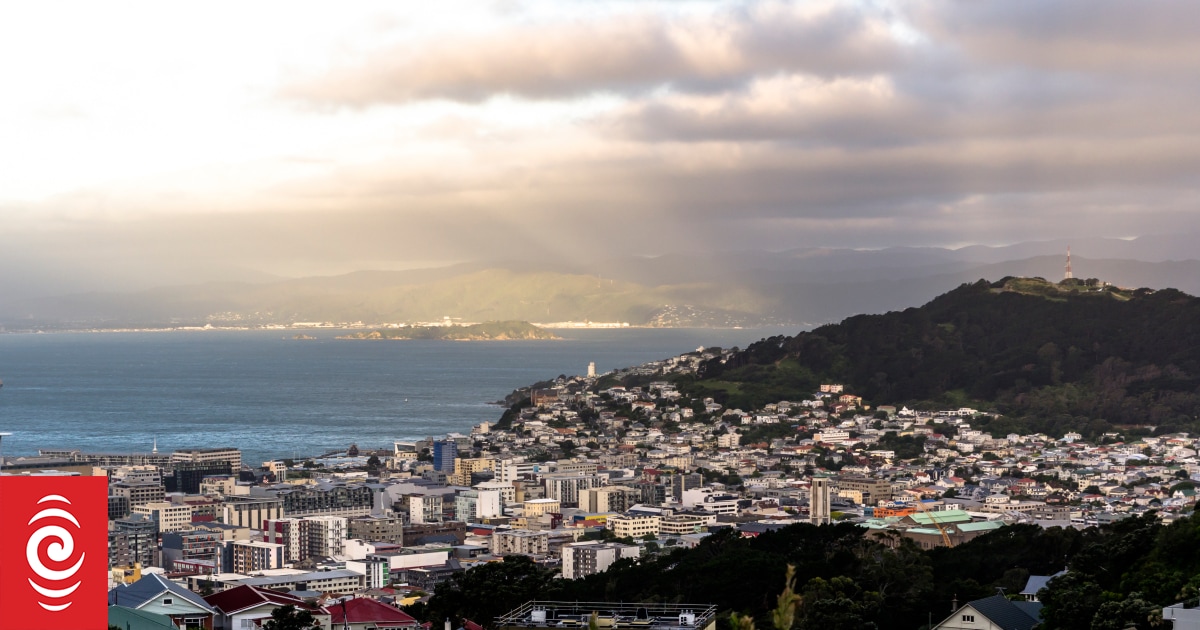
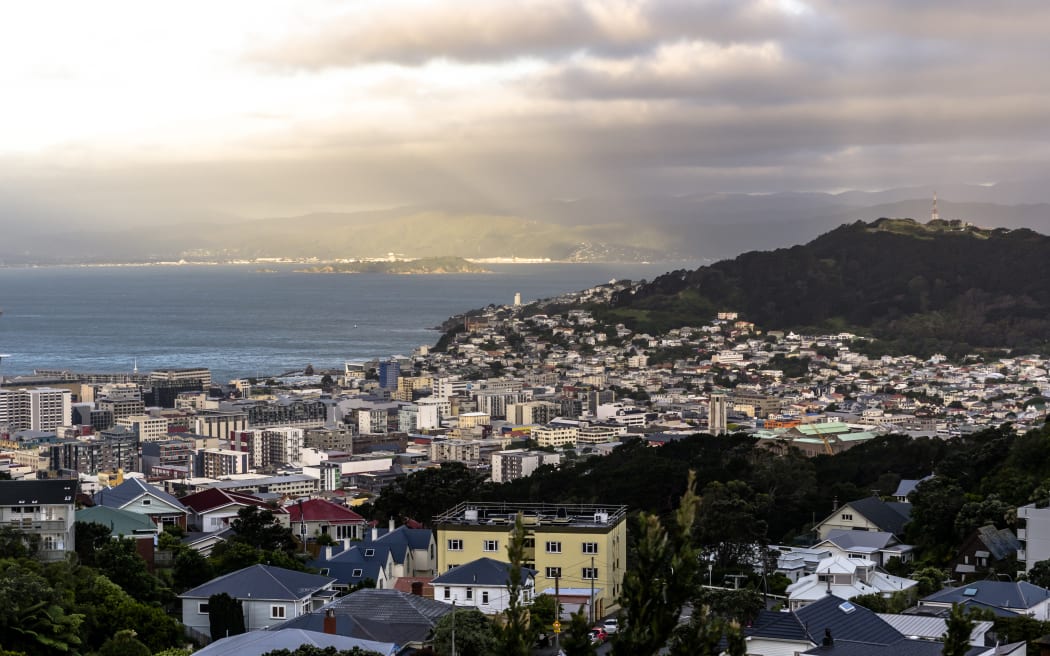
The mayor says last year’s local body elections sent a clear message the council needed to reign in spending.
Photo: 123rf
Wellington City Council has voted overwhelmingly in favour of a 5.8 percent residential rates rise in the annual plan, when Wellingtonians will soon start to pay for water rates separately.
Rates had been slated to rise 12.6 percent, before being whittled back to 7.4 percent and finally settling on the 5.8 percent in today’s planning and finance committee meeting.
The savings come mainly through reduced salary costs by not replacing all staff that leave, and from re-assessing capital project completion dates.
This morning Mayor Andrew Little urged the Planning and Finance Committee to stick with cost cuts in the plan to reduce the burden on ratepayers.
Today’s meeting trawled over 26 amendments to the annual budget covering cycleways, cremation fees, sports ground fees, climate response, celebrations to open the Te Ngākau Precinct and short term accommodation rates – all of which could have affected efforts to reduce rates.
Little told the committee the results of last year’s local body elections had sent a clear message that the council needed to reign in spending.
He said savings had already been achieved at the margins of council activities, but the Annual Plan was the primary place to achieve rates reductions.
“We’ve seen in a recent grants committee meeting what happens when people and organisations are faced with funding cuts – funding that we provide – and it can be very difficult and very challenging.
“In Wellington with a suppressed economy, with a static population, with major challenges that were already here but have been compounded by recent announcements – particularly likely future public service cuts – we have a responsibility to do everything we can to get this city back to an affordable state.
“Right now what’s important is that we signal to our community that this is a council that is prepared to be responsible and we’ve come up with a budget to suit,” Little said.
Today the Planning and Finance Committee voted in support of amendments to limit fees for children’s access to swimming pools and sports ground fees for community groups.
But councillors voted against using funds from the sale of carbon credits owned by the council for climate change mitigation – including allocating up to $15m to continue work on the city’s North South bike lane connection.
Councillor Geode Rogers argued that the completion of the Te Ara Tupua shared path and seawall had seen an explosion of cyclists and pedestrians enjoying the city.
Councillor Rebecca Matthews said – while the sale of the credits were initially assigned for debt reduction – she supported the use of the money to continue climate mitigation projects.
“The disproportionate cuts were made to climate change funding and have been made to cycle ways which are not only a safe transport project but are also an emissions reducing plan,” Matthews said.
But councillor Tony Randle argued that diverting funds towards cycling infrastructure was “choosing the winners” ahead of long term planning.
“Transport needs to be done as a joined up process and to be properly funded and the only way to do that correctly is not to pre-allocate funds to certain transport…. projects. But to keep it in the pool and have an agreed and joined up set of projects such that we will address the transport issues that we have in the city,” Randle said.
Councillors voted 13 to five against the amendment.
In a tense debate over an additional amendment calling to halt expenditure on new cycleways until further planning for transport investment was completed through the development of the Transport Plan and Strategy, councillors disputed interpretations of the feedback from the public consultation process.
Randle said the implementation of the cycle lane network had been piecemeal across the city and had negatively impacted businesses in the city.
He criticised the submission process, arguing that if councillors were sincerely interested in the public response to the lanes, then submissions on cycle lane planning should have given people an option to choose to halt the construction of lanes entirely.
“Why was no cycle ways not put up as an option? We have defeated democracy on this and I’m a little bit ashamed that we did not give our public the chance to have a full say on what is really a controversial option. We need to stop reassess and re-plan our transport strategy around the whole city,” Randle said.
Councillor Ray Chung added that since learning to cycle at four years of age in the city, he had never personally felt unsafe or had an accident or injury while cycling in the city.
But Matthews said councillors needed to take into account the fact that people had been injured and lives lost while people attempted to make their way around Wellington by bike.
“Councillors who want to share their own experiences of feeling safe should maybe give pause to think about other people who have literally not been safe.
“Regardless of the position that you have please, please have a little bit of sensitivity that people have died and been seriously hurt when we don’t have protected cyclelanes,” Matthews said.
The proposal to pause construction of cyclelanes was voted down 13 to five.
As the session drew to a close, Little said the acceptance of the Annual Plan marked a turning point for council.
“It is one step. It is a first step into the future that we have to collectively lead Wellington through which is an economic realignment but laying a foundation for improved civic and economic performance for the future,” Little said.
The mayor said despite the re-allocation of funds for climate response education, the council was not shying away from climate change.
“This is a council that – as an organisation – has taken seriously the challenge of climate change for our city. We’ve seen the developing impact of climate change – because it is clear that it is intensifying – and it is important that we do that in the context of what we have to do, which is a city that has to get to grips with its spending and the need for greater financial control. We are continuing to invest in climate change and that’s good,” Little said.
Committee chair Diane Calvert said the process to approve the plan had – at times – been painful, but she said today’s result would mark a turning point in council practice.
“It has not been an easy plan.
“We are setting a different direction and working to what Wellingtonians have told us. We are dealing with rising infrastructure costs, debt pressures and affordability concerns and the economic uncertainty not only bought about by the geo-political situation but also by government announcements.
“We can’t do everything. We can’t save everything. But we’re still investing in our city, we’re still investing in our communities.
“I know we have different views about what those priorities are and I’m hoping that we’ve landed in a good space. I think it is setting a new direction for this council,” Calvert said.
How will residents’ bills change with new water entity Tiaki Wai?
The vote on rates comes at a time of change for how Wellingtonians pay their rates bill.
Previously incorporated in residents’ council rates, charges for water services will be separated out into different bills from July.
Nw entity Tiaki Wai is taking over management of the Wellington region’s water services from 1 July, inheriting water assets from the five councils.
Ratepayers are likely to see a lower council rates bill with water services separated out, though this is unlikely to be a dollar-for-dollar reduction, [https://www.rnz.co.nz/news/community/596109/mounting-confusion-over-new-water-bills-looming-for-wellington-region-residents councillors have said, with other funding pressures still on councils.
Tiaki Wai has indicated water bills could average $2400 per year for Wellington regions’ residents, an average 14 percent increase on current charges – or an extra $310 per year.
Concerns have been raised water bills will become unaffordable, with estimates they could reach $6831 per year by June 2035.
Tiaki Wai has said not enough money has been spent on water infrastructure, and the organisation needed to take on a back-log of non-compliant treatment plants and failing pipes.
It also wants to install water meters and has estimated the cost of the roll-out could be between $500-$590 million and take up to seven years.
Little said those costs were “justifiably causing concern”, and he expected Tiaki Wai to start from scratch on a new business case for the implementation.
Sign up for Ngā Pitopito Kōrero, a daily newsletter curated by our editors and delivered straight to your inbox every weekday.