
Summary
Inflation has helped drive bankruptcy filings higher for three straight years while delinquency rates rise and personal savings hit a three-year low.
Consumer sentiment has fallen to an all-time low, worse than during the Great Recession or pandemic, according to closely watched gauges.
Workers are maxing out overtime, halting retirement contributions and facing difficult choices as some data shows the wealth gap widens to its largest in a decade.
AI-generated summary was reviewed by a CNN editor.
Kris Massey stood at a jeweler’s counter last month, hoping to sell a couple of her grandmother’s gifted pieces to possibly cover some bills.
Even though Massey, a 57-year-old nurse practitioner, makes six figures a year, her financial situation has grown untenable. Years of fast-rising prices and a recent monthslong bout of unemployment had taken their toll.
She worked two jobs from 2012 to 2023, but a second job is not an option after an extensive back surgery. Her retirement was drained when she was out of work.
“I’m just trying to hang on,” she told CNN.
While the gargantuan machine that is the US economy chugs along despite shock after shock after shock, the same cannot be said for some of its innermost components, now showing wear and tear: A growing number of Americans whose labor and spending help fuel that machine are reaching their financial breaking points.
Already hammered by the compounding effects of five-plus years of high inflation, they’re now contending with a war-driven cost crunch.
‘I should be fine, and I’m not’
There was optimism that economic growth could pick up this year; that the clouds of uncertainty would part, boosting hiring and consumer confidence; that tax refunds would provide a cushion; and that inflation would ease further, paving the way for lower interest rates.
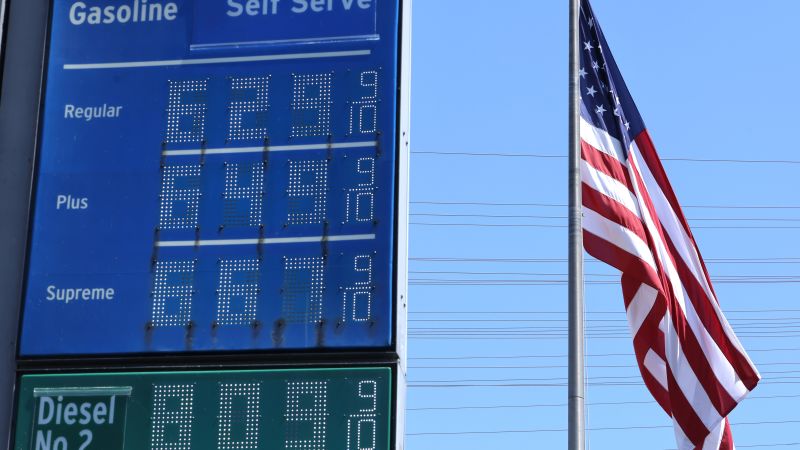
But an unpopular war in the Middle East and its resulting oil supply squeeze, sharply higher gas prices and greater risks of inflationary contagion have dogpiled atop sentiment already soured by cost of living concerns.
This month, a closely watched gauge of consumer sentiment fell to an all-time low. Americans are feeling worse about the economy than they did during the Vietnam War, the 1970s oil crisis, 9/11, the Great Recession, the Covid-19 pandemic and the inflation burst that followed.
But, for the most part, the year-to-date data paints a picture of a resilient economy. And just going by the stock market (which isn’t the economy, by the way), this period looks like a Golden Age.
At the same time, bankruptcy filings have increased for the past three years; debt levels have grown; delinquency rates have moved higher; and the personal savings rate is at its lowest in more than three years.
“I should be securely in the middle class,” said Massey, who lives in a relatively low-cost-of-living Nashville suburb. “I should be fine, and I’m not. I can’t be the only one feeling like this.”
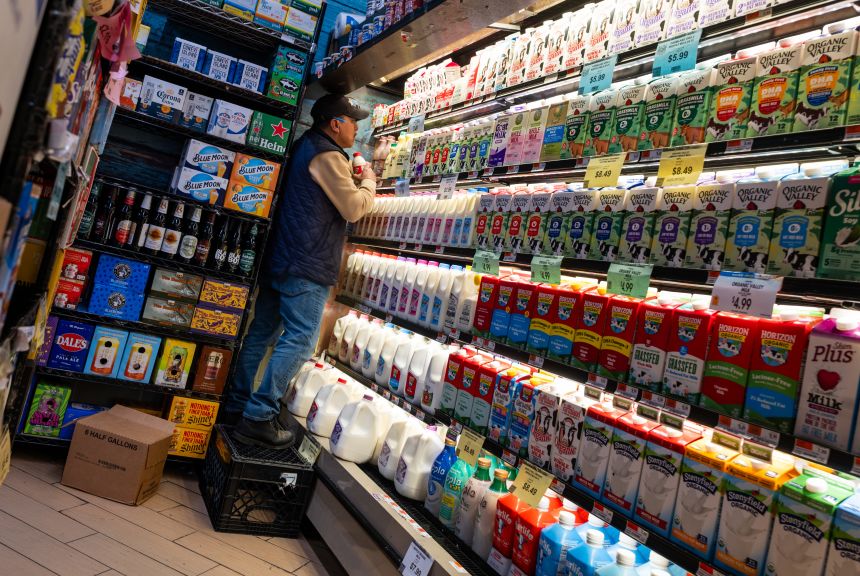
It’s normal for prices to increase, especially over years. But since 2021, everyday goods and services are up about 25%. That’s more than double the pace during a comparable period pre-pandemic.
Lower-income households are disproportionately impacted, given that a larger share of their earnings goes toward basic needs like groceries and gas.
And as higher-income shoppers trade down from premium brands to cheaper alternatives, demand for lower-cost goods rises, said David Ortega, a food economics professor at Michigan State University.
“If you were someone who was buying the conventional product, you don’t have anything to switch down to,” Ortega said.
Sharply higher gas prices haven’t curbed consumer spending for everyone.
Bank of America data showed that consumer spending was running at a 4% annual growth rate in April, even with stripping out gasoline.
“That’s the fastest growth in over three years,” David Michael Tinsley, senior economist at the Bank of America Institute, told CNN, fueled in part by higher tax refunds and the persistence of a K-shaped economy.
Income and wealth inequality have long persisted in the United States and elsewhere; however, the disparities have widened in recent years, he said.
“The gaps between higher-income wage growth, for example, and middle- and lower-income wage growth is the largest it’s been in our data, which goes back about 10 years,” he said.
After-tax wage growth for higher-income households (above $130,000) is running at 6% annually versus 1.5% for lower-income households (below $70,000) and 2.3% for middle-income households (between $70,000 and $130,000).
The gap in the spending growth is less stark but still the widest in three years, he said.
But the tax refunds, which served as a saving grace for some, are also finite, he said.
Bill Brantner has worked in manufacturing for 20 years, including some fly-by-night operations where his workday was greeted with a note on a locked front door. He’s never started a job for more than $19 an hour, never earned more than $23 an hour.
Many businesses in his industry have been in a holding pattern for much of the past 18 months. High uncertainty has stifled hiring, shelved raises and slowed the all-important churn needed for a healthy labor market.
President Donald Trump’s aggressive new tariffs have increased the cost of many materials and components. High fuel prices threaten to add more costs.
Brantner, 51, says he’s working as much as he can – pulling 10-hour shifts, working six days a week, jumping at any overtime – to survive.
Brantner recently signed a debt management agreement and had “gotten to zero” in terms of his credit card bills, which mounted quickly last year after he tried to save his cat, Loki, who was battling cancer.
The debt management agreement, which involves a monthly payment, freed him from the stranglehold of high interest but required that no new credit be drawn.

For Brantner, there’s absolutely no wiggle room now.
There’s no discretionary spending – no movies, no restaurants, no driving around town, no new clothes, no new shoes; his coffee is whatever’s available in the breakroom; his bumper is strapped on with Gorilla Tape.
“If I sign a lease again, and they raise my rent again, I can’t do it; if they raise my insurance premiums again, I can’t do it,” Brantner said. “They have squeezed every drop of blood that there is to be squeezed out of this stone.”
Come next May, if his rent is hiked for a fifth consecutive year, he might have to resort to living in his car outside of Colorado Springs city limits, where sleeping in a vehicle isn’t illegal.
“I found a couple of places that I could pay $400 less a month, but just to move into an apartment, you need to have three times what the monthly rent is going to be: You’ve got to pay your first month, your last month and deposit and all the other fees that they throw in there,” he said.
“I’m trapped. I cannot get out of this apartment.”
Lower- and middle-income households feel economic pain first and most dramatically, Elizabeth Renter, senior economist at NerdWallet, said in an email to CNN.
“Because many of the prices impacted by the war are on necessities, they have little choice but to find ways to cover these costs,” she said. “They’re less likely to have cash on hand to cover unexpected costs, and they realize the precarious position they’re in.”
Sian Slater, 59, has multiple jobs in the sprawling Phoenix metro area, where driving is her only option to get to her job at a big-box retailer or to her graveyard shift at a shipping company.
Spiking gas prices have already eaten into her budget. A gallon of the premium gas her car requires now costs about $5.50. Before the US-Israeli war with Iran, it was below $4, she said.
The commercial cleaning business she started has lost a couple of clients who had to curtail expenses. She’s done the same by halting automatic contributions to her retirement, canceling doctor’s appointments and cutting grocery items.
“At the end of the week with the price of fuel added, I have roughly $15 a week to buy groceries and medications,” she said. “I’ve had to cancel upcoming medical appointments because I cannot afford the copays.”
She’s working out a plan to get more clients for her cleaning business and more hours at her retail job.
“But right now, I’m feeling very poor,” she said, “and I’ve never felt that way before.”