
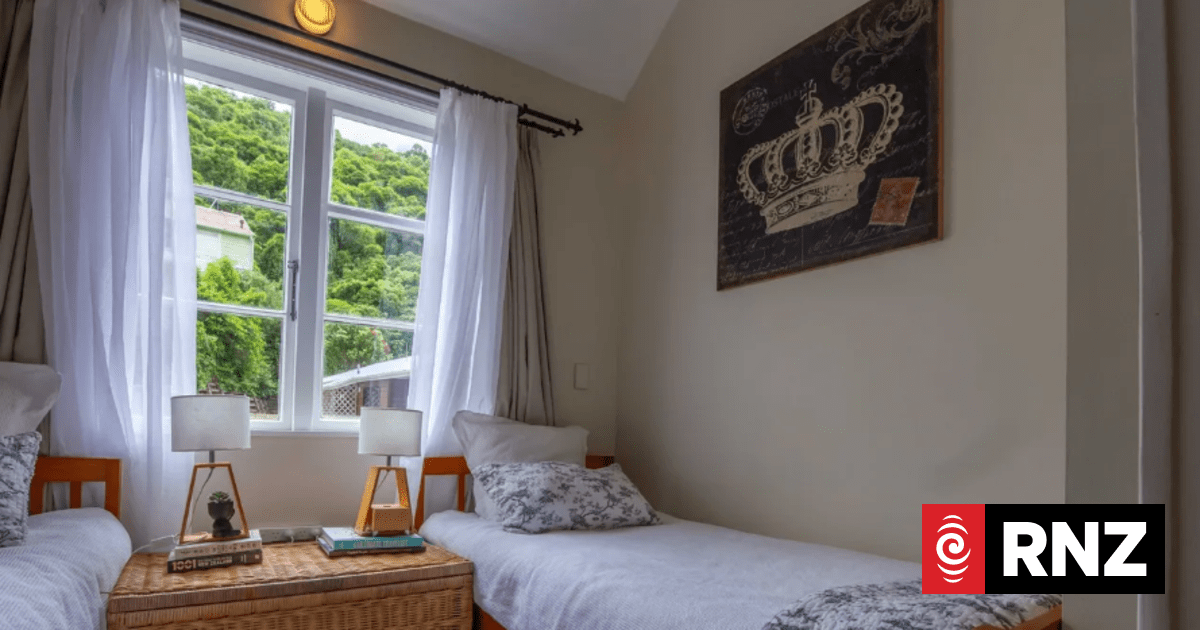
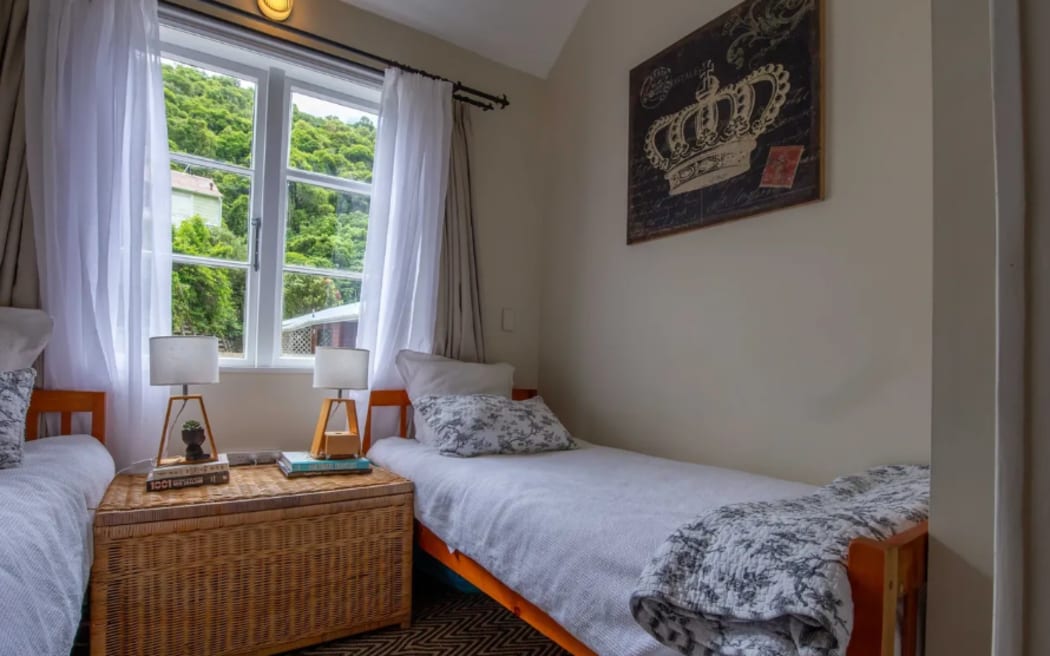
Emma Reid offers accomodation at two of her Aro Valley houses on Airbnb, but says a rates change will cost her almost $20,000 a year.
Photo: Supplied/ Emma Reid
A Wellington Airbnb host is devastated by an impending rates rise on short-term rental properties, believing it will force her to pull her Aro Valley cottage from the platform.
But according to a group representing hotels and motels the move is a win that levels the playing field and brings in extra council cash.
In a committee meeting on Wednesday, Wellington city councillors voted to charge short-term rentals, such as Airbnb homes, 2.6 times the base residential rate, which was set on average at 5.8 percent.
Wellington rates rises whittled down to 5.8 percent
The full council will debate the proposed rates hike on Thursday, with a view to bring it into effect from 1 July next year.
The changes won’t be confirmed until the end of June.
The policy would apply to short-term rentals where the property was let for periods of less than a month, adding up to more than 60 days a year.
But it excludes single rooms, granny flats, sleepouts or dual-key units in some circumstances.
Airbnb lobbies Wellington council to drop short-term rental rating
The current rate for commercial properties, such as hotels and motels, is 3.7 times the base residential rate.
Mayor Andrew Little said the change was about fairness, arguing it would create revenue for the council who provided the infrastructure tourists enjoyed.
The new rate was still lower than what hotels and motels paid despite “providing accomodation in the same way”, Little has said.
Charging Airbnb hosts higher rates is about ‘fairness’, Wellington mayor Andrew Little says
However, Emma Reid, a full-time Airbnb host said the change proposed was huge and would see her rates jump from $11,000 for two cottages to about $30,000 a year.
“I would have to close down. I would try my best to keep one of them open – only because I see a need in our community.
“A lot of us in Aro Valley are in very small cottages and we do have friends and family that visit us often … [so] a lot of my neighbours use the cottage as their west wing.”
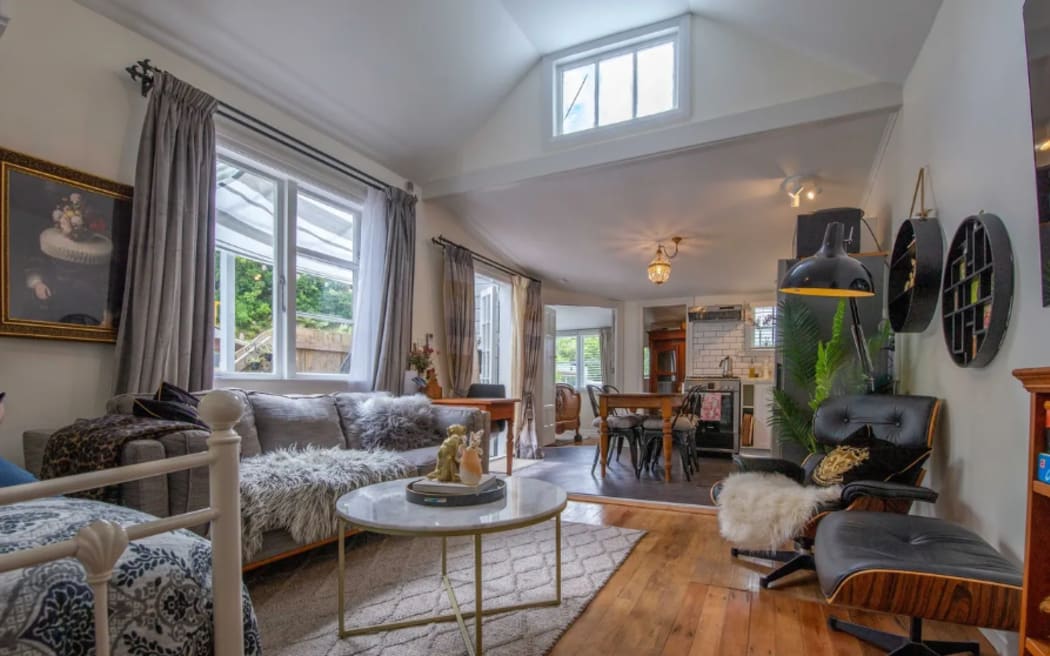
The lounge in one of Emma Reid’s two Aro Valley homes, which are listed on Airbnb.
Photo: Supplied/ Emma Reid
She said the possibility of shutting down – and other hosts following suit – was devastating not just for her but for the city.
“I’m absolutely gutted. I just feel like it’s a very, very sad day for Wellington.
“I just see a lot of people are struggling and y’know it’s becoming increasingly hard to make a living and to be able to stay in the city that I love.”
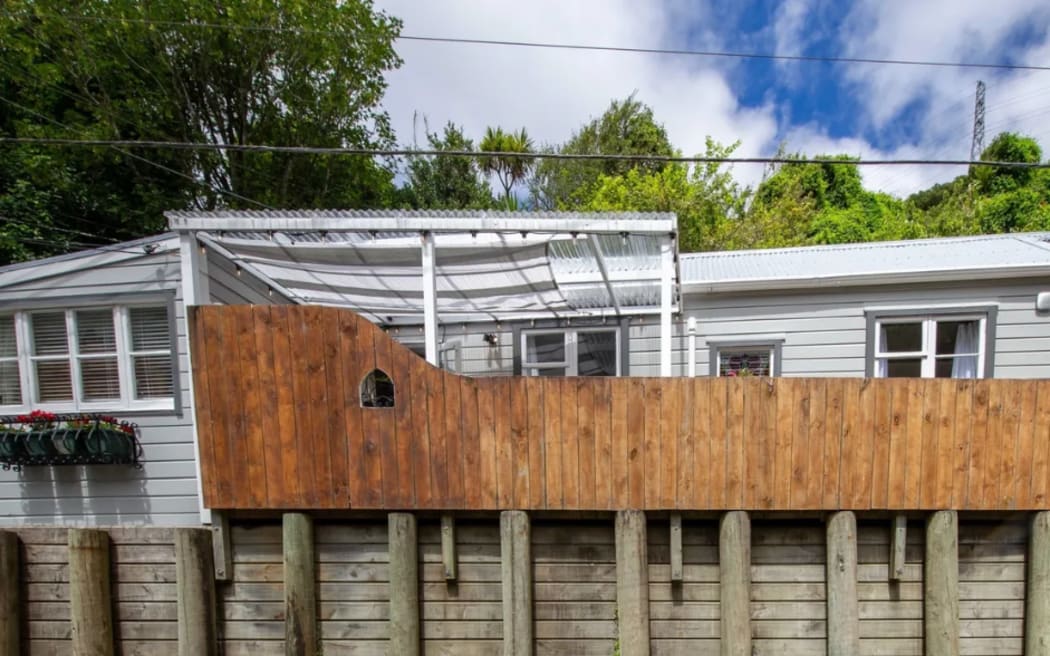
One of Emma Reid’s Airbnbs.
Photo: Supplied/ Emma Reid
Reid said she “fell” into hosting and did everything from marketing and managing the properties, to cleaning and decorating, and giving visitors the rundown on the best places to dine in Wellington.
“When I like to travel, I prefer to stay in an Airbnb because I like to live like a local. It’s not something I set out to do, but I do it all … and I love it and I feel like I’m an ambassador for Wellington.”
Julie Wilson, who speaks on behalf of some lower North Island Airbnb hosts, said the proposal was short-sighted and would push hosts off the platform – effectively reducing supply and hiking prices.
She said the changes wouldn’t affect her, but said other hosts were disappointed and in disbelief.
“At a time when Wellington is already facing redundancies, struggling businesses, residents leaving the city, and an oversupply of housing, introducing a policy that risks reducing visitor numbers and foot traffic is the wrong approach.
“The impacts will be felt across local cafes, restaurants, bars, and retail businesses that are already under pressure.”
Wilson said Airbnb-style accommodation brought in tourism dollars and filled an important niche for families and people wanting a temporary place to stay without committing to a long-term lease.
Hospitality New Zealand head of advocacy Sam Mackinnon said there was a place for short-term rentals in the tourism sector – but the current situation saw hosts skirting the compliance and costs faced by commercial operators, who were “mum and dad” moteliers as well as big multi-national chains.
He said a national strategy would be better than a council-by-council policy, but the group was pleased to see Wellington city councillors vote in favour of the rates hike.
“There is clearly a market for [short-term rentals], but I guess the challenge for us is that given that they currently operate relatively unregulated, that isn’t a level playing field with traditional accommodation providers – your hotels, your motels, et cetera …”
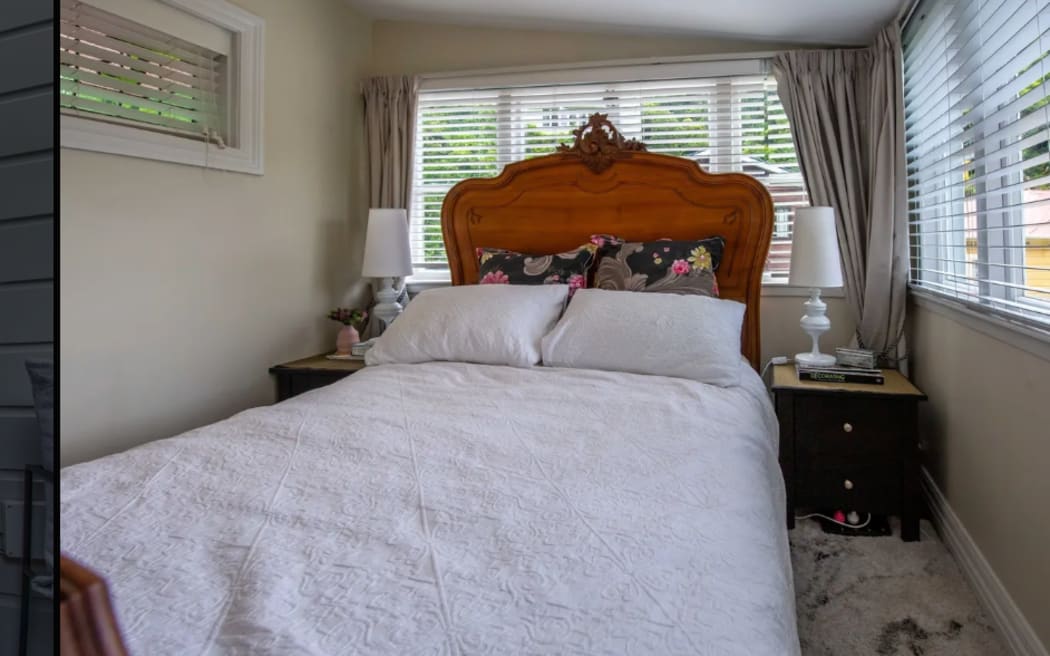
A bedroom at Emma Reid’s Airbnb.
Photo: Supplied/ Emma Reid
Mackinnon said encouraging visitors to Wellington to get out and spend wasn’t exclusive to Airbnb hosts and while some might pull out of the short-term rental market, others would stay.
“You’d expect that there would be some people who look at the numbers and it doesn’t stack up anymore and they choose not to list their properties.
“And from our point of view, of course we’d love more people staying in our members’ properties, but I guess that’s decisions that business owners are making every day.
“It doesn’t matter if you’re running a cafe or a retail shop or a tech start-up, you’re looking at whether or not your funding model makes sense, whether or not the costs you have to pay stack up with the profit that you’re making.”
Sign up for Ngā Pitopito Kōrero, a daily newsletter curated by our editors and delivered straight to your inbox every weekday.