
 2 min read
Is your ultimate summer fantasy a shingled pile on Nantucket? A glass-walled box facing the Pacific in Malibu? Something cavernous and sleek behind a high hedge in the Hamptons? There are as many different vacation dreams as there are people pining for a few uninterrupted weeks to relax (and a private stretch of waterfront upon which to do it).
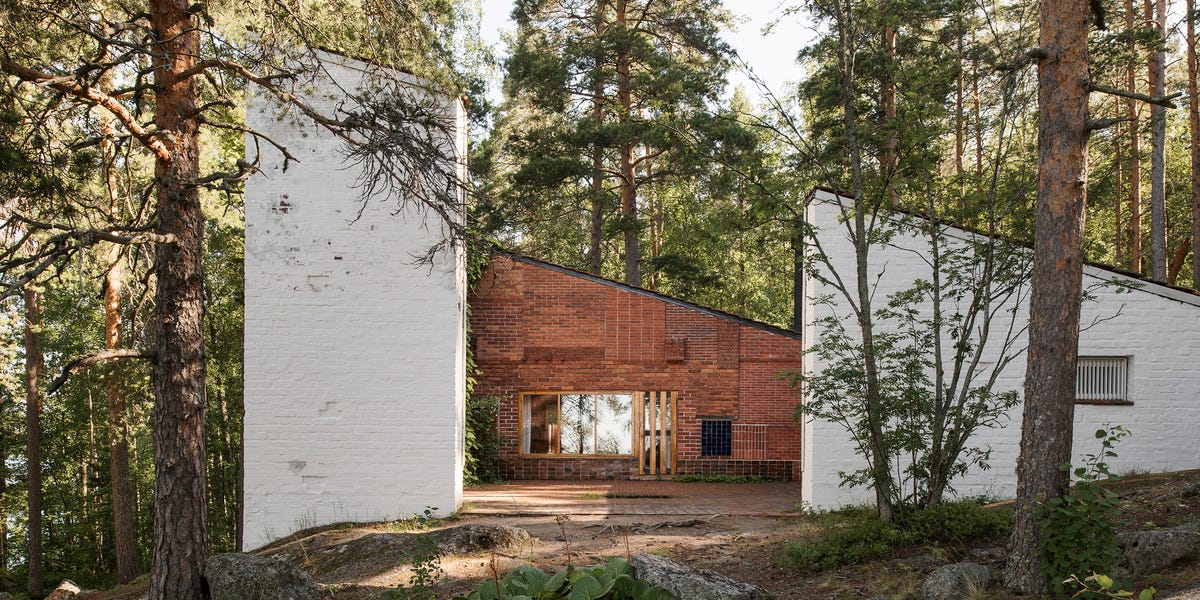
For celebrated Finnish architect Aalvar Aalto, the dream was a place where he could freely experiment with his ideas for architectural construction and composition. In the early 1950s, he and his second wife, Elissa, bought property on an island, Muuratsalo, in the center of Lake Päijänne, Finland’s second largest lake, and set about building what became known as the Experimental House. The structure is relatively simple and modest—a main building that contains the living quarters and a workspace for Aalto, and a wing with a few small bedrooms—and the building partially encloses an internal courtyard, protected from the elements and centered on a firepit, that frames the lakeside views.
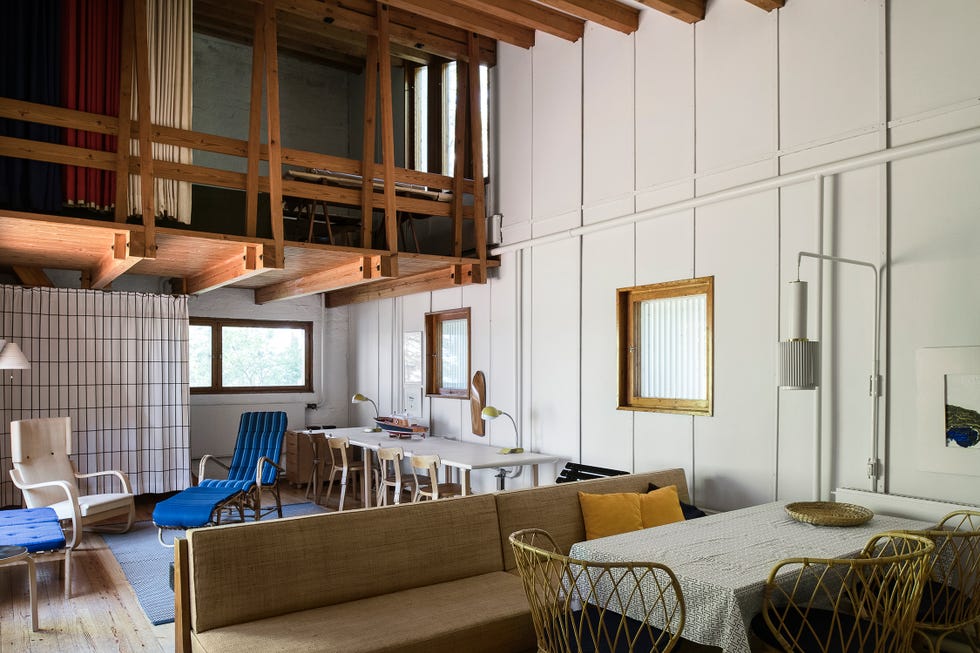 Niclas Mäkelä / Finnish Design Shop
The main living area of Alvar Alto’s Experimental House.
Instead of looking to Finnish vernacular architecture for inspiration, Aalto himself was inspired by the atria of classical Roman homes. Visitors were drawn outside to gather around the fire in the warm summer months (the house was not meant to be lived in during a Finnish winter.)
True to its name, the home’s internal courtyard features 50 panels, each finished with a different kind of brick, ceramic tile, or construction method. “The group of buildings in Muuratsalo is intended to serve as both a peaceful architect’s studio and an experimental center suitable for carrying out the experiments that are not yet ready for other environments,” Aalto wrote in Arkkitehti magazine in 1952. “It is also to be a place where the proximity to nature provides inspiration for shapes and structures alike.”
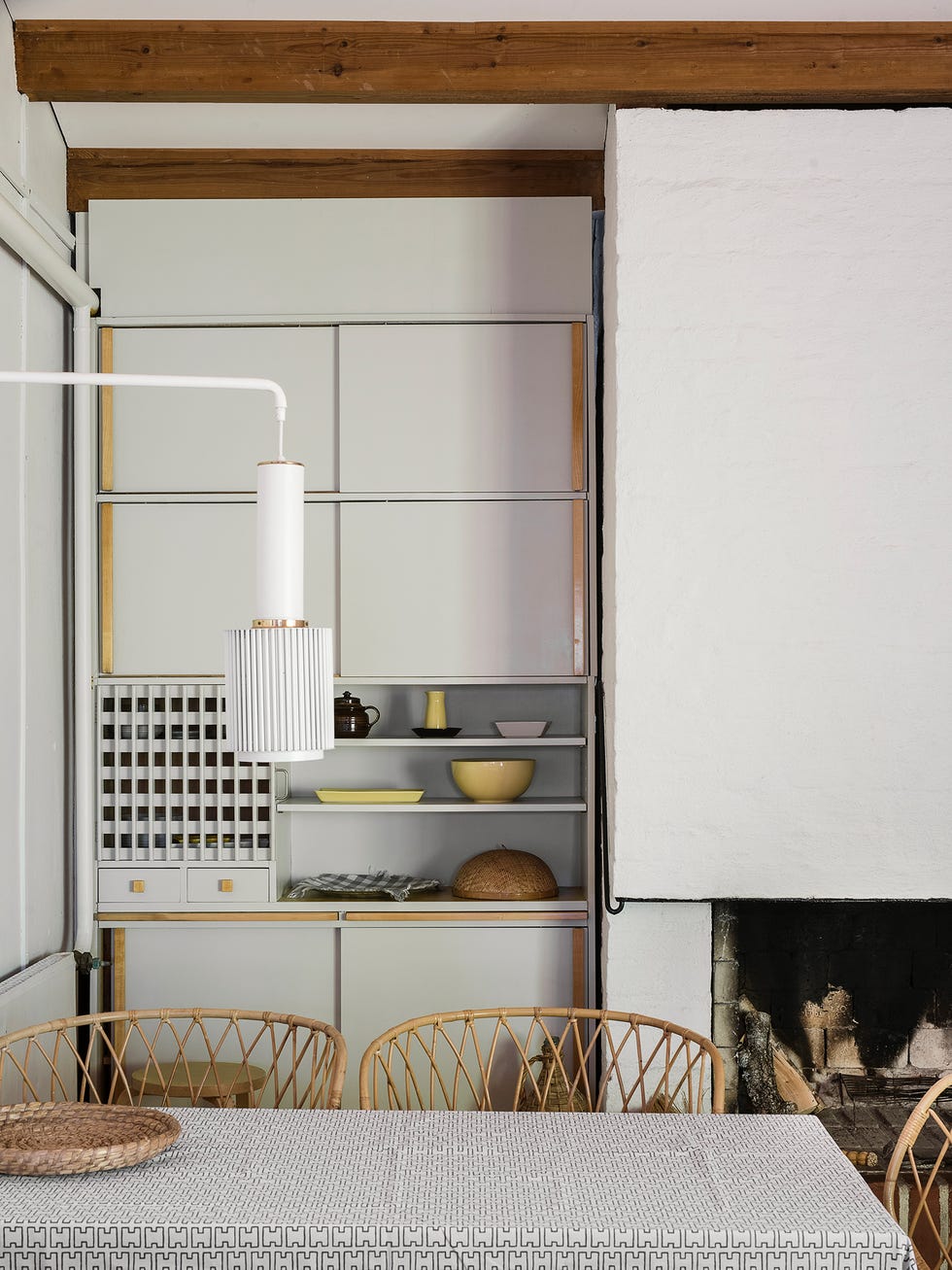 Niclas Mäkelä / Finnish Design Shop
The kitchen and dining area.
When Aalto first built the house, the only way to access Muuratsalo was by boat, so the architect of course designed himself one, christening it “Nemo propheta in patria.” He spent summers there until his death in 1976 and his family continued to visit the property until the early 1990s. Visitors can now book a tour of the house.
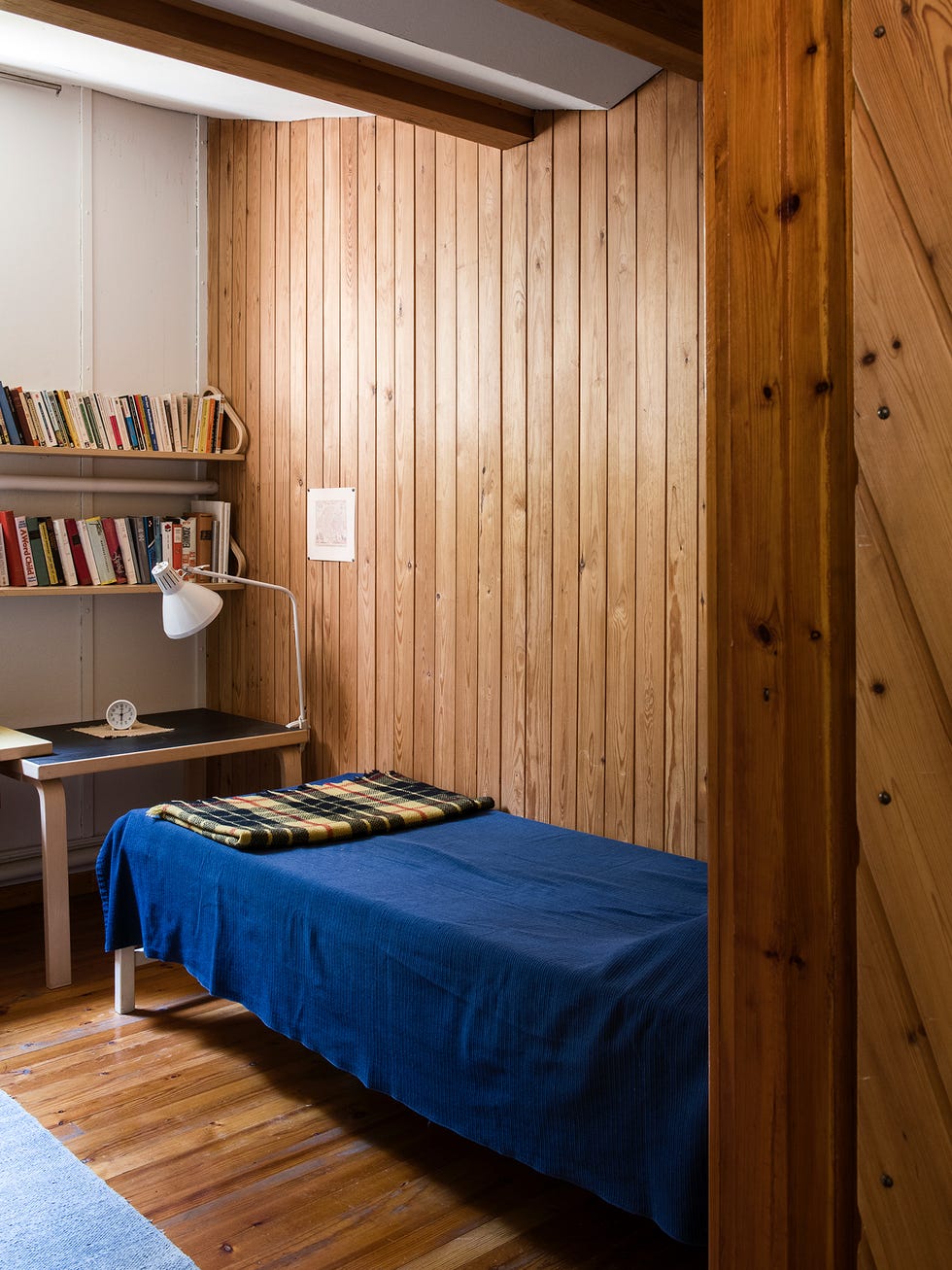 Niclas Mäkelä / Finnish Design Shop
A small bed in the Experimental House.
Aalto’s summer idyl has been exerting an influence on architects for the last half century, and was the direct inspiration for the another countryside compound, this one designed by Italian architect and designer Massimo Adario. His cluster of structures, built from scratch on a property to the east of Rome, was featured in ELLE Decor’s May issue. “I was inspired by my early university studies, where the focus was precisely on the Scandinavian approach,” Adario told writer Paola Maraone of his affection for the Experimental House.
Like the structure on Muuratsalo, Adario’s house uses outdoor patio areas to link the inside spaces to the outdoors. The Experimental House is “completely immersed in the landscape. I was really impressed by the fact that the Experimental House is a very simple project but so powerful,” he says..
Elizabeth Angell is a journalist and editor who writes about style, travel, parenting, and the British Royal Family. She has written for The New York Times and Town & Country and was most recently the Editor in Chief of Romper. She lives in Brooklyn, New York with her family.