
ANZ’s chief economist says it’s not at all clear that the government will reach its forecast surplus.
Sharon Zöllner was speaking at an ANZ post-Budget event on Friday morning, ahead of a speech by Finance Minister Nicola Willis.
The government’s Budget on Thursday afternoon forecast a return to surplus in 2028-29 – a year earlier than expected.
That includes assumptions such as the Iran war and high fuel prices being temporary.
But Zöllner told the audience she wasn’t confident the surplus will be reached.
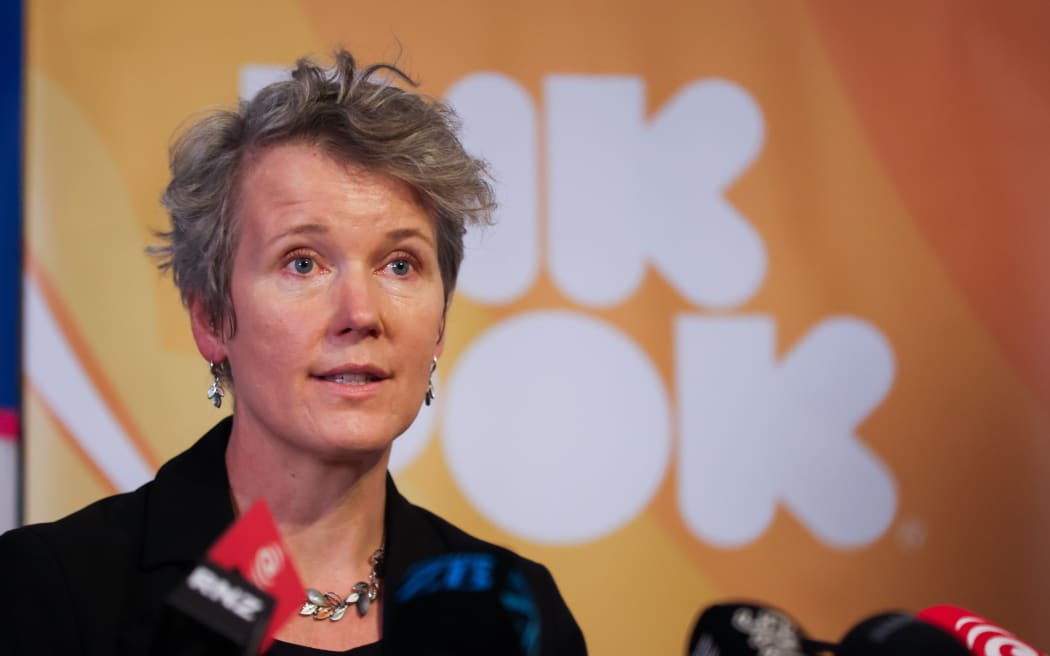
Photo: RNZ / Louis Dunham
She described the Budget as not austere, but not generous either – a pragmatic kind of compromise.
Replying on Friday morning, Willis said there were always challenges – but that Treasury was still forecasting surpluses.
The Finance Minister ended her Thursday Budget speech with a call to arms for supporters: “Kiwis can look forward with confidence, they just need to choose it, they just need to vote for it.”
Her sugar-free Budget – with no election year sweetener – has caused some minor coalition friction, but it lays down a challenge to their opponents: to come up with a better plan.
As promised there was little new operational spending, but more capital for new infrastructure.
The return to surplus was projected for a year earlier than the previous forecast, but the 2028/29 timeframe is still considerably later than National promised ahead of the last election.
Asked on Morning Report on Friday if the approach was risky in an election year, Willis said it “would have been very risky for the country for me to take an approach which was all about winning votes and my political expediency”.
“It’s a Budget that does what’s right for the country. And I trust my fellow New Zealanders that they can see that this is not a time to be getting us further into the hock, to be whacking another set of bills on the credit card. This is a time to making sure the country’s well set up for what could be challenges ahead.”
Where Willis said her Budget was about careful management of taxpayer money, the opposition argued it was about growing inequity.
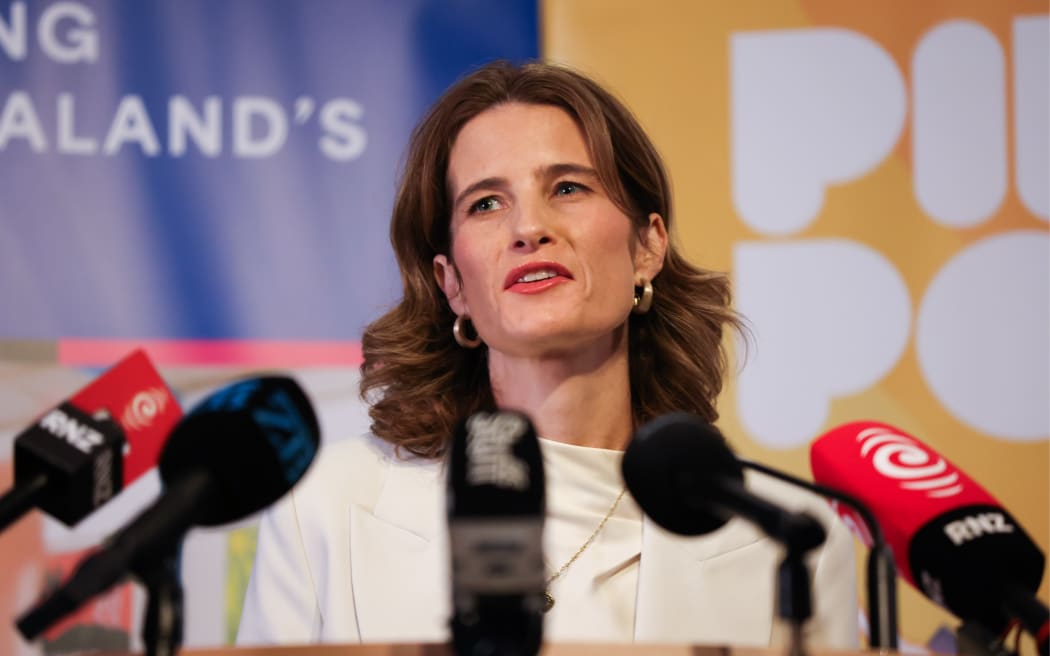
Photo: RNZ / Louis Dunham
Labour leader Chris Hipkins was sceptical of the forecasts, which he said were all based on petrol prices dropping from now.
“Those economic growth forecasts are still lower than they were before the election.”
Willis said while the Strait of Hormuz situation was “a real setback for many households, many businesses”, she put trust in Treasury forecasts that oil prices would normalise and inflation would fall. If they did not, the Budget set aside nearly half-a-billion dollars to respond, she said.
“It’s a very hard time to be forecasting because no one knows how the ayatollahs and Donald Trump are going to sort out the conflict in the Middle East.”
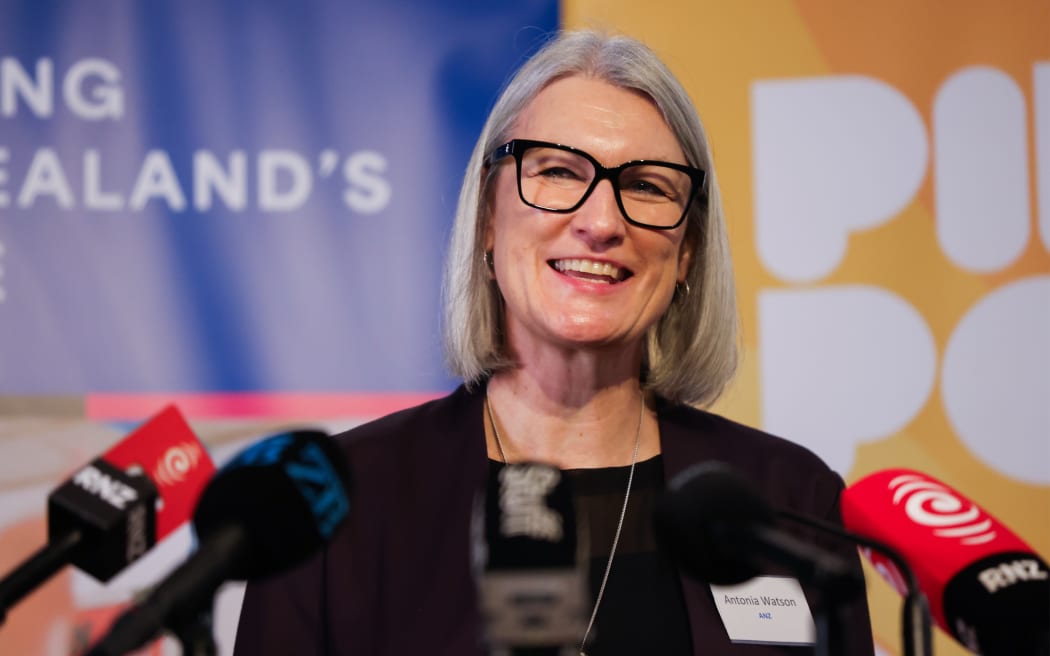
Photo: RNZ / Louis Dunham
Asked what Labour would do differently, Hipkins said the party would take time to “do our homework properly” and “take time to digest the Budget”.
Labour has repeteadly stated it would provide policy after it saw the forecasts in this year’s Budget.
“Obviously, we’ve only just seen the government’s Budget,” Hipkins said. “We’re going to set out our own plan.”
Hipkins has promised some policy in June, so as soon as Monday.
However, Labour’s finance spokesperson Barbara Edmonds said the fiscal plan would not come for at least few weeks.
“I need to crunch through this Budget, and go through line by line – have a look at the savings, have a look at the different assumptions that underpin those forecasts, have a look at all the different programmes within the vote.”
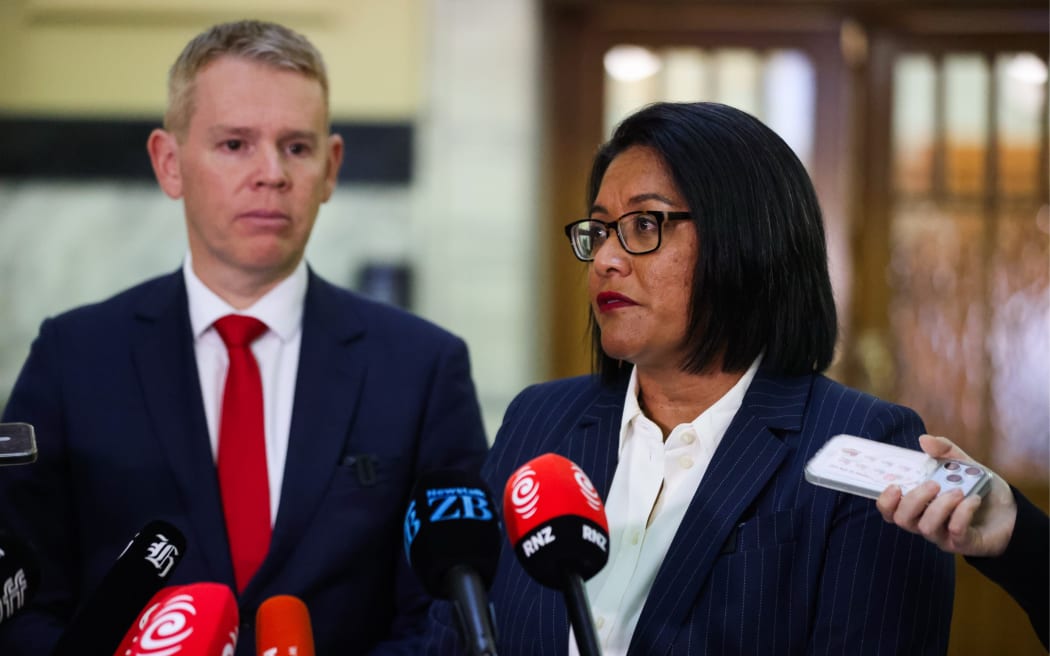
Labour leader Chris Hipkins and Labour’s finance spokesperson Barbara Edmonds.
Photo: RNZ / Louis Dunham
The Greens were thinking about those doing it toughest, with co-leader Chlöe Swarbrick saying “kids in poverty can’t eat their surplus”.
The Budget showed her the goverment had “no hope, no plan, no ambition, and no vision for this country”.
“That plan is just what we see here, allowing corporations to profit handsomely off the misery of regular New Zealanders,” she said.
“They have actively made decisions to push more children into poverty.”
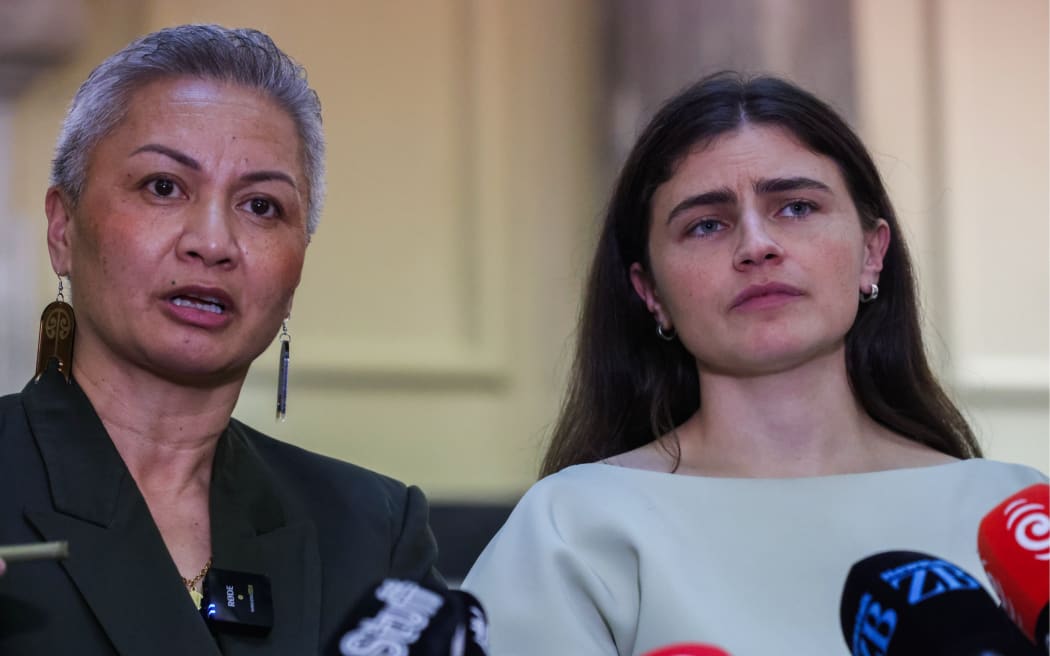
Green Party co-leaders Marama Davidson (L) and Chlöe Swarbrick speak to media after Budget 2026.
Photo: RNZ / Louis Dunham
Co-leader Marama Davidson said those kids could not wait for “fantasy growth” from the government. “They need it now.”
She asked what prudence and fiscal responsibility meant to those nervously watching their supermarket bill at the checkout.
“What do those words mean to the mothers who are missing meals just so the rest of their kids can have kai?”
Willis said the country needed to be “on top of its finances” or more money would be spent paying debt interest costs.
“Every dollar being spent on debt can’t be spent on a hospital, on a school. on a road, on the things that New Zealanders care about. And if we’re a country that isn’t on top of its debt, then actually we start losing choices very quickly.”
Te Pāti Māori co-leader Rawiri Waititi said the Budget was not about the “haves and have-nots” but about the “have-nots and have yachts”.
He was not surprised by the Budget, saying Māori had not featured in any of the Budgets.
“It’s the least investment in Māori that we’ve seen in the last 15 years, when this government was the last in charge of the purse strings of our democracy.”
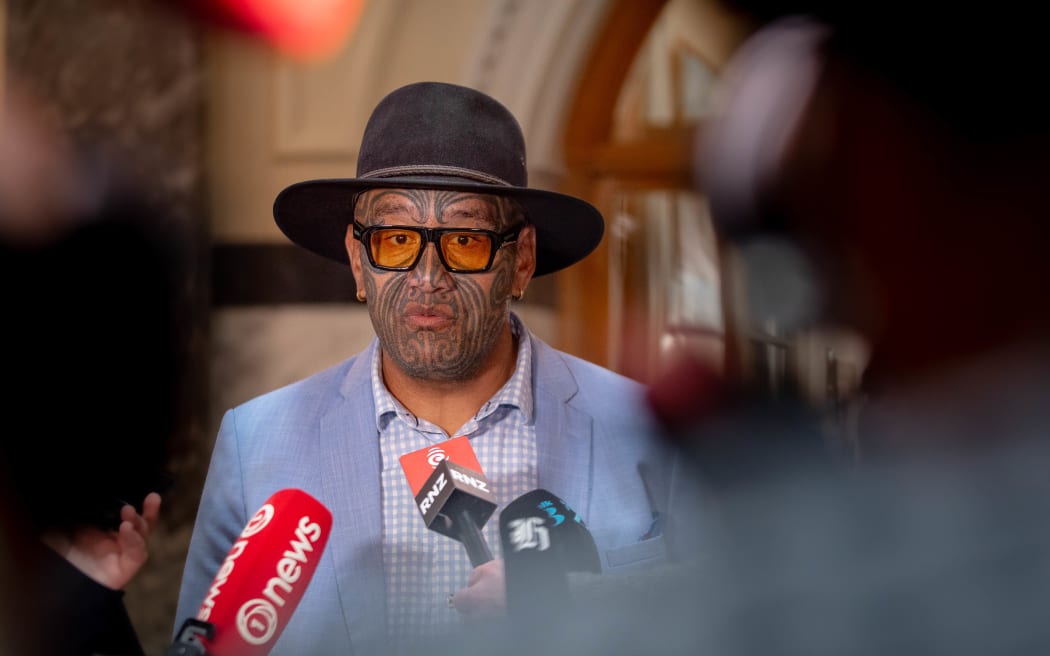
Te Pāti Māori co-leader Rawiri Waititi.
Photo: RNZ / Mark Papalii
Across the aisle, there was much outward support for the Budget, though one point touched a nerve.
Willis warned that any party ignoring the size of the problem of superannuation was doing so for its own benefit.
Her comments were a clear dig at New Zealand First leader Winston Peters, and Labour – which have both pushed back on changes.
Peters said it was an “unfortunate mistake” saying he suspected National wanted to privatise the Cullen fund – the New Zealand Super Fund.
He said for the last 40 years the major parties had “demonstrated they can’t run the economy their way properly”, and that when “people thought more like New Zealand First” the growth rate in the economy was running at a higher rate.
Responding to that on Friday, Willis said super costs were going up at a “rapid clip” – $1.8b next year alone.
“I worry about a future in which suddenly, because no one has done anything about it, the government comes in and either whacks up taxes on working people or vastly changes that entitlement in a way that’s unfair.”
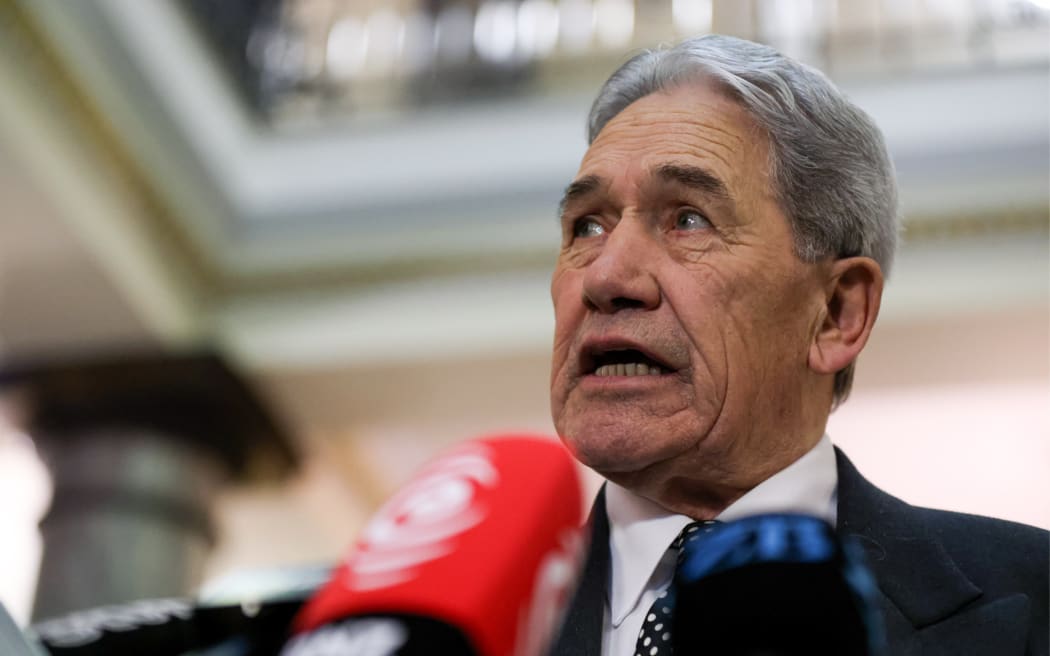
New Zealand First leader Winston Peters.
Photo: RNZ / Louis Dunham
ACT’s leader David Seymour was not too keen on the new levy on banks announced as part of the Budget.
“If your answer to everything is to go out and find someone to tax, eventually you end up with a really big government and no money left for anybody else.
“And let’s be honest, banks only have one source of money – that’s their customers, so let’s not tell the easy lie that we would be taxing the banks, you’d be taxing the customers.”
Willis said she was directing the banks not to do that to New Zealand customers, and she wanted a bigger levy.
“I haven’t been able to convince my coalition partners yet, but I retain hope.”
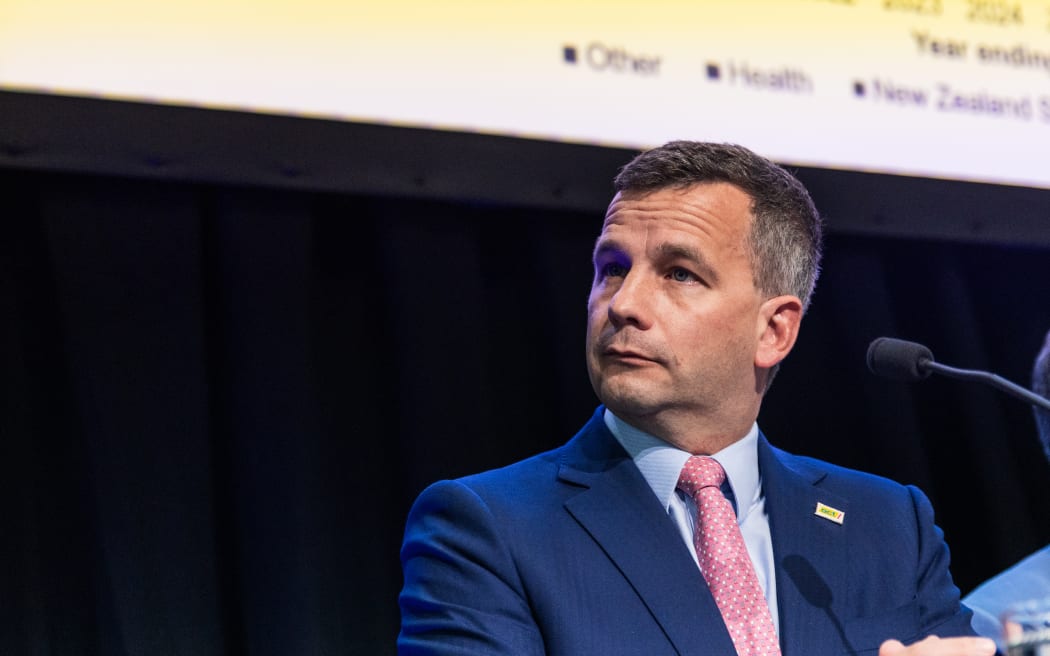
ACT leader David Seymour.
Photo: RNZ / Samuel Rillstone
Peters said he was supportive of the bank levy, but pointed out there were other ways of ensuring the country had the wealth it needed to invest for the development it needed.
He said voters would have to wait and see what the party unveiled during the campaign.
Seymour was overall supportive of the Budget, saying “we cannot spend and borrow our way to prosperity”.
“We have to pay the bills and we have to balance the books,” he said.
“This Budget is backing the hard working people who get up and make a go of it, while cutting the things that don’t work to provide more of what does.”
He said it was a tribute to three parties working together to create the third Budget of the three-party coalition that is a “triumph that is better than our worst enemies’ worst nightmares”.
Sign up for Ngā Pitopito Kōrero, a daily newsletter curated by our editors and delivered straight to your inbox every weekday.