
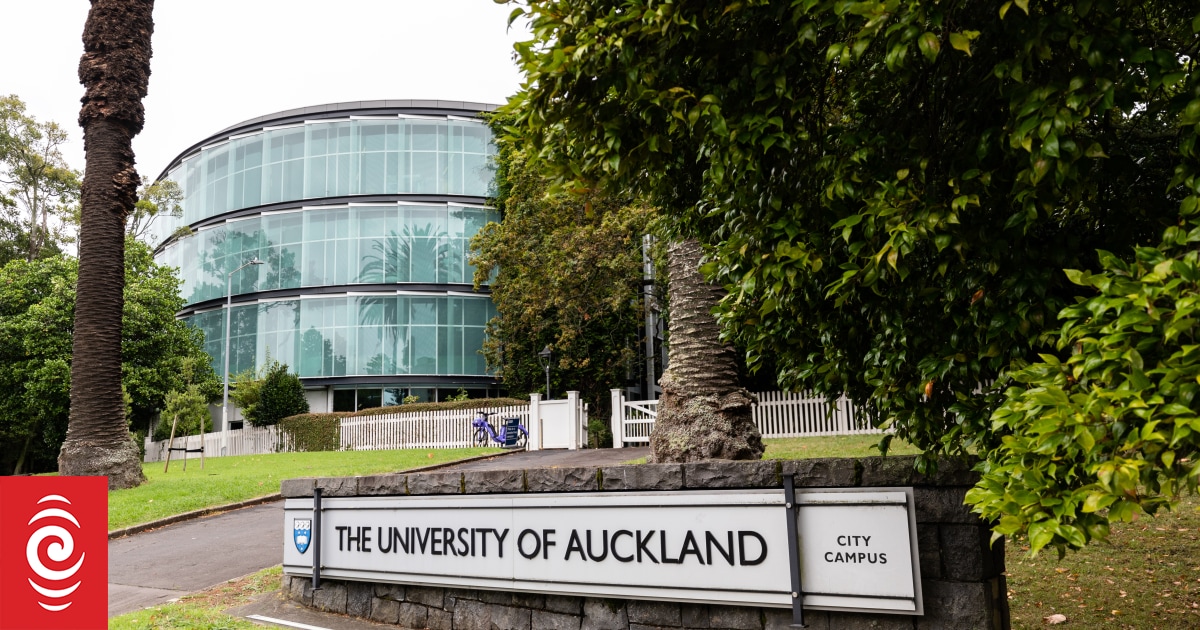
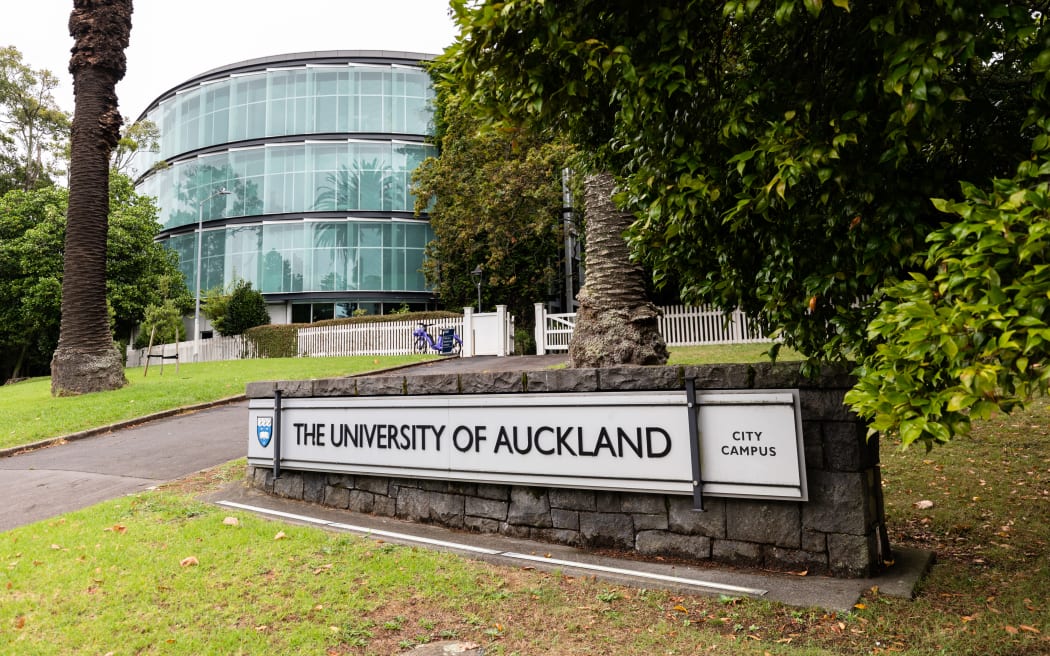
Auckland University.
Photo: RNZ / Dan Cook
A University of Auckland leader has welcomed the Budget decision to cover more student enrolments.
The $234 million would enable the Tertiary Education Commission to fund 99 percent of enrolments in 2026 and 2027.
The commission had previously warned that it did not have sufficient funding to subsidise all enrolments and some institutions were missing out on millions of dollars in government funding as a result
Auckland University deputy vice-chancellor education, Sarah Young, said the decision was helpful for universities, where enrolments had increased about five percent.
“I think that’s excellent,” she said.
“I think the government’s very focused on the future workforce of New Zealand and growing that knowledge economy so you can see that in the way that they’re supporting and thinking about the future of the New Zealand workforce.”
Young said there was no increase to subsidy rates, but universities could raise student fees by up to six percent next year.
That decision – the third consecutive year the government had allowed fee rises of up to six percent – combined with the end of the fees-free scheme angered students.
But Young said the government provided more support to students than the OECD average and covered about 75 percent of the cost of their education.
“I think we’re very fortunate in New Zealand and if you were to compare what a domestic students pays for university tuition in New Zealand versus Australia we’re very cost effective here,” she said.
A political economist and higher education researcher in Auckland University’s School of Environment, Nicolas Lewis, said young people were worse off because of the Budget.
“They are not getting their final year of fees paid, they’re facing higher fees from universities that will put their fees up to cover increasing costs and they are walking out of university to far more uncertain labour market positions,” he said.
“In a world where stability is disappearing the opportunity to spend a little time in a university in order to prepare yourself for that instability is going to be that much more expensive. So they’re being hit from all directions.”
Lewis said New Zealand students might be better off than some others, but they were certainly not in as good a position as those in many European nations who did not pay any tuition fees at all.
He said the effect of the government’s decision to fund more students but freeze tuition subsidies would vary between institutions and even between academic departments depending on how many unsubsidised students they had enrolled.
Sign up for Ngā Pitopito Kōrero, a daily newsletter curated by our editors and delivered straight to your inbox every weekday.