
Photo: RNZ / Samuel Rillstone
Wellingtonians are facing slightly lower water bills, as the region’s new water entity backs down on an initial set of prices in the face of public concern.
Residents are still in line for an average $6200 bill per year in 10 years’ time – a decrease from the nearly $7000 bill suggested in March.
On Friday, Tiaki Wai announced that water charges will, on average, increase by 12.8 percent across the four cities in the coming financial year, instead of the 14.7 percent signalled in March.
That means for 2026-2027, the average water charge for households could be $2377 per year – an increase of $277 per year – rather than the $2400 per year first projected. Exact figures are set to be confirmed on 16 June.
Up to July, Wellington region’s residents currently pay on average about $2100 in water charges through their rates bills.
The charges are set to increase throughout the next 10 years – to reach a forecast average of $6206 per year in 2036, instead of $6831 – a 10 percent decrease on initial projections.
Confusion, anger and concern has been mounting over the bills, as well as a projected half-a-billion dollar price-tag for water meters.
Tiaki Wai has said it has a huge amount of work to do to turn around the region’s old, leaking and failing infrastructure – including four non-compliant wastewater treatment plants.
Chairperson Will Peet said officials had listened to people’s concerns.
“I know some people will find these charges really really difficult, I also know that there are very few people that look forward to getting an increase in prices.
“We know we need to get on with the investment, and we know we need to get the support of the community, and it’s the balance of those two things we’ve worked hard to do”.
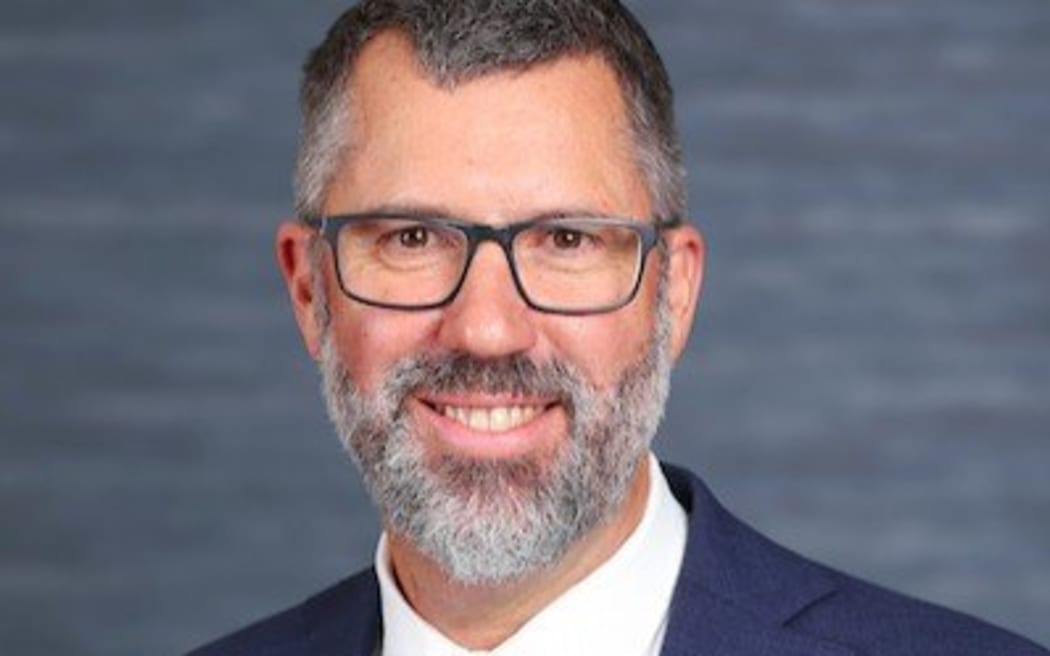
Chair of Tiaki Wai Will Peet.
Photo: Supplied / Tiaki Wai
In explaining how reductions were made, Peet said Tiaki Wai decided to extend its capital spending programme – meaning it may take longer to reduce the frequency of leaks, pipe failures, flooding and overflows. He said decreasing bills would further delay improvements more.
The five share-holding councils – Wellington, Porirua, Upper Hutt and Lower Hutt, along with Wellington Regional Council – had agreed to a financial backstop of $400 million which could be used in a significant, unexpected event.
This reduced the need for Tiaki Wai to rapidly build financial headroom, Peet said.
Wellington mayor Andrew Little said while Tiaki Wai had come back with a lower price trajectory, the costs were still significant by the 10th year.
“These prices are still going to huge pressure on a lot households. So the scrutiny remains, the pressure on Tiaki Wai to have pricing that is reasonable and realistic remains, and we will continue to advocate for that.”
Little said he would advocating for the Commerce Commission to have price control over Tiaki Wai. The commission is currently consulting on more regulations for the entity, including potential performance requirements.
The five councils on Friday confirmed they would transfer assets and debt to the new water organisation.
All five councils have now formally agreed to transfer assets worth a total of around $9 billion and about $1.6 billion of debt to Tiaki Wai from 1 July.
What about water meters?
Earlier this week, Little raised concerns about a half-a-billion dollar price-tag for a water meter roll-out Tiaki Wai had suggested in March.
Initial projections released in a draft strategy were that implementing water meters could cost between $500-$590 million and take between five and seven years.
On Friday, Peet said water meters were a “significant decision” and Tiaki Wai would be talking with councils’ about the roll-out.
He said Tiaki Wai had not committed to any numbers around meters, when there was “still work to do”.

Michael Brewster.
Photo: RNZ
“The main point with water meters is nobody is getting a $4000 bill in their letterbox – anything that we do decide on will be done over time and through the charges.
“The meters themselves will still be subject to a business case and when that’s done we will be back to talk to people.”
Tiaki Wai has been looking at smart meters. During a meeting of the five share-holding councils, chief executive Michael Brewster said there was a difference in cost to install smart meters versus basic meters.
He said there initially appears to be a benefit to smart meters as opposed to mechanical meters.
“All of this has to be tested through the next stage of the business case.
“Meters must show value for money benefits over the costs, and we need to be able to demonstrate it to everyone, so there’s a lot of work to be done and some of that will involve pilots and trials to prove up the costs, before we get too far.”
Sign up for Ngā Pitopito Kōrero, a daily newsletter curated by our editors and delivered straight to your inbox every weekday.