
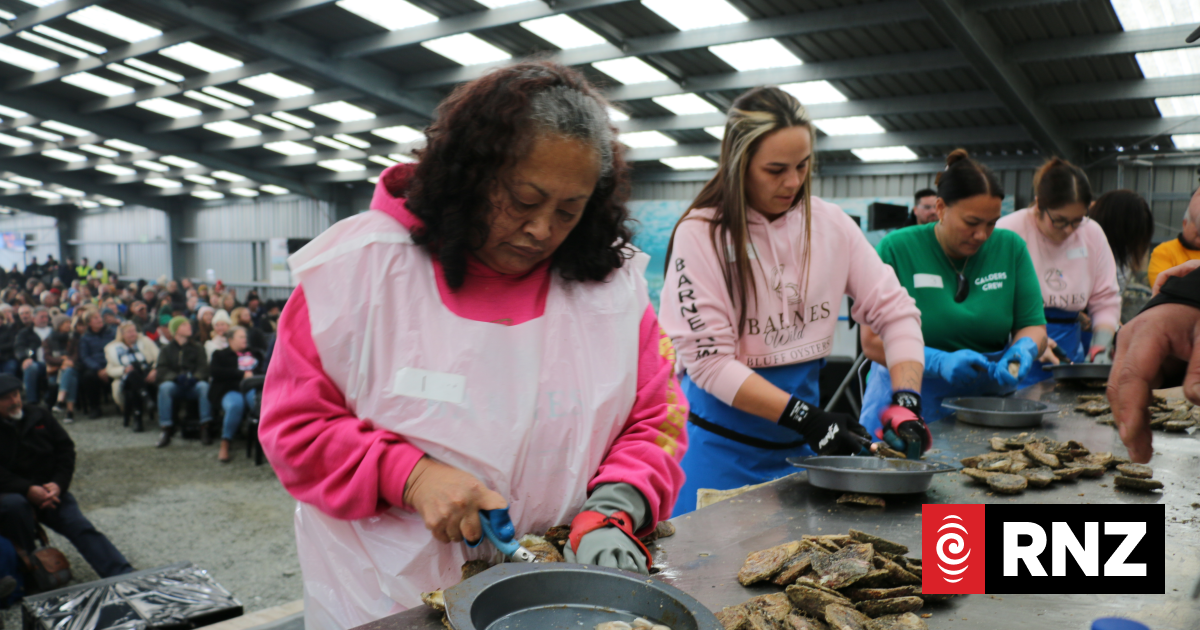
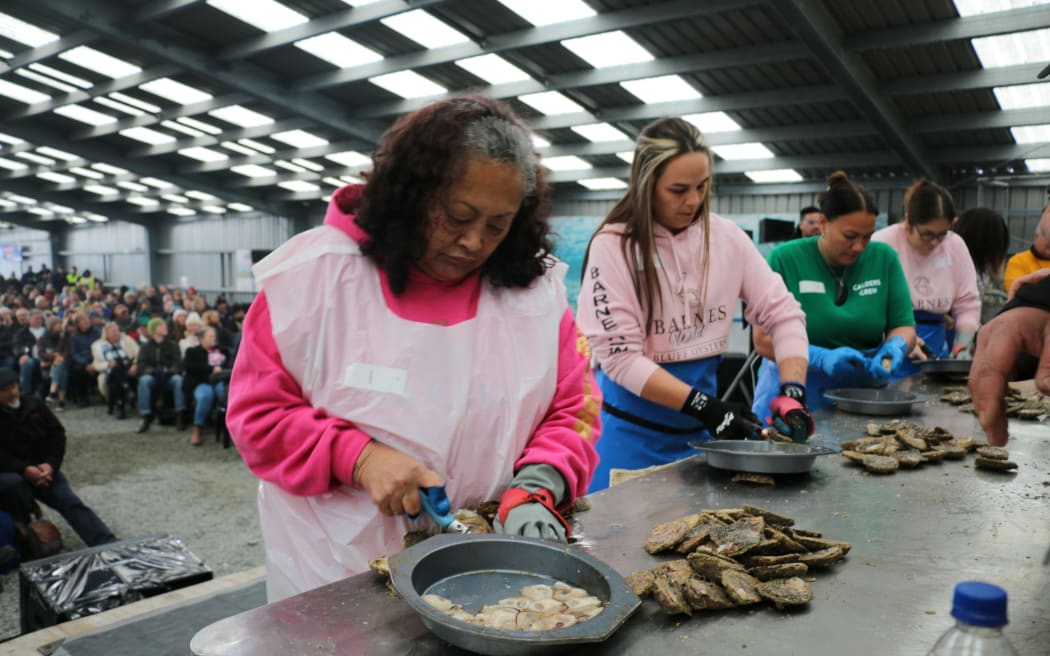
Herepaenga Witehira (left) and Tia Selwyn speed-shucking oysters.
Photo: RNZ/Anisha Satya
How do you like your oysters?
“Raw, vinegar and pepper, beer, batter, oyster soup, seafood chowder… any way,” Bluff oysterman John Edminstin told Country Life.
He’s been dredging Bluff oysters for over 50 years, and with the 2026 season over, he’s done for good.
Follow Country Life on Apple Podcasts, Spotify, iHeart or wherever you get your podcasts.

Oysterman and Bluff Oyster Festival chairman John Edminstin.
Photo: RNZ/Anisha Satya
Edminstin’s retiring from the industry at a time of struggle – the season traditionally runs from early March to late August, but ended in May this year.
Barnes Wild Bluff Oysters, which processes the majority of the country’s Bluff oysters, ended their season just a day before the Oyster Festival.
“The catch rate’s slowly but surely gone down over the years,” he said, “and fuel prices have gone up.”
Additionally, poor weather has led to oysters being covered over by sand and debris, preventing them from feeding.
All of those factors made it harder to justify continuing to harvest the shellfish.
“It’s a hard one,” Edminstin said. “The scientists say we’re not doing any damage, but it’ll come down to the economics of whether it’s worth going dredging or not.
“You talk to scientists, you talk to a lot of oystermen, old oystermen … and nobody’s really got the answer.
“I mean we’ve all got our thoughts, but we can’t really prove them.”
Barnes Wild Bluff Oysters, which harvests around 65 percent of the total Bluff oyster quota each year, pulled their boats early too.
Manager Graeme Wright said the last couple of harvests “haven’t been so good, to be fair”.
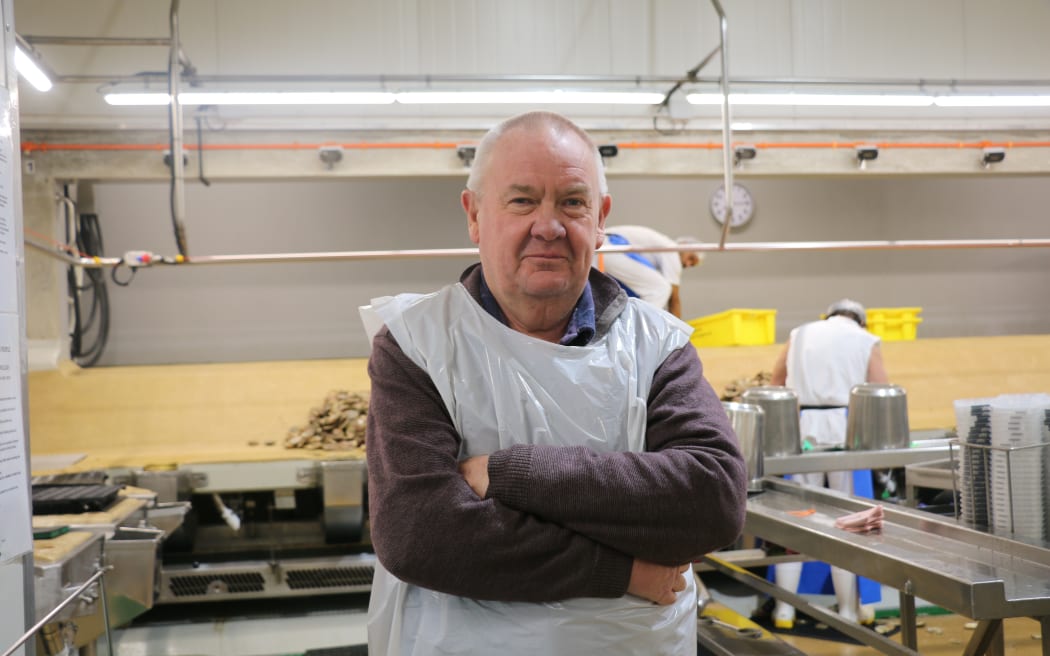
Barnes Oyster manager Graeme Wright.
Photo: RNZ/Anisha Satya
He said this is a low point in the “natural cycle” of a wild fishery with unique conditions – and low levels of shellfish have been a problem before.
“The fishery was closed in the mid-’90s for three years.
“I started in ’96 after the shutdown, and the fishery rebuilt incredibly strongly.”
He said among the factors was a parasite, bonamia exitiosa, which had caused high mortality in the fishery.
Another parasite, bonamia ostreae, has been detected around the waters of Rakiura Stewart Island. It has not been found in the Bluff fishery yet.
“At this stage, Biosecurity New Zealand are doing a lot of work to monitor the fishery, but so far it hasn’t been detected in Foveaux Strait,” Wright said. “But we all know it’s hard to put a fence around water.”
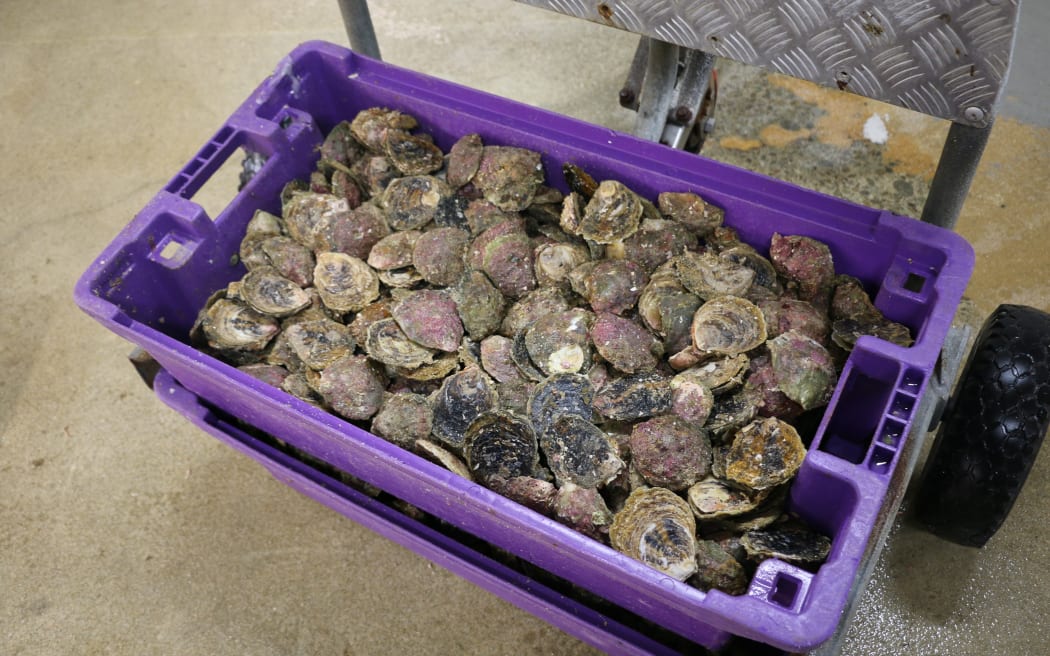
Unopened Bluff oysters, ready for processing.
Photo: RNZ/Anisha Satya
Max Russell, a production manager at Barnes, is the third generation of his family to be in the business of oysters.
“If you’ve been in Bluff any length of time, it’s pretty hard to get away from something to do with oysters.
“It’s at Bluff’s core really; if we lost it we’d probably be a broken town, really.”
He said bonamia exitiosa sounded more sinister than it was.
“Absolutely no harm to humans at all. All it really does is weaken the oyster, and give it a belly ache, and then everything else out there in the food chain gets in and kills the oyster, basically.”
When the fishery shut down in the ’90s, some oysterers tried their hands at catching cod.
“You’ve got to find some other way to make a living.”
But he was optimistic the tide would turn for the industry soon.
“There’ll be a massive amount of regrowth we haven’t probably seen for about eight or 10 years; there’re millions of little oysters out there.”
Wright echoed that sentiment.
“At the moment we’re seeing huge amounts of juvenile oysters, and we’re not seeing any disease. We’ve come off the back of four years of disease, and this year we’re not seeing it.”
The state of the festival
Fewer oysters harvested meant fewer to go around at the 2026 Bluff Oyster Festival – and that caused a downturn in ticket sales.
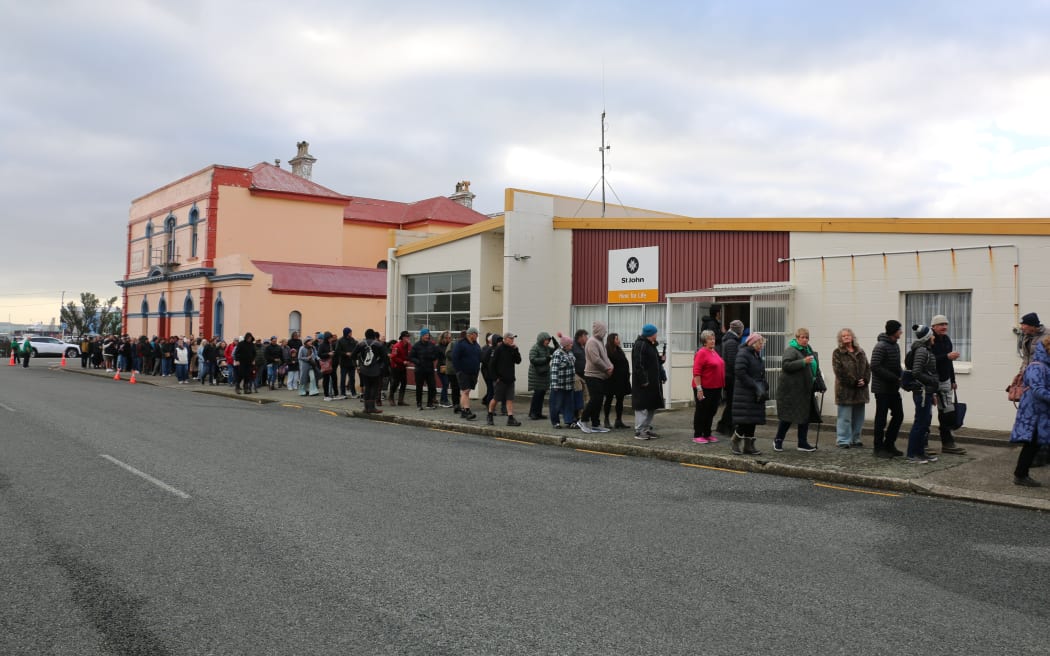
The opening queue for the 2026 Bluff Oyster Festival went around the block.
Photo: RNZ/Anisha Satya
An early press release warned there would potentially be no oysters on site, saying the “availability of the Bluff Oyster throughout the 2026 season is uncertain”.
A later announcement that the shellfish would be there did not boost ticket sales as expected.
Edminstin, also the chairman of the festival, said the influx of North Island foodies was usually the “bread and butter” of the festival.
“Motels and hotels and meals and restaurants – that’ll be down a bit. It brings a lot of foreign money into Southland, which is always welcome.”
Before the gates opened, he was uncertain about whether gate sales would be high enough to justify an event next year.
But a few hours in, he had become hopeful.
“We’ve got a lot of walk-ups to the gates, which has helped us out financially.”
Bluff publicity officer Lindsay Beer said it was “too early” to make a call on whether there would be a festival in 2027 yet.
All the money needed to be counted, and the state of the fishery next year would affect the decision too.
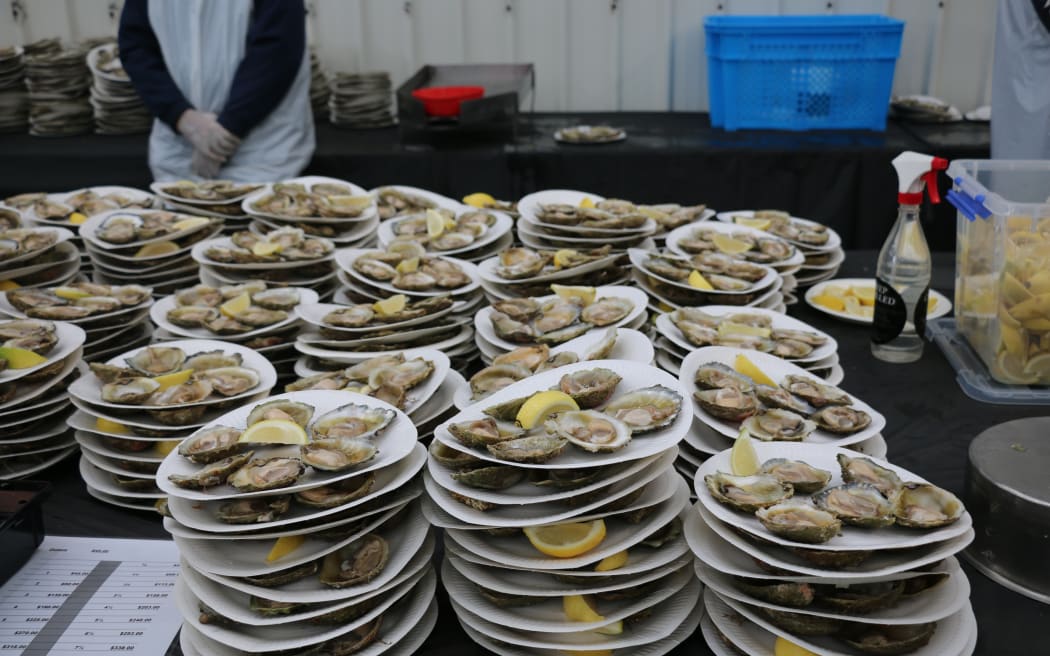
Plates piled high with Bluff oysters, known indigenously as tio, and abroad as Chilean oysters.
Photo: RNZ/Anisha Satya
Sign up for Ngā Pitopito Kōrero, a daily newsletter curated by our editors and delivered straight to your inbox every weekday.