
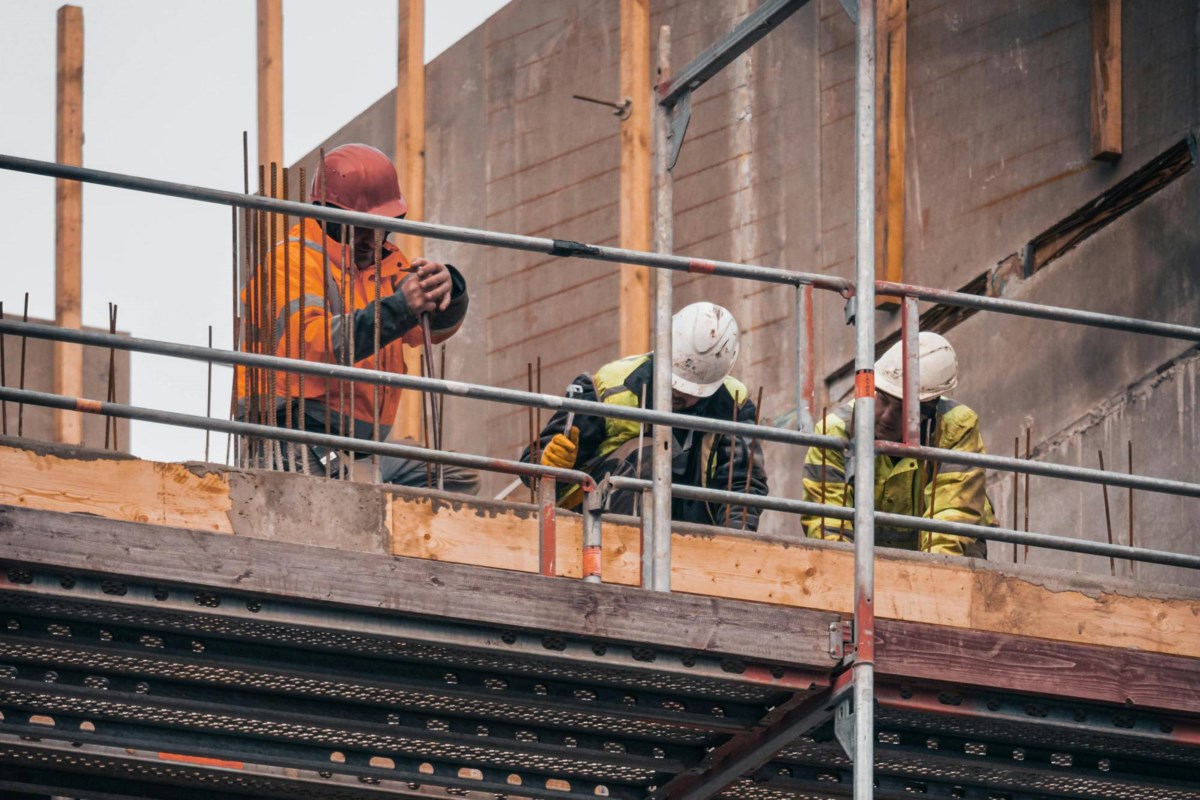
Researchers found construction ranked first for suicide deaths, drug-related deaths and drug-related hospital visits among major industry groups examined
Compared to the overall labour force in Ontario and Alberta, construction workers are almost twice as likely to die because of suicide and are two and a half times as likely to die because of substance use.
Those are some of the early findings from a new analysis by the Institute for Work and Health, which identifies, what some are calling, a crisis among construction workers increasingly affected by poor mental health, suicide, and substance abuse harms.
Led by institute scientist Dr. Nancy Carnide, the work was done as a response to the Ontario Construction Industry Prevention Roundtable.
Formed in 2025 amid growing concern about suicide in the industry, the roundtable includes employers, occupational health and safety representatives, unions, mental health experts, people with lived experience, and researchers. Its mandate later expanded to include mental health and substance abuse harms.
Carnide presented her team’s early findings during a webinar presented by Occupational Health Clinics for Ontario Workers (OHCOW) on May 22.
Researchers examined data from various sources, including the Canadian Census Health and Environment Cohorts (CanCHECs) and worker compensation data.
“What we found was that from 2016 to 2023 there were an estimated 170 traumatic workplace fatalities among workers in the Ontario construction industry,” said Carnide, who’s also an assistant professor in the Division of Epidemiology at the University of Toronto’s Dalla Lana School of Public Health.
“Over that same time period, there were 565 suicides, which is more than three times the number of traumatic workplace fatalities, and when we combine suicides and drug poisoning together, that number rises to 1,360 deaths, or about eight times the number of traumatic workplace fatalities.”
In addition, the combined number of hospital visits by construction workers for self-harm, drug poisoning or a drug-related disorder is seven times as high as the number of hospital visits for critical workplace injuries, she added.
Those preliminary estimates suggest that self-harm and drug-related harms represent a “substantial burden among Ontario construction workers,” Carnide said, occurring more often than fatalities and critical workplace injuries.
Looking further into the data, researchers wanted to compare the rates of suicide, self-harm, and drug-related mortality and morbidity amongst construction workers compared to rates among all workers in the labour force, this time including workers from both Ontario and Alberta.
According to their analysis, construction ranked first for suicide deaths, drug-related deaths, and drug-related hospital visits, Carnide noted. When it comes to hospital visits related to self-harm, construction ranked sixth among the 13 industry groups researchers looked at.
In addition, the rate of drug-related hospital visits was 62 per cent higher among construction workers than it was in the general labour force, but the rate of hospital visits related to self-harm was actually lower in construction workers.
“We also examined which worker characteristics were associated with higher risk of suicide, self-harm, and drug-related outcomes …,” she said. “These included lower education, not being married or in a common-law relationship, being a non-immigrant, being unemployed or working part time at the time of the census and working in jobs with higher physical job strength requirements.”
Male workers were at a higher risk of death following a hospital visit related to suicide or drug-related outcomes.People of colour were at a higher risk for self-harm and drug-related outcomes. Self-employed construction workers were at a higher risk of drug-related outcomes only.
A study done by American researchers proposes that suicide or drug-related harms could stem from workers dealing with an injury on the job and using either prescribed medication or self-medication to treat pain, Carnide said. Another “plausible pathway” is that workers start using substances to cope with job-related pressure.
With 1.6 million Canadians — or 8 per cent of the labour force — working in construction, more study is needed on mental health, self-harm, suicide, and drug-related harms in Canadian construction workers, since most existing research focuses on construction workers from outside the country, Carnide said.
Her team plans to continue with their analyses and hope to have more results in the coming months.
“I think this industry is also vital to achieving both federal and provincial housing and infrastructure priorities, yet at the same time the sector is facing considerable productivity pressures and ongoing labour shortages, and together this might influence the working conditions for the workers in this industry and their health.”