
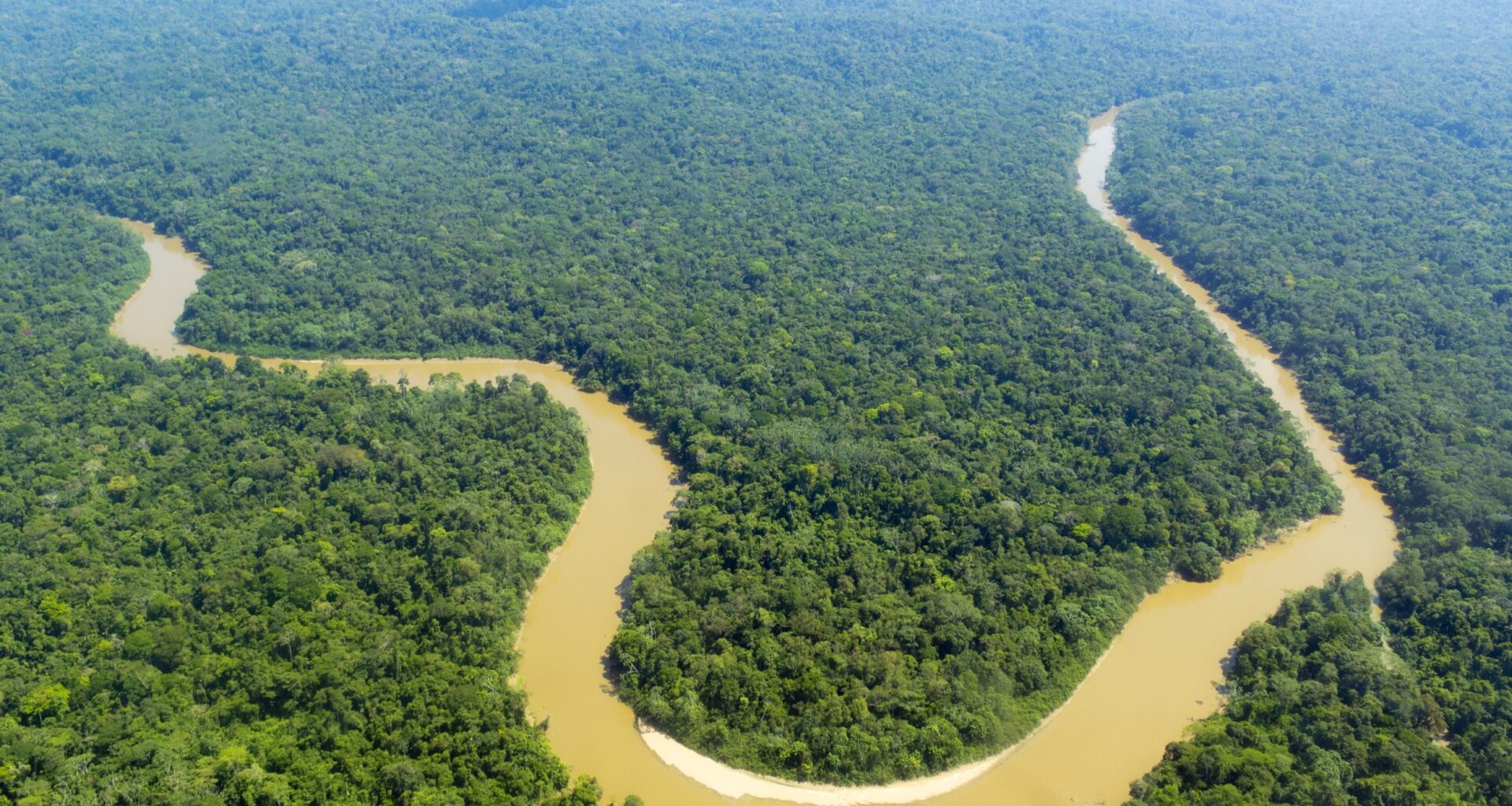
The Amazon rainforest is one of Earth’s most important natural systems. It stores massive amounts of carbon, supports countless plant and animal species, and helps regulate weather patterns across South America and beyond.
But new research suggests that some of the climate conditions scientists once expected decades from now are already taking shape today.

Recent studies show that parts of the Brazilian Amazon are experiencing longer dry seasons, shifting rainfall patterns, and worsening drought conditions.
These changes are not only affecting the forest itself. They are also increasing the risk of fires, damaging ecosystems, and threatening the region’s ability to recover from environmental stress.
A changing climate in the Amazon
Evidence of change also includes the extended dry season. Some studies have reported a shift in certain parts of the Amazon where the dry season now lasts between four and six months, during which time water deficits reach over -150 millimeters.
An extended dry season creates a cascade of effects. Increased stress on the trees leads to increased fire susceptibility, habitat loss for wildlife, and eventually a change in the structural composition of the rainforest.
Climate model projections also indicate that things could get worse if greenhouse gas emissions remain high.
By the end of the century, southwestern parts of the Amazon may face even greater water shortages during the dry season.
Lessons learned from past droughts
The lessons have not been drawn just from future predictions. The scientists studied a severe Amazon drought from 2023 to 2024, which was strongly affected by the El Niño phenomenon.
The results reveal worrying figures. The area of burned territory grew by 9%, whereas warnings of the degradation of forests went up by 19 percent.
During the peak of the drought, the extent of fires reached 4.2 million hectares.
It is clear that there are now more incidents where forest fires are associated with degraded forests as opposed to cleared forests.
This point is vital considering the fact that a forest could be degraded but still look healthy from afar.
Worst-case scenarios becoming reality
The research was led by scientists from Brazil’s National Institute for Space Research (INPE), an organization that has spent decades monitoring environmental changes across the Amazon.
Débora Dutra is an environmental and sanitation engineer, doctoral candidate in remote sensing at the INPE.
“A few years ago, when we started talking about climate scenarios for the Amazon, that future often seemed far off in the most pessimistic scenarios,” said Dutra.
“However, we’re now observing the most pessimistic anomaly extremes occurring in the present.”
“When we compare today’s data with the projections, we see how critical the situation is becoming as we include pessimistic scenarios in the climate analysis.”
Why water stress matters
To understand what is happening, the researchers used a measurement known as the maximum cumulative water deficit, or MCWD.
This indicator helps scientists track water stress in tropical forests.
Water stress arises when water loss by the plants exceeds replacement.
Prolonged water stress will slow down the growth of trees, increase their mortality rate, and make them more vulnerable to diseases and fire.
The possibility of another major El Niño
The studies also raise concerns about the possibility of a “super El Niño” developing this year or next. El Niño occurs when waters in the equatorial Pacific Ocean become unusually warm.
In particularly strong events, temperatures can rise by more than 2 degrees Celsius above average.
These warming patterns can disrupt atmospheric circulation and rainfall around the world.
For the Amazon, that often means hotter conditions and reduced rainfall, increasing the risk of drought and fire.
Turning science into action
Researchers say understanding these changes is only part of the challenge. The larger question is how governments, institutions, and communities respond.
Dr. Liana Anderson leads the Tropical Ecosystems and Environmental Sciences (TREES) project alongside Dr. Luiz Aragão.
“We’re at a crucial moment with national and international goals to be met by 2030. If we direct our efforts in that direction, we can achieve them,” said Dr. Anderson.
“We must view the connection between the environment, development, and the economy as an inseparable triad in terms of both exploitation and the cost of reconstruction following the impacts.”
Dr. Anderson believes that the climate crisis presents an opportunity to rethink our paths and accelerate sustainable initiatives that promote quality of life, social justice, and environmental justice.
“There’s mobilization within the scientific community to contribute and present alternatives. The question is, who’s willing to listen to what’s been studied over the past few decades?”
The full study was published in the Journal of Climatology.
—–
Like what you read? Subscribe to our newsletter for engaging articles, exclusive content, and the latest updates.
Check us out on EarthSnap, a free app brought to you by Eric Ralls and Earth.com.
—–